Gambusia affinis
Look for mosquitofish darting near the surface in Texas spring-fed streams, most active in water between 12 and 26 C year-round.
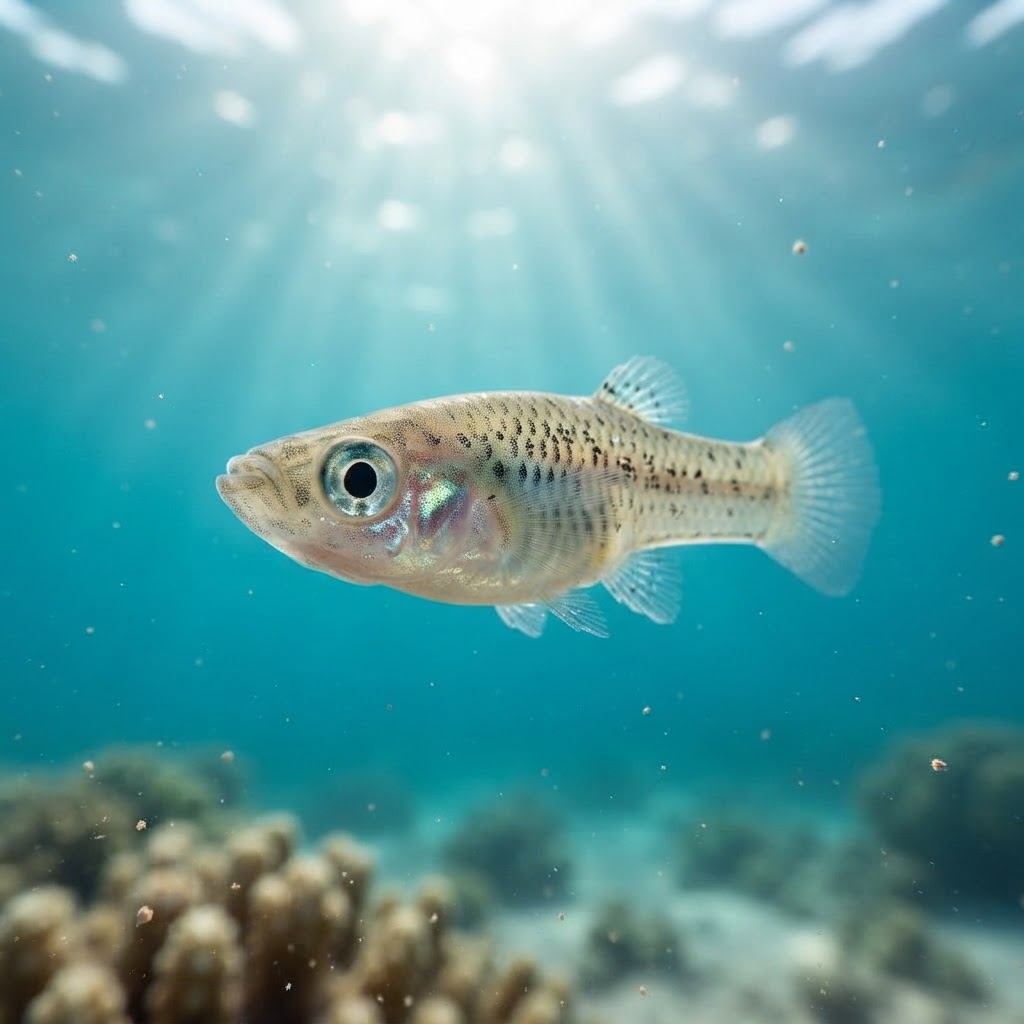
A tiny, torpedo-shaped fish rarely longer than 4 cm, with a flattened, upturned mouth built for snatching prey off the surface film. Colour runs dull olive to grey-brown on top with a pale, silvery belly, and there's no bold pattern to key on beyond a faint dusting of dark speckles along the upper sides in some individuals. Females grow noticeably larger and rounder-bodied than males, especially when gravid, while males stay slim with a modified anal fin (gonopodium) used for mating.
Expect to see small groups hovering just under the surface in calm, shallow, weedy margins, feeding on anything small that lands on or near the water film, including mosquito larvae. They're not shy exactly, but they scatter fast at sudden movement and tend to regroup in the same sheltered pocket of vegetation once the disturbance passes. Most sightings come from slow-moving or still freshwater rather than open, current-swept sites.
They're live-bearers, giving birth to fully formed fry rather than laying eggs, which lets them colonise still or seasonal waters quickly and is part of why they've been introduced so widely outside their native range.
Records don't show a clear seasonal pattern, and the wide observed temperature range of 12 to 26.4 C suggests they tolerate cool and warm water alike, so a year-round approach is reasonable, especially in the spring-fed Texas waters where they're most often logged.
Texas is by far the strongest place to find them, with sightings logged across multiple sites there, making it the most reliable region for a look. Smaller, scattered records also turn up in the Pacific Northwest and Hawaii in the United States and in the Western Cape of South Africa, though these are outlier sightings rather than dependable spots.
Mapping where Mosquitofish is logged…
Texas is the most consistent place to find them, with multiple logged sites in shallow freshwater habitat. Occasional sightings also come from the Pacific Northwest, Hawaii, and South Africa's Western Cape, but these are far less frequent.
There's no strong seasonal signal in the sightings, and they've been recorded across a wide temperature range from 12 to 26.4 C, so they can turn up any time of year in the right shallow, vegetated water.
Look for a tiny, drab olive-grey fish under 4 cm, with a flat upturned mouth and a pale belly, usually hovering in small groups just under the surface of still or slow water. There's no bold pattern, so size, mouth shape, and habitat are the best clues.
They're small, typically topping out around 4 cm, with females growing visibly larger and rounder than males.
They give birth to live young instead of laying eggs, a trait that helps them establish quickly in new or isolated bodies of water.
Site and sighting data is aggregated from diver logs, iNaturalist and GBIF. For taxonomy and conservation status:
Sun Perch
2,182 sites