Pardachirus marmoratus
Uncommon but widespread from the Red Sea Riviera to Zanzibar, this flat, mottled sole hides in plain sight on sandy reef bottoms year-round.
Safety warning
Handling one can transfer skin toxins to your hands, and rubbing eyes or a cut afterwards can cause irritation, so admire it without touching. It poses no threat if simply observed or photographed from a normal distance.
Handle with care
Toxic skin secretionGeneral first-aid guidance, not a substitute for professional medical care. In an emergency, call your local emergency number.
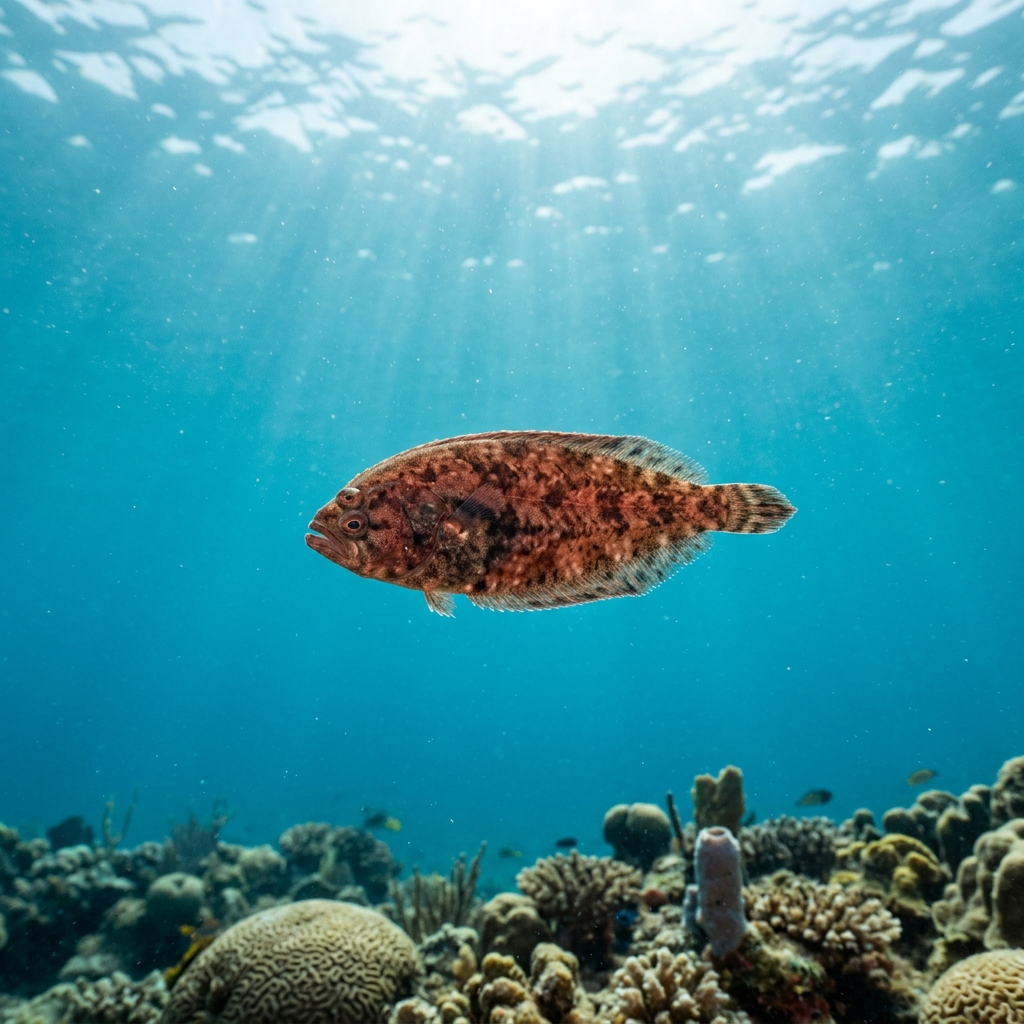
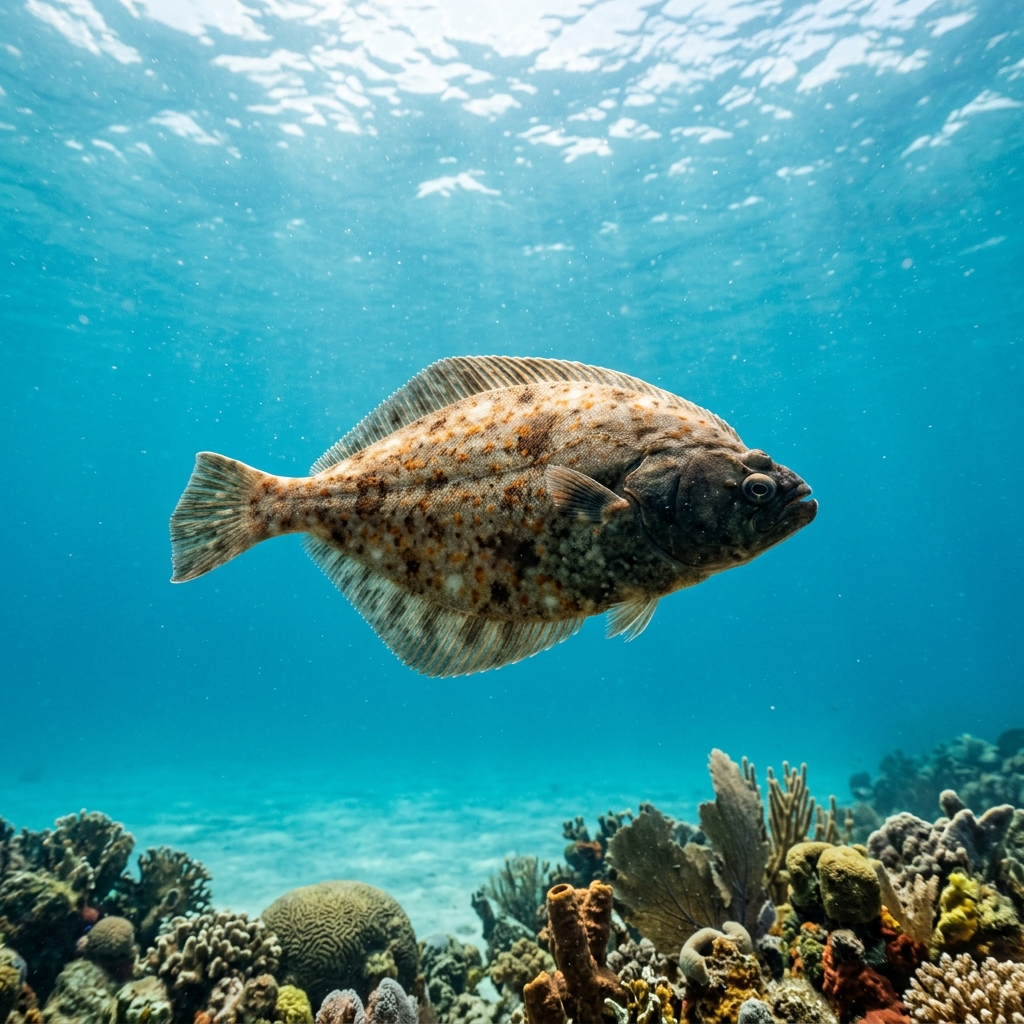
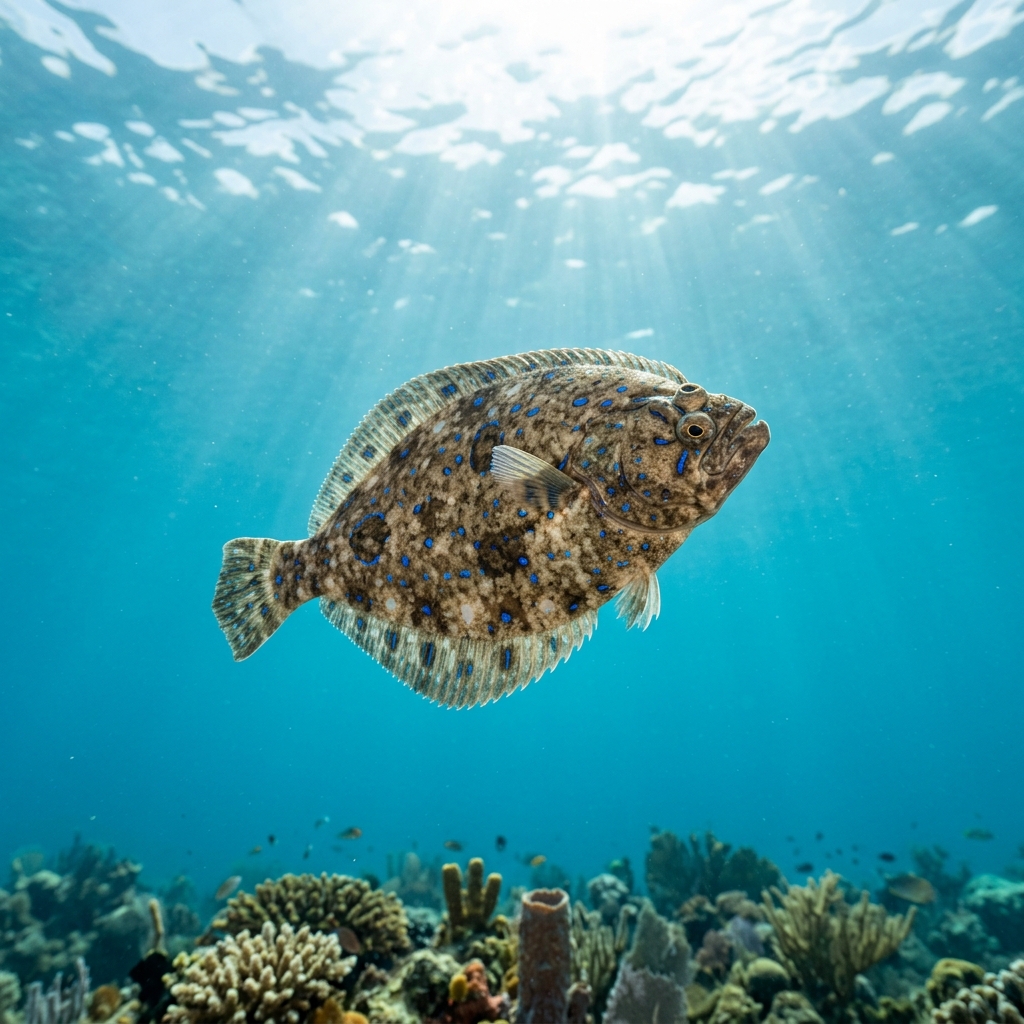
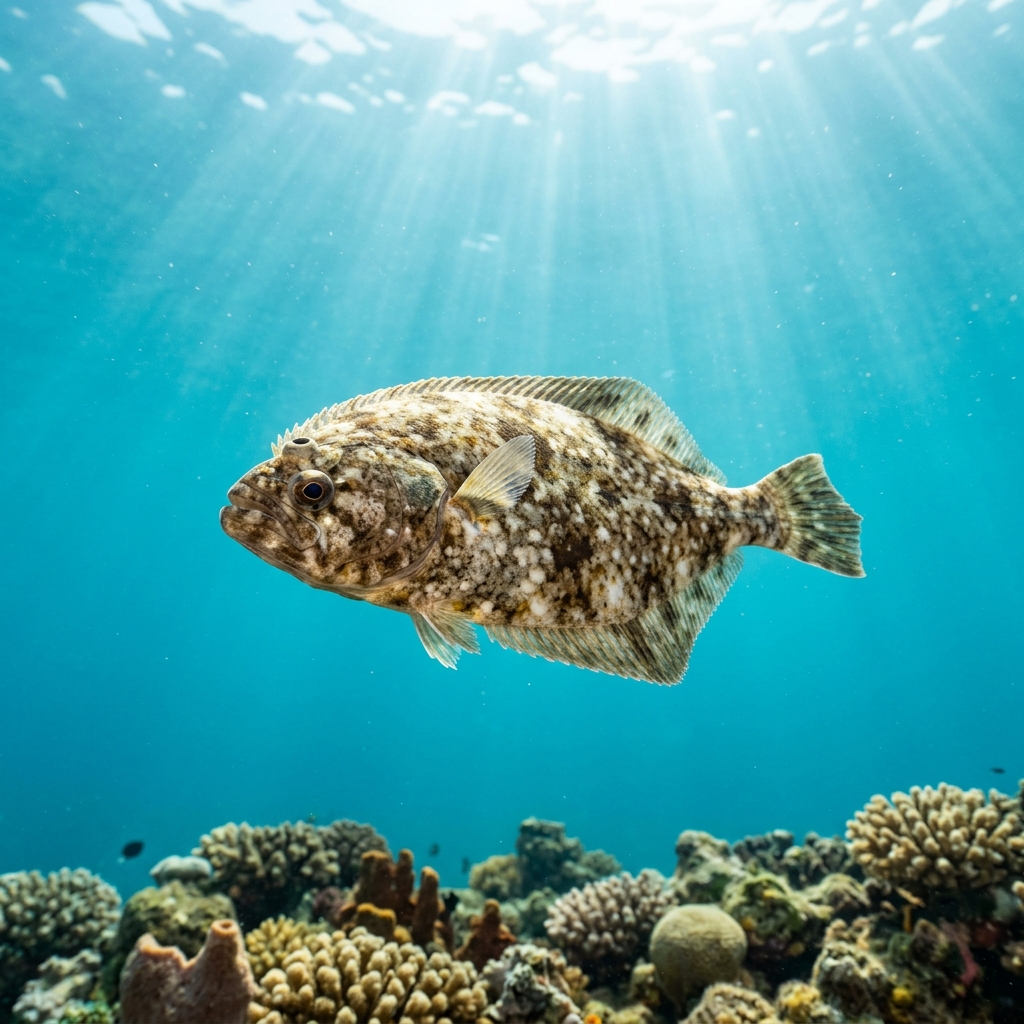
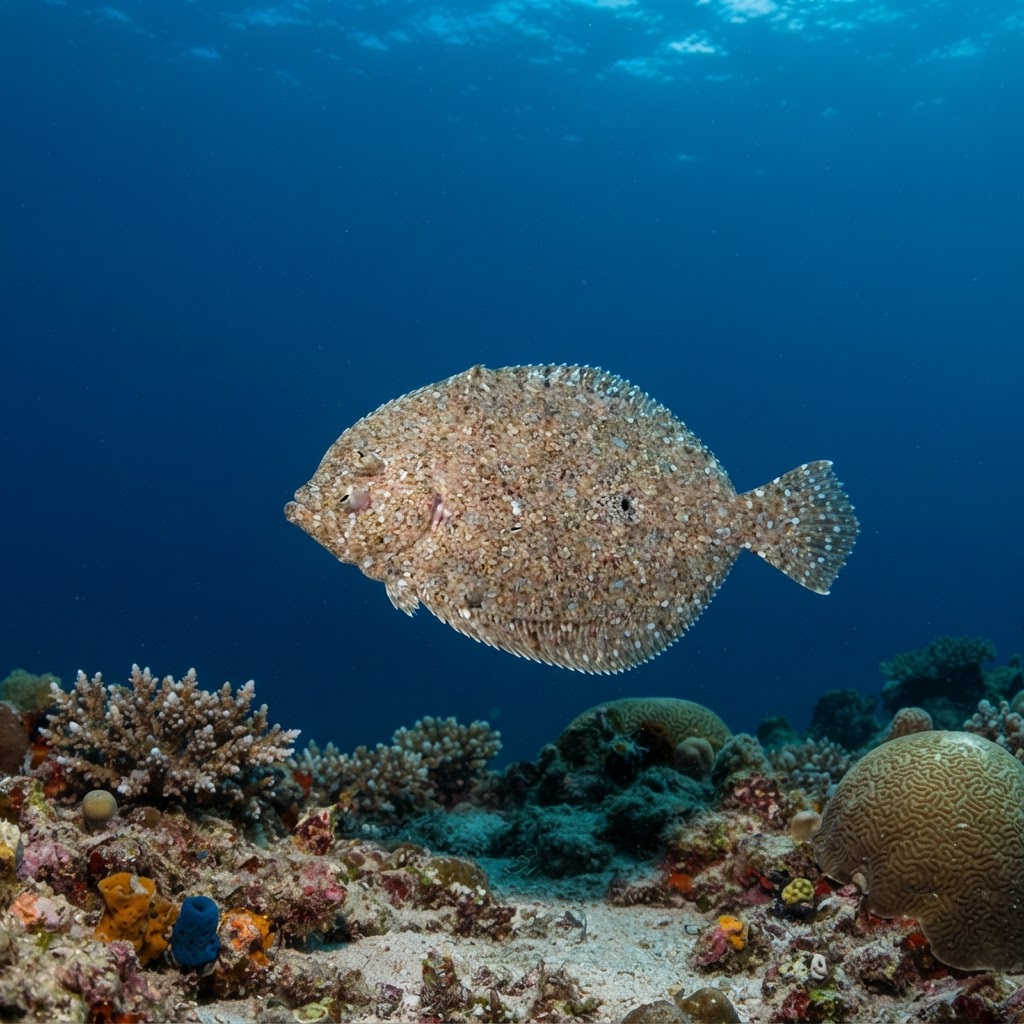
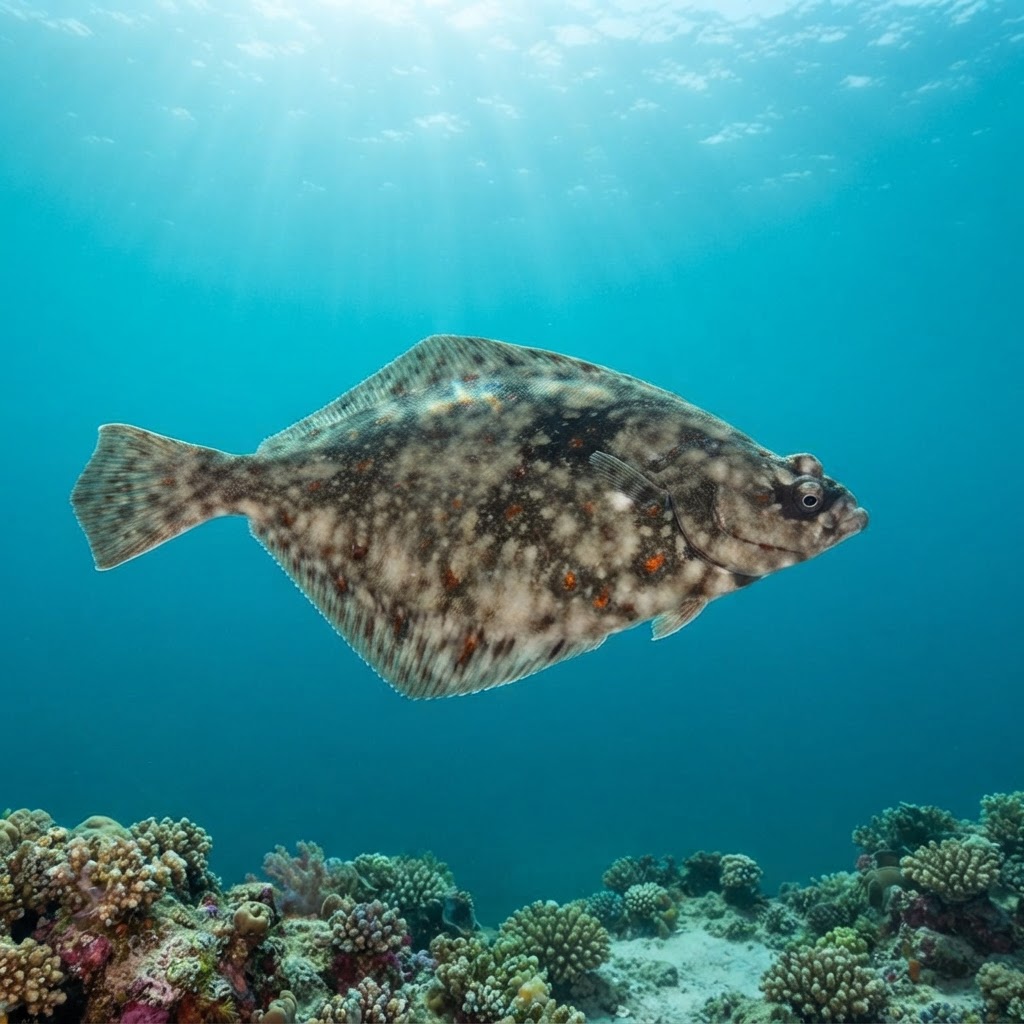
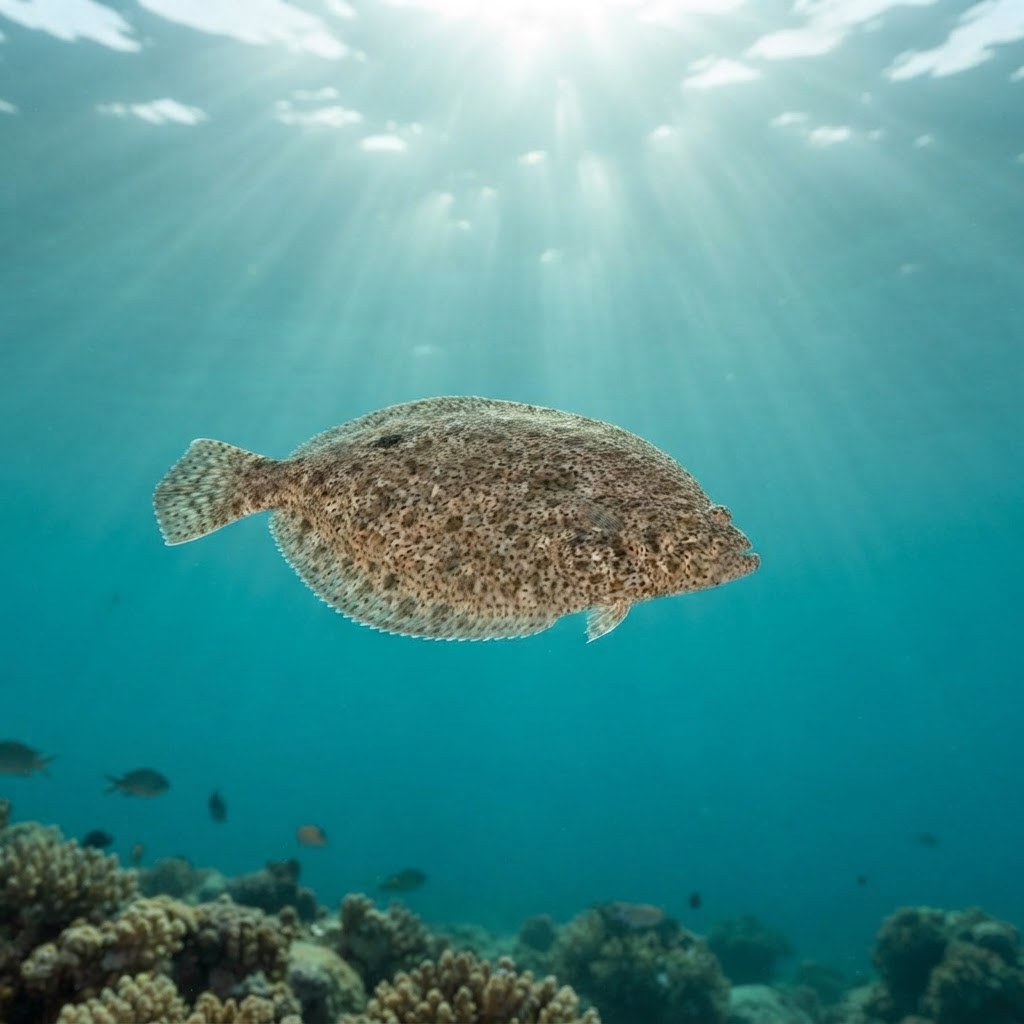
Flattened, oval body about 18cm long, lying flush against sand or rubble with both eyes on the upper side of its head like all soles. Skin is mottled brown, grey and cream, blending closely with the seabed so it's often spotted only when it moves. Look for the continuous fin edging the whole body outline and the way it glides low over the bottom rather than swimming in open water.
Spends most of its time resting motionless on sand or rubble patches close to reef structure, relying on its mottled skin to disappear against the bottom. Divers tend to notice it only when it shifts position or half-buries itself, and it will usually stay put rather than bolt if you keep your distance. Most sightings come from slow, close-focus swims over open sand rather than mid-water reef scanning.
It secretes a milky toxin from glands along its fin base that deters predator sharks from biting it, one of the few soles known to chemically defend itself this way.
No clear seasonal pattern shows up in sightings, and with a comfortable range of 25 to 29.3C across these sites it's present on the reef sand year-round.
Most reliably logged in Egypt, especially the Red Sea Riviera and South Sinai, and in Oman's Daymaniyat Islands. Also a steady find in Tanzania around Zanzibar and Mafia Island, and off Mauritius at Flic-en-Flac.
Mapping where Moses Sole is logged…
Best chances are in Egypt's Red Sea Riviera and South Sinai, Oman's Daymaniyat Islands, Zanzibar and Mafia Island in Tanzania, and Flic-en-Flac in Mauritius. It's logged as uncommon at nearly all these sites, so it takes a patient, sand-focused eye to find one.
There's no strong seasonal pattern in sightings, and water temperatures across its range stay in a comfortable 25 to 29.3C band, so it's a year-round find on tropical reef sand.
They're not aggressive, but they secrete a toxic mucus from fin-base glands that can irritate skin or eyes if you handle one and then touch your face. Simply looking without touching keeps you completely safe.
Look for a flat, oval fish around 18cm long lying still on sand, with mottled brown and grey camouflage and both eyes on top of its head. It moves in short glides low over the bottom rather than swimming freely in the water column.
They typically reach about 18cm in length, staying small and flat enough to blend easily into sand and rubble patches near reefs.
It produces a milky toxin from glands along its fins that deters sharks from biting it, a rare chemical defence among flatfish that has drawn research interest into natural shark repellents.
Site and sighting data is aggregated from diver logs, iNaturalist and GBIF. For taxonomy and conservation status:
Wide Eyed Flounder
1,624 sites