Pleurobranchus albiguttatus
An uncommon find on reefs in Mindanao, Bali and Milne Bay, this mottled sea slug rewards divers who slow down and scan the rubble.
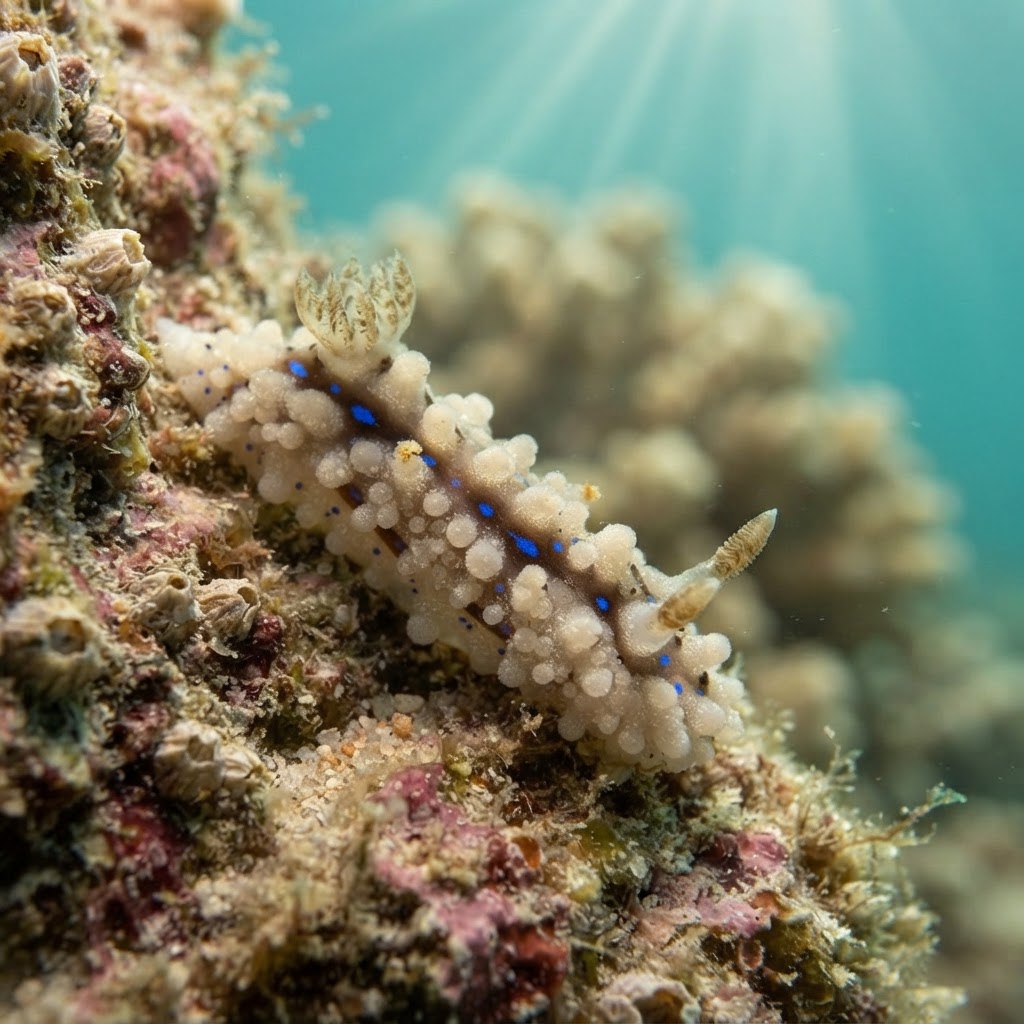
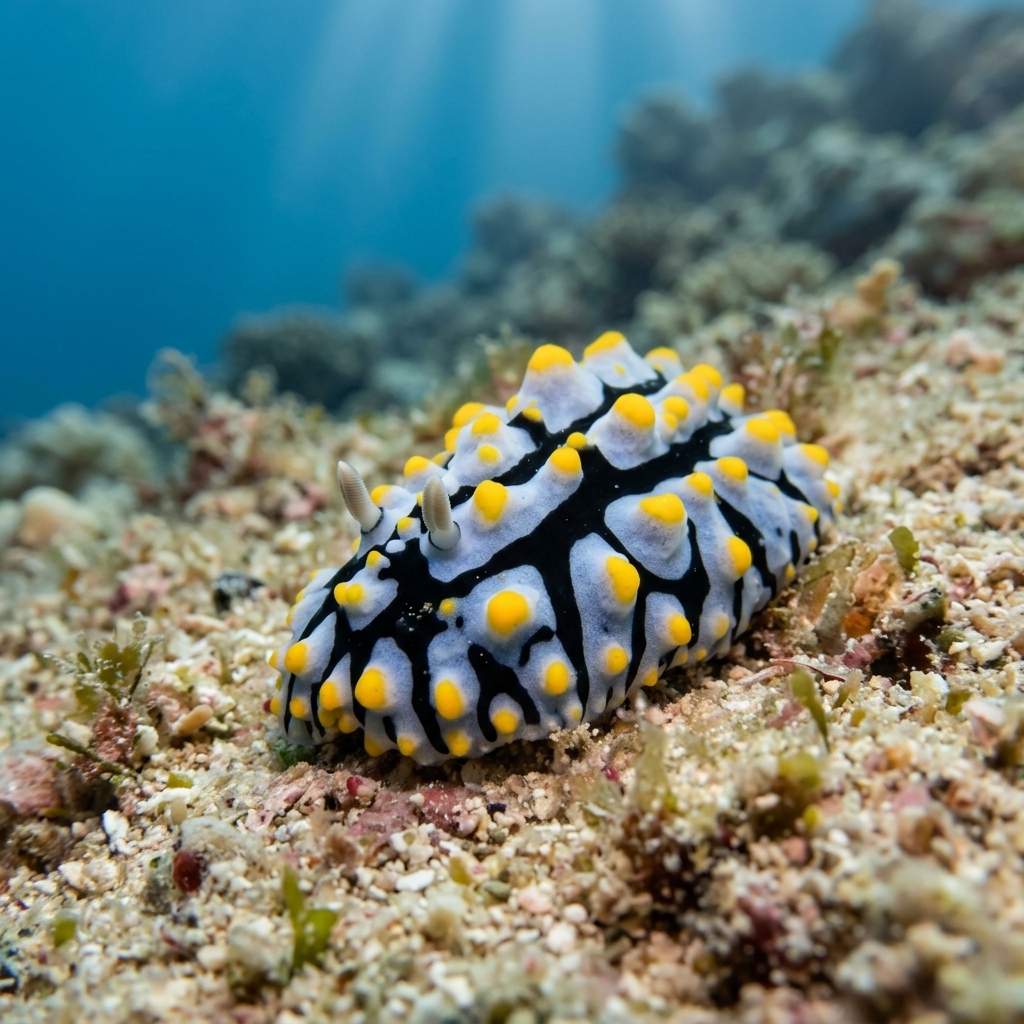
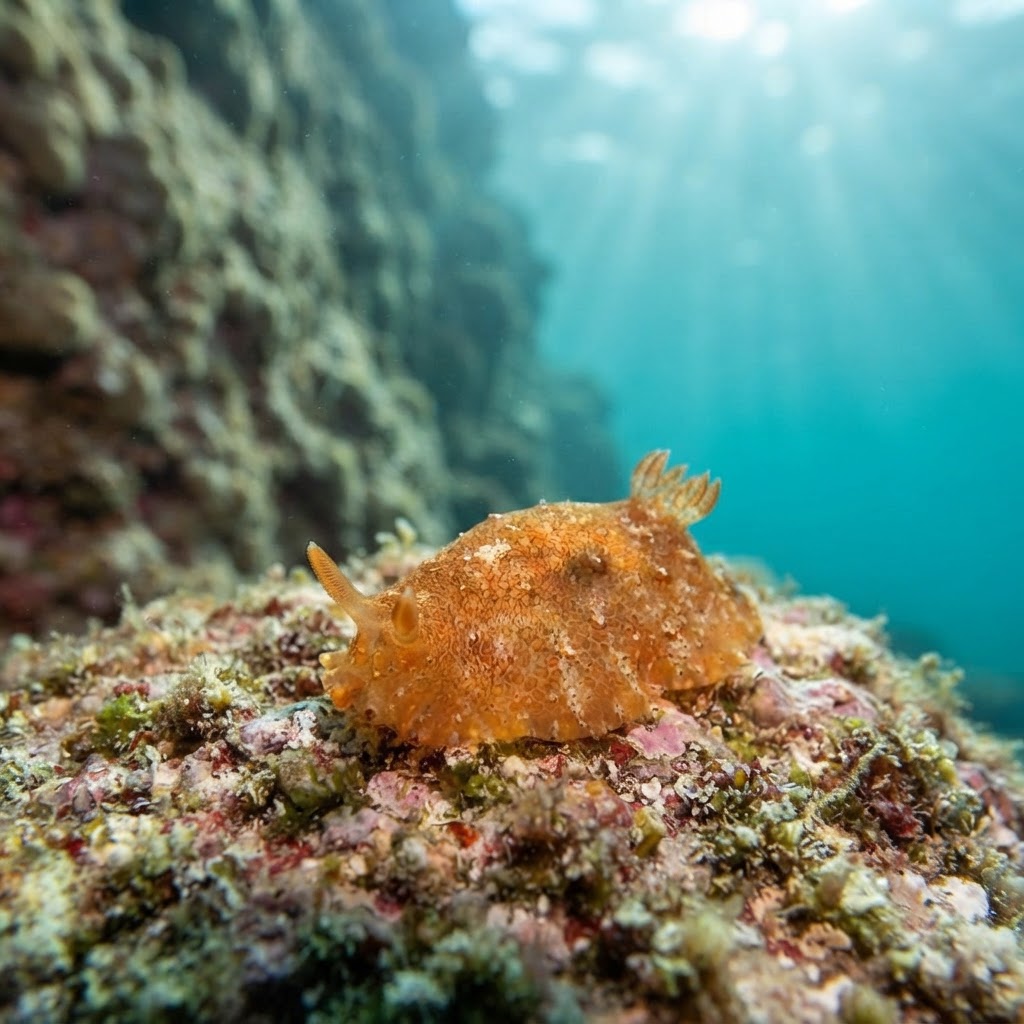
Look for a broad, flattened body with a mottled, mosaic-like pattern of brown, tan and cream patches spread across a soft, warty mantle. The mantle edge often ruffles slightly as it moves, and there is no obvious set of external gills on the back the way many true nudibranchs show, since pleurobranchs breathe through a gill tucked under the mantle on the right side. It moves slowly over rock, rubble and sponge-covered surfaces, staying low and close to the substrate rather than out in the open water.
Divers usually find this one grazing slowly across rubble patches, sponge-encrusted rock or the reef floor during the day, often half tucked against a ledge or under a small overhang. It moves at a deliberate crawl and shows little reaction to a diver's presence beyond retracting slightly if touched, making it an easy subject for a macro lens once spotted.
Pleurobranchs like this one are not true nudibranchs, they belong to a related but distinct group that keeps a thin internal shell remnant under the mantle, a trait left over from shelled sea slug ancestors.
There is no clear seasonal pattern in the sightings logged so far, and the water-temperature range it turns up in, roughly 23.5 to 29.8C, covers typical year-round conditions on the reefs where it is found. Treat it as a species to look for on any dive rather than one tied to a particular month.
Reef neighbours a diver could mistake it for. Use the identification notes above to tell them apart.
This is most reliably reported from Mindanao in the Philippines, with further sightings logged in Bali, Indonesia, and around Milne Bay in Papua New Guinea. Across all three countries it sits in the uncommon-to-rare bracket, so it is more of a patient-macro-hunter's target than a guaranteed find on any single dive.
Mapping where Mosaic Pleurobranch is logged…
It has been logged most often on reefs in Mindanao in the Philippines, with additional sightings around Bali in Indonesia and Milne Bay in Papua New Guinea. At all these sites it is considered uncommon to rare, so finding one takes a careful scan of rubble and rocky substrate.
Sightings do not show a clear seasonal pattern, and it turns up across a wide temperature range from about 23.5 to 29.8C. That points to a year-round presence rather than a specific season to plan a trip around.
Check for a flattened, soft-bodied slug with a mottled brown, tan and cream pattern across the mantle and no obvious external gill plume on its back. It moves slowly over rubble and rock rather than swimming, and stays low to the substrate.
No, it poses no known danger to divers. It has no stinging cells or venomous defences that affect people, and simply moves away or retracts slightly if disturbed.
Not quite. It belongs to the pleurobranch family, a closely related group of sea slugs that breathe through a hidden gill under the mantle rather than the exposed gill tufts many true nudibranchs display.
Site and sighting data is aggregated from diver logs, iNaturalist and GBIF. For taxonomy and conservation status:
Blue Dragon
3,163 sites