Morone americana
Sea Perch tolerate water as cold as 2°C and as warm as 23°C. Here's how to recognise them and what divers should know.
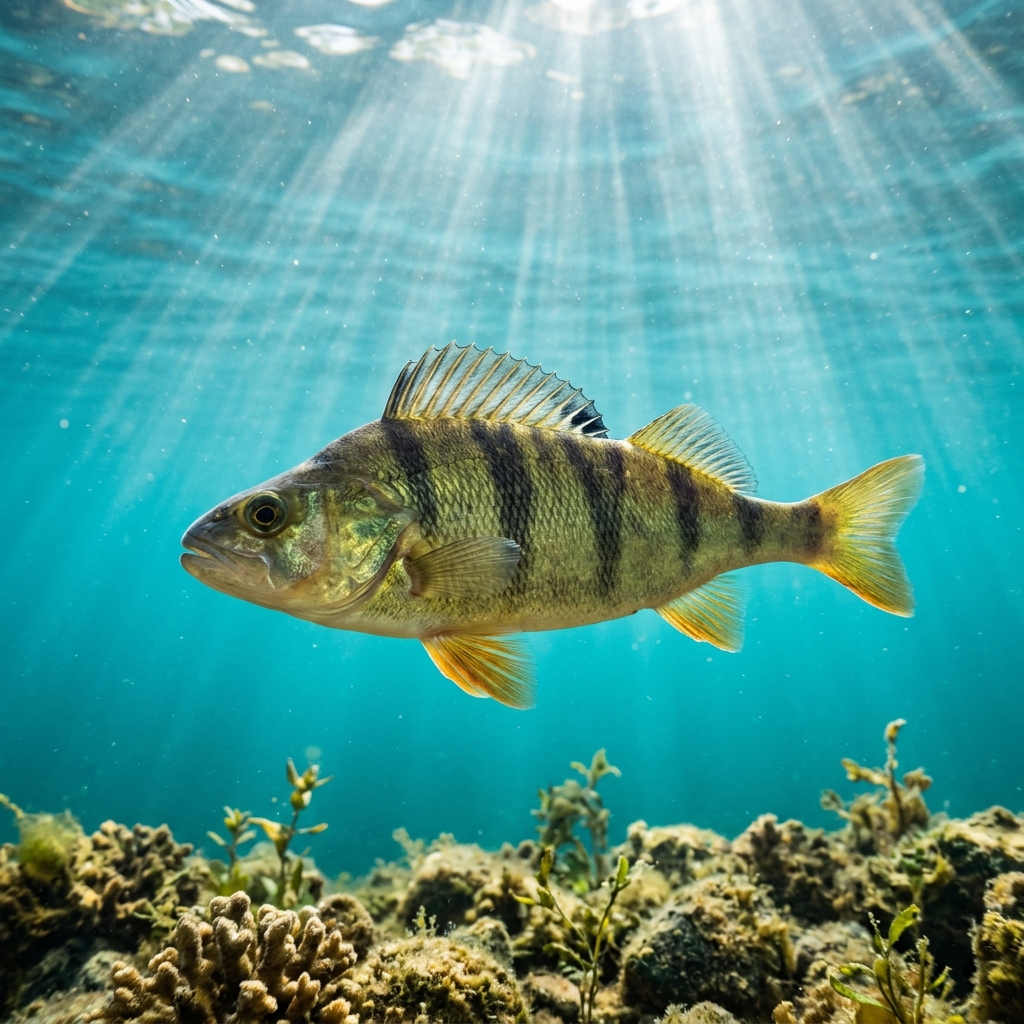
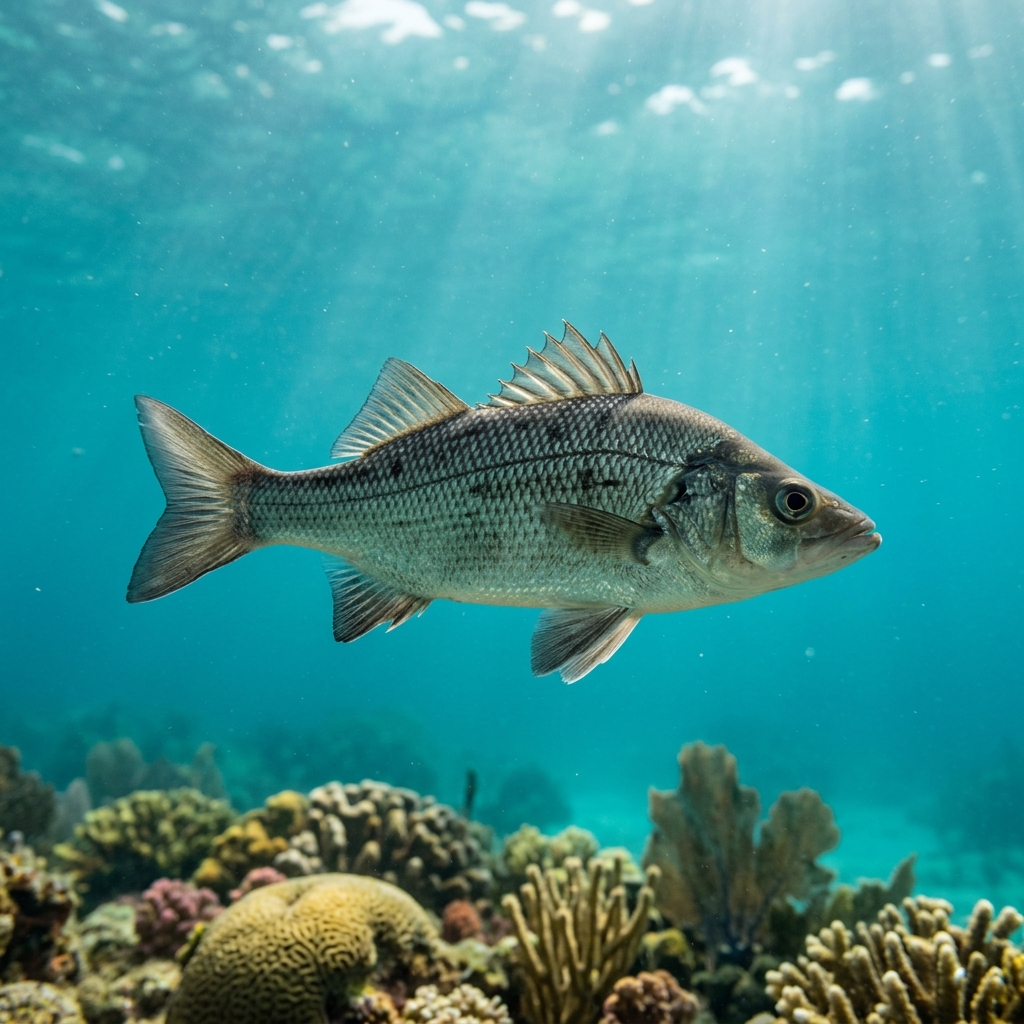
A compact, silvery-white perch with a slightly compressed body and two distinct dorsal fins, the first spiny, the second soft-rayed, which is the key shape to fix on underwater. Dark, broken horizontal stripes run along the flanks, most visible in good light. Adults rarely grow large, sitting comfortably in the small-to-medium range that makes them easy to overlook among other schooling species.
Sea perch tend to move in loose groups through the mid-water column and along the bottom of estuaries and tidal rivers, often hugging structure such as submerged timber or rocky edges. They are not particularly wary of divers but will drift away calmly if approached too quickly. Sightings tend to be brief and opportunistic rather than prolonged encounters.
Sea perch are anadromous, meaning they migrate from saltwater or brackish estuaries into freshwater rivers to spawn in spring, so the same fish a diver spots near a river mouth in winter may be well upstream by April.
No seasonal pattern has emerged from diver logs yet. Given the species' wide thermal tolerance, recorded across water temperatures from roughly 2°C to 23°C, encounters are plausible year-round wherever the fish are present.
Diver sighting data for this species is not yet established on Fin, so no specific dive sites or regions can be recommended from observations. Based on known biology, sea perch inhabit estuaries, rivers, and nearshore coastal waters along the north-eastern seaboard of North America, so divers exploring those brackish and temperate habitats stand the best chance of an encounter.
Mapping where Sea Perch is logged…
Sea perch are native to the estuaries, tidal rivers, and coastal waters of north-eastern North America. Divers exploring brackish or temperate nearshore environments in that region, particularly around submerged structure in low-visibility tidal areas, have the best chance of finding them. No specific dive sites have been logged on Fin yet.
There is no confirmed seasonal peak from diver data at this stage. The species tolerates a wide temperature range, from near-freezing to about 23°C, suggesting year-round residency wherever habitat is suitable. Spring may concentrate fish near river mouths as they move to spawning grounds.
Look for a small silvery fish with two clearly separated dorsal fins and faint dark horizontal stripes along the flanks. The dual dorsal fin arrangement, spiny front fin, soft-rayed rear fin, is the most reliable field mark. Body shape is compact and moderately deep rather than elongated.
Typical size data is not confirmed in our records for this species. Broadly, sea perch are a small-to-medium fish; adults are unlikely to surprise you with their bulk, which is part of why they can be overlooked on a dive.
No. Sea perch pose no threat to divers. They are not aggressive and will typically move away if approached closely.
Both. Sea perch are euryhaline, meaning they can tolerate a wide range of salinities. They spend much of the year in brackish estuaries and coastal salt water, but migrate into freshwater rivers to spawn in spring. Divers might encounter them anywhere along that gradient.
Site and sighting data is aggregated from diver logs, iNaturalist and GBIF. For taxonomy and conservation status:
Sun Perch
2,182 sites