Lampridae spp.
Moonfish are rarely encountered pelagic fish observed across a wide temperature range from 9 to 28 °C. Here's what to look for if you spot one.
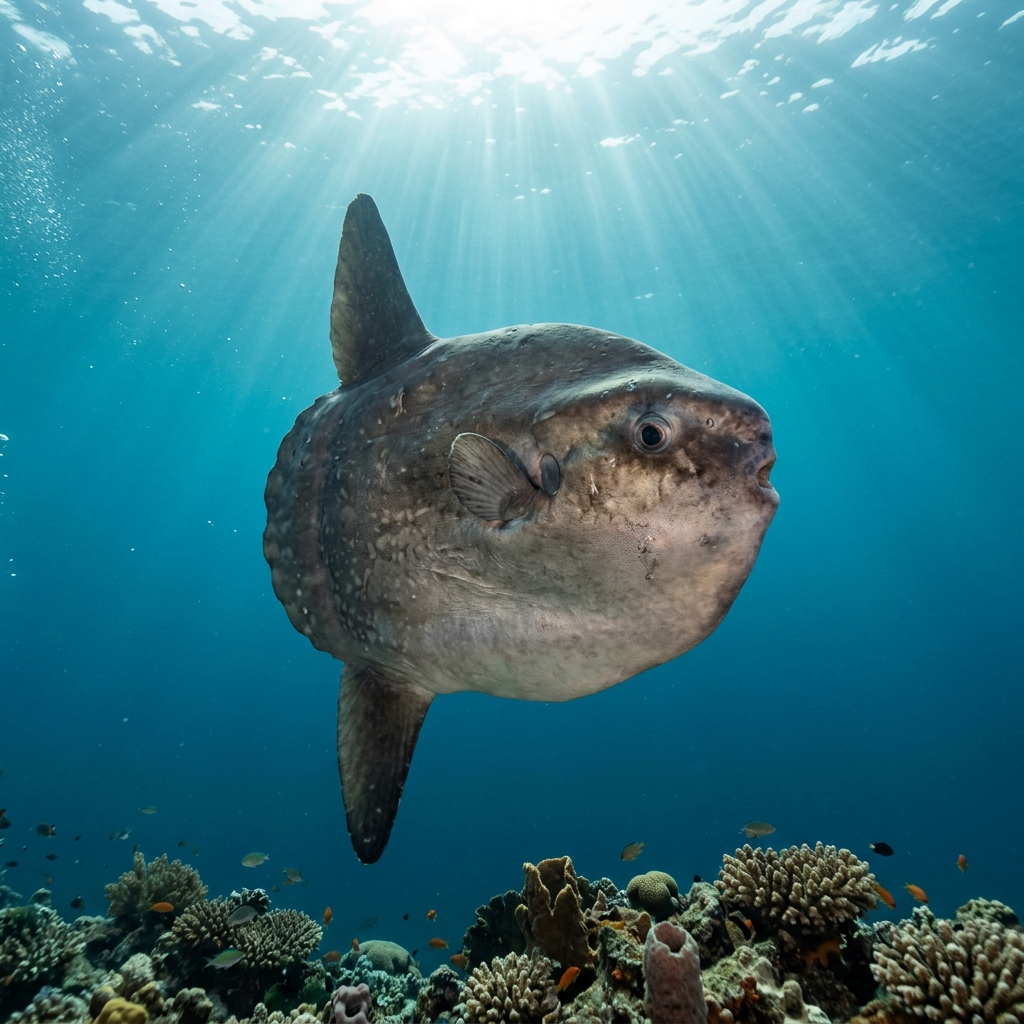
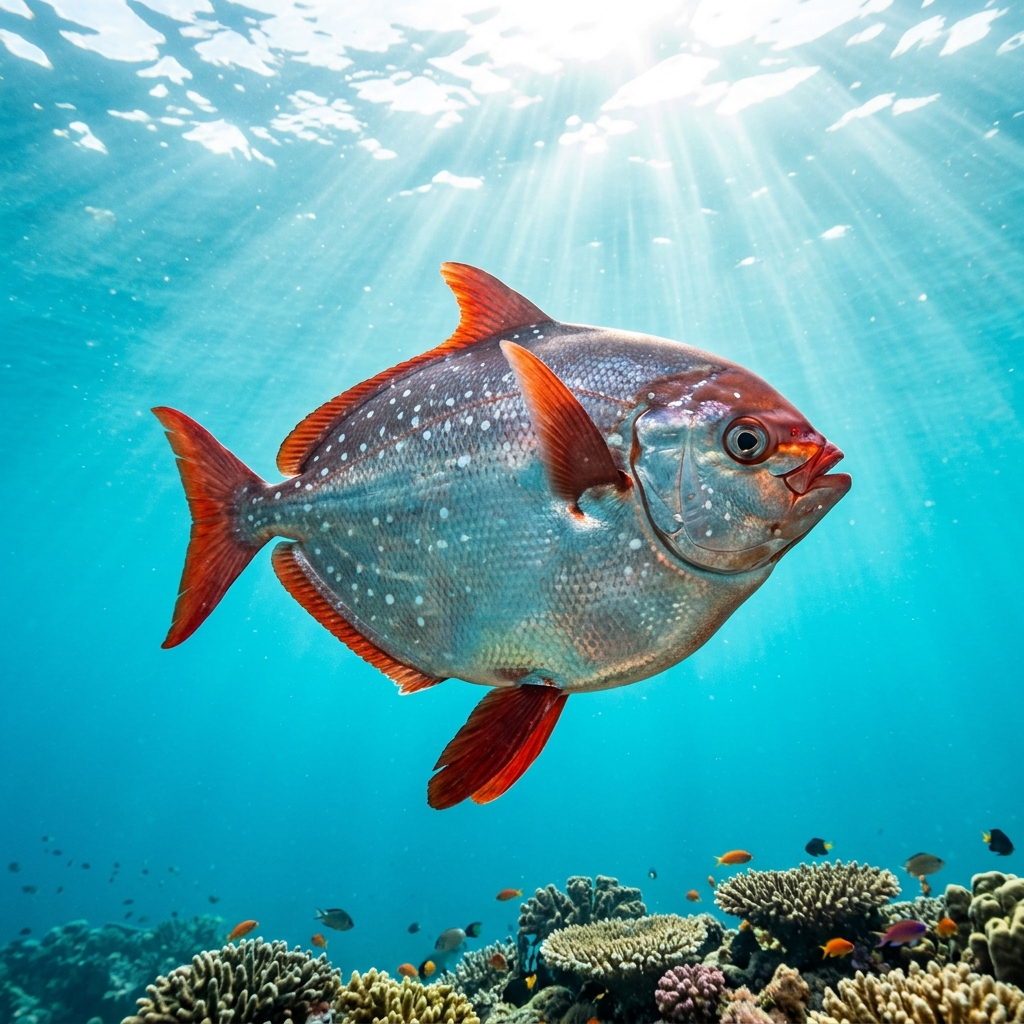
Deep-bodied and strongly flattened side-to-side, moonfish look almost disc-shaped in the water column, with a profile unlike almost any other open-ocean fish. The body is bright silver with a scattering of white spots, and the fins are a striking crimson-red, making the animal easy to pick out against blue water when one does appear. They grow very large, with some individuals reaching well over a metre in length, giving them an unmistakable bulk for a pelagic (open-water) species.
Moonfish are solitary open-ocean wanderers, typically encountered mid-water rather than near a reef or the surface. They are not known to show curiosity towards divers and are more likely to veer away than to linger. Most diver encounters are brief and opportunistic, often during blue-water drifts.
Moonfish are one of the very few fish known to be partially warm-blooded, able to raise the temperature of certain muscles and organs above the surrounding water, which may help them hunt effectively in cold, deep water.
There is not enough sighting data to define a season. The observed water-temperature range of roughly 9 to 28 °C spans cool temperate to warm tropical conditions, so moonfish appear to be present year-round across a broad range of seas.
Reef neighbours a diver could mistake it for. Use the identification notes above to tell them apart.
Moonfish have no recorded dive-site sightings in the Fin database yet, reflecting how rarely they are encountered by divers rather than a limited range. As a deep-ranging pelagic group, they turn up across temperate and tropical seas worldwide wherever conditions are right. Blue-water divers and liveaboard trips in oceanic corridors give the best chance of a chance encounter.
Mapping where Moonfish is logged…
Moonfish are pelagic and wide-ranging, found across temperate and tropical oceans worldwide. Because they spend most of their time in deep open water, planned encounters are almost impossible. Blue-water dives and oceanic liveaboard routes offer the most realistic chance of a sighting.
Look for a very deep, disc-like silver body, bright red fins, and a scattering of pale spots. The combination of that round compressed shape and vivid red fins sets them apart from almost everything else in the open ocean. Size helps too; they can exceed a metre in length.
Members of the Lampridae family can reach around 1.8 metres in length and weigh over 200 kg, making them one of the largest bony fish in the open ocean. Most diver encounters involve animals well under that maximum, but they are always impressively bulky.
No. Moonfish pose no threat to divers. They are large but entirely passive, with no defensive spines or aggressive behaviour recorded around people.
Moonfish are among the very few fish capable of partial endothermy, meaning they can warm parts of their body above the surrounding water temperature. This adaptation likely helps them stay active and hunt in cold, deep water where prey such as squid and small fish are abundant.
No clear season has been identified from diver sightings. Moonfish tolerate a wide temperature range, from around 9 °C to over 28 °C, so they are not confined to a particular season. Any blue-water dive in productive oceanic waters could produce an encounter at any time of year.
Site and sighting data is aggregated from diver logs, iNaturalist and GBIF. For taxonomy and conservation status:
Butterfish
1,423 sites