Liparis montagui
Small tadpole-shaped fish found clinging to rock in Jersey and Guernsey's cold, 8-12C waters, year-round if you know where to look.
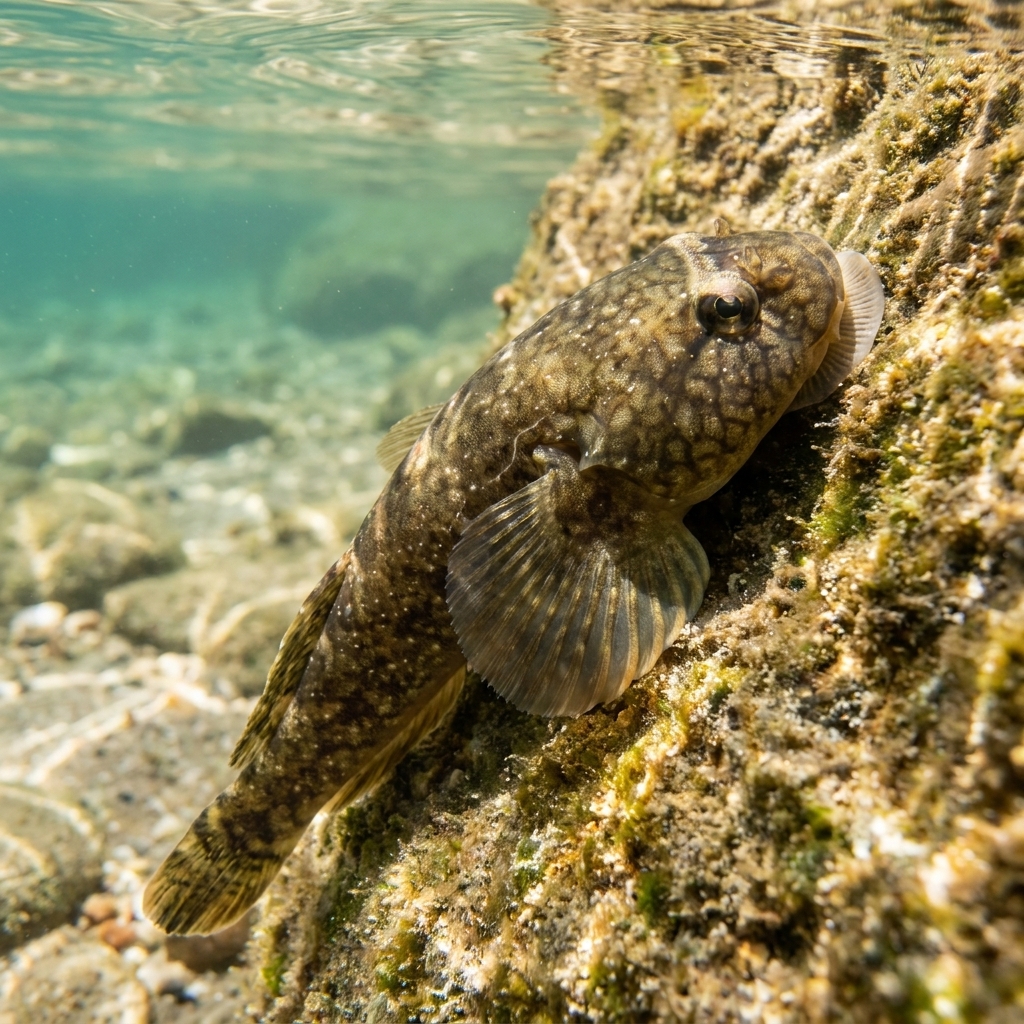
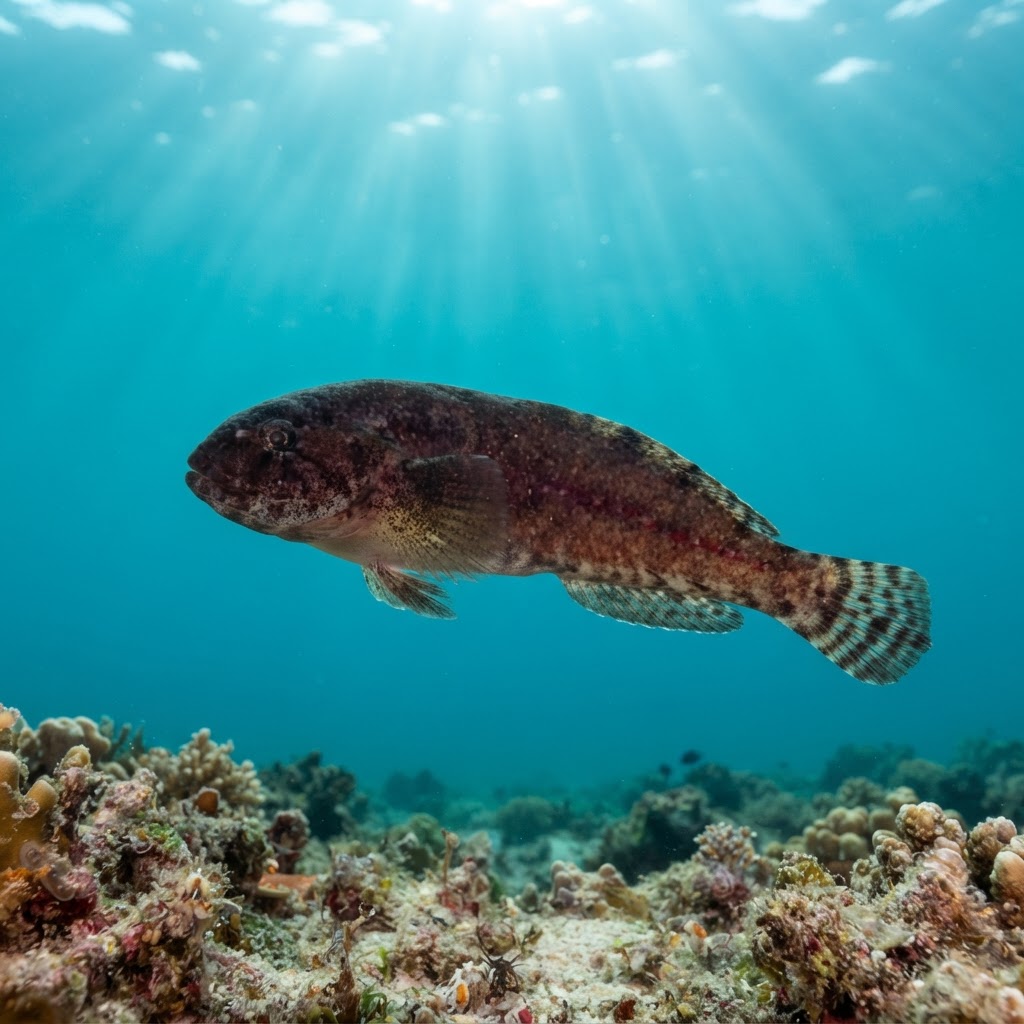
Small tadpole-shaped body, around 11 cm, with a soft, scaleless skin that looks slightly slimy underwater. Mottled brown, olive or greyish colouring helps it blend against encrusted rock and weed, and a rounded head tapers into a slender tail with no obvious neck line. Look for the sucker-like disc on its underside, formed from fused pelvic fins, which it uses to grip rock in current rather than swim freely.
Found sitting motionless on rock, in crevices or among kelp holdfasts, gripping the substrate with its sucker disc rather than swimming in open water. It tends to stay put when divers approach, relying on its mottled camouflage instead of fleeing, which makes a slow, careful scan of rocky ground your best tactic for spotting one.
That sucker disc on its belly, fused from the pelvic fins, lets it anchor firmly to rock faces in surge and current, which is exactly why divers usually find it wedged still rather than out swimming.
Sightings are spread across the year with no clear seasonal peak in the data, and its comfort range of roughly 8 to 12C fits cold-temperate waters most months. Treat it as a year-round find rather than a seasonal target.
Most reliably logged around Jersey and Guernsey in the UK Channel Islands, with further sightings in Nordland, Norway, Brittany in France, and Galway & Connemara in Ireland. Divers rate it common at several Channel Islands and Norwegian sites, so patient rock and kelp-base searches in these regions give the best odds.
Mapping where Montagu's Sea Snail is logged…
Best known from Jersey and Guernsey in the UK Channel Islands, with additional sightings in Nordland, Norway, Brittany, France, and Galway & Connemara, Ireland.
There is no strong seasonal pattern in sightings, so it is best treated as a year-round find in cold water between roughly 8 and 12C.
Look for a small, soft-bodied, tadpole-shaped fish around 11 cm long, mottled brown or olive, sitting still on rock or kelp holdfasts rather than swimming openly.
They typically reach about 11 cm, making them an easy species to overlook against rocky, weedy backgrounds.
Its pelvic fins are fused into a sucker disc on its underside, letting it clamp onto rock in current and surge instead of relying on swimming to hold position.
No, they are harmless, small, slow-moving fish that pose no risk to divers.
Site and sighting data is aggregated from diver logs, iNaturalist and GBIF. For taxonomy and conservation status:
Soldierfish
3,612 sites