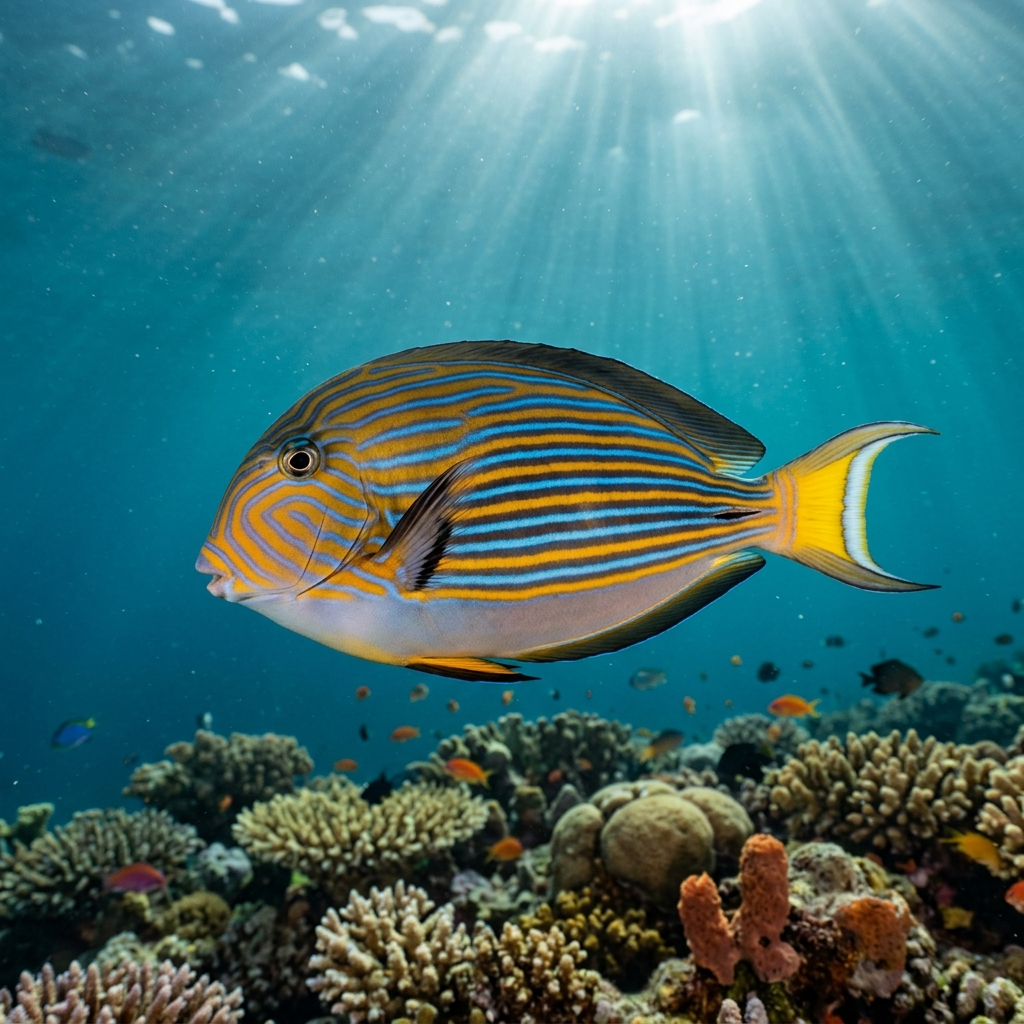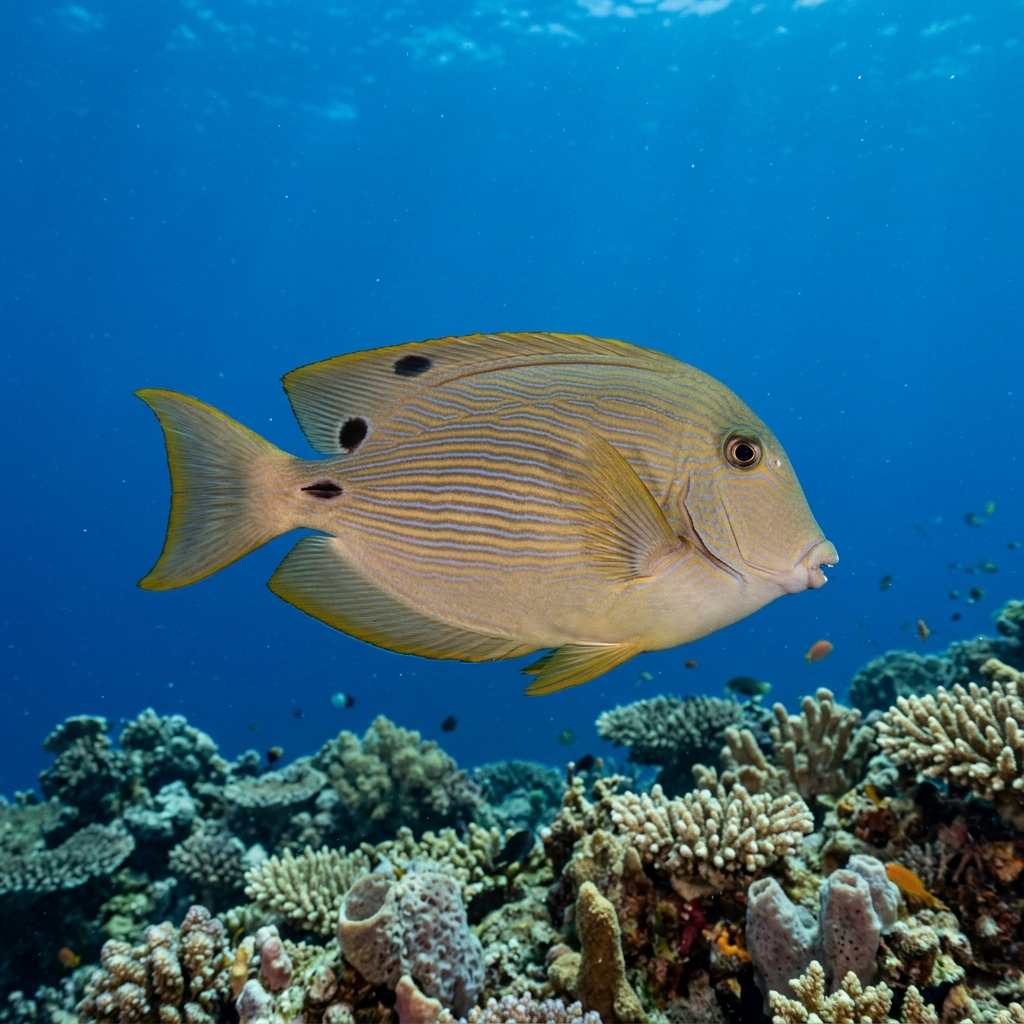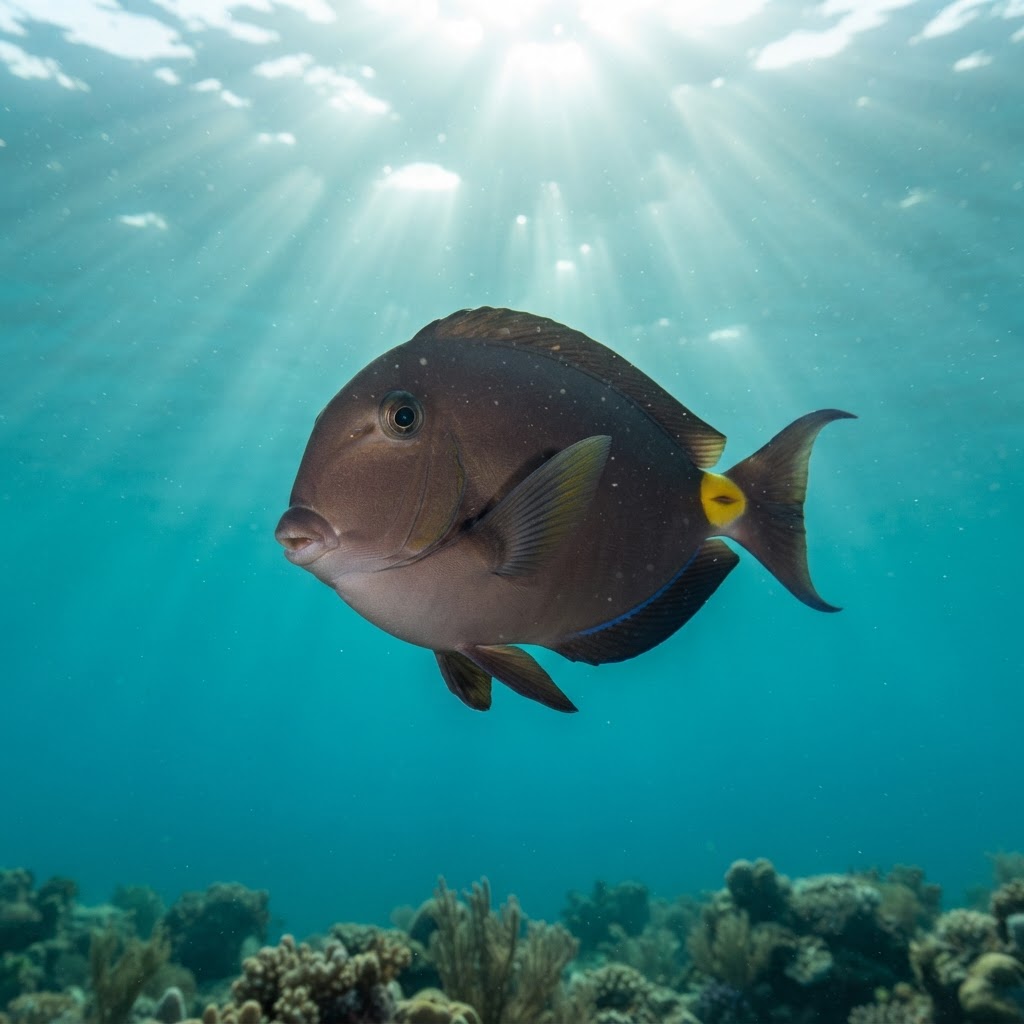
Acanthurus monroviae
Uncommon but steady find on São Vicente and Sal reefs, water 22-28C, Monrovia Doctorfish show up year-round off Cape Verde and Senegal.
Oval, laterally flattened body around 31 cm, coloured grey-brown to olive with a paler underside and a faint dark saddle near the tail base. Like other surgeonfish it carries a sharp defensive spine at the base of the tail (caudal spine), though it's rarely flashed at divers unless harassed. Look for the blunt-nosed profile and the way it grazes low over rock and reef rubble rather than schooling in open water.
Usually spotted alone or in loose ones-and-twos, picking algae off rocky substrate and low reef structure rather than roaming the water column. It tends to hold its ground when divers approach slowly, drifting off a short distance rather than bolting, which makes for an easy if brief look. Most sightings come from the same rubble and rock habitats favoured by other Atlantic surgeonfish, not from open sand or deep wall dives.
That caudal spine is a scalpel-sharp defence mechanism, the feature that gives the whole surgeonfish family its name, and it locks forward when the fish is threatened.
No clear season shows up in the sighting data, and with a comfortable range of roughly 22 to 28C year-round in these waters, it's a fish you can reasonably expect on any dive trip to Cape Verde or Senegal.
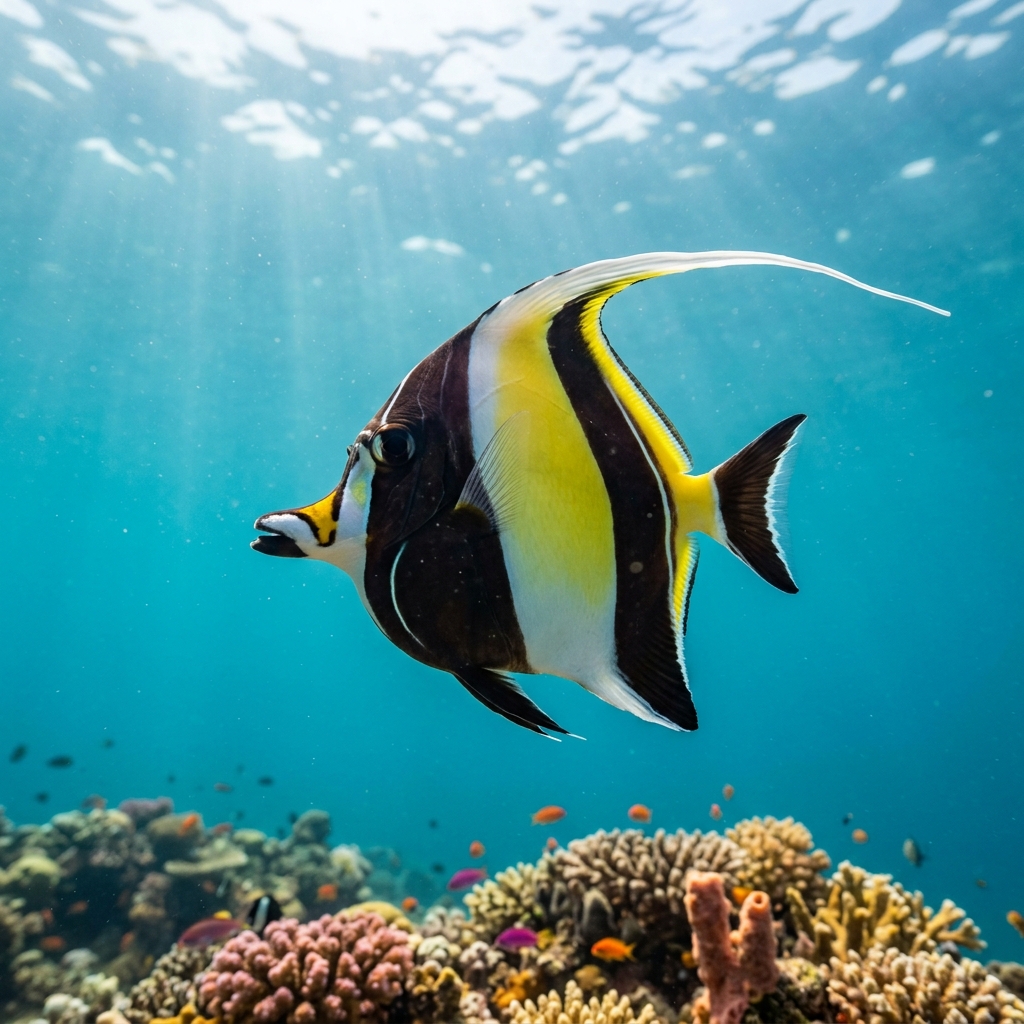
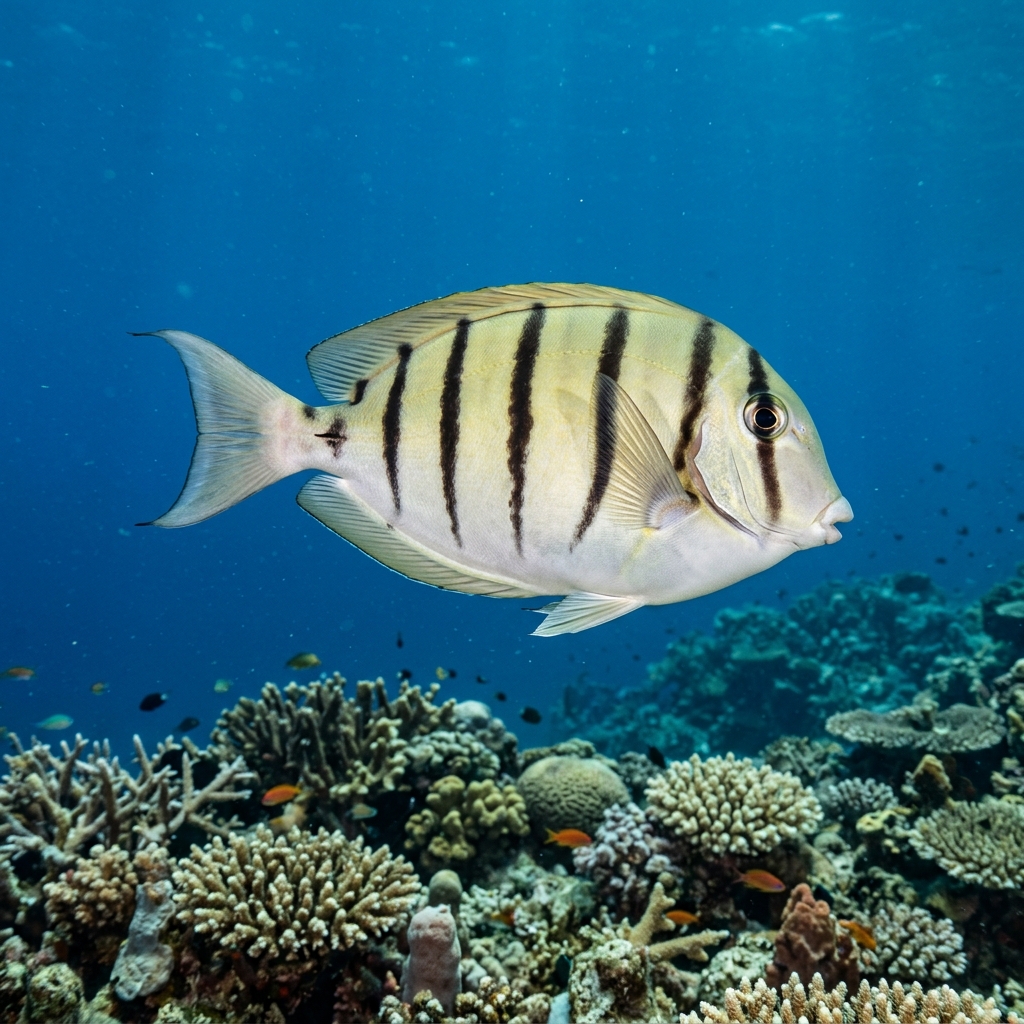
Reef neighbours a diver could mistake it for. Use the identification notes above to tell them apart.
Cape Verde is the stronghold, with the best odds around São Vicente and Sal, plus a solid showing on Santiago and Santo Antão. Off the West African mainland, Dakar in Senegal is the other reliable spot to log this species.
Mapping where Monrovia Doctorfish is logged…
Cape Verde is the most reliable destination, especially São Vicente and Sal, with further sightings on Santiago and Santo Antão. Dakar in Senegal is the main mainland West African site for this species.
There's no strong seasonal pattern in the sighting data, and the species tolerates a wide temperature band of roughly 22 to 28C, so it's fair to expect it on a dive trip at any time of year.
Look for a grey-brown, oval-bodied fish around 31 cm, grazing low over rock and rubble rather than schooling in the open. The faint dark mark near the tail base and blunt head shape are the main visual cues.
They typically reach about 31 cm in length, a mid-sized surgeonfish that's easy to mistake for background reef fish if you're not looking closely.
No. They pose no real threat to divers, though like all surgeonfish they carry a sharp caudal spine used defensively, so it's best not to grab or corner one.
Site and sighting data is aggregated from diver logs, iNaturalist and GBIF. For taxonomy and conservation status:
Striped Surgeonfish
3,289 sites