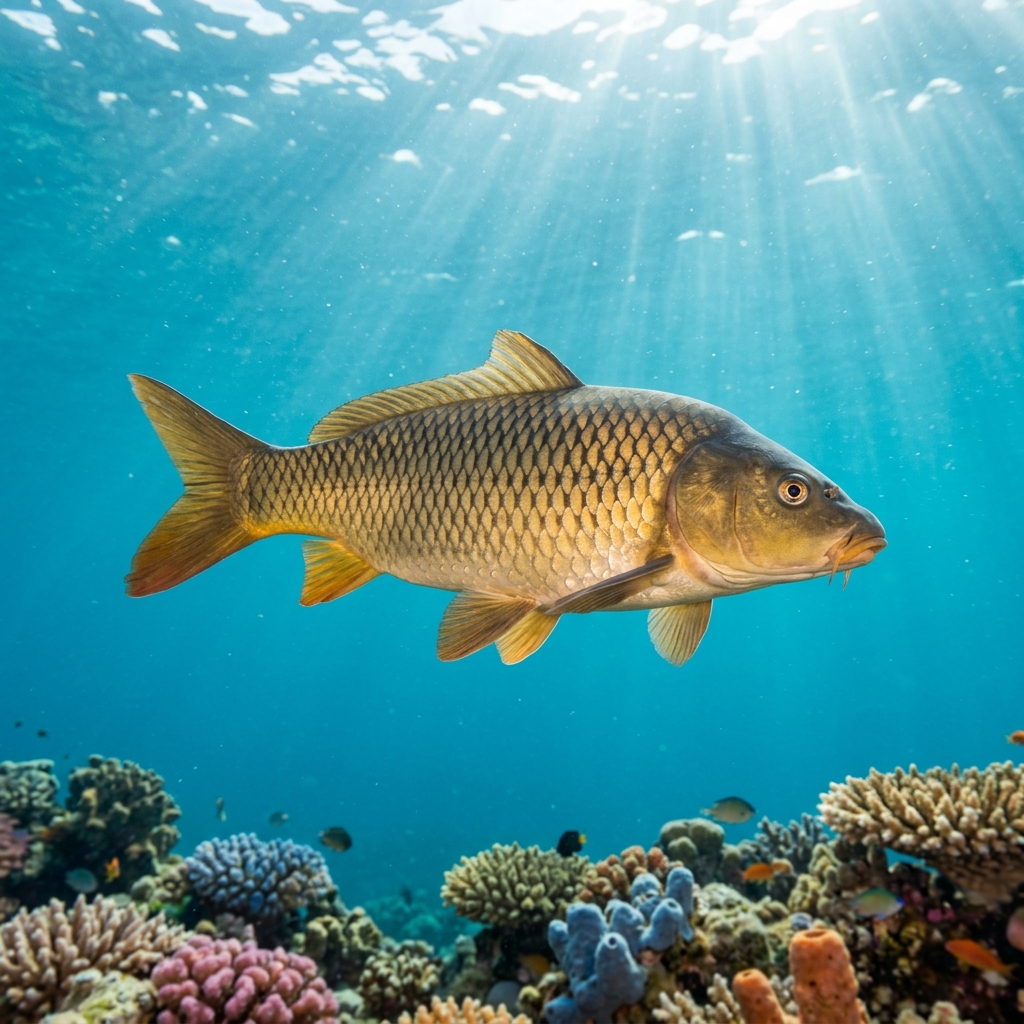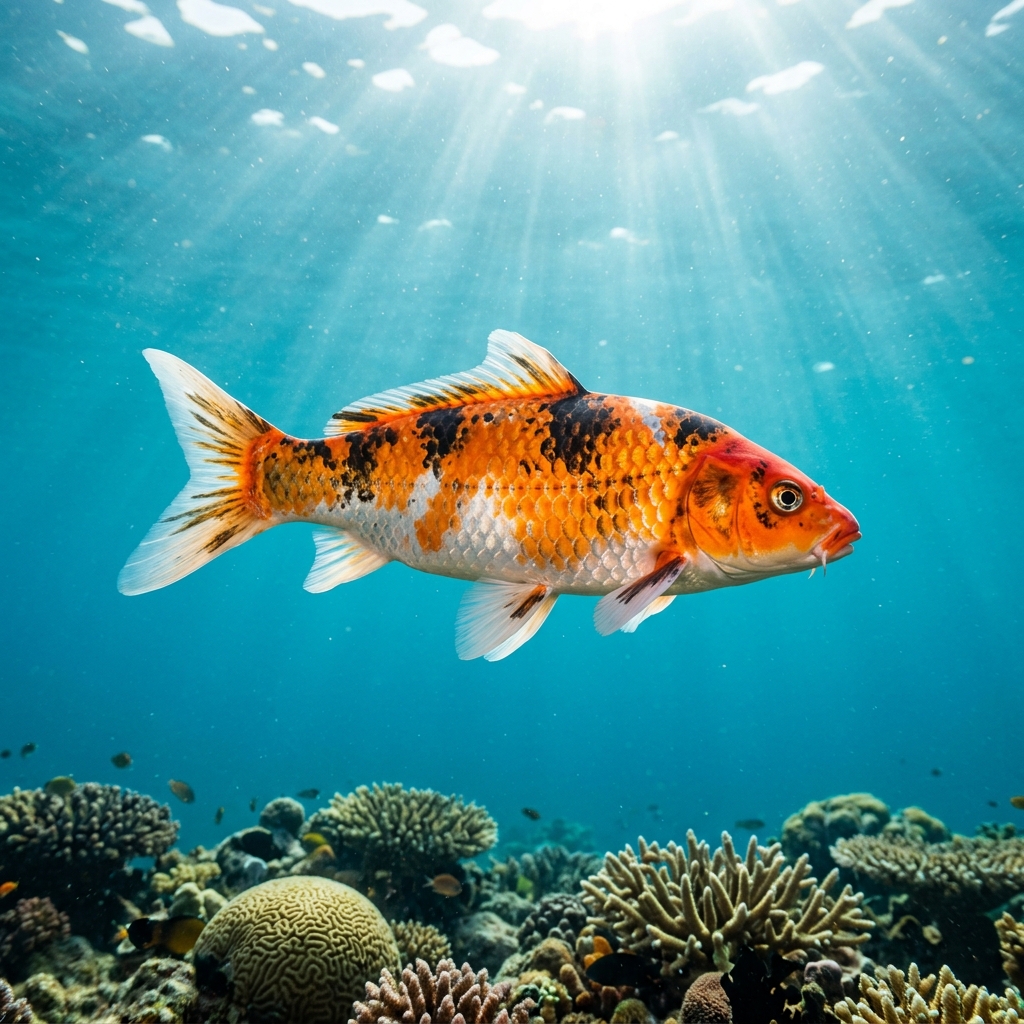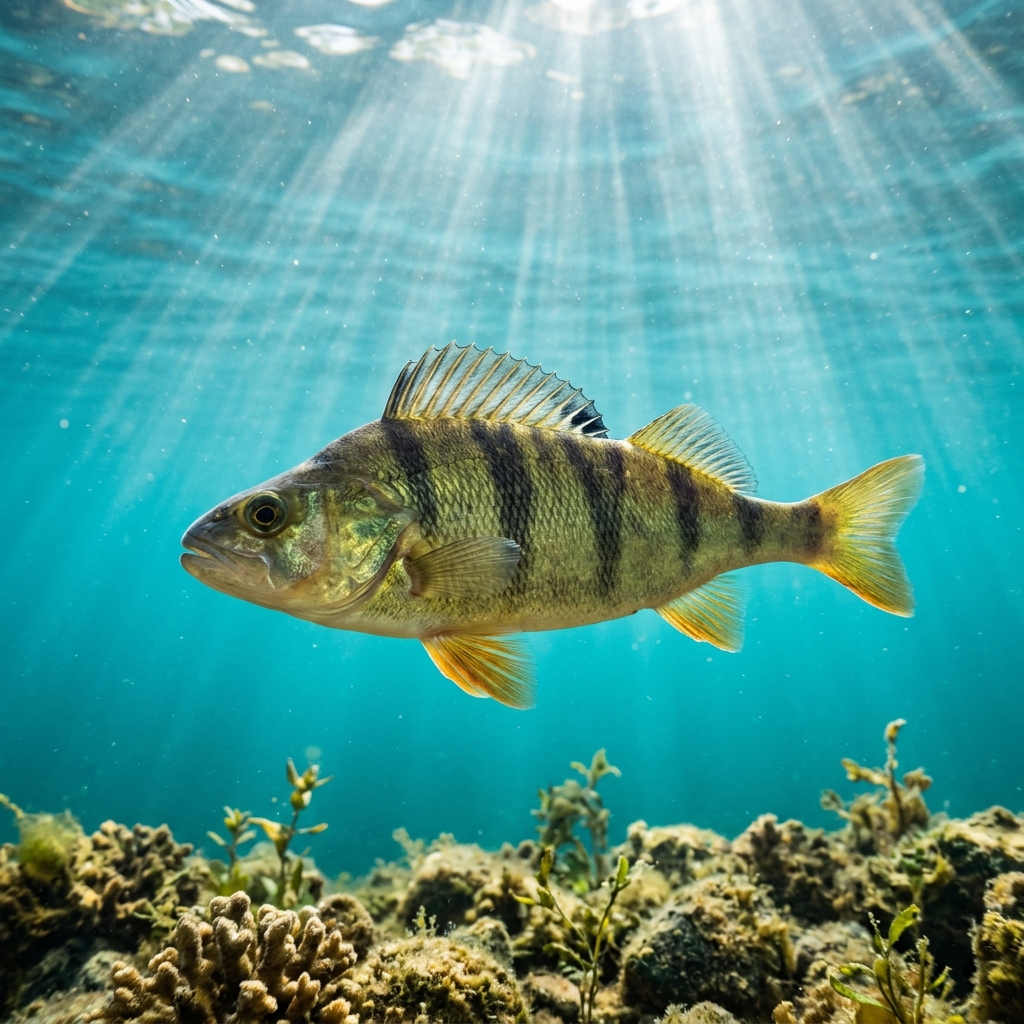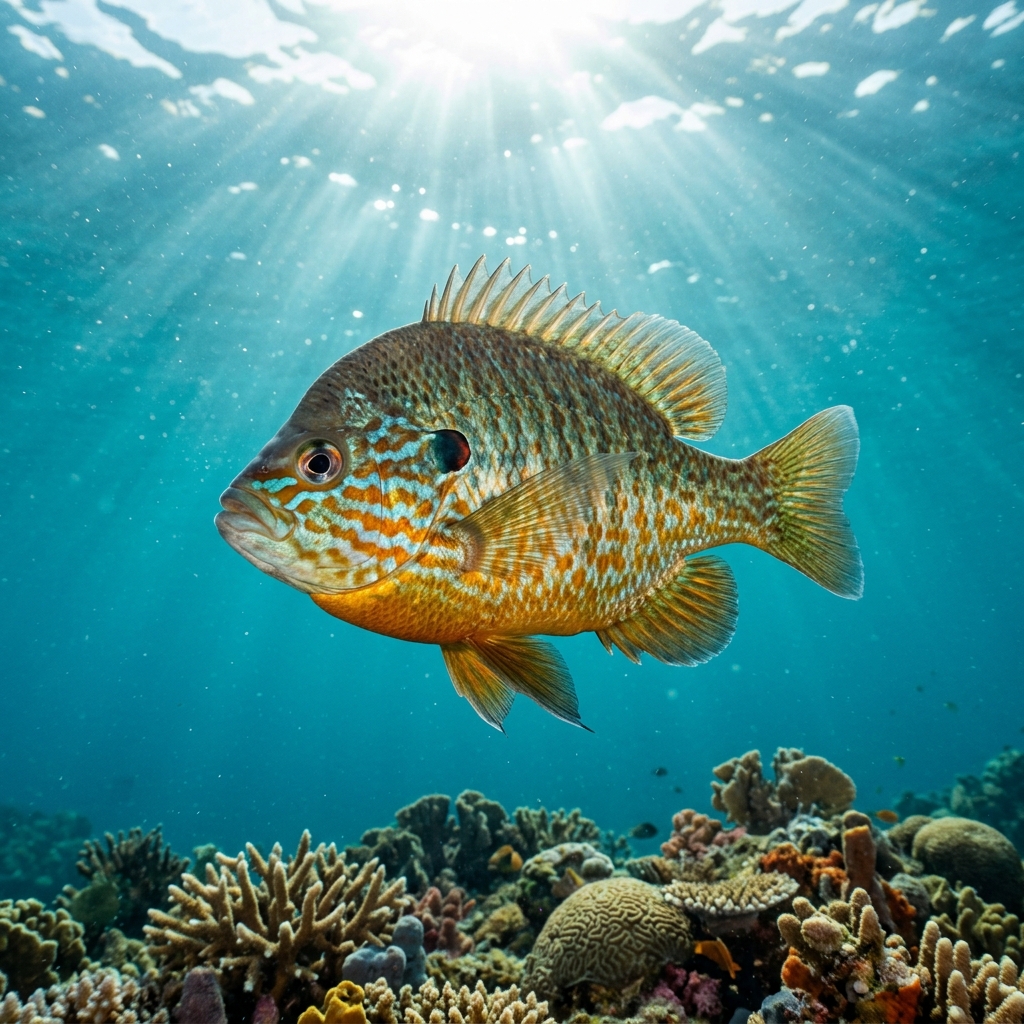
Poeciliidae spp.
Spot mollies in Florida, the Swiss lakes, and beyond. Sightings concentrate Jan, Jun in waters from 16 to 29 °C. Here's where divers find them.
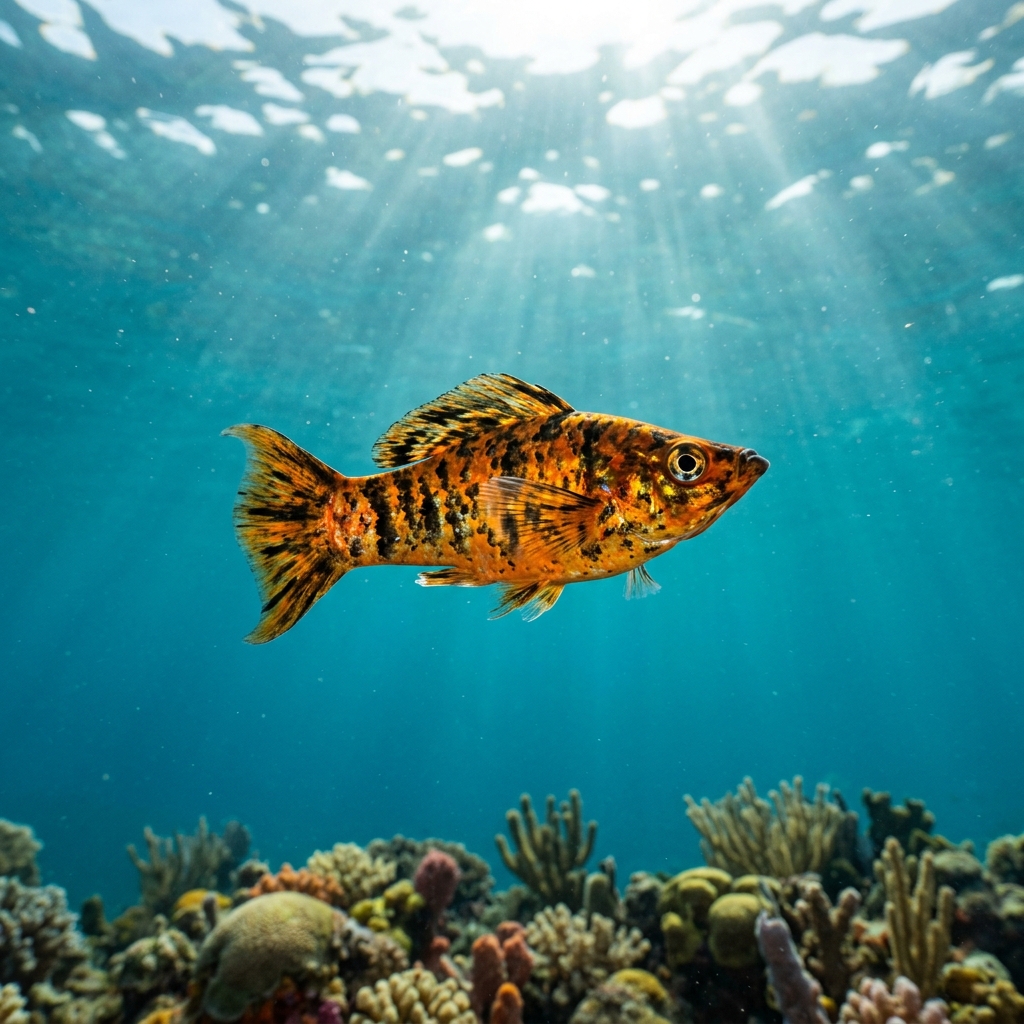
Small, deep-bodied freshwater fish, usually 5-10 cm long, with a rounded tail and a noticeably upturned mouth suited for surface feeding. Colouration varies across the family from silvery-grey and olive to jet black or speckled, but body shape is the reliable field mark. Males carry a dramatically enlarged, sail-like dorsal fin that makes them easy to pick out at a glance; females are plumper-bodied with a standard-sized dorsal fin.
Mollies are active near the surface and in mid-water, often schooling loosely along vegetated margins, reed beds, or rocky shallows where they pick at algae and organic film. They are generally unbothered by slow-moving divers and will hold their position or drift aside calmly rather than bolting. Males frequently spar and display their enlarged dorsal fins to one another, so a patient diver at a good site can watch courtship behaviour play out just a metre or two away.
Mollies are livebearers, meaning females give birth to fully formed, free-swimming young rather than laying eggs. A single female can produce dozens of fry in one brood, which partly explains why populations establish quickly in warm freshwater habitats across the world.
Northern Hemisphere sightings concentrate between January and June, suggesting that early-year and spring dives give the best odds. Their observed temperature range of roughly 16 to 29 °C means they are accessible across a wide variety of freshwater sites as long as you target that seasonal window.
Mollies turn up most consistently in the United States, with Florida and the Southeast leading all regions by a wide margin, followed by freshwater sites across the Central and Mountain West. European freshwater divers encounter them regularly in Switzerland's southern lakes and the Bavarian Alps region of Germany, where lake and river dives through the warmer months offer the best shots. Mexico rounds out the top destinations for divers willing to explore warm-water springs and coastal lagoons.
Mapping where Livebearer is logged…
The strongest diver records come from Florida and the Southeast United States, followed by Swiss southern lakes such as those in Ticino, the Bavarian Alps in Germany, and spring and lagoon sites in Mexico. They are logged across a wide spread of countries, but those regions give you the best chance of a reliable sighting.
In the Northern Hemisphere, diver sightings cluster between January and June. Targeting spring dives in Florida or the warmer Swiss and German lakes during that window should improve your odds considerably.
Look for a small, rounded freshwater fish with a noticeably upturned mouth and a fan-shaped tail. The surest sign is a male's oversized, sail-like dorsal fin, which stands out clearly in the water. Females are rounder-bodied with a standard dorsal fin, and colouration across the family ranges from silvery-olive to solid black.
Most mollies in the wild measure somewhere in the range of 5-10 cm, though some species in the family can reach closer to 15 cm. They are small enough that you might overlook them against a weedy backdrop if you are not actively looking.
No. Mollies pose no risk to divers whatsoever. They are small, peaceful fish that are more likely to ignore you than to react defensively.
Unlike most fish, mollies do not lay eggs. They are livebearers, giving birth to fully formed, swimming young. Females can store sperm and produce multiple broods from a single mating, which makes populations grow quickly in suitable habitat.
Site and sighting data is aggregated from diver logs, iNaturalist and GBIF. For taxonomy and conservation status:
Sun Perch
2,182 sites