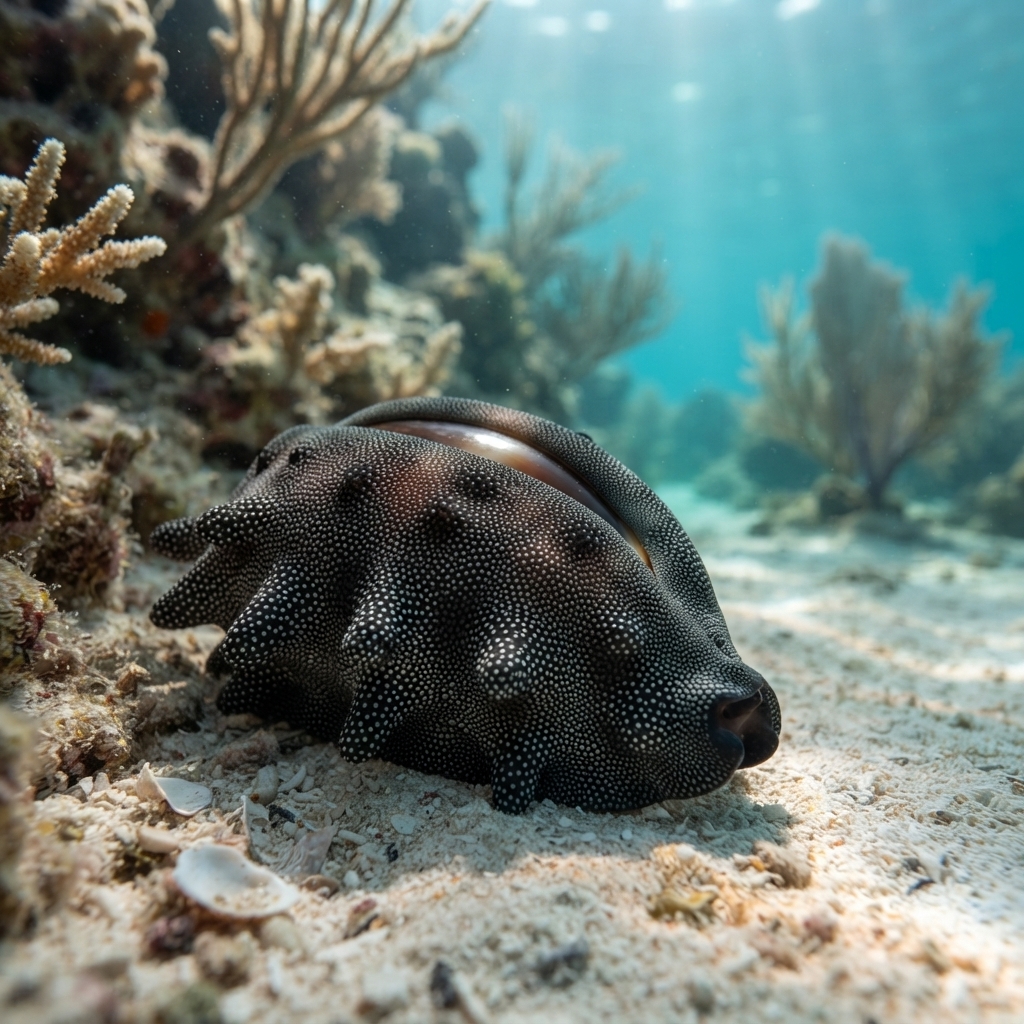
Talparia talpa
Rare but real: mole cowry turns up year-round on reefs in Peninsular Malaysia's East Coast and the Philippine Visayas, 22 to 29C.
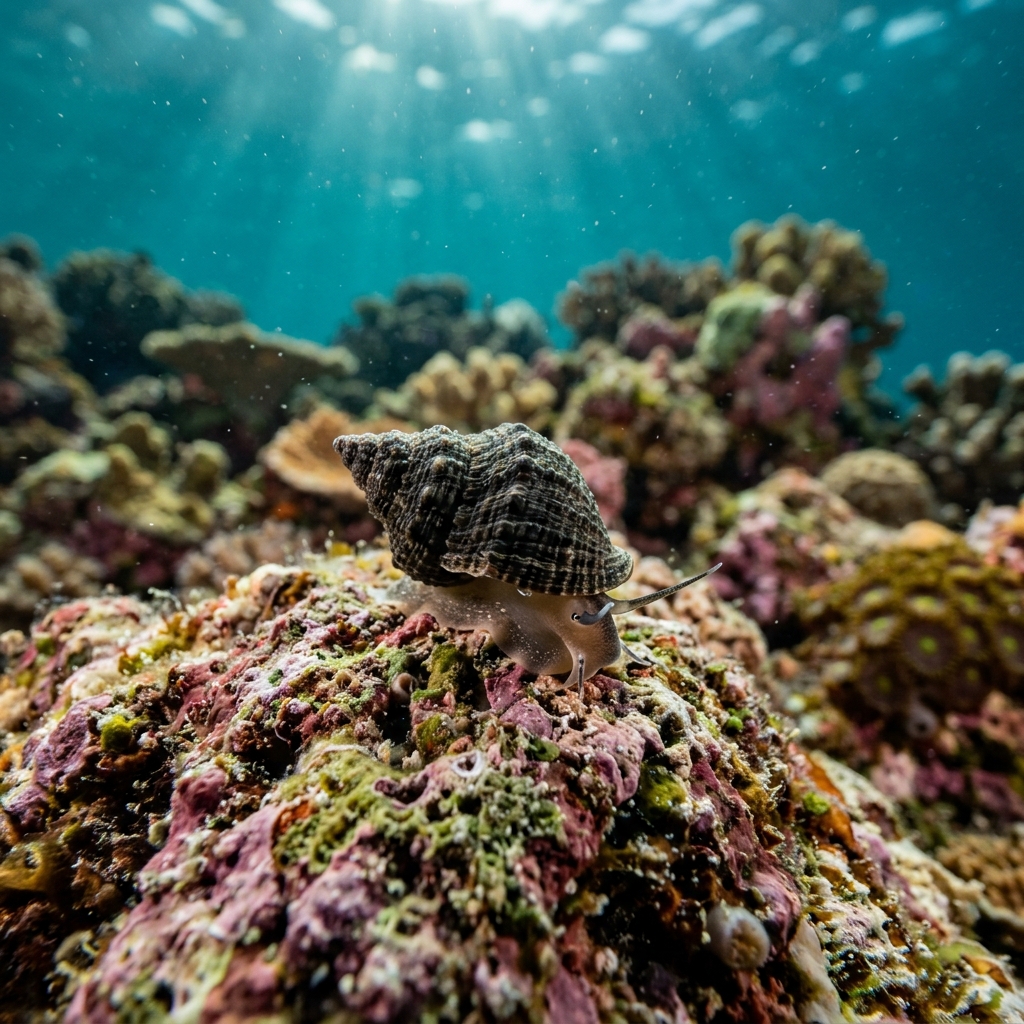
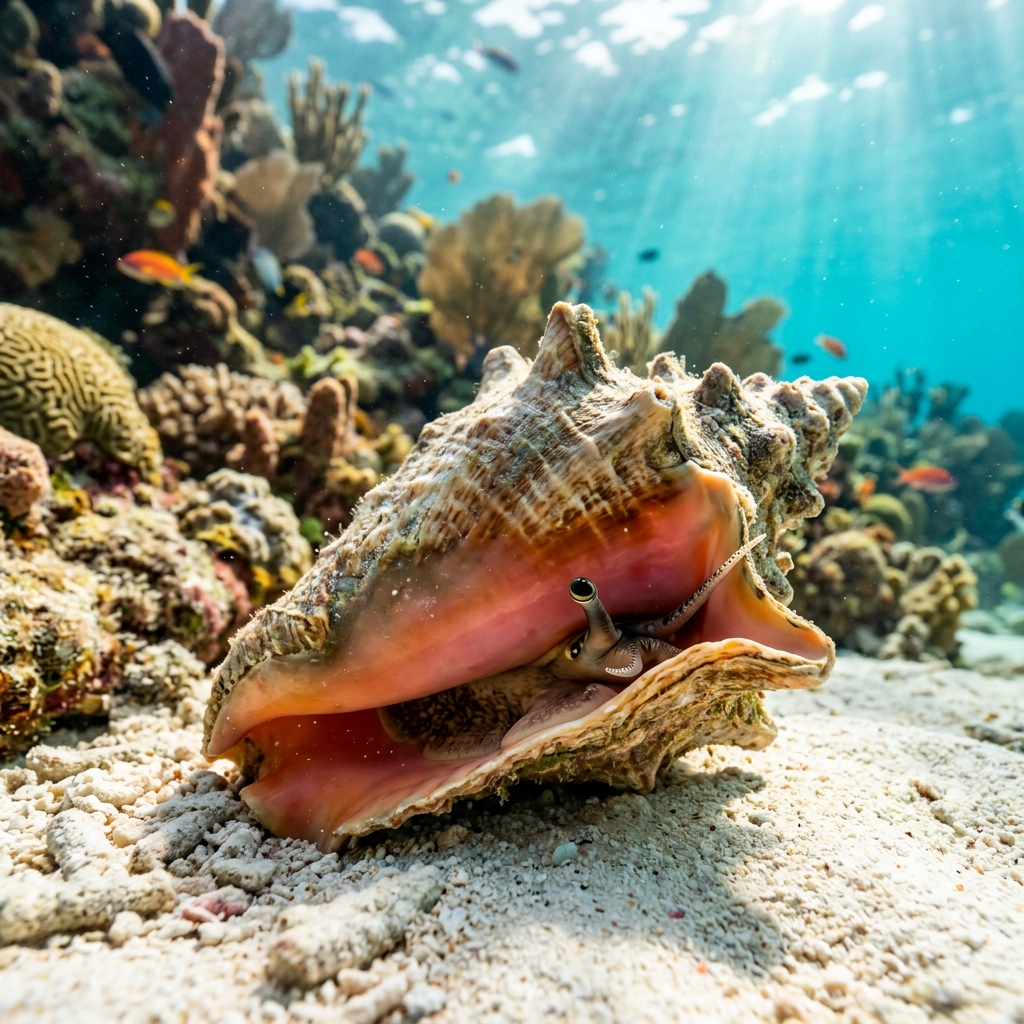
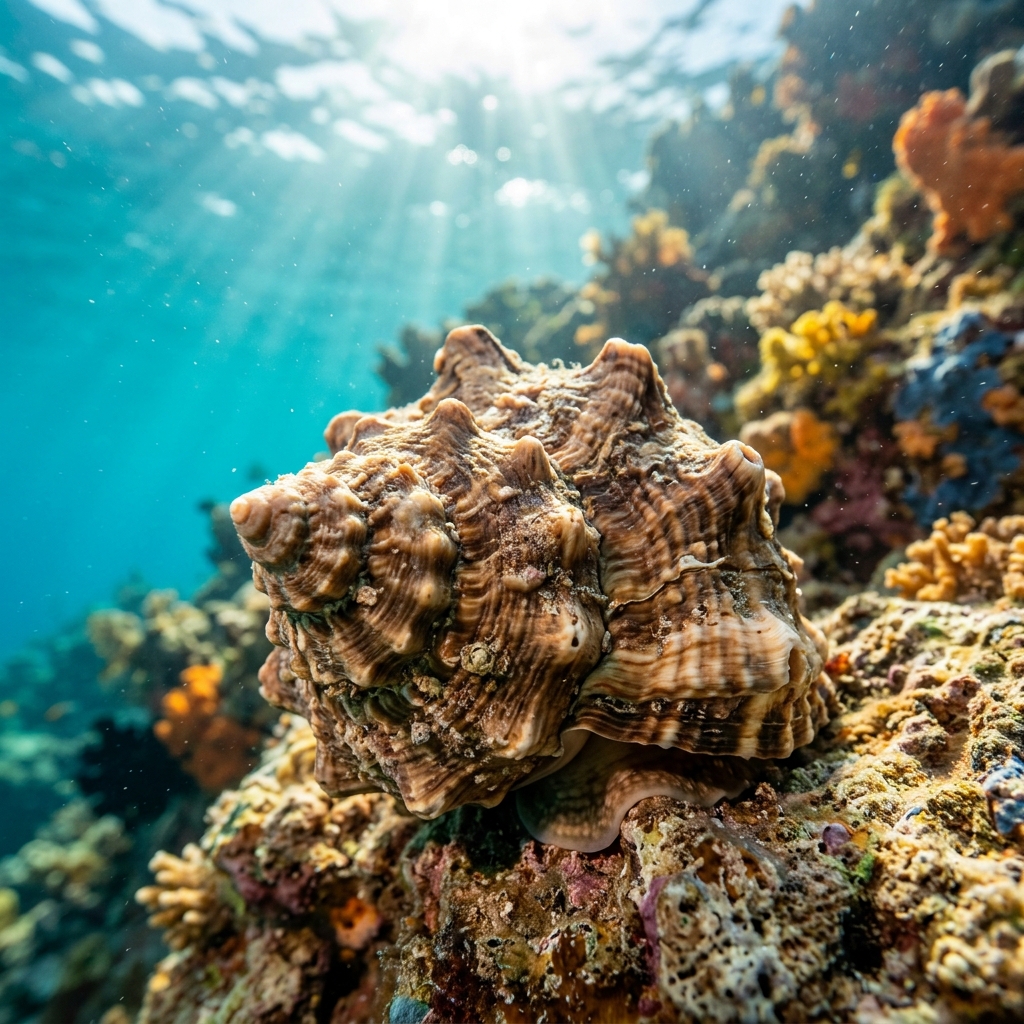
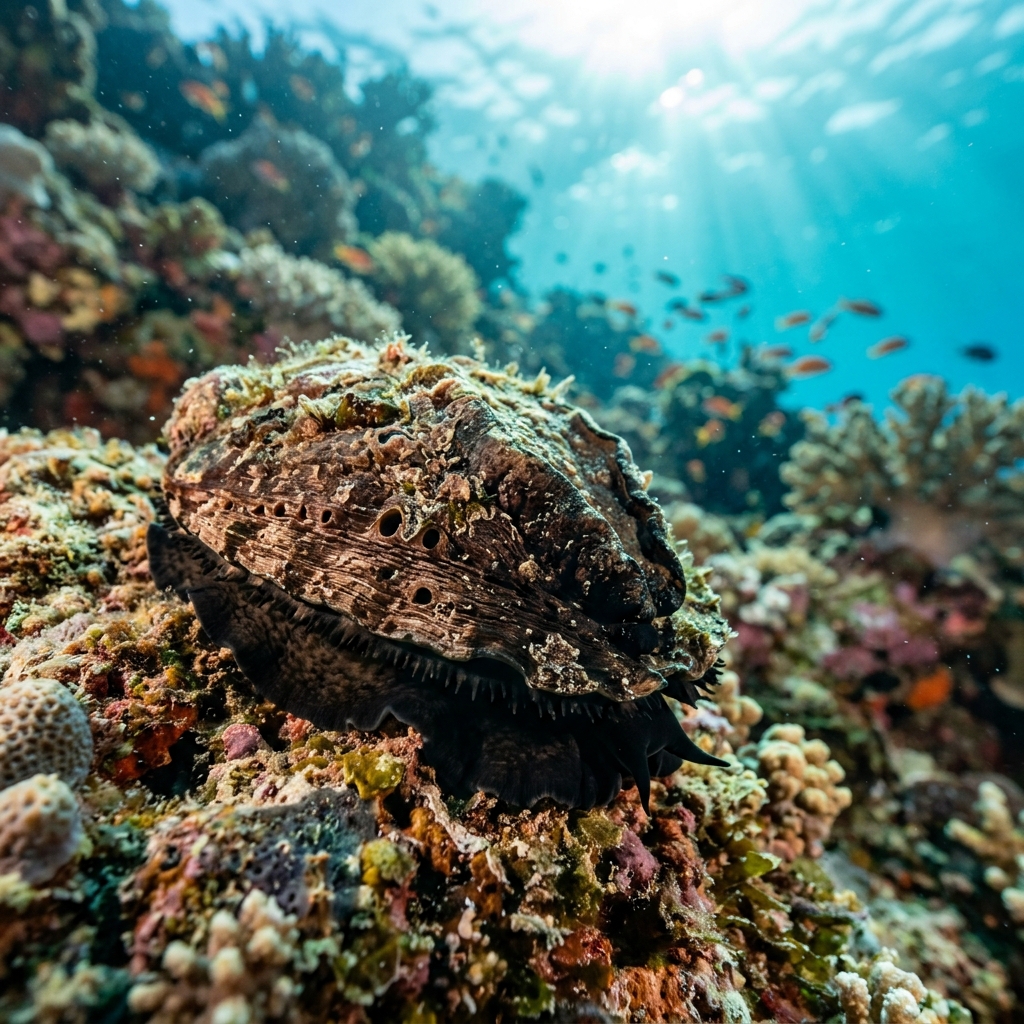
Look for a smooth, glossy oval shell about 7cm long, dark brown to almost black with a pale margin running around the shell's edge. When active, a fleshy mantle (the soft tissue that can extend over the shell) spreads out over the surface, often mottled or papillate, temporarily hiding the shine underneath. The underside shows the classic cowry slit-shaped opening lined with small teeth, but you'll mostly clock this one by its dark, domed silhouette tucked against rock or coral rubble.
Expect a slow-moving, nocturnal grazer that spends daylight hours wedged into crevices, under coral ledges or beneath rubble, often with only the shell's edge visible. Divers most often find it on night dives when it's out foraging on algae and detritus across hard substrate. It won't react to a torch beam or a diver nearby beyond retracting its mantle, so a careful, patient look is all it takes.
That fleshy mantle isn't just camouflage, it's actively secreted to keep the shell's glassy finish polished and protected from erosion, which is why well-fed individuals often show a near-mirror shine once the mantle withdraws.
No clear seasonal pattern shows up in the data, and with a comfortable range of 21.8 to 28.6C it's a year-round find on the reefs where it occurs. Treat any dive at these sites as a fair shot, day or night.
Most reliably logged in Peninsular Malaysia's East Coast, which accounts for the bulk of recorded sightings, with a solid secondary population through the Visayas in the Philippines. Hong Kong's Sai Kung region also turns up occasional finds, making it a realistic target on Southeast Asian muck and reef dives rather than a single-country specialty.
Mapping where Mole Cowrie is logged…
Best logged along Peninsular Malaysia's East Coast, with further sightings through the Visayas in the Philippines and occasional finds around Sai Kung, Hong Kong.
There's no strong season in the sightings data, and the water temperatures it's found in (21.8 to 28.6C) hold year-round on these reefs, so any month is workable.
Look for a glossy dark brown to black oval shell around 7cm long with a pale rim, often partly covered by a mottled fleshy mantle when the animal is active. It's usually tucked into crevices or rubble rather than out in the open.
Around 7cm at full size, a compact shell that's easy to miss unless you're scanning ledges and rubble closely on a night dive.
Yes, most dive sites that log this species report it as rare, with a smaller number logging it as uncommon. It's a find worth pointing out to your buddy rather than an everyday sighting.
Site and sighting data is aggregated from diver logs, iNaturalist and GBIF. For taxonomy and conservation status:
Triton Shell
2,297 sites