Erronea errones
A 3cm shelled snail turning up uncommonly on reefs in Queensland and Bali, active year-round in warm water from 22 to 29C.
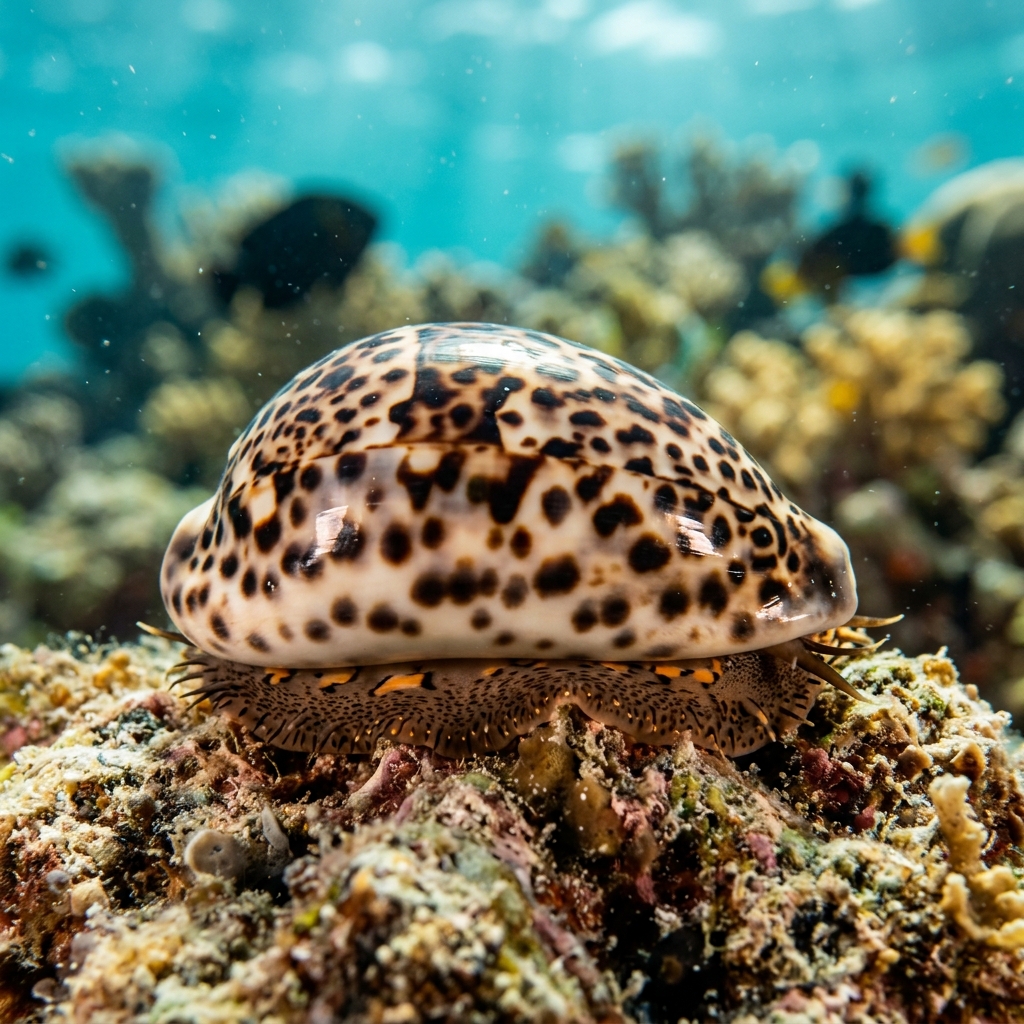
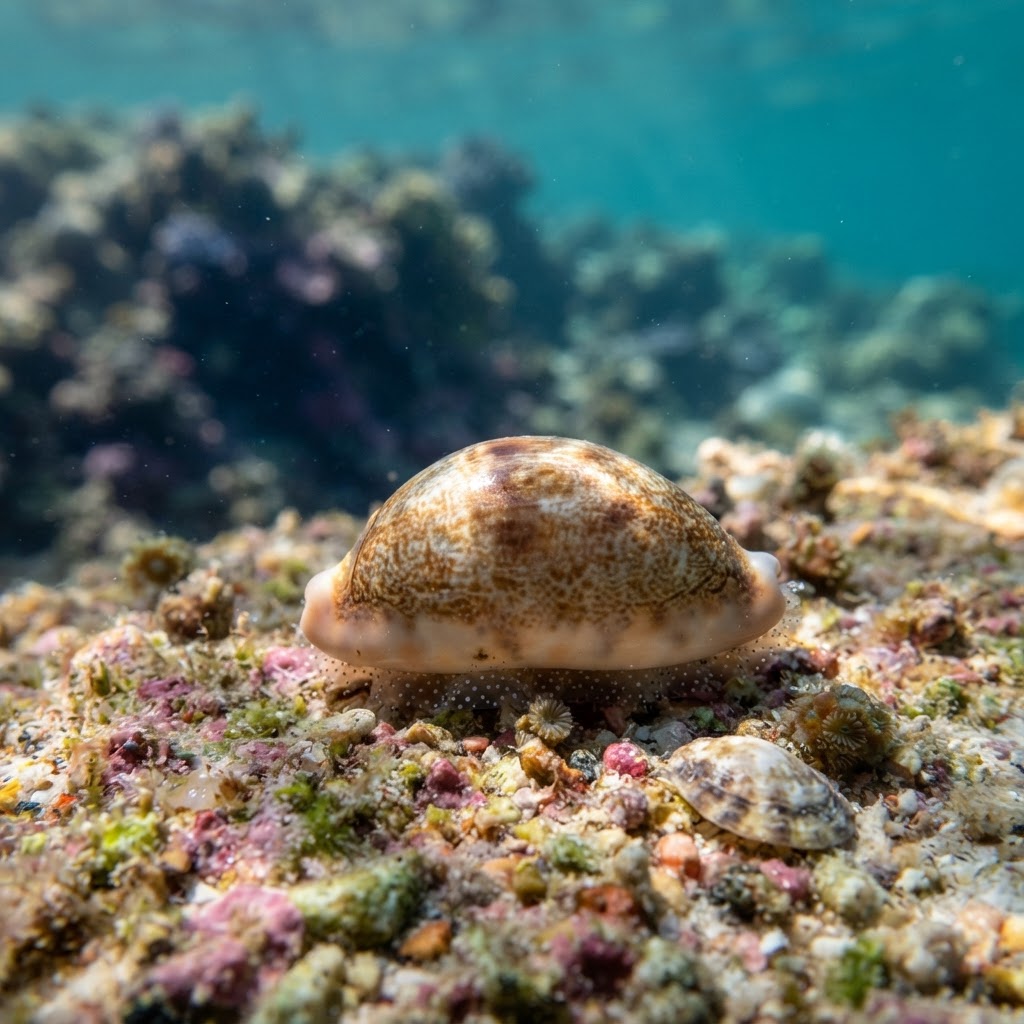
Look for a small, glossy oval shell about 3cm long with a smooth, polished surface and a pale to tan background covered in fine brown mottling or speckling. The shell has the classic cowrie shape: a rounded dome tapering to a narrow slit-like opening on the underside lined with tiny teeth. When active, the mantle (the soft tissue) may partly or fully cover the shell, giving it a fleshy, mottled look rather than a hard glossy one. It is easy to overlook among rubble and algae given its size and camouflage pattern.
Divers usually find this cowrie tucked into crevices, under rubble, or grazing slowly over algae-covered surfaces and hard substrate during the day. It moves at a snail's pace (literally) and shows little to no reaction to divers, relying on its camouflaged mantle and shell pattern rather than fleeing. Night dives can turn up more active individuals out foraging in the open.
Like other cowries, it can extend its mantle tissue up and over the shell while moving or feeding, which is why a glossy shell one moment can look like a mottled fleshy blob the next.
No clear seasonal pattern shows up in the data, and its comfortable temperature range of 22.1 to 29.4C spans typical year-round conditions on the reefs where it is found. Treat it as a species you might encounter on any dive in Queensland, Bali, or similar warm-water sites, any month.
Most commonly logged on reefs in Queensland, Australia and Bali, Indonesia, which together account for the bulk of recorded sightings. Smaller but reliable numbers turn up around New South Wales, Australia, the Southern Islands of Singapore, and Nouméa in New Caledonia. Across all these sites it is generally logged as uncommon to rare, so finding one takes a bit of patient rubble and reef-crevice searching rather than a guaranteed spot.
Mapping where Mistaken Cowrie is logged…
It is most reliably logged on reefs in Queensland, Australia and Bali, Indonesia, with smaller numbers of sightings in New South Wales, Singapore's Southern Islands, and New Caledonia.
There is no strong seasonal pattern in sightings, and its warm-water niche of roughly 22 to 29C is present year-round on the reefs where it is found, so any season works.
Look for a small glossy oval shell around 3cm long with a tan or pale background covered in fine brown mottling, and a narrow toothed opening on the underside. The mantle can cover the shell entirely when the snail is active, giving it a fleshy speckled look instead of a hard glossy one.
They typically reach about 3cm in shell length, making them one of the smaller cowries divers spot on the reef.
No, this species poses no danger to divers. It is a slow-moving, shelled snail with no venom or defensive threat to humans.
It can extend its soft mantle tissue completely over its shell while crawling or feeding, temporarily hiding the glossy shell beneath a mottled, fleshy exterior.
Site and sighting data is aggregated from diver logs, iNaturalist and GBIF. For taxonomy and conservation status:
Elysia Timida
573 sites