Nembrotha milleri
Common on reefs in Visayas, Sabah and Zanzibar, this nudibranch turns up year-round in 25-31C water.
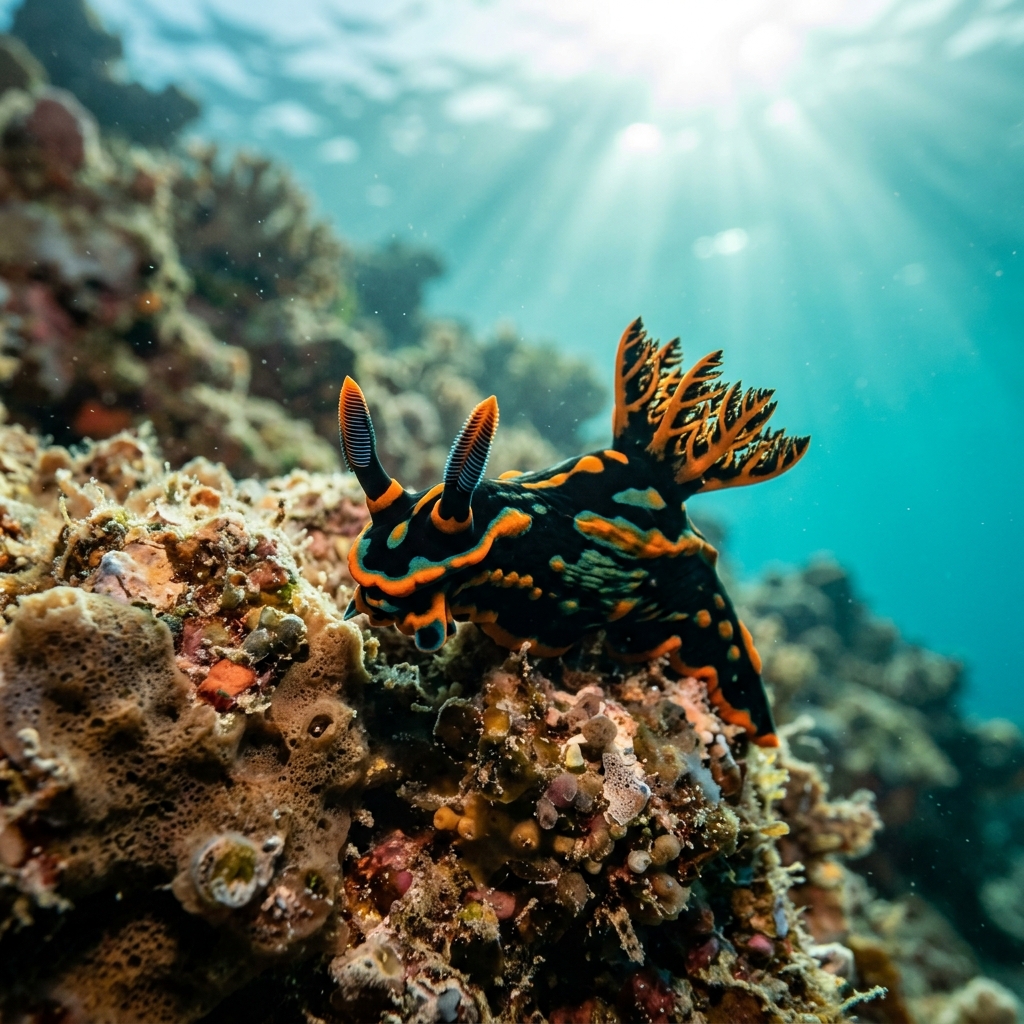
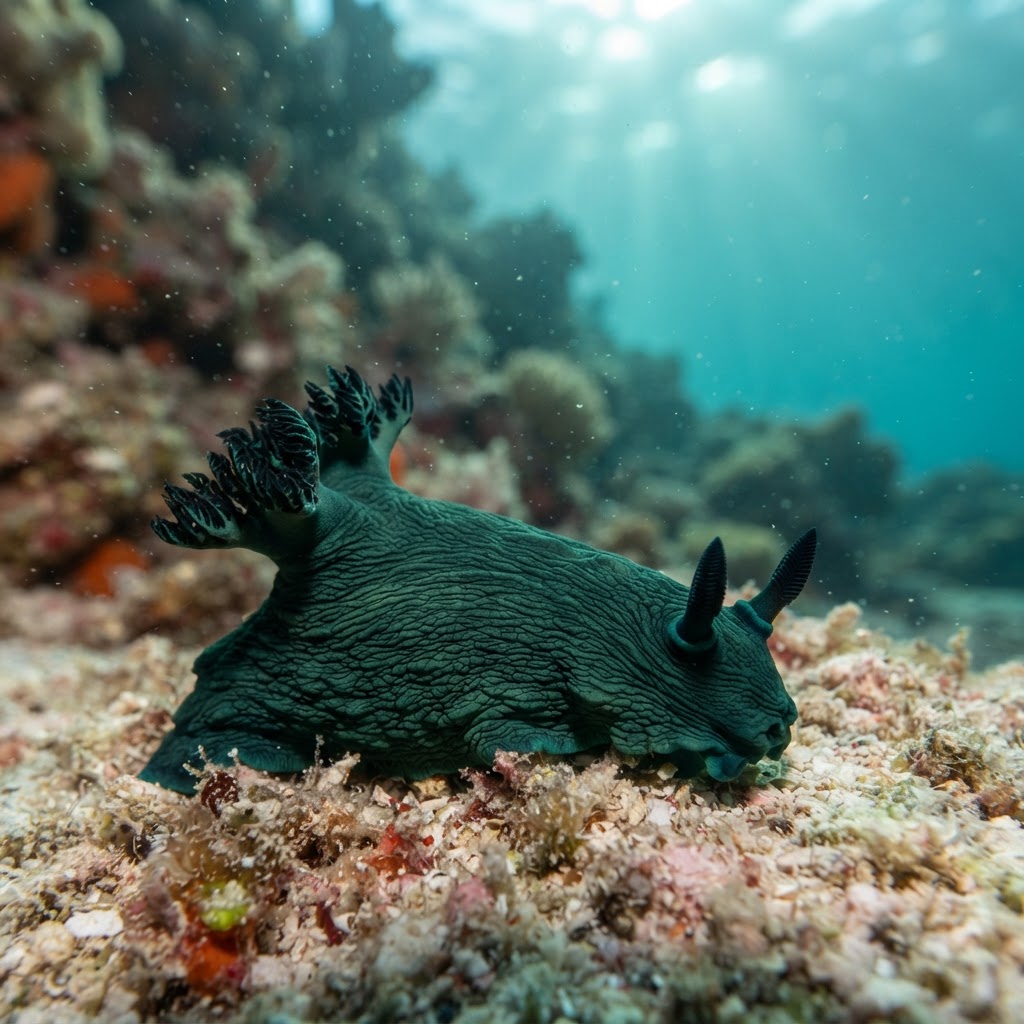
A slug-bodied nudibranch with a dark green to black body dotted with pale flecks, set off by bright orange tips on its rhinophores (the paired sensory horns) and gill cluster. It moves slowly across the substrate, rarely more than a few centimetres long, with the orange gill plume flaring at the rear like a small feathered crown. That orange-on-black colour combination is the quickest giveaway against the reef.
Divers typically find it parked on sponges or grazing slowly across rubble and reef substrate, using its rasping mouthparts to feed on the specific sponges and tunicates it targets. It shows no real reaction to divers, no flight response, no defensive display, just a slow crawl that makes it an easy macro subject once spotted. Most sightings come during the day on shallow to mid-depth reef and muck sites rather than in open water.
Like other Nembrotha species, it likely recycles toxic compounds from the sponges and tunicates it eats into its own tissue, which is thought to explain why it has no obvious predator-deterrent behaviour and no need to flee when disturbed.
No clear seasonal pattern shows up in the sightings, and the species sits comfortably in a wide 25.4 to 31.4C range, so it is effectively a year-round find on the tropical reefs where it occurs. Plan the trip around the destination's general dive season rather than around this species specifically.
Reef neighbours a diver could mistake it for. Use the identification notes above to tell them apart.
Most reliably logged in the Philippines, especially Visayas and Luzon, and in Sabah, Malaysia, where divers report it as a common find on muck and reef dives. Zanzibar and Mafia Island in Tanzania hold a solid secondary population, with occasional sightings also reported from Western Australia and Bali.
Mapping where Miller's Nembrotha is logged…
It shows up most reliably in the Philippines, particularly Visayas and Luzon, and in Sabah, Malaysia. Zanzibar and Mafia Island in Tanzania are the next best bet, with scattered records from Western Australia and Bali.
There is no strong season in the sightings data, and it tolerates a wide temperature range from about 25 to 31C, so it turns up year-round wherever its reef habitat exists.
Look for a small, slow-moving nudibranch with a dark green to black body, pale speckling, and bright orange tips on both the rhinophores and the rear gill cluster. That orange accent against a dark body is the main feature to key on.
No, it poses no threat to divers. It is a slow, stationary reef grazer with no sting or bite risk, safe to photograph up close without disturbing it.
It likely absorbs chemical defences from the sponges and tunicates it grazes on, which may be why it moves so unhurriedly across the reef with little concern for passing divers or predators.
Site and sighting data is aggregated from diver logs, iNaturalist and GBIF. For taxonomy and conservation status:
Light-spotted Aegires
3,168 sites