Chelonodon patoca
Pale, spotted puffer found on sandy reef flats in Goa and Sai Kung; year-round in 23 to 30C water, most often logged as uncommon.
Safety warning
Its skin and internal organs carry tetrodotoxin, a potent nerve toxin, so the risk to divers is essentially zero if you simply look and do not touch, handle, or provoke it into inflating. The real danger is entirely on the ingestion side, not the diving side, but keep hands off regardless.
Handle with care
Toxic if eatenGeneral first-aid guidance, not a substitute for professional medical care. In an emergency, call your local emergency number.
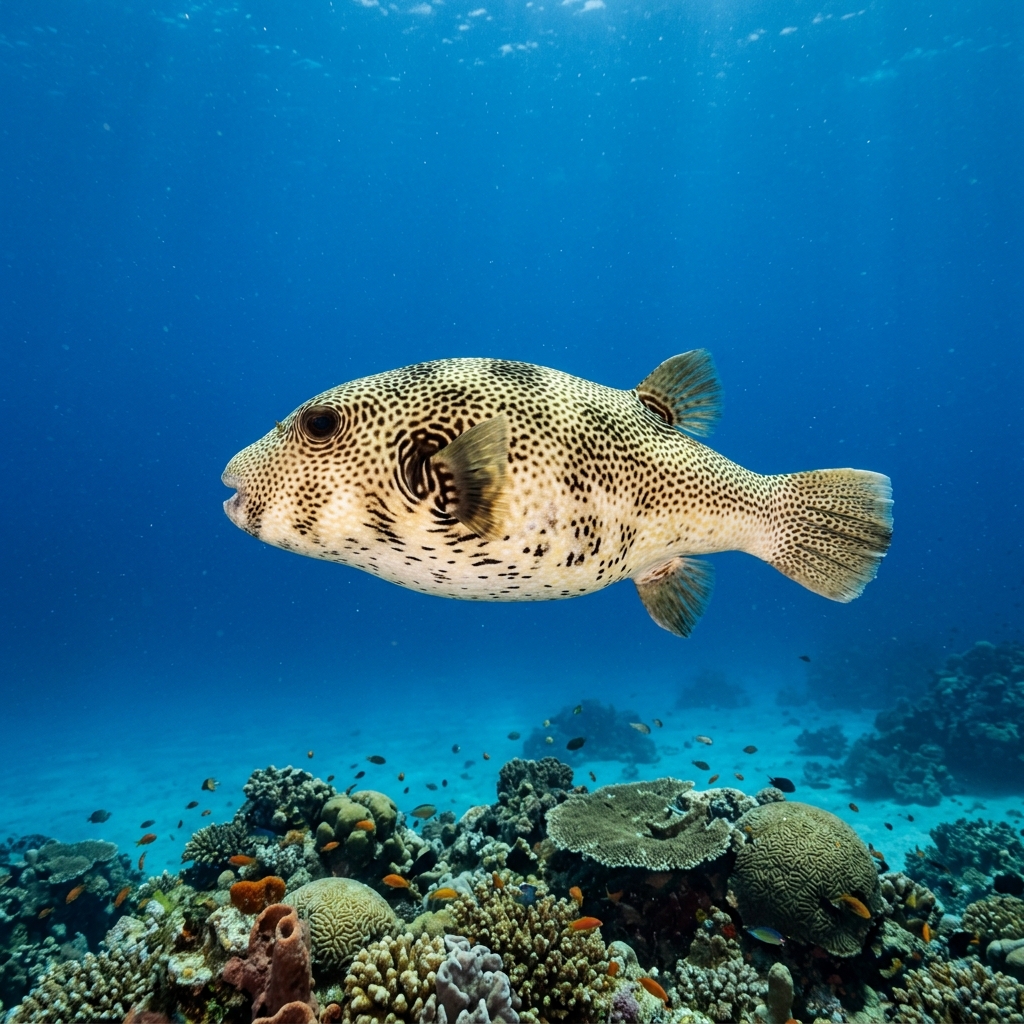
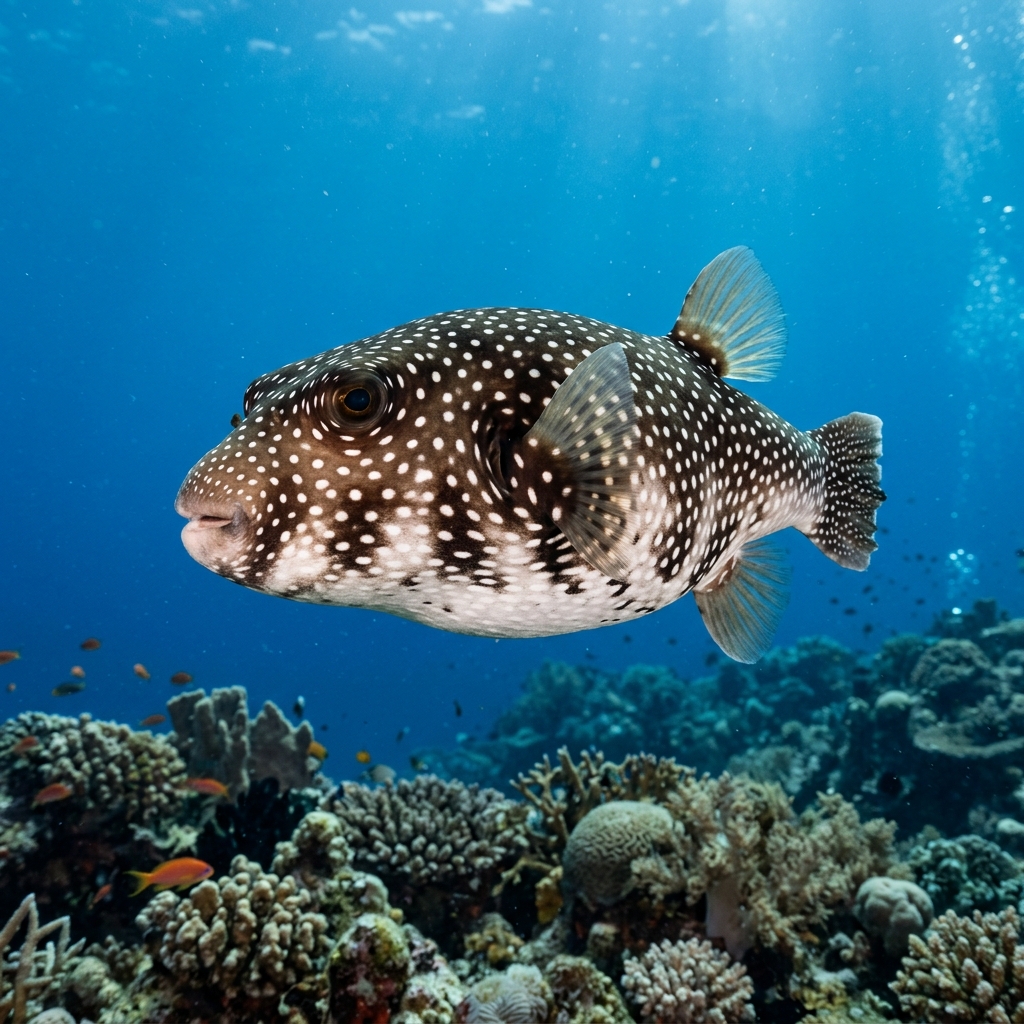
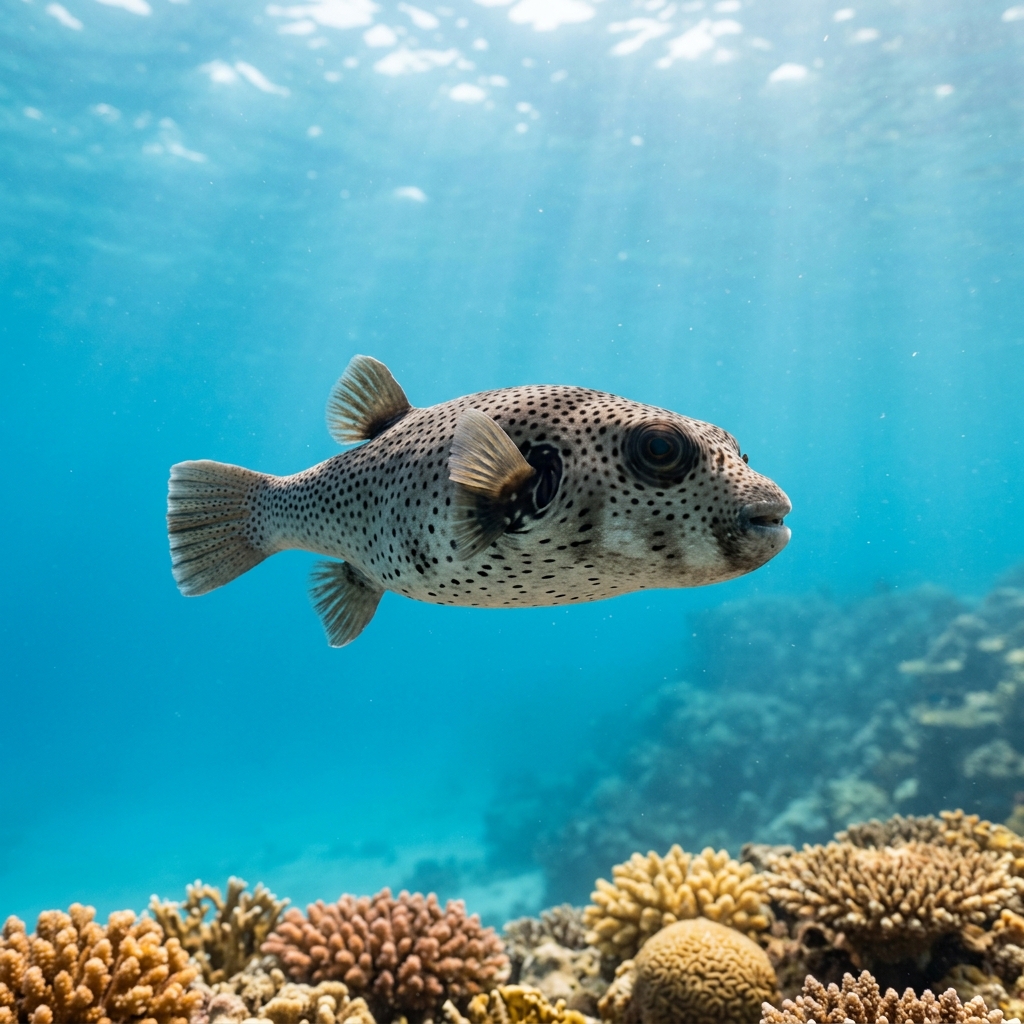
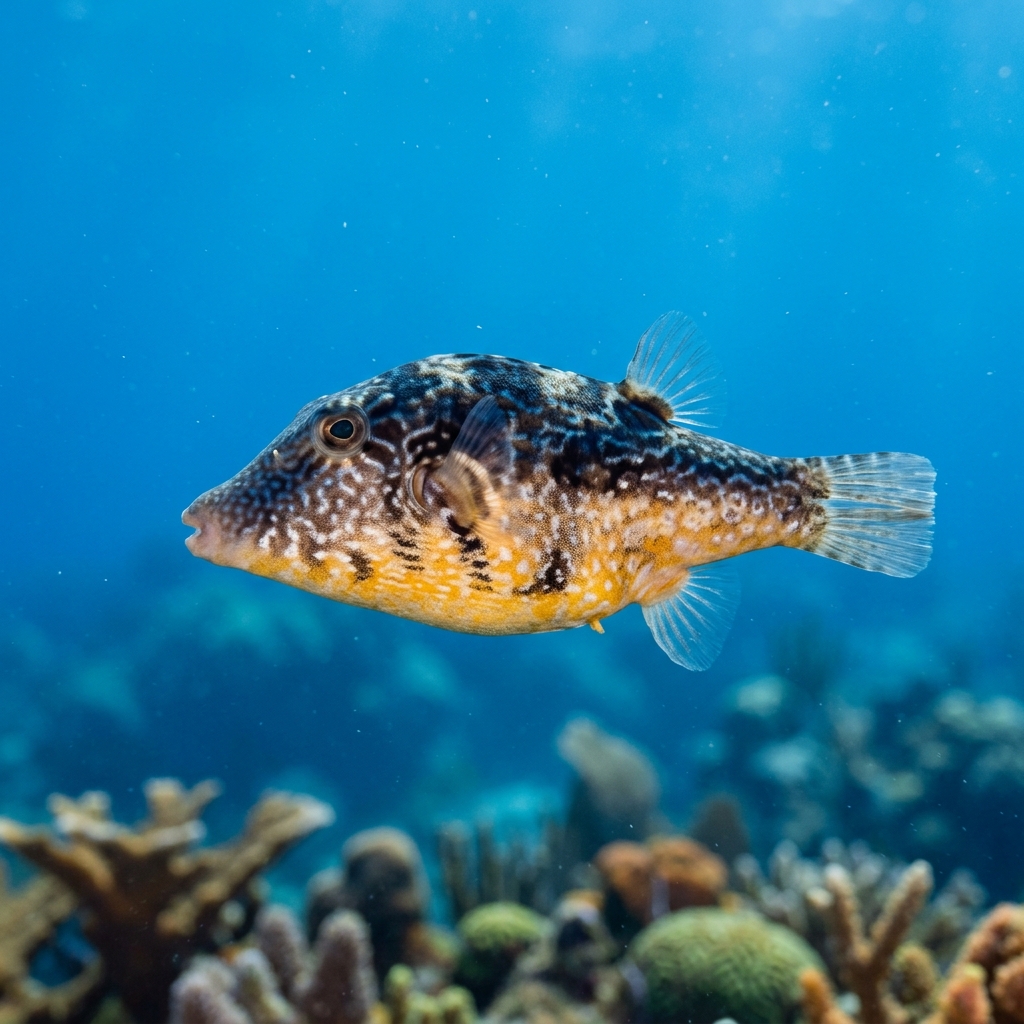
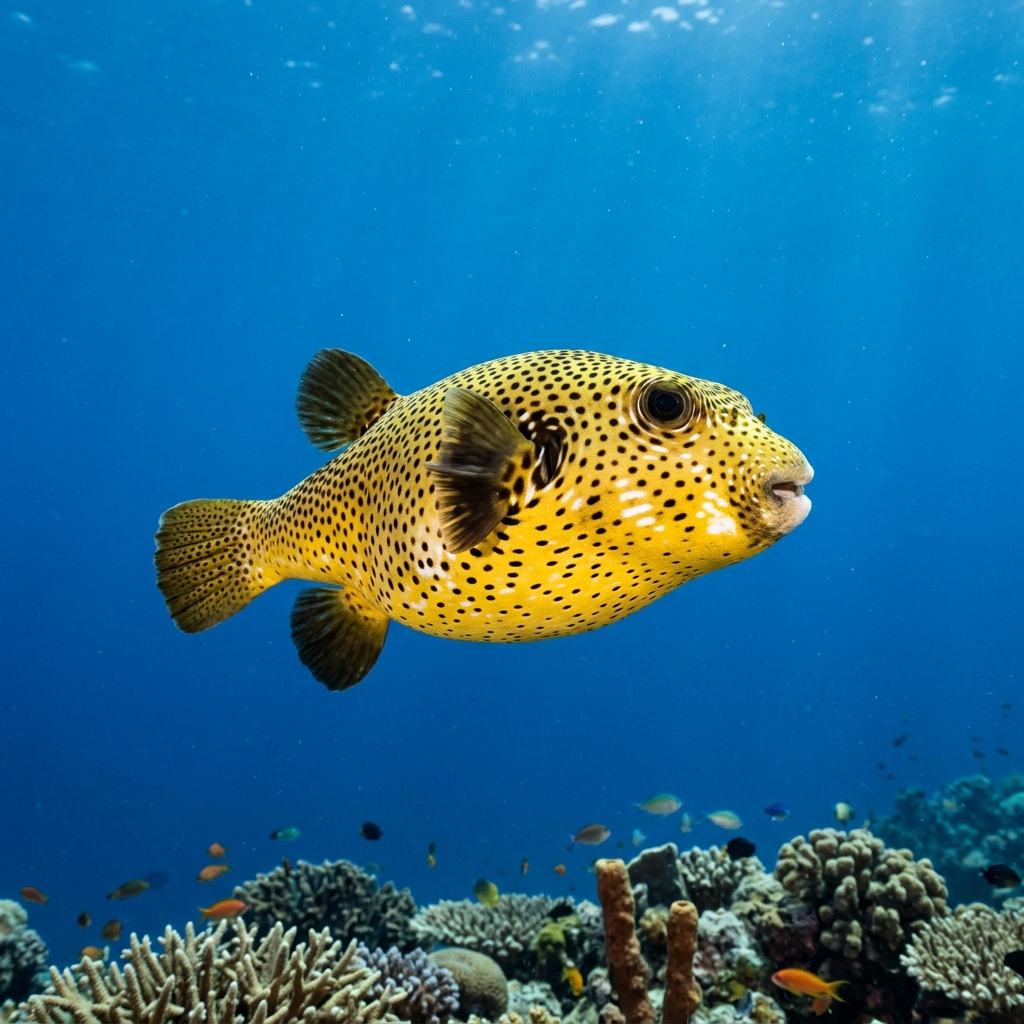
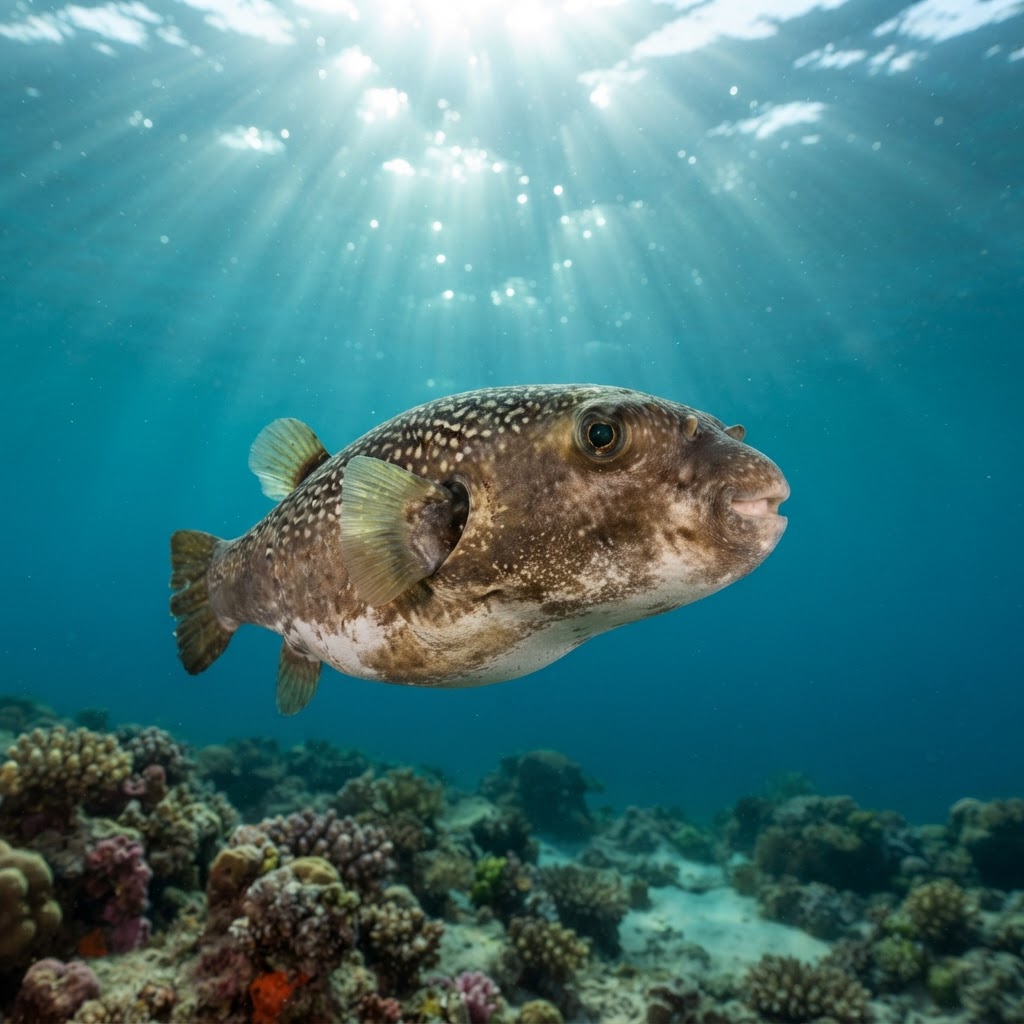
Stocky, rounded body in pale grey to olive-green, covered head to tail in small white to cream spots that give it its name. No stripes or bold blotches to speak of, which is itself a clue when comparing against boldly patterned puffers. Swims with slow, deliberate fin strokes rather than darting, and the belly can visibly balloon if it feels threatened.
Usually seen cruising low and slow over sand patches or silty reef edges, often alone, picking around the bottom rather than schooling or holding station in current. It is not a fast swimmer and tends to tolerate a diver's approach for a while before easing off, rather than bolting immediately. Most logs describe it as an uncommon but steady find rather than something divers stumble on in numbers.
Like other pufferfish, it can inflate itself with water when stressed, a defence that makes it a much harder mouthful for a predator to swallow and also why it should never be squeezed or grabbed underwater.
Sightings show no clear seasonal pattern, and with a comfortable range of 23.3 to 29.7C it seems to sit on reefs and sandy flats year-round rather than showing up for a particular month.
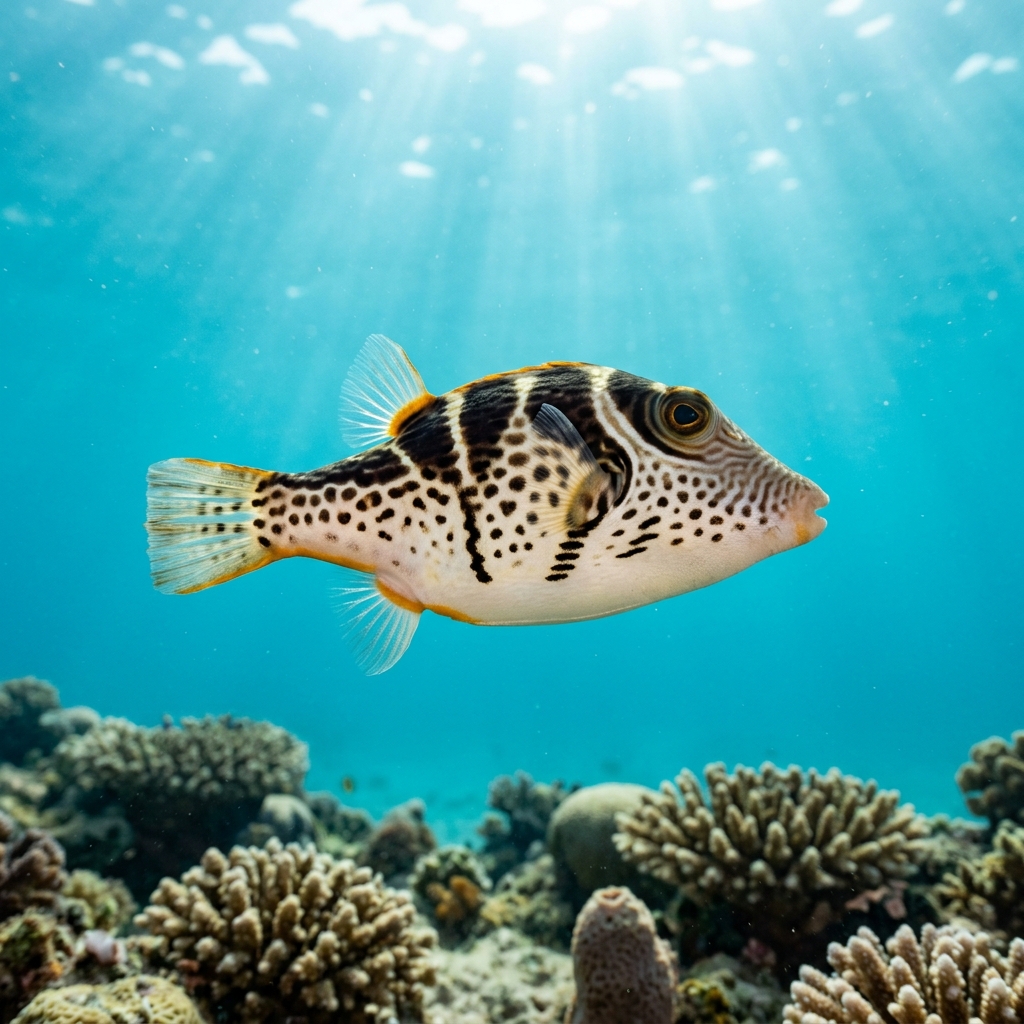
Reef neighbours a diver could mistake it for. Use the identification notes above to tell them apart.
Most reliably logged in Goa, India, where it turns up across a wide spread of sites, with a second reliable pocket around Sai Kung in Hong Kong. It has also been recorded in Queensland, Australia, though far less often than in these two hotspots.
Mapping where Milkspotted Puffer is logged…
Goa in India is the strongest area for sightings, followed by Sai Kung in Hong Kong. It has also been recorded off Queensland, Australia, though far less frequently.
There is no strong seasonal pattern in the sightings, and it tolerates a broad 23.3 to 29.7C range, so it is best treated as a year-round find on the reefs where it occurs.
Not if you leave it alone. It carries tetrodotoxin in its skin and organs, which is dangerous if ingested, but poses no real threat to a diver who simply observes without touching or handling it.
Look for a stocky, rounded body in pale grey to olive-green covered evenly in small white spots, with no bold stripes or large blotches. It moves slowly over sand and silty reef edges rather than schooling or darting.
When threatened it inflates its body with water, ballooning up so it becomes a much harder target for a predator to grab or swallow, a trick shared across the pufferfish family.
Site and sighting data is aggregated from diver logs, iNaturalist and GBIF. For taxonomy and conservation status:
Valentini Pufferfish
2,830 sites