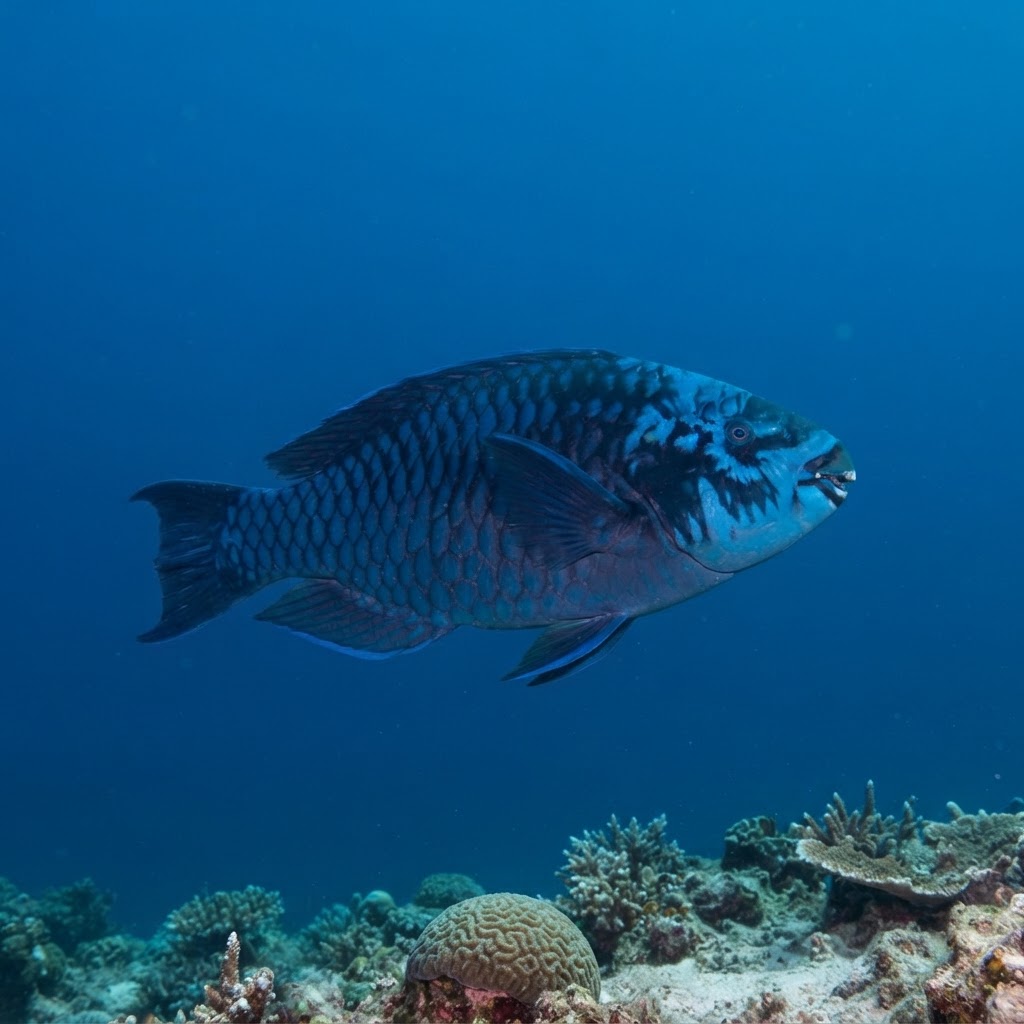
Scarus coelestinus
Slate-blue reef fish with a pale-yellow snout, commonly logged in Florida and Honduras's Bay Islands year-round.
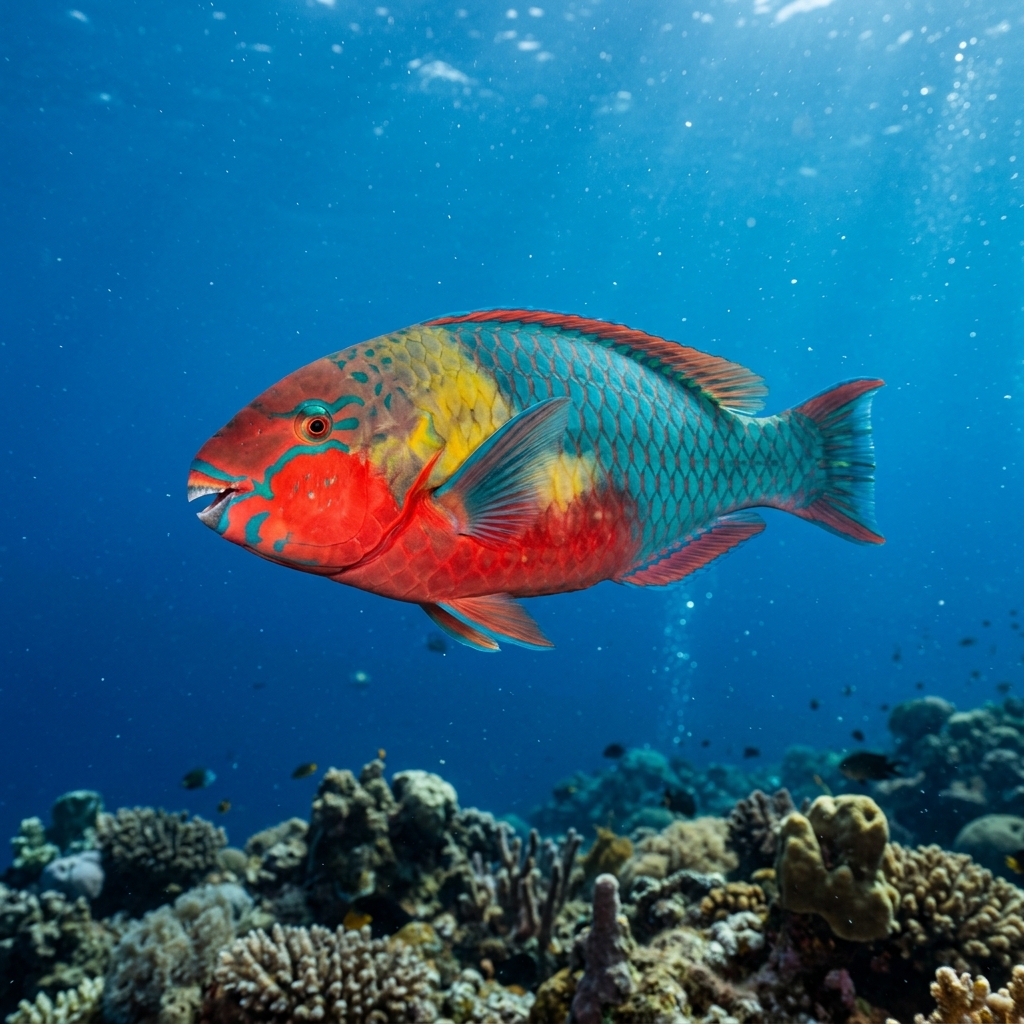
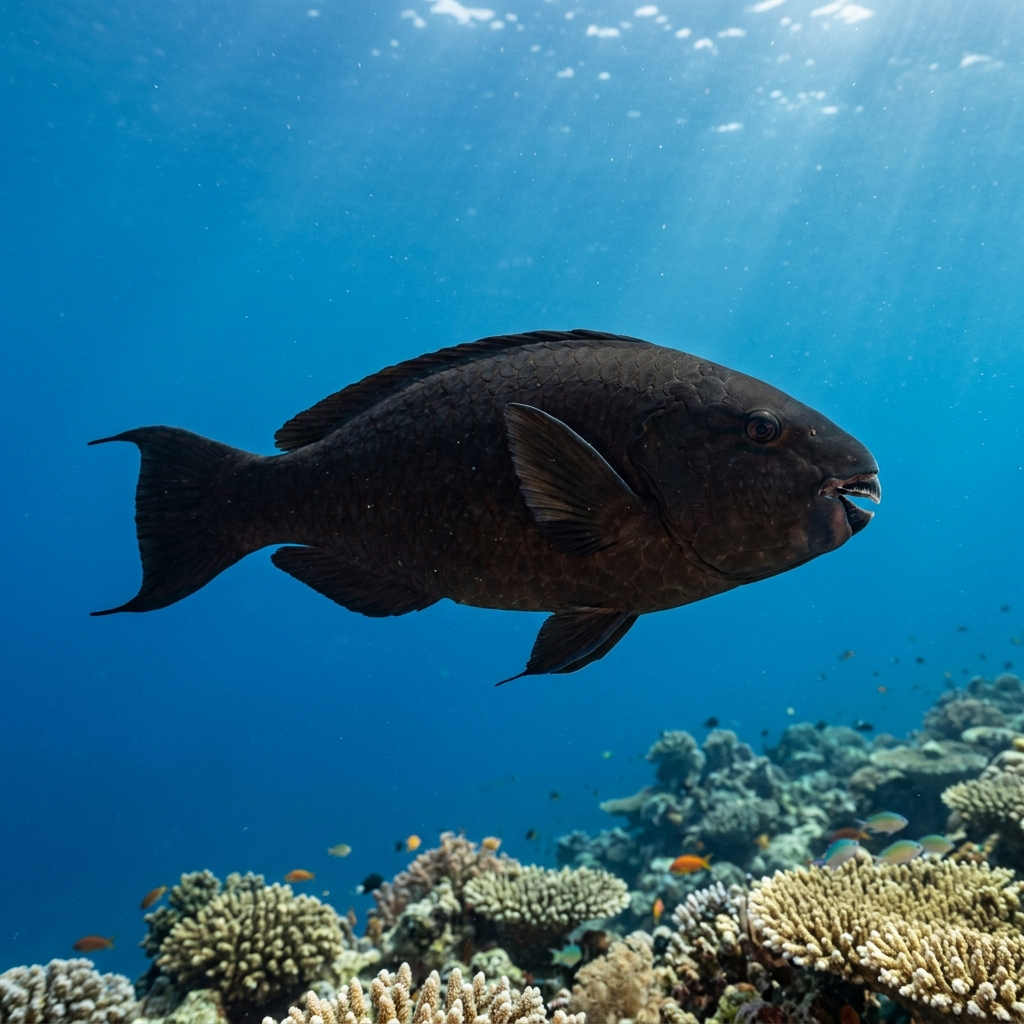
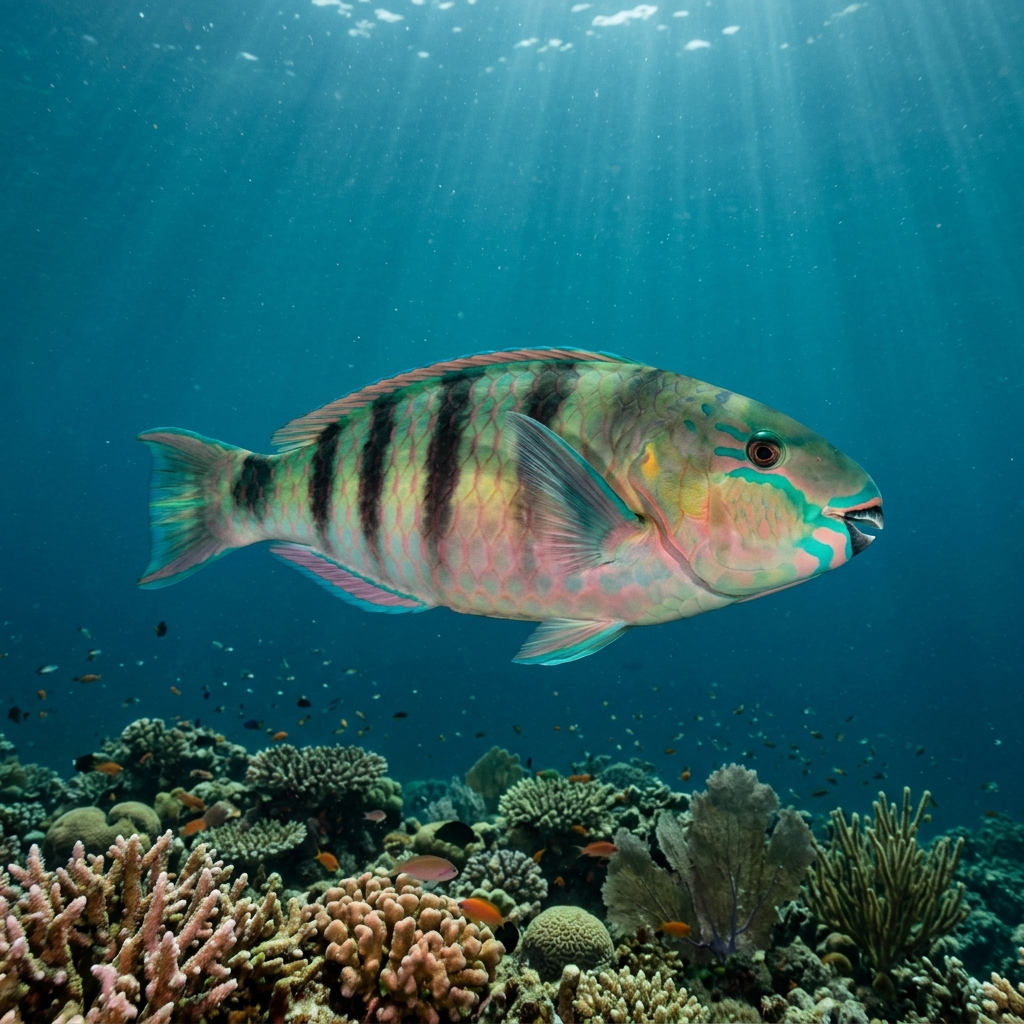
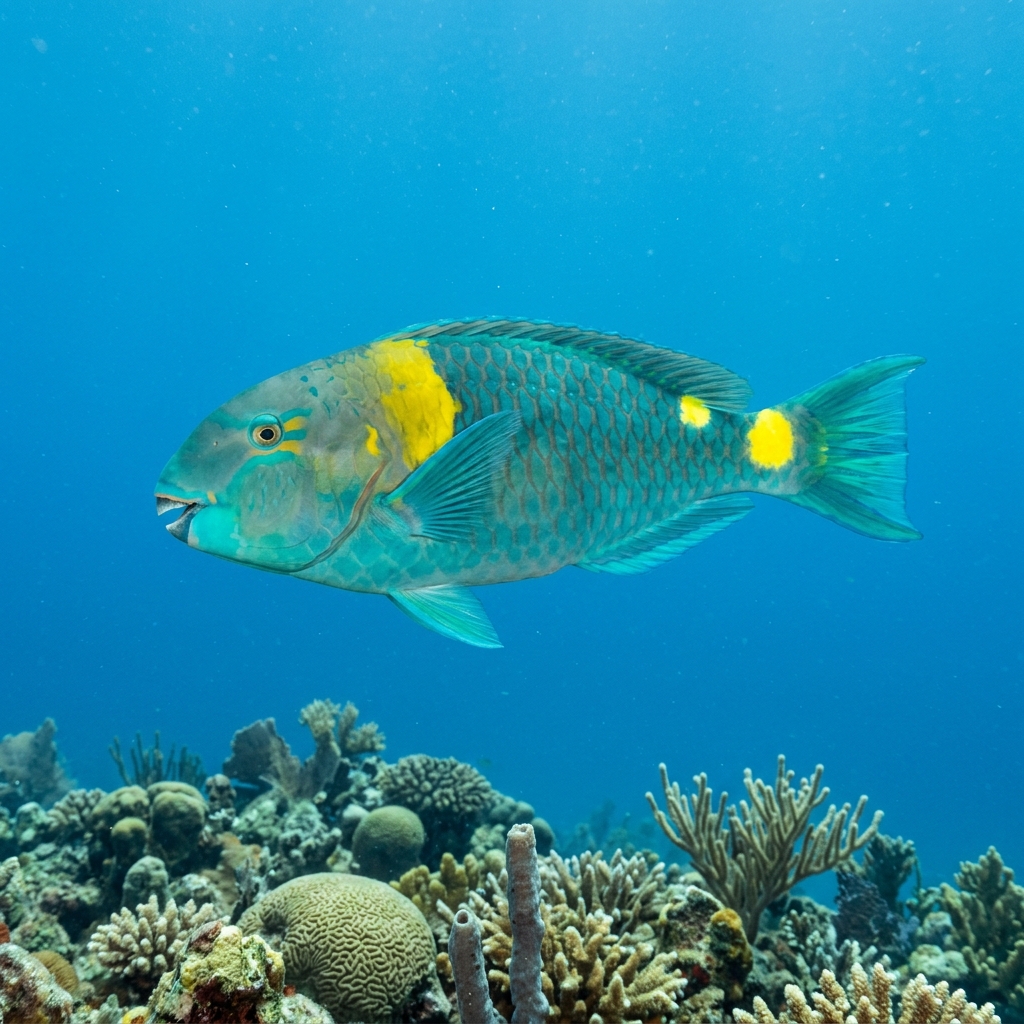
A deep slate-blue to near-black body gives this parrotfish its name, offset by a pale yellow-green patch across the snout and lips that stands out even in low light. It grows to around 53 cm, with the thick-lipped, fused parrot-like teeth typical of the genus visible when it's grazing on algae. There's no dramatic colour split by size in the data, so look for that combination of dark body and light face rather than counting on juvenile phases to tell it apart.
Watch for it grazing steadily over algae-covered reef and rubble, scraping at the surface with its fused beak-like teeth rather than darting after anything. It's generally unbothered by divers at a normal distance, continuing to feed as you pass, and tends to range across open reef flats and slopes rather than hiding in crevices. Most sightings come from daytime reef dives in the 5 to 75 m range it occupies.
Parrotfish grazing keeps algae from smothering coral, and the sand you see drifting off a feeding fish is largely ground-up reef material passed through its gut.
There's no clear seasonal pattern in the sightings, and the 25.3 to 28.0 C range it's found in matches year-round tropical reef conditions in Florida, Honduras and Belize. Plan around good visibility and reef access rather than a particular month.
Florida's reefs in the United States are the most reliable place to find one, with strong numbers also logged around the Bay Islands of Honduras and at Lighthouse Reef in Belize. Across all three it turns up often enough at depth that a mid-morning reef dive in any of these regions has a fair shot at a sighting.
Mapping where Midnight Parrotfish is logged…
Florida in the United States is the most consistent spot, with the Bay Islands of Honduras and Lighthouse Reef in Belize also holding strong populations. It's a common enough sighting at many of these sites that a Caribbean or Florida reef dive stands a decent chance of a passing encounter.
There's no strong seasonal pattern in the sightings, so it's treated as a year-round species. Water in its logged range stays between about 25 and 28 C, comfortable for it on tropical reefs at any time of year.
Look for a large, dark slate-blue to blackish body with a pale yellow-green patch across the snout and lips. It grazes over the reef surface with a distinctive fused, beak-like set of teeth rather than swimming like a typical reef fish.
They typically reach around 53 cm in length, making them one of the larger parrotfish species divers encounter on Caribbean and Florida reefs.
No, they pose no danger to divers. They're herbivores focused on grazing algae off the reef and generally ignore passing divers entirely.
Like other parrotfish, it grinds up reef material while feeding on algae, and the fine sand this produces is a real contributor to sand formation on tropical reefs.
Site and sighting data is aggregated from diver logs, iNaturalist and GBIF. For taxonomy and conservation status:
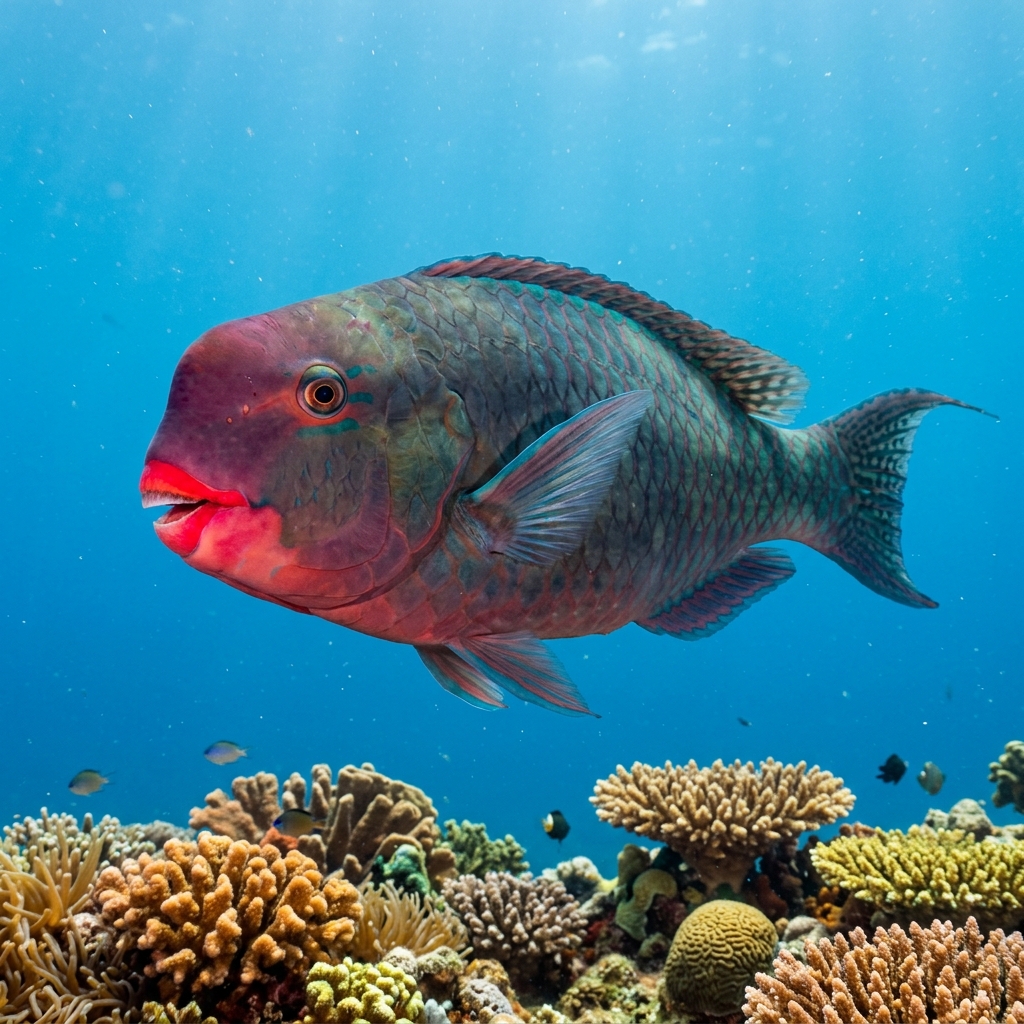
Redlip Parrotfish
2,789 sites