Mulloidichthys dentatus
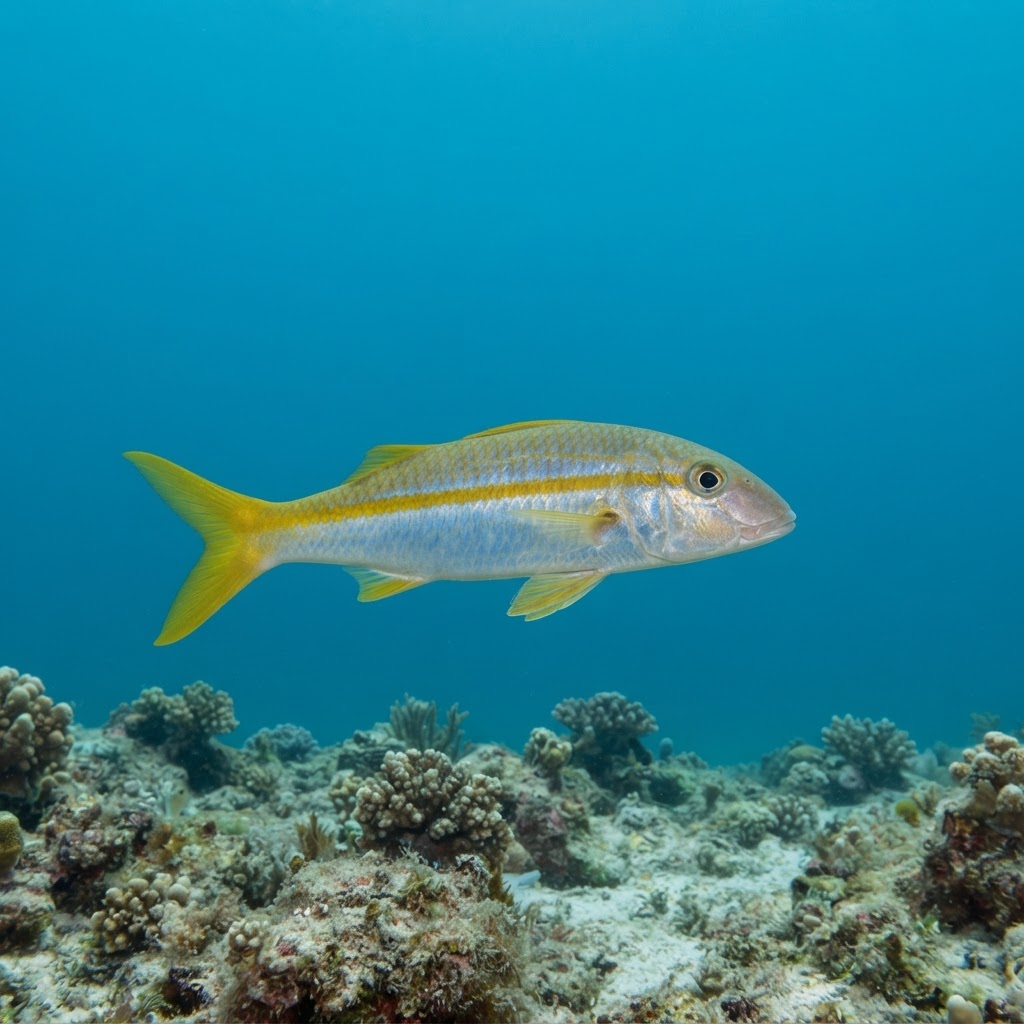
Silvery goatfish with a yellow stripe, common along Baja California and the Galápagos in water from 20.6 to 28.4 C, year-round.
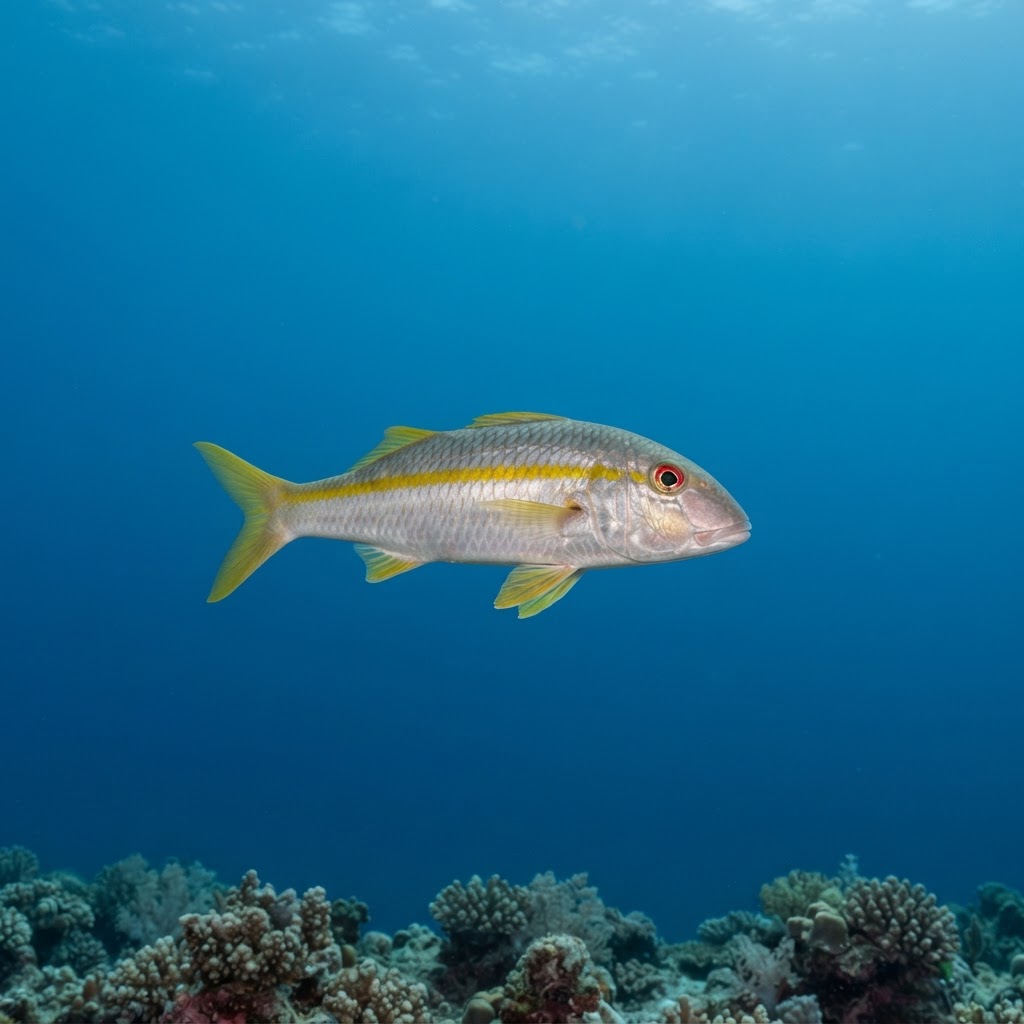
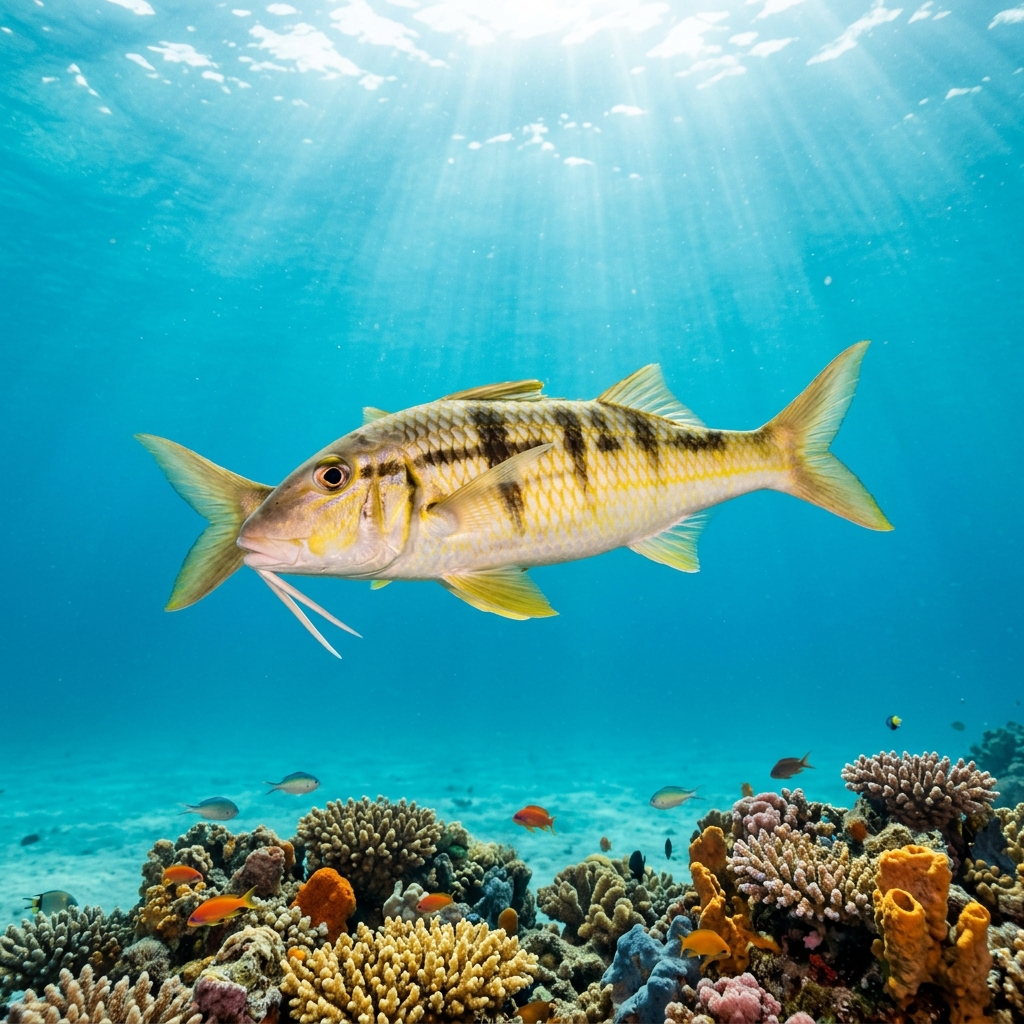
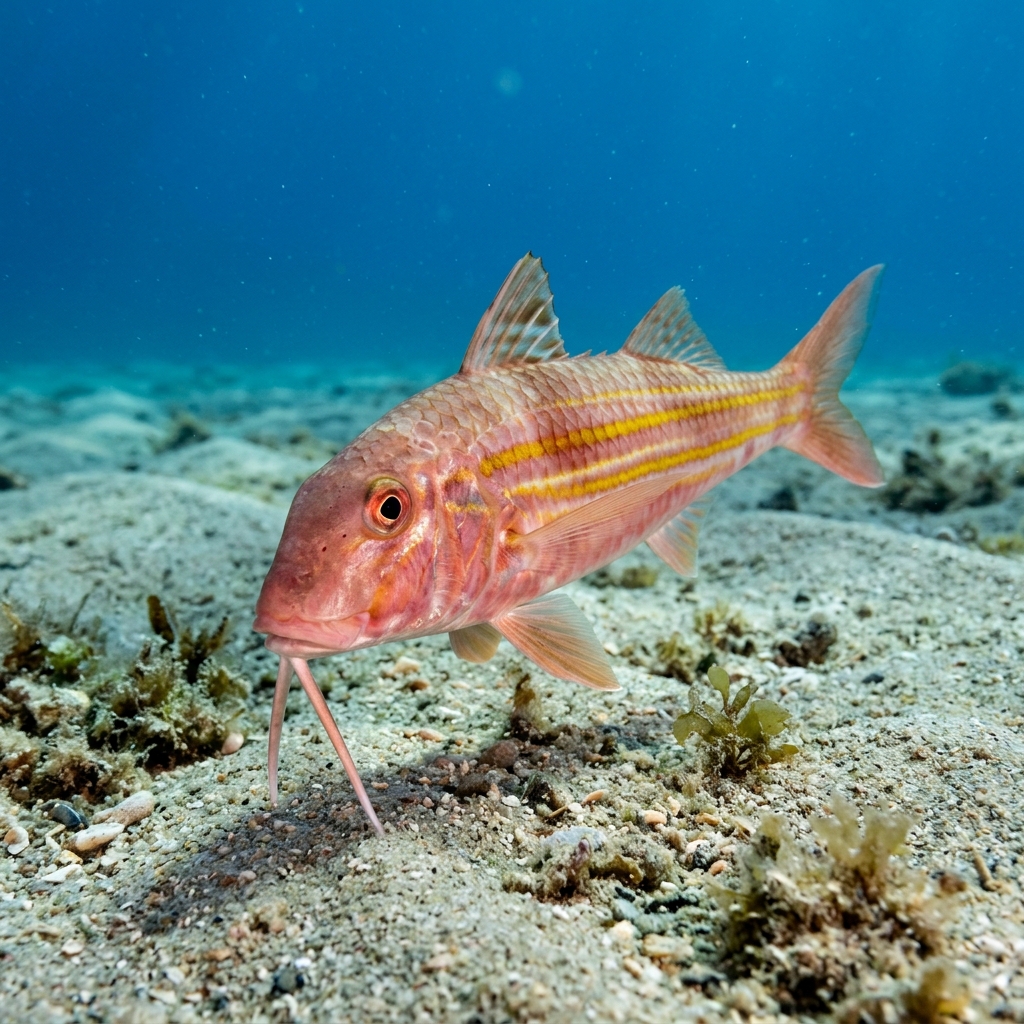
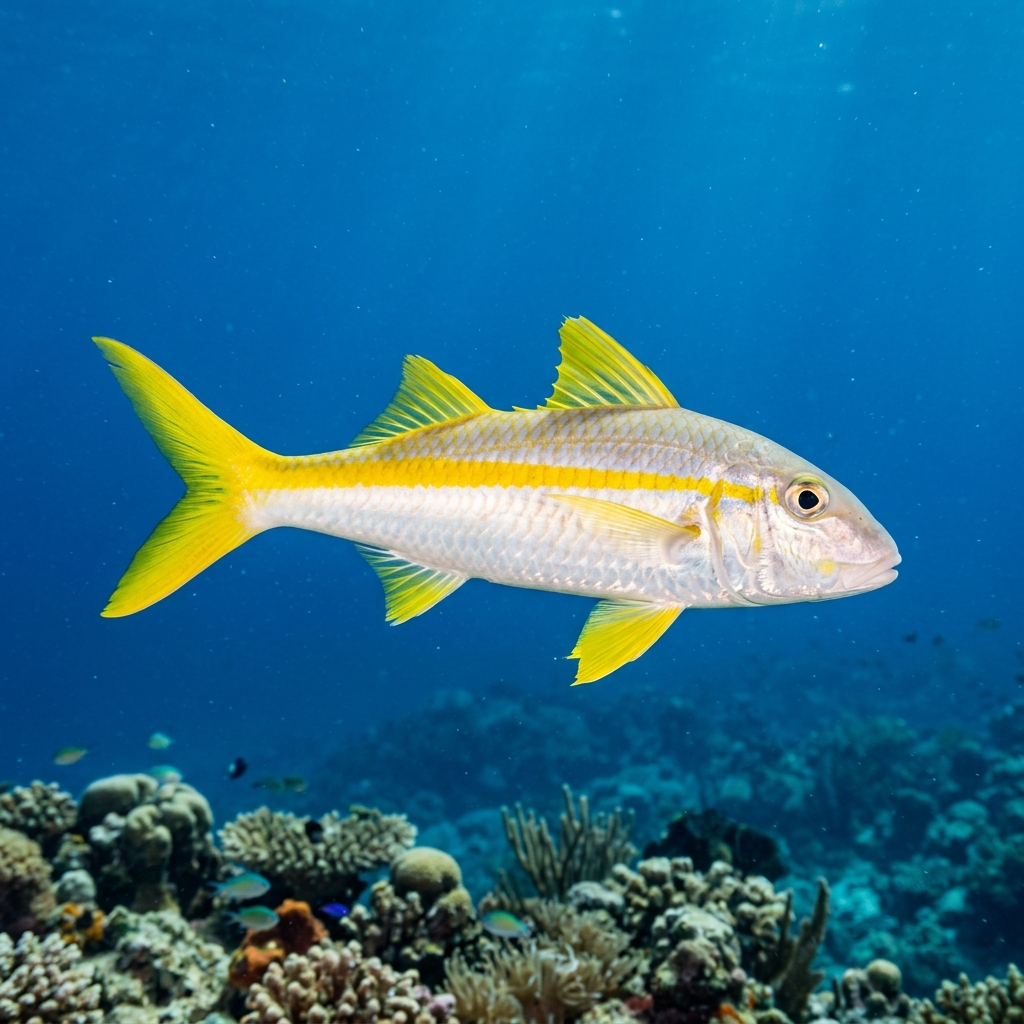
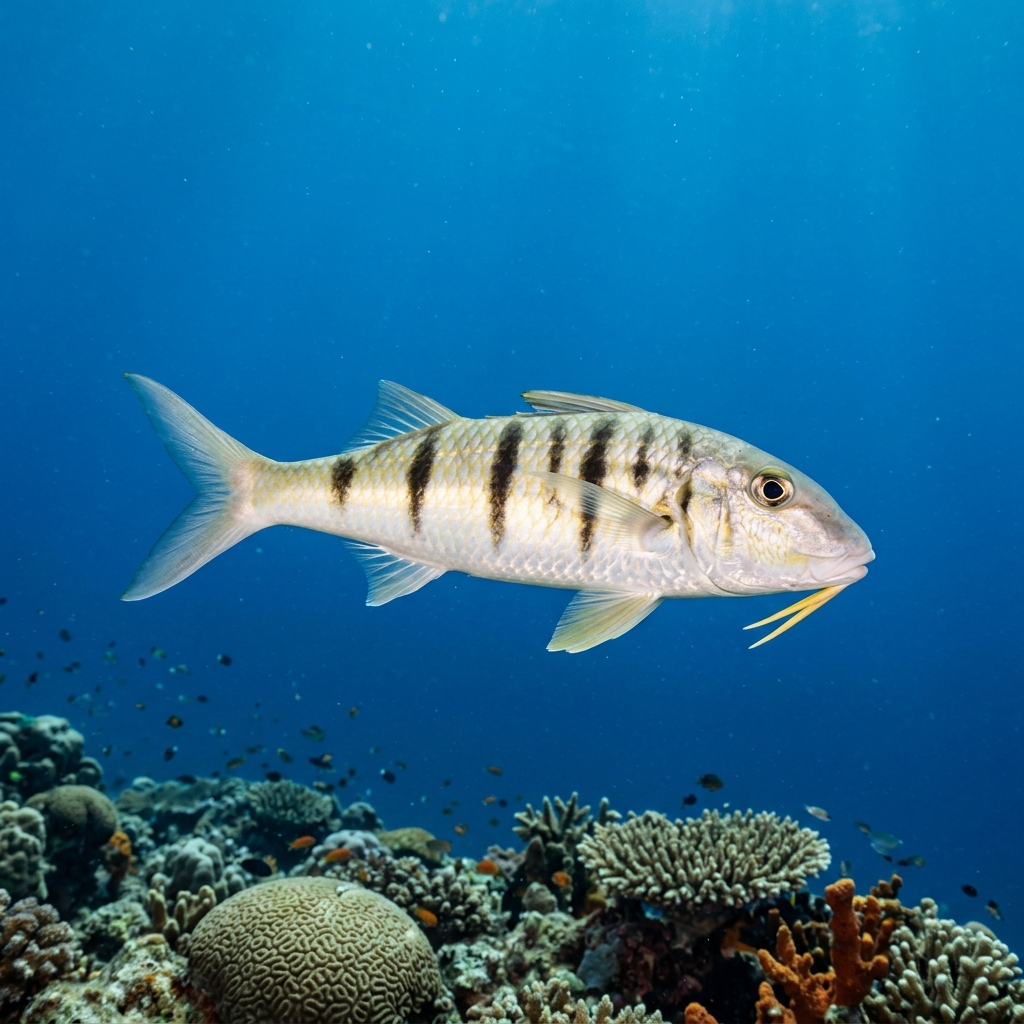
Look for a slim, silvery fish around 21 cm with a bold yellow stripe running from eye to tail and a pair of long chin barbels it drags along the sand while foraging. The barbels are the giveaway underwater: a goatfish with them tucked flat is resting or cruising, one sweeping the substrate is feeding. Body shape is torpedo-like, built for hovering just above the reef or sand rather than fast open-water swimming.
Divers most often find it working sand patches and reef edges in small loose groups, sweeping its barbels across the bottom to root out buried invertebrates. It pays little attention to divers and will keep foraging within a few metres if you hold still, occasionally joined by wrasses or other fish waiting to snap up anything it stirs loose. Sightings span a wide depth range from shallow reef flats down past 40 metres, so it's not tied to one particular depth band.
Those chin barbels are equipped with taste buds, letting it detect buried worms, crustaceans and molluscs hidden in sand before it digs them out, a foraging trick shared across the goatfish family.
No clear seasonal pattern shows up in the sighting data, so treat it as a year-round find. Its comfort range of roughly 20.6 to 28.4 C covers the water temperature swings across its Eastern Pacific range for most of the year.
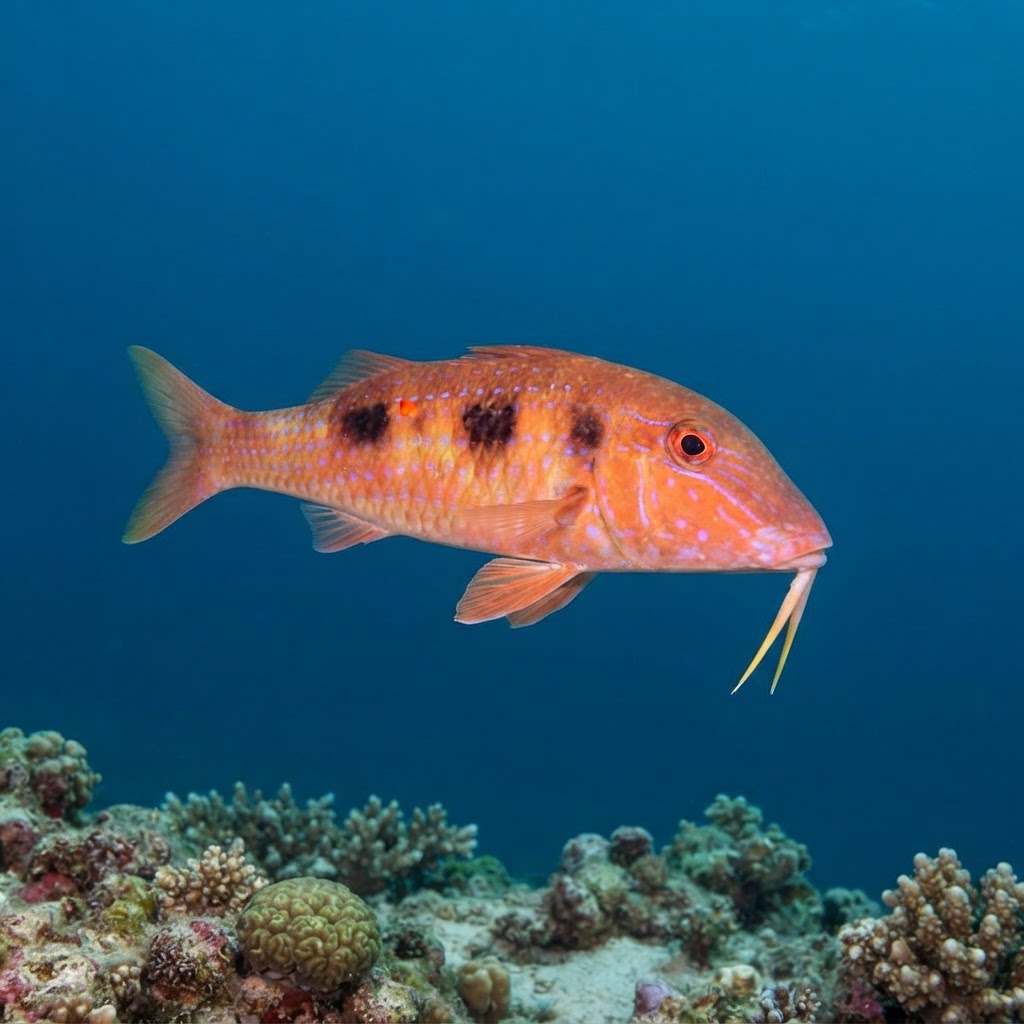
Reef neighbours a diver could mistake it for. Use the identification notes above to tell them apart.
Most reliably logged along Mexico's Pacific Coast and Baja California, which between them account for the bulk of sightings, with further strong populations around Panama's Pacific Coast, Costa Rica's Cocos Island and South Pacific coast, and Ecuador's Galápagos Islands. It shows up as an uncommon to occasionally common sighting at reef and rocky-slope sites across all four countries rather than clustering at just one or two locations.
Mapping where Mexican Goatfish is logged…
Baja California and the Pacific Coast of Mexico are the most consistent regions, with further sightings around Panama's Pacific Coast, Cocos Island and the South Pacific coast of Costa Rica, and the Galápagos Islands in Ecuador.
There's no strong seasonal pattern in the sighting data, so it's considered a year-round sighting. It's found in water between about 20.6 and 28.4 C, a range that holds across most of the year in its Eastern Pacific range.
Look for a silvery, torpedo-shaped fish about 21 cm long with a yellow stripe along its side and a pair of long barbels under its chin used for probing sand. A fish sweeping those barbels across the bottom while foraging is a strong identification clue.
They typically reach around 21 cm in length, a modest, slender reef fish rather than a large one.
Their chin barbels carry taste-sensing cells, letting them detect buried prey in sand before digging it out, a feeding trick that also draws other fish in to steal exposed leftovers.
Site and sighting data is aggregated from diver logs, iNaturalist and GBIF. For taxonomy and conservation status:
Manybar Goatfish
1,816 sites