Acanthemblemaria macrospilus
A 4cm face peeking from a hole in the rock: find the Mexican Barnacle Blenny on Mexico's Pacific Coast in 23-29C water, year-round.
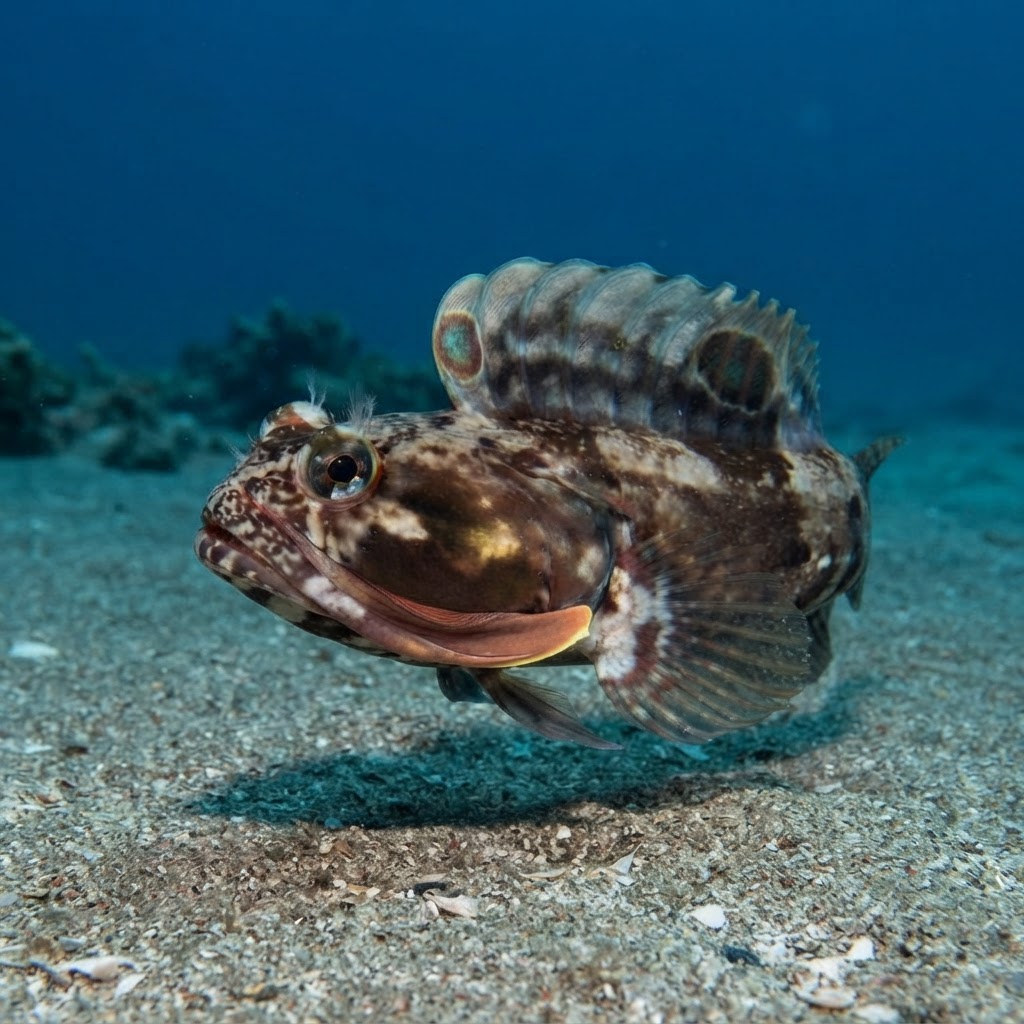
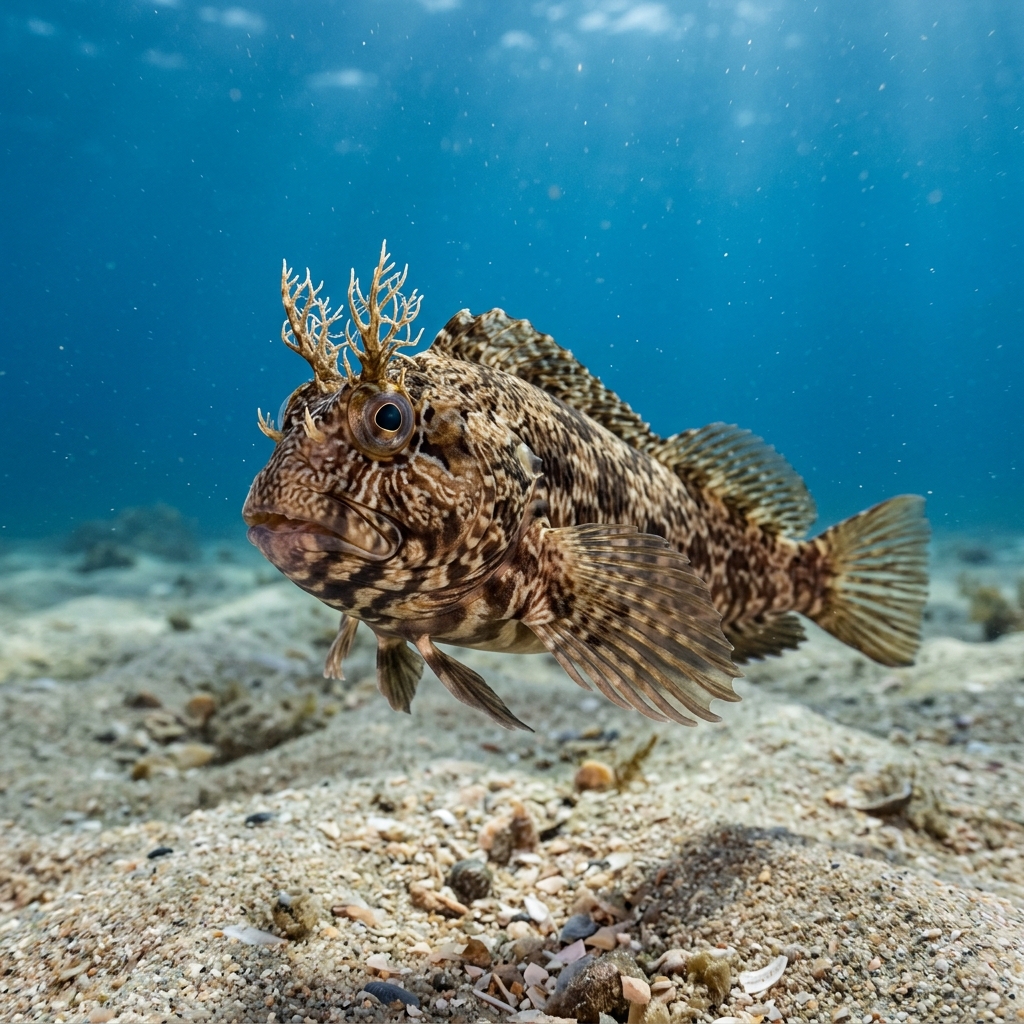
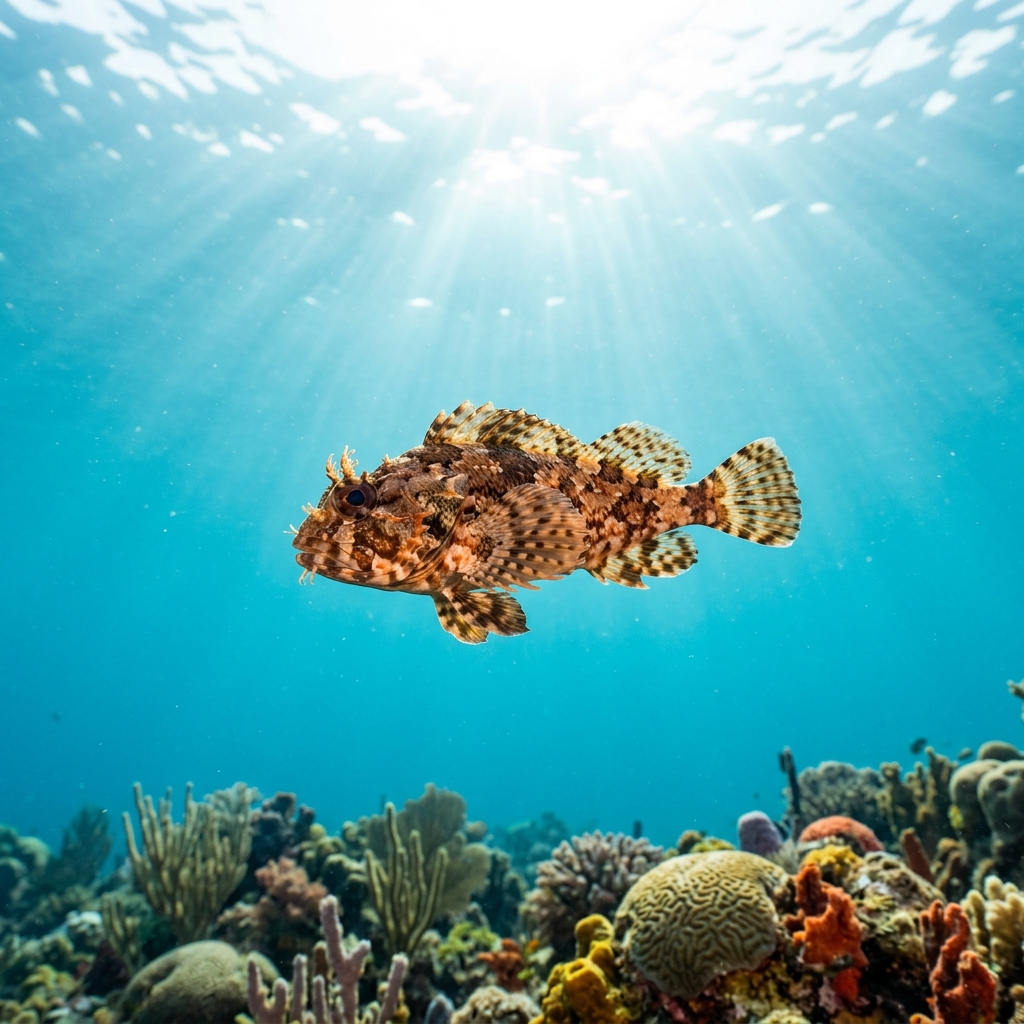
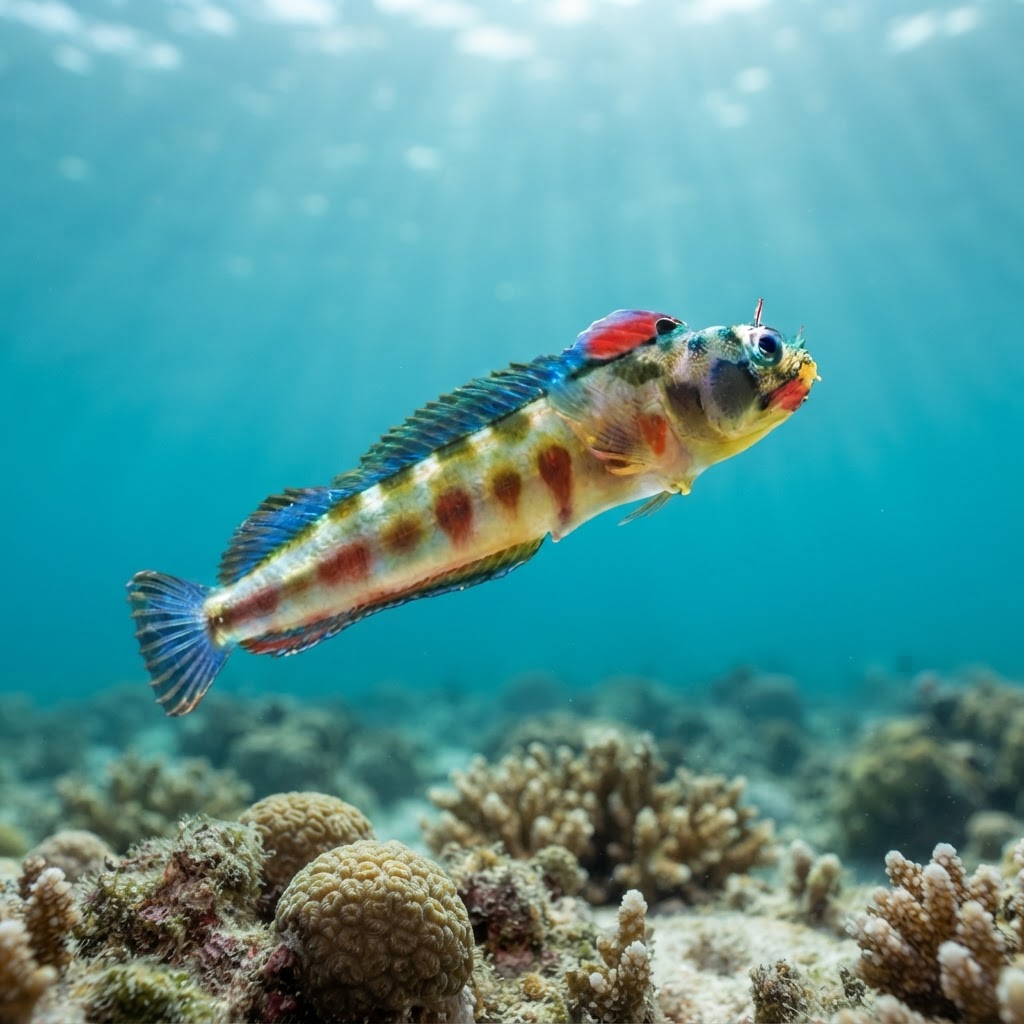
Barely 4cm long, this blenny lives head-out in an old barnacle shell or worm hole, so what you actually see is a small face with oversized, almost bulging eyes staring back at you. The body is mottled brown to grey, blending into the encrusted rock it hides in, and it rarely shows more than its head and a sliver of front body. Look for the tiny branched appendages (cirri) above the eyes, a giveaway of the blenny family, and the way it vanishes into its hole the instant it feels threatened.
Spend any time hovering over rubble or rocky reef and you will eventually clock one of these blennies framed in a small hole, watching the world go by. They are homebodies, holding a single burrow rather than roaming the reef, and will duck back inside at the first sign of a close approach or a fin sweeping past. Most sightings come from divers who slow down and scan rock crevices closely rather than swimming the open reef.
Like other members of its family, it likely takes over an abandoned barnacle shell or worm tube as a permanent home rather than digging its own, which is part of why it is so easy to overlook unless you know to check old barnacle scars on the rock.
Sightings show no detected seasonal pattern, and with a comfortable range of 23.3 to 29.1 C it seems to sit tight in its hole year-round rather than following a migration or breeding season divers need to plan around.
Reef neighbours a diver could mistake it for. Use the identification notes above to tell them apart.
This one is a Pacific Coast Mexico specialty, logged across a wide spread of dive sites there and nowhere else in the current data. It shows up consistently but never in numbers, so treat any site along Mexico's Pacific Coast as a reasonable chance rather than a guaranteed encounter.
Mapping where Mexican Barnacle Blenny is logged…
It is best known from Mexico's Pacific Coast, where it has been logged across a wide range of dive sites. Current data does not show it outside this region.
There is no clear season in the sighting data, and it tolerates a wide temperature range of 23.3 to 29.1 C, so it is considered a year-round find on Pacific Mexico reefs.
Look for a tiny mottled brown face poking out of a hole in rock or dead coral, with large eyes and small branched cirri above them. The body almost never shows fully, since it stays anchored inside its burrow.
They max out around 4cm, making them one of the smaller reef fish a diver is likely to photograph. Most of that length stays hidden in the burrow, so the visible face looks even smaller.
Not really, it is logged as uncommon at most sites and rare at others, so finding one takes deliberate close scanning of rocky crevices and old barnacle holes rather than casual reef swimming.
Site and sighting data is aggregated from diver logs, iNaturalist and GBIF. For taxonomy and conservation status:
Rusty Blenny
2,605 sites