Melanochlamys miqueli
Small headshield slug found on Catalonia and French Riviera sand flats in cool 14-20C water, year-round but uncommon.
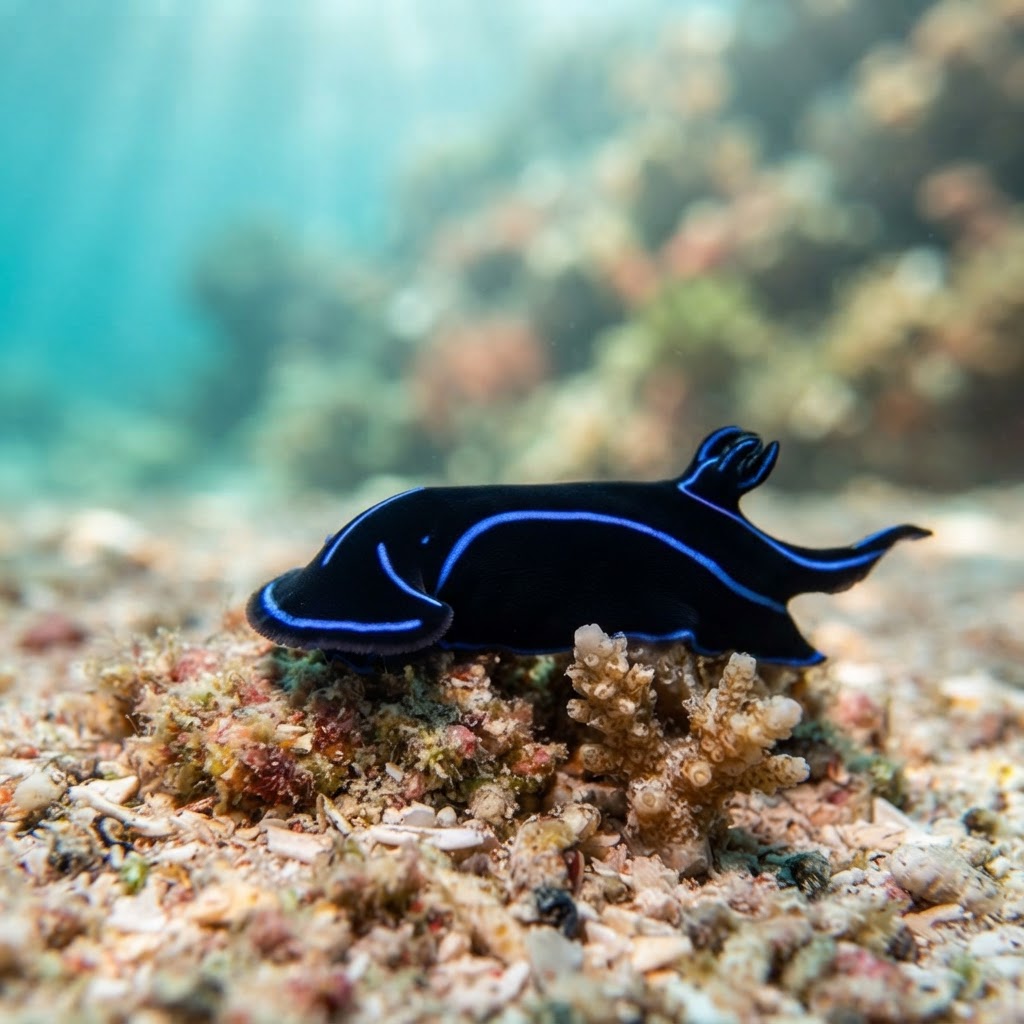
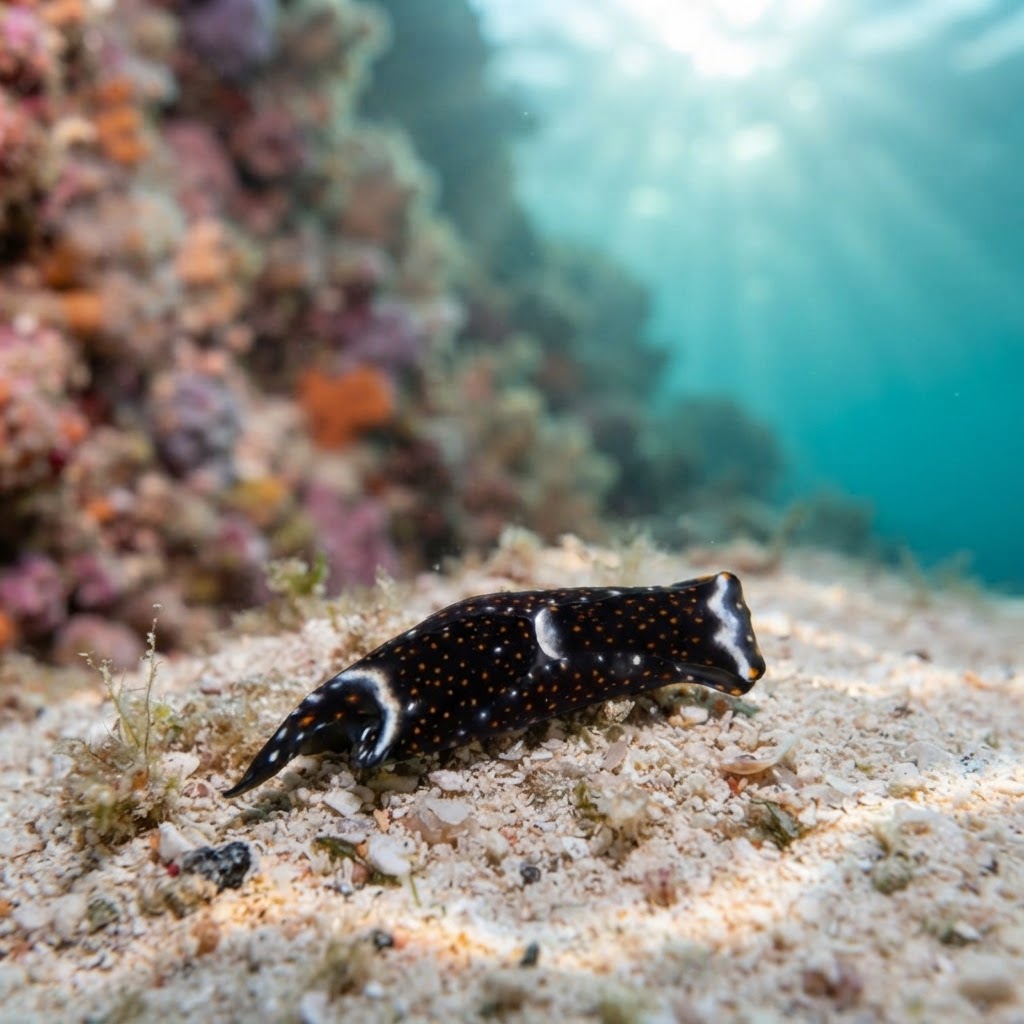
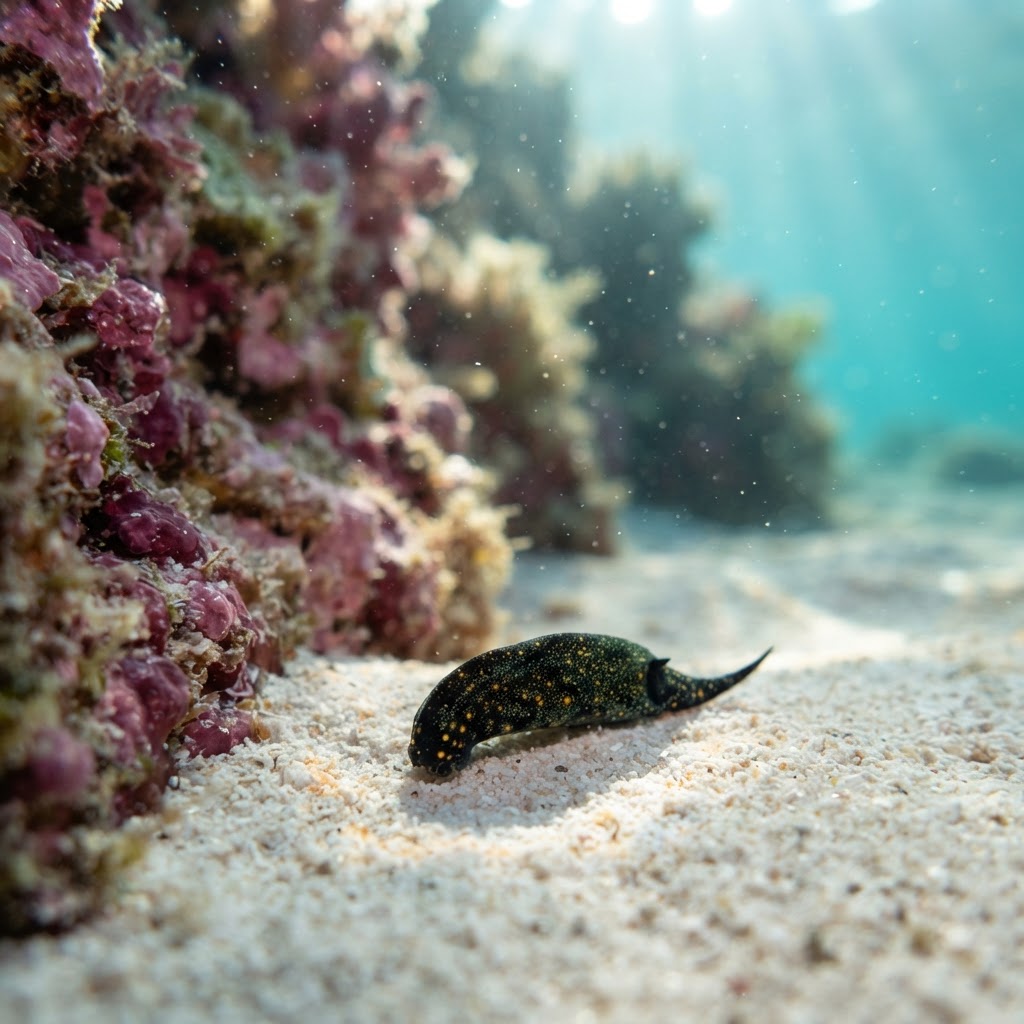
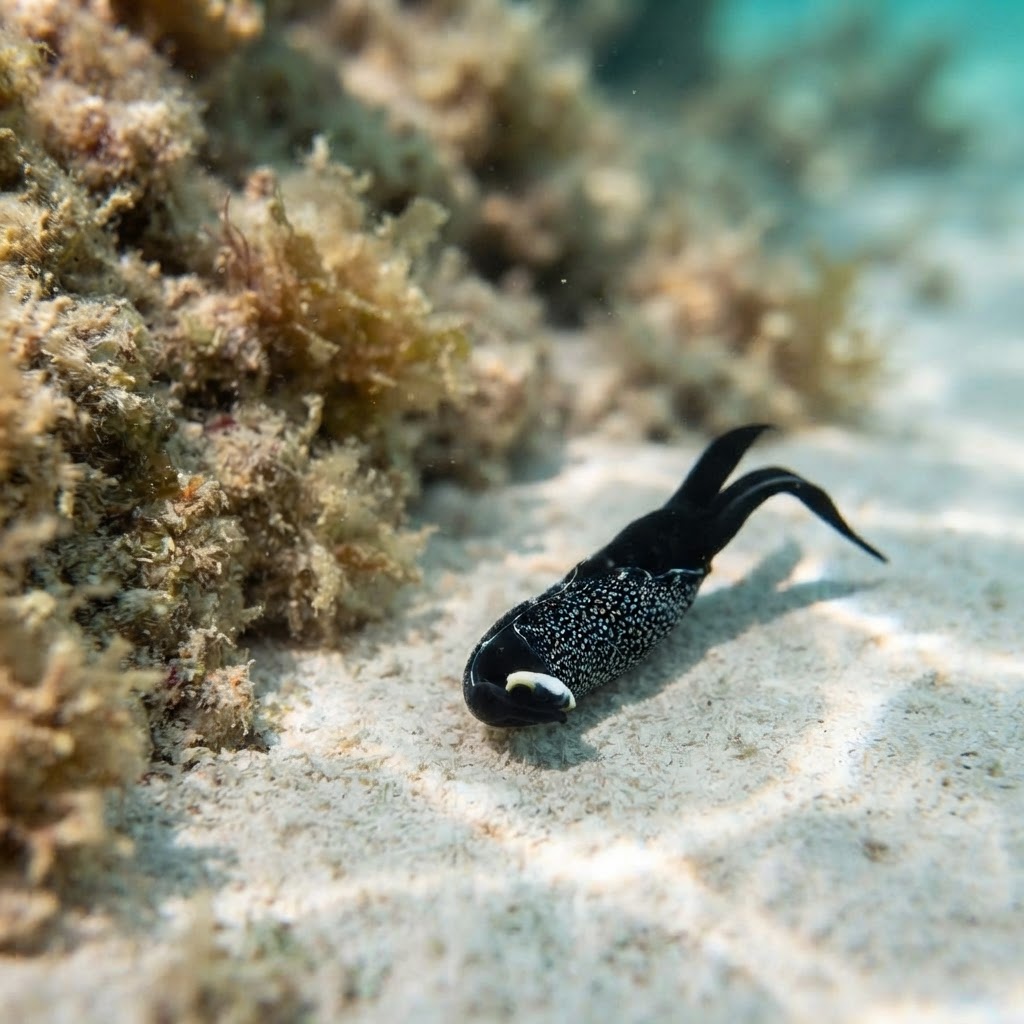
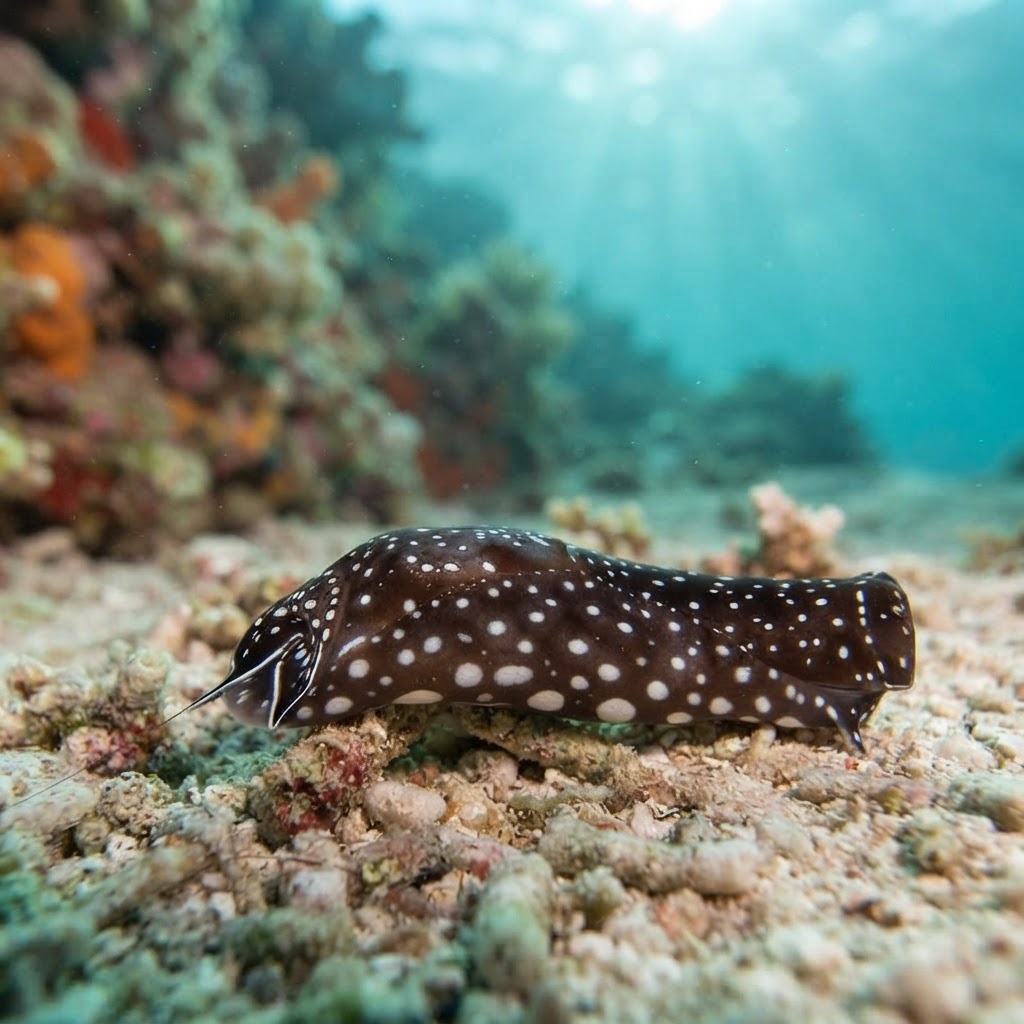
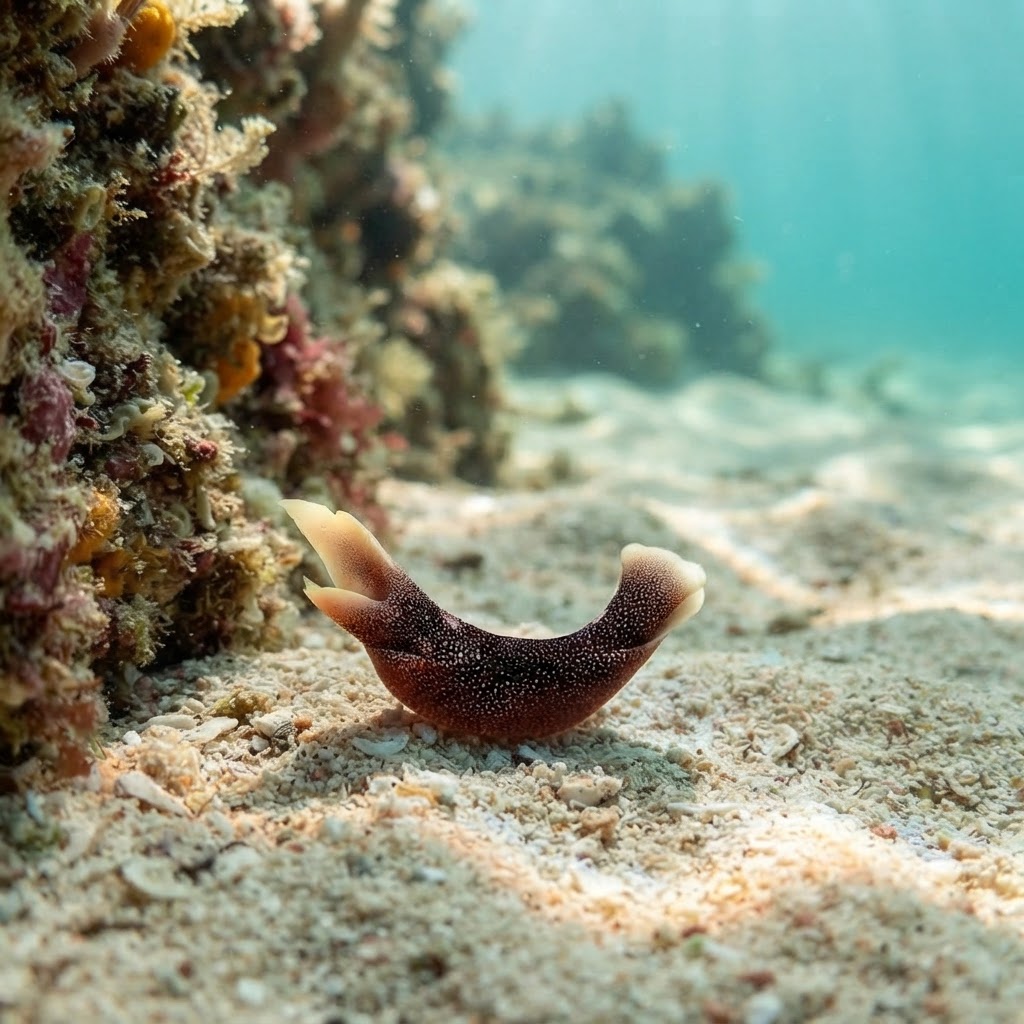
A small, oval, glossy dark slug with no visible shell, its body shaped like a smooth bean with a headshield (a flattened plate covering the head) rather than obvious tentacles. Colouring runs dark brown to near-black, often with a faint pale margin or speckling along the edge of the mantle. It sits low and rounded on sand, easy to miss unless you are scanning close to the substrate with a torch.
Found cruising or resting on sand and silt bottoms, usually low-visibility work for the diver rather than dramatic behaviour. It moves slowly across the substrate and shows little reaction to a diver's presence, making it an easy subject once spotted. Most sightings come from divers deliberately searching sandy patches rather than stumbling across it mid-swim.
Like other aglajids, it's a headshield slug, part of a group known for hunting other small invertebrates rather than grazing algae, so its presence on a sand flat often hints at prey activity nearby.
Sighting records don't show a clear seasonal pattern, and with a water-temperature niche spanning 14.1 to 20.1C it seems tolerant of both cooler and milder Mediterranean conditions, so plan for a year-round, if uncommon, encounter.
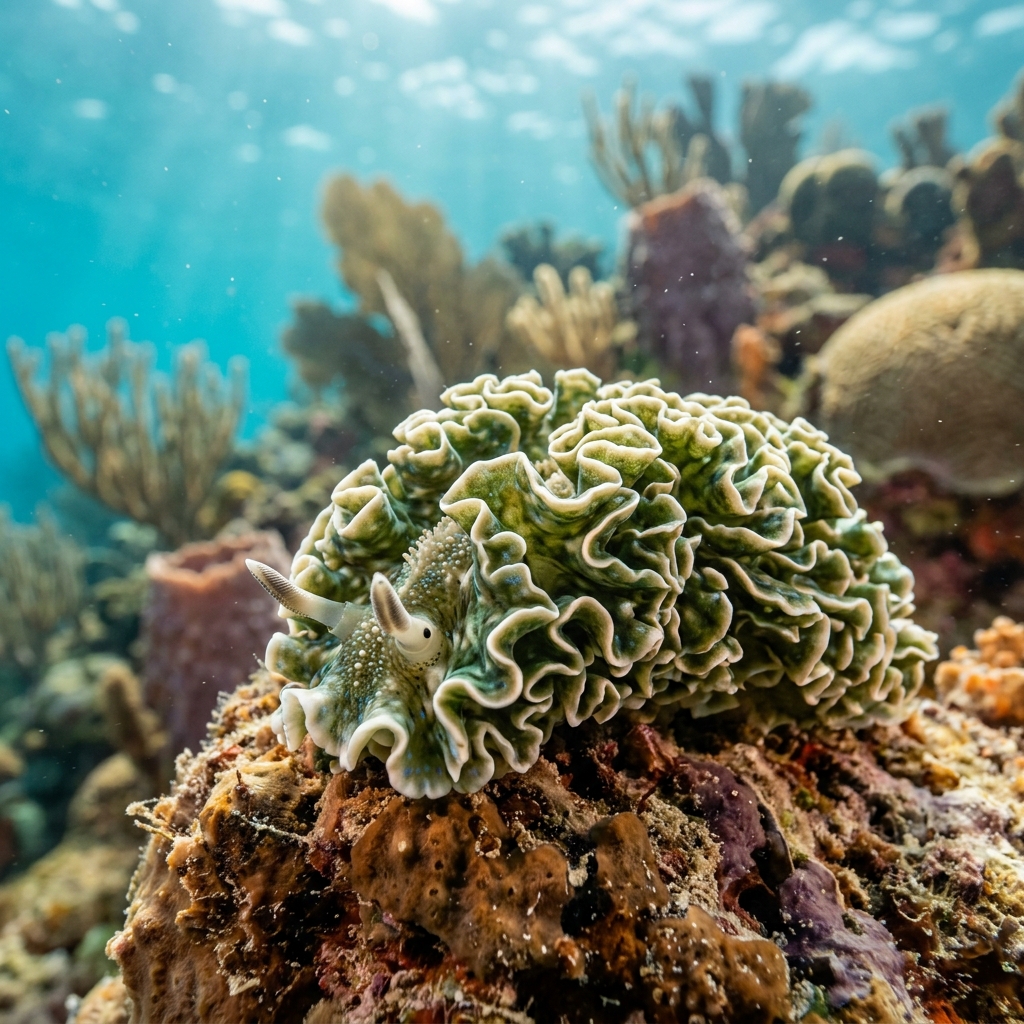
Reef neighbours a diver could mistake it for. Use the identification notes above to tell them apart.
Logged sites cluster in two countries: Spain and France, with Catalonia and the French Riviera and Provence the two standout regions. Divers looking specifically for this species should focus on sand and silty patches at these Mediterranean sites rather than reef structure.
Mapping where Melanochlamys miqueli is logged…
It's most reliably logged in Catalonia, Spain, and along the French Riviera and Provence coastline in France, typically on sand or silt patches rather than rocky reef.
There's no strong season in the sighting data, so it's considered a year-round find in the 14 to 20C water typical of these Mediterranean sites.
Look for a small, smooth, dark oval slug with no shell and a flattened headshield instead of visible tentacles, usually resting on sand. Its size and low profile mean it's easy to overlook without a close, slow search.
No, it poses no danger to divers and can be observed and photographed without any risk.
It belongs to the aglajid group of headshield slugs, predators that hunt other small invertebrates on soft sediment rather than grazing algae like many other sea slugs.
Site and sighting data is aggregated from diver logs, iNaturalist and GBIF. For taxonomy and conservation status:
Chelidonura amoena
Elysia Timida
573 sites