Antiopella longidentata
A cool-water nudibranch logged across Western Cape, South Africa in 13-19C water, mostly as an uncommon find on local reefs.
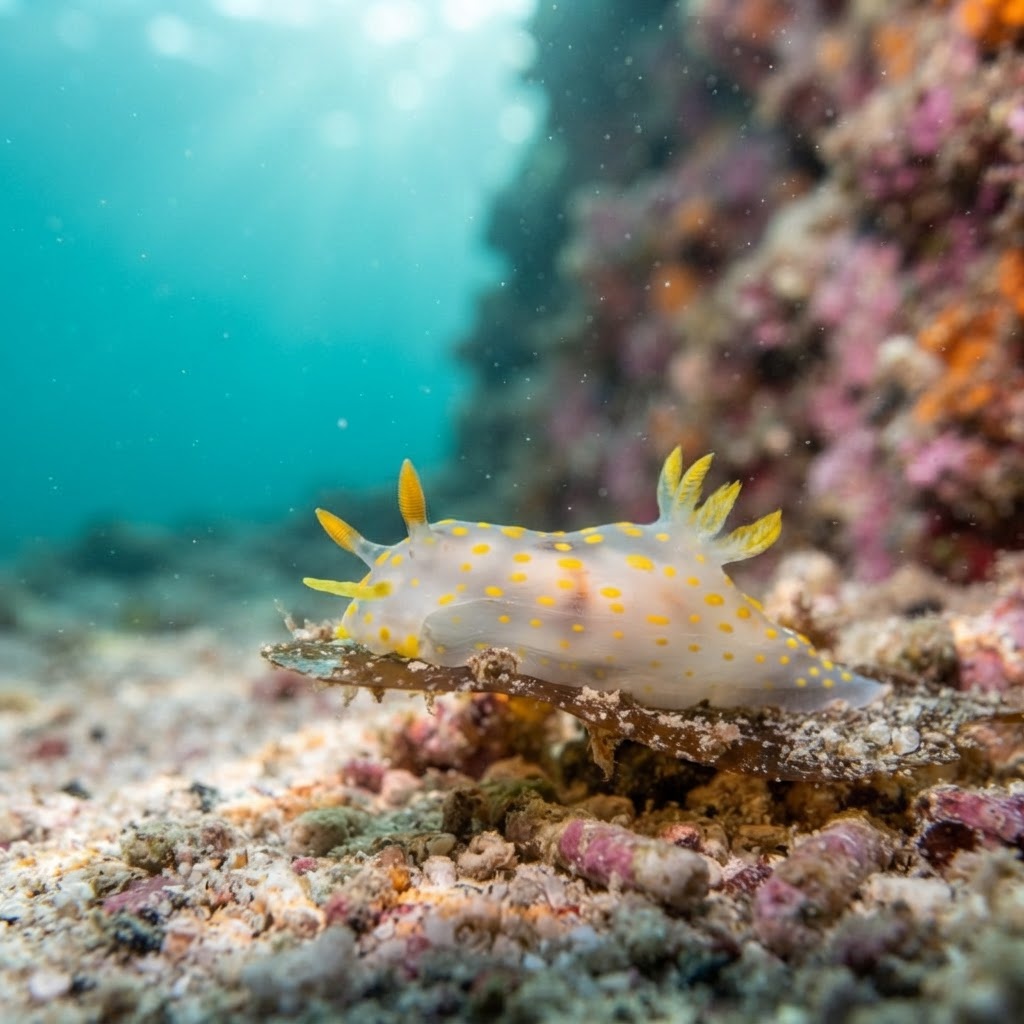
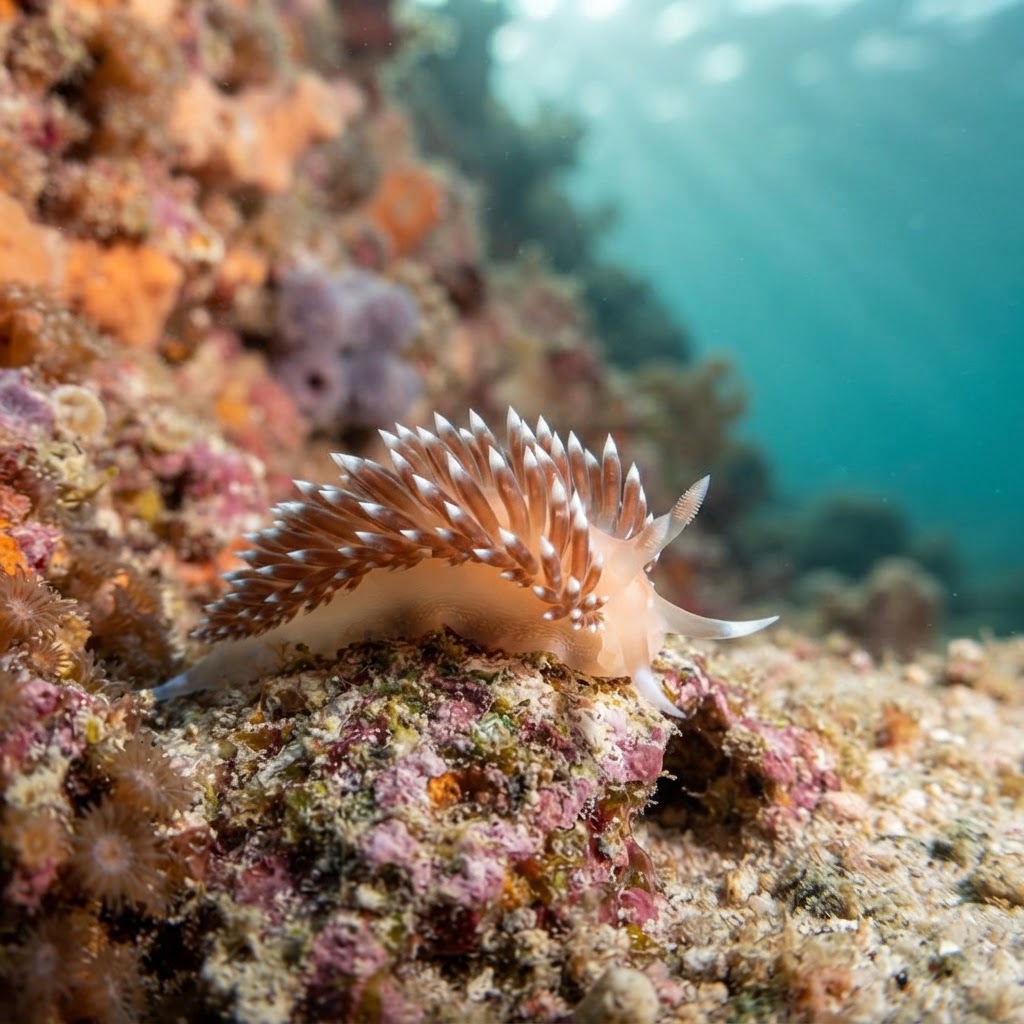
A small, slender nudibranch with a translucent to pale body and a row of finger-like projections (cerata) running down its back, often tipped with a bright silvery or coloured edge that gives it a flame-like outline. Look for it clinging to rock or algae rather than swimming in the open, since its size in the water is modest and easy to miss without a careful eye. The paired rhinophores (sensory tentacles) on the head are a useful confirming feature once you spot the body shape.
Divers typically find it moving slowly over rock and algae-covered substrate, grazing rather than reacting to divers in any obvious way. It's the kind of animal you spot on a slow, close-focus pass over a reef wall rather than mid-water, and most logs describe it as an uncommon to rare find rather than something you'll stumble on every dive. Patience and a torch or magnifier help, since it blends easily against mixed-colour reef backgrounds.
Like other members of its family, it likely feeds on hydroids, and the cerata running along its back may serve a defensive role by storing stinging cells taken from that prey, a common nudibranch strategy.
Sightings don't show a clear seasonal pattern, so treat it as a year-round possibility on Western Cape reefs where the water sits in the 13 to 19C range. Cooler months may bring slightly lower temperatures within that range, but there's no strong data pointing to a peak season.
Reef neighbours a diver could mistake it for. Use the identification notes above to tell them apart.
This one is a Western Cape speciality, with every logged sighting so far coming from South Africa's cool Atlantic and False Bay reefs. If you're diving the Cape Peninsula or nearby Western Cape sites, keep an eye on rocky reef and kelp forest substrate, since that's where local divers consistently find it.
Mapping where Medallion Silvertip Flame is logged…
It's currently only logged in South Africa, concentrated in the Western Cape region. Divers looking for it should focus on Cape Peninsula and surrounding rocky reef sites rather than tropical destinations.
There's no detected seasonal pattern, so sightings happen year-round in the Western Cape's cool water, typically between 13 and 19C. Any time you're diving that region's reefs, it's a possibility.
Look for a small, translucent-bodied nudibranch with a row of bright-tipped cerata down its back, giving a flame-like silhouette. It's usually found clinging to rock or algae rather than out in the open water.
No, it poses no danger to divers. It's a small, slow-moving grazer with no sting or bite that affects humans.
Exact size data isn't available for this species, but like most nudibranchs in its family it's small, likely only a few centimetres long, and easy to overlook on a reef.
Site and sighting data is aggregated from diver logs, iNaturalist and GBIF. For taxonomy and conservation status:
Light-spotted Aegires
3,168 sites