Marioniopsis viridescens
A rare, uncommon find in South Sinai, Egypt, this green-toned nudibranch turns up on reefs holding 21 to 27C year-round.
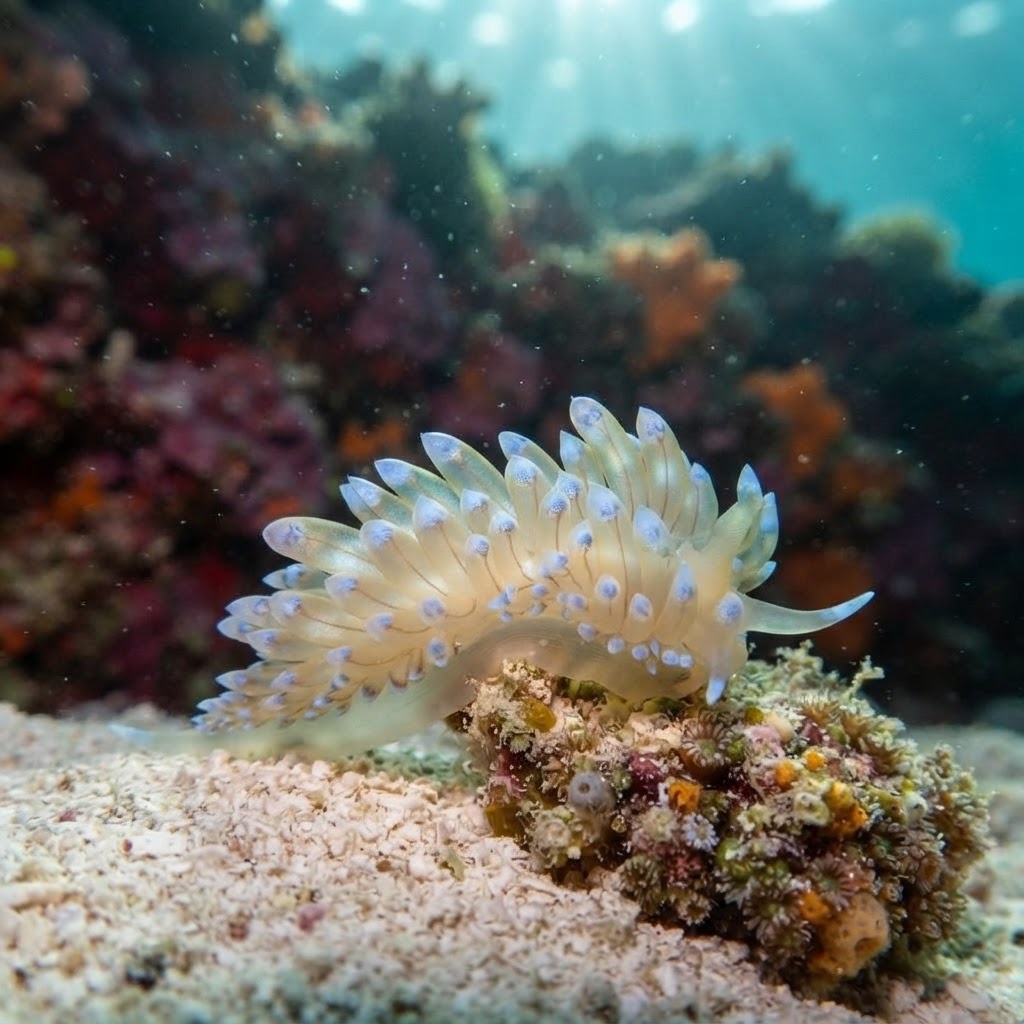
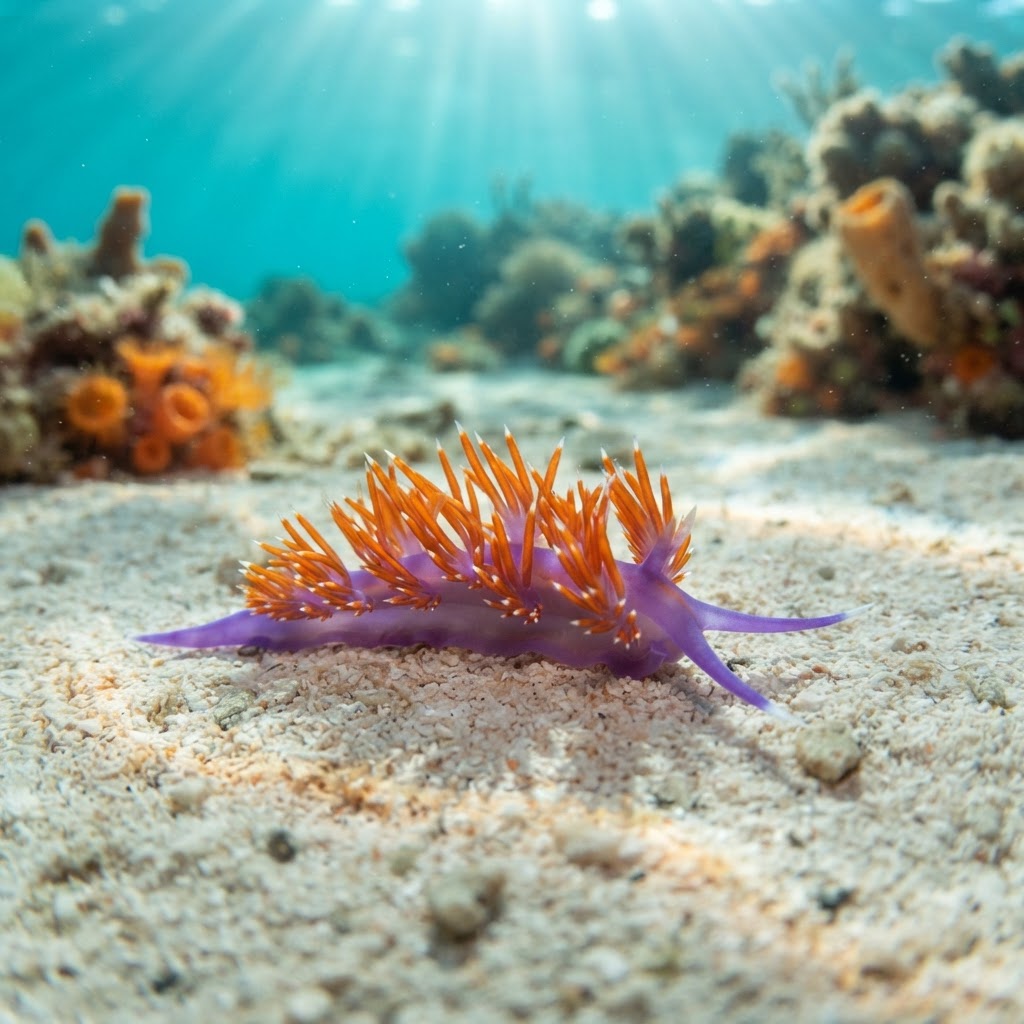
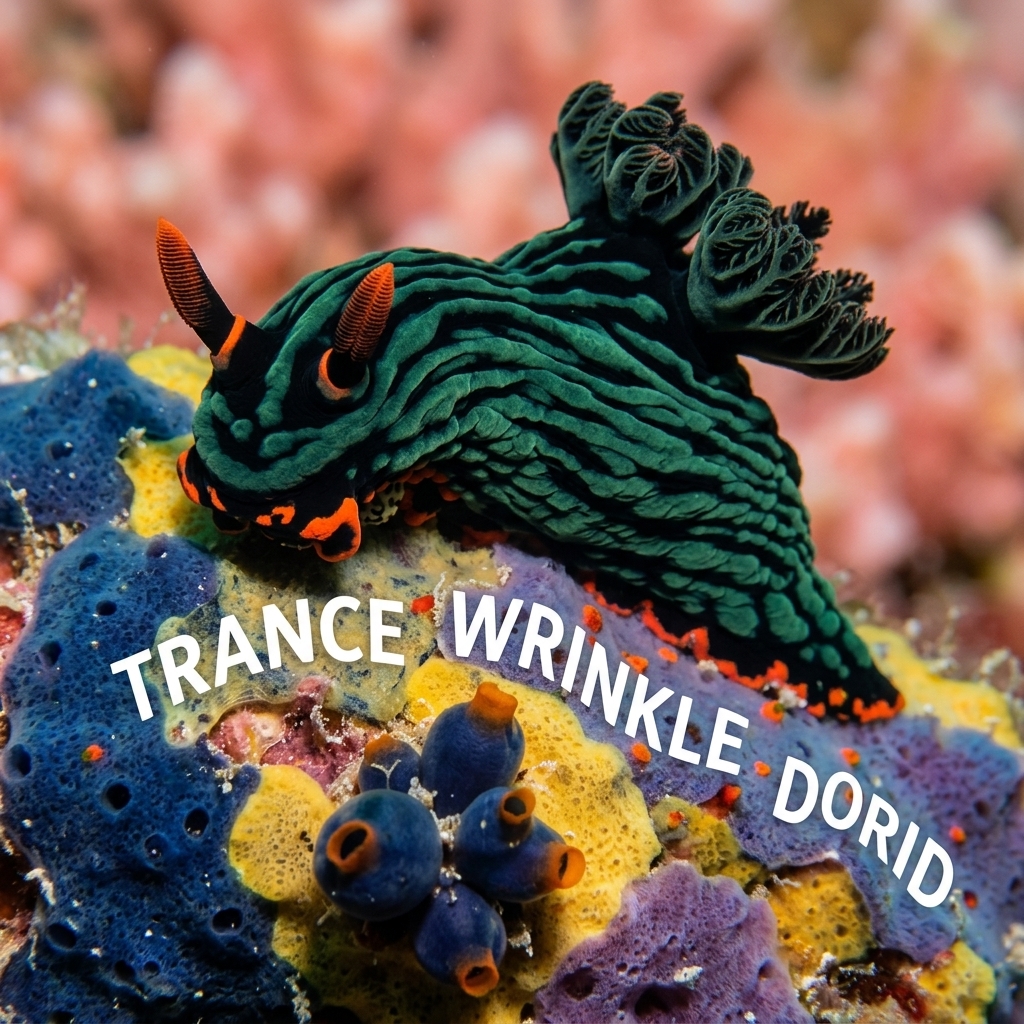
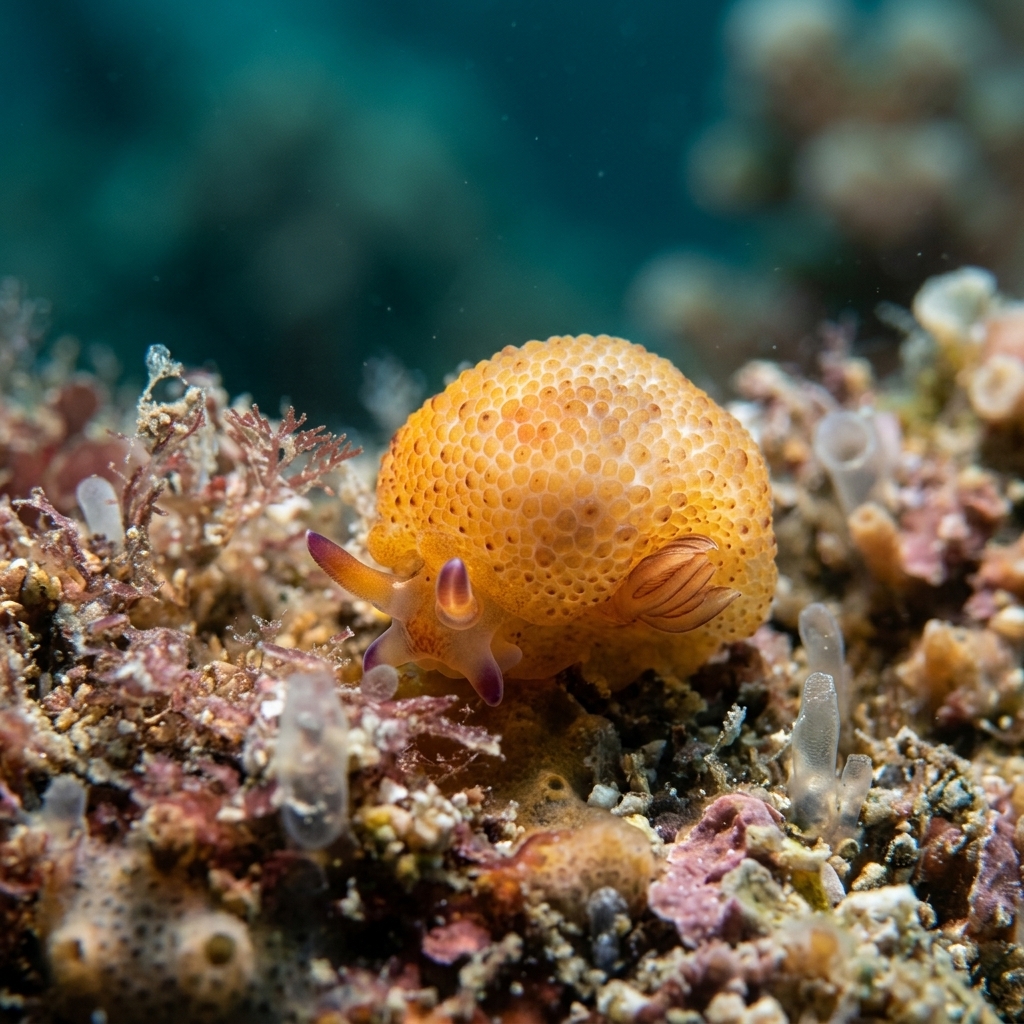
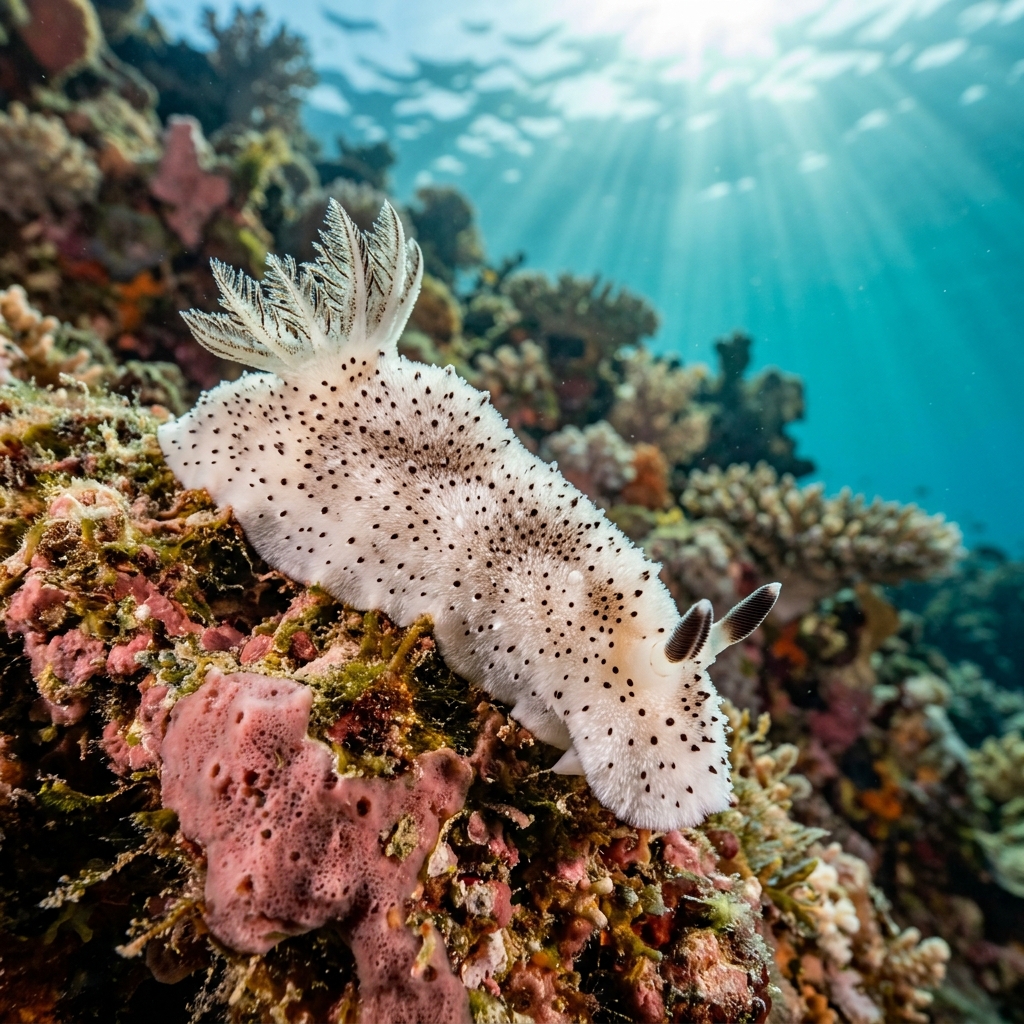
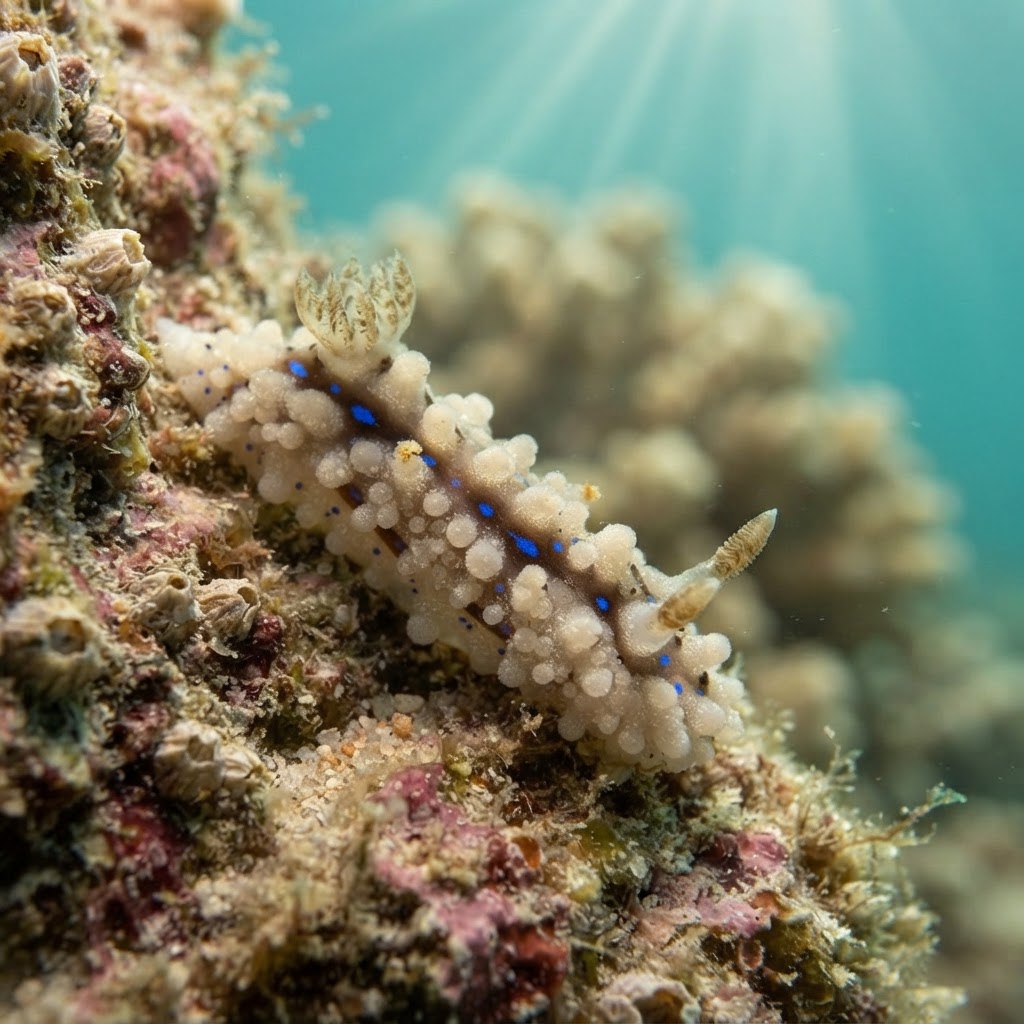
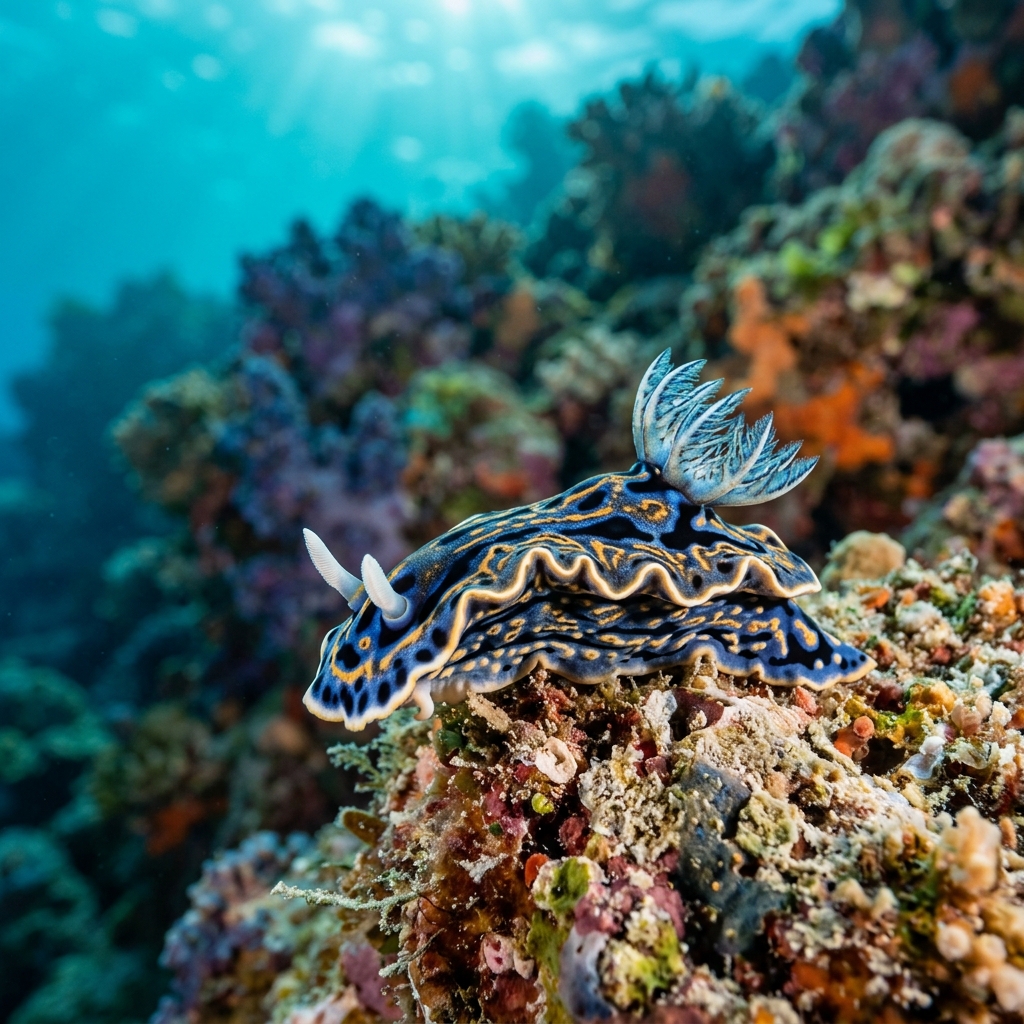
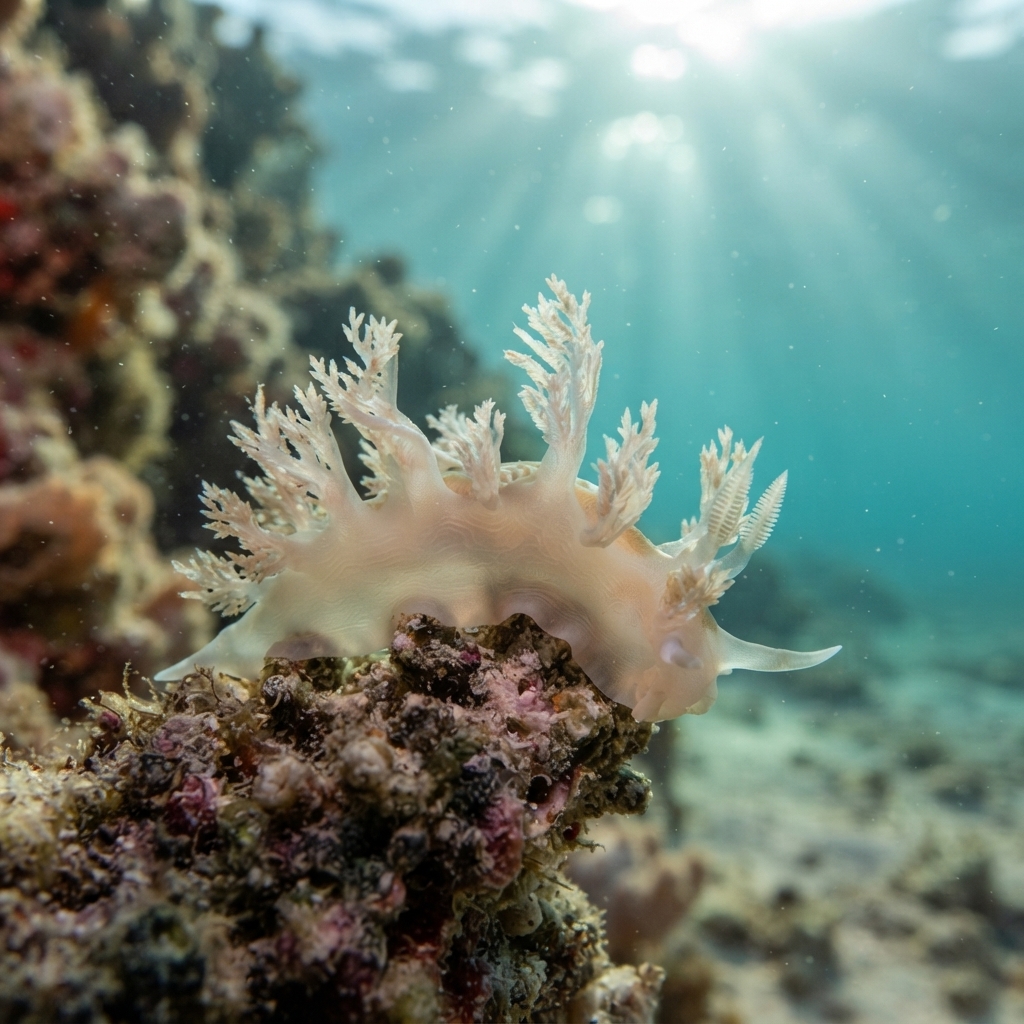
A small, soft-bodied nudibranch with a translucent to pale green body that often takes on the colour of whatever it is feeding or sitting on. Look for the smooth, slug-like profile typical of tritoniid nudibranchs, with a fringe of feathery gills running down each side of the back and short, branched tentacles (rhinophores) on the head. There is no bold contrast pattern here, so divers usually spot it by its shape and gill fringe rather than by colour alone.
Divers find it slow-moving and stationary on reef substrate, tucked among sponges or algae that it likely grazes on. It shows no reaction to divers beyond simply continuing to browse, and like most nudibranchs it is easiest to spot on a careful, slow-paced macro dive rather than a fast drift.
Like other tritoniid nudibranchs, it likely feeds on soft corals or gorgonians, using its feathery back gills for both respiration and camouflage against the branching structures it lives on.
Sightings show no clear seasonal pattern, so treat this as a year-round possibility on South Sinai reefs. Water there sits comfortably within its observed 21.4 to 27.4C range through most of the year, which likely explains the lack of a distinct season.
Reef neighbours a diver could mistake it for. Use the identification notes above to tell them apart.
Every logged sighting of this nudibranch so far comes from South Sinai in Egypt, making the Egyptian Red Sea the place to look for it. It has not been reported elsewhere with any consistency, so a Sinai reef dive is currently your best and really only shot at finding one.
Mapping where Marioniopsis Viridescens is logged…
All confirmed sightings are from South Sinai, Egypt, making the Red Sea reefs there the place to search for it. It has not been reliably reported from other regions.
There is no detected season, so it is considered a year-round find on South Sinai reefs where water stays between roughly 21 and 27C.
Look for a small, soft-bodied nudibranch with a translucent to pale green colour and a fringe of feathery gills along its back. It lacks bold spots or stripes, so its shape and gill fringe are the main giveaways underwater.
Exact size data is not available for this species, but like most tritoniid nudibranchs it is a small, easily overlooked animal best spotted on slow macro-focused dives.
It is logged as an uncommon sighting even at the handful of Sinai sites where it has been recorded, so finding one takes a patient, careful look at the reef.
Site and sighting data is aggregated from diver logs, iNaturalist and GBIF. For taxonomy and conservation status:
Blue Dragon
3,163 sites