Siganus rivulatus
Oval, olive-grey and often overlooked: find marbled spinefoot on reefs from Crete to Marsa Alam in water around 25-29C, year-round.
Safety warning
The dorsal, anal and pelvic fin spines carry venom that causes a sharp, painful sting if you brush against or grab one, so admire from a short distance and never handle it, even if it looks docile. Stings are rarely dangerous to a healthy adult but can cause swelling and intense pain that is worth avoiding.
If you're stung
Venomous fin spinesGeneral first-aid guidance, not a substitute for professional medical care. In an emergency, call your local emergency number.
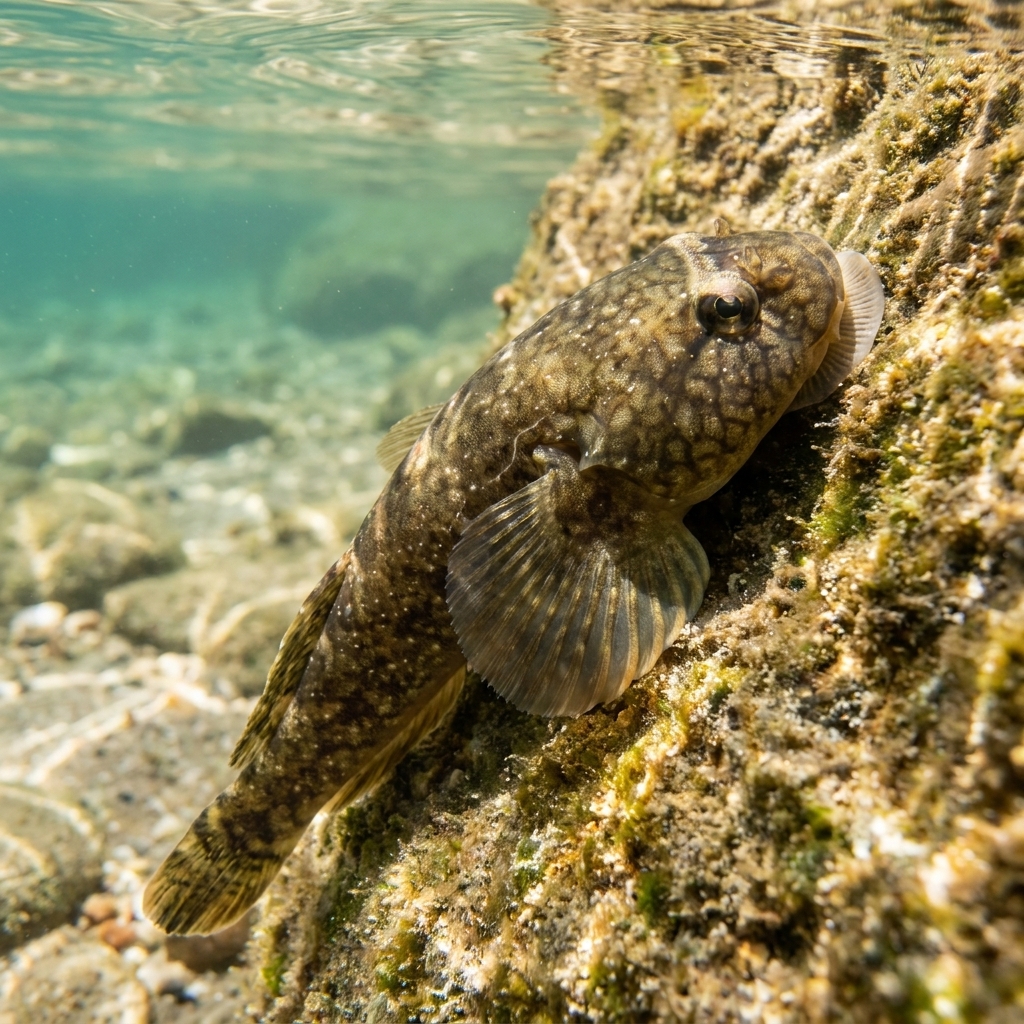
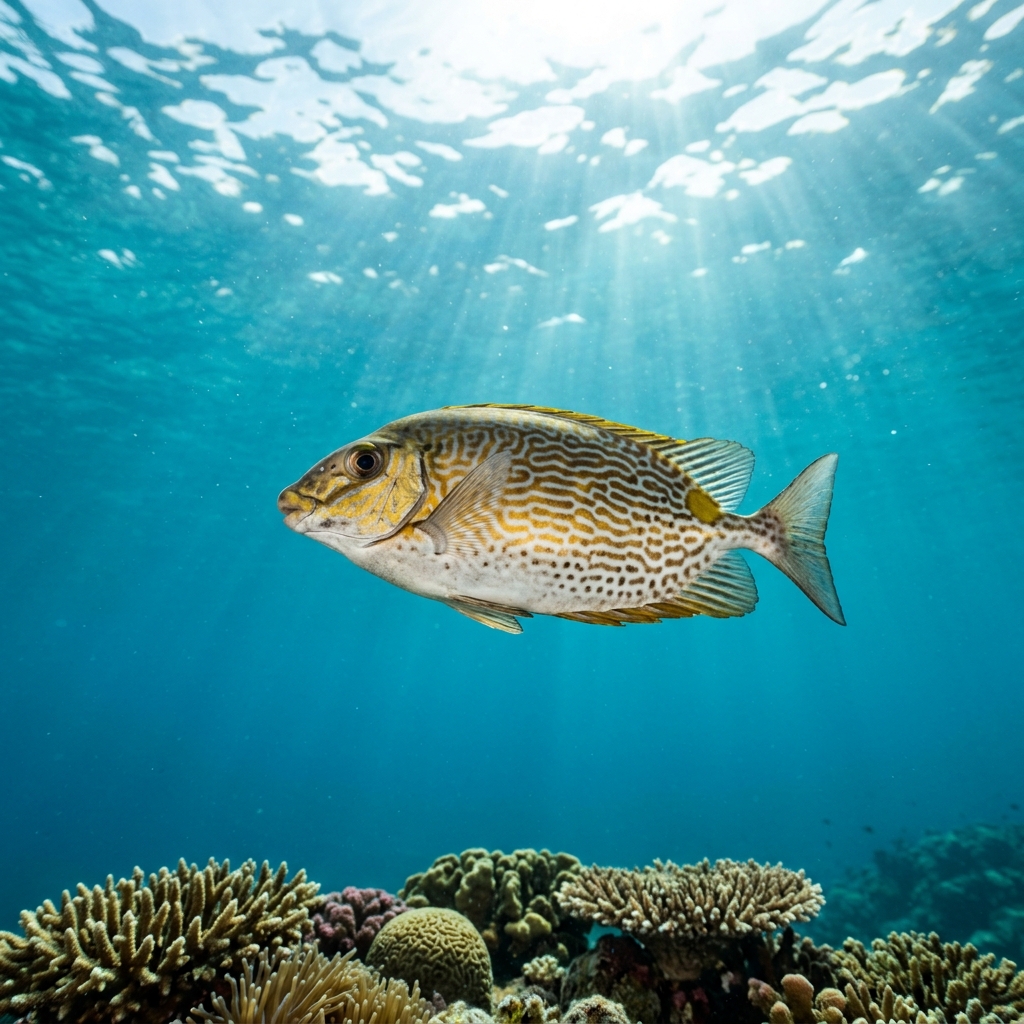
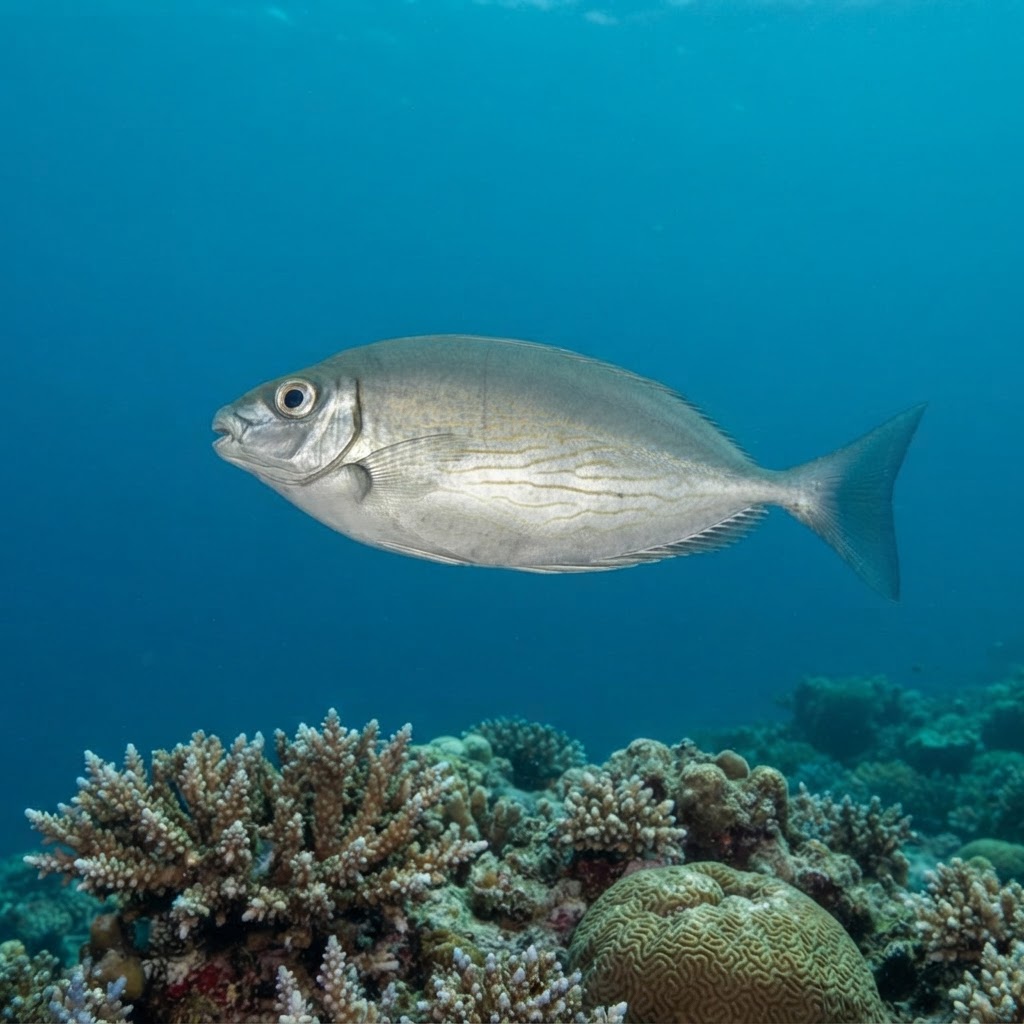
Oval, laterally flattened body around 21 cm long, olive-grey to yellowish-brown with faint darker mottling or wavy lines along the flanks that give it the marbled look. Has a small, pointed mouth built for grazing algae and a slightly pointed snout. The dorsal fin carries venomous spines, so it holds a stiff, upright posture when it feels crowded rather than darting off immediately.
Usually seen grazing over rocky or reef substrate, either alone or in loose small groups, picking at algae growth on rock and rubble. It tends to hold its ground rather than flee when a diver approaches, staying alert and ready to raise its spiny dorsal fin if it feels threatened. Most sightings are on shallower sections of reef, well within recreational depths.
As a grazer, it plays a real role in keeping algae in check on Mediterranean rocky reefs, an ecological niche it shares with rabbitfish relatives on Indo-Pacific reefs.
No clear seasonal pattern shows up in the sightings, and it sits comfortably in water from about 24.7 to 29.2 C, so it is a year-round fixture on Mediterranean and Red Sea reefs rather than a seasonal target.
Most reliably logged in Greece, particularly Crete, the Ionian Islands, Cyclades and the Dodecanese, and it is also a strong sighting across Egypt's South Sinai and Marsa Alam region. Turkey's Antalya and Turquoise Coast, plus Cyprus, round out the main places divers regularly run into it, with smaller numbers reported from Israel and Saudi Arabia.
Mapping where Marbled Spinefoot is logged…
Greece is the strongest area, especially Crete, the Ionian Islands, Cyclades and the Dodecanese, with Egypt's South Sinai and Marsa Alam also reliable. Turkey's Antalya and Turquoise Coast, and Cyprus, are other solid spots.
There is no strong seasonal pattern in sightings, and it tolerates water from roughly 25 to 29 C, so it turns up on Mediterranean and Red Sea reefs throughout the year.
Yes, in a limited way: its dorsal, anal and pelvic spines are venomous and give a painful sting if touched or grabbed. It will not chase a diver, so the risk is easily avoided by keeping hands off.
Look for an oval, flattened body about 21 cm long, olive-grey to brownish with faint mottled or wavy markings along the sides. It grazes low over rock and rubble with a small pointed mouth and holds its position stiffly rather than bolting when approached.
They typically reach around 21 cm in length, making them a modest-sized reef grazer rather than a standout for size.
It carries venomous spines in its dorsal, anal and pelvic fins, a defence shared with other rabbitfish, and spends its time grazing algae off rock and rubble, giving it a real cleanup role on Mediterranean reefs.
Site and sighting data is aggregated from diver logs, iNaturalist and GBIF. For taxonomy and conservation status:
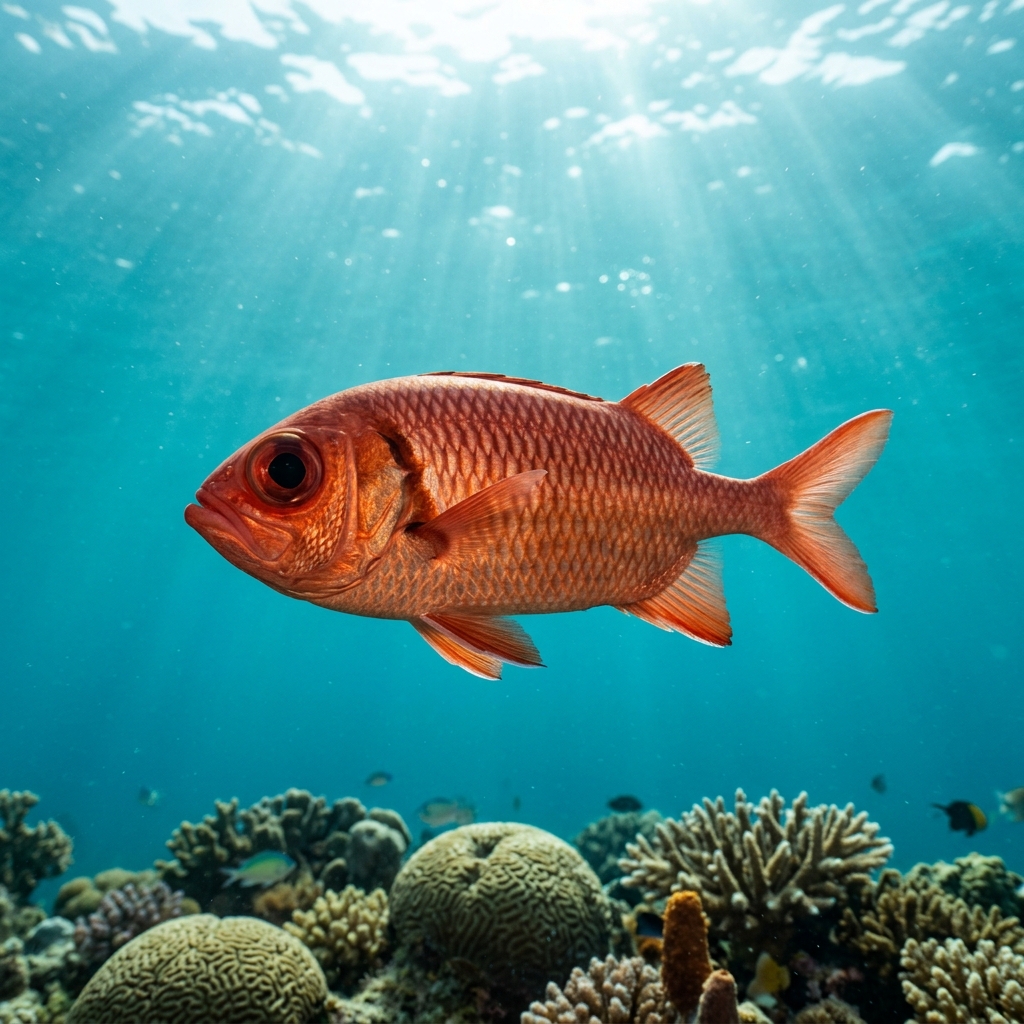
Soldierfish
3,612 sites