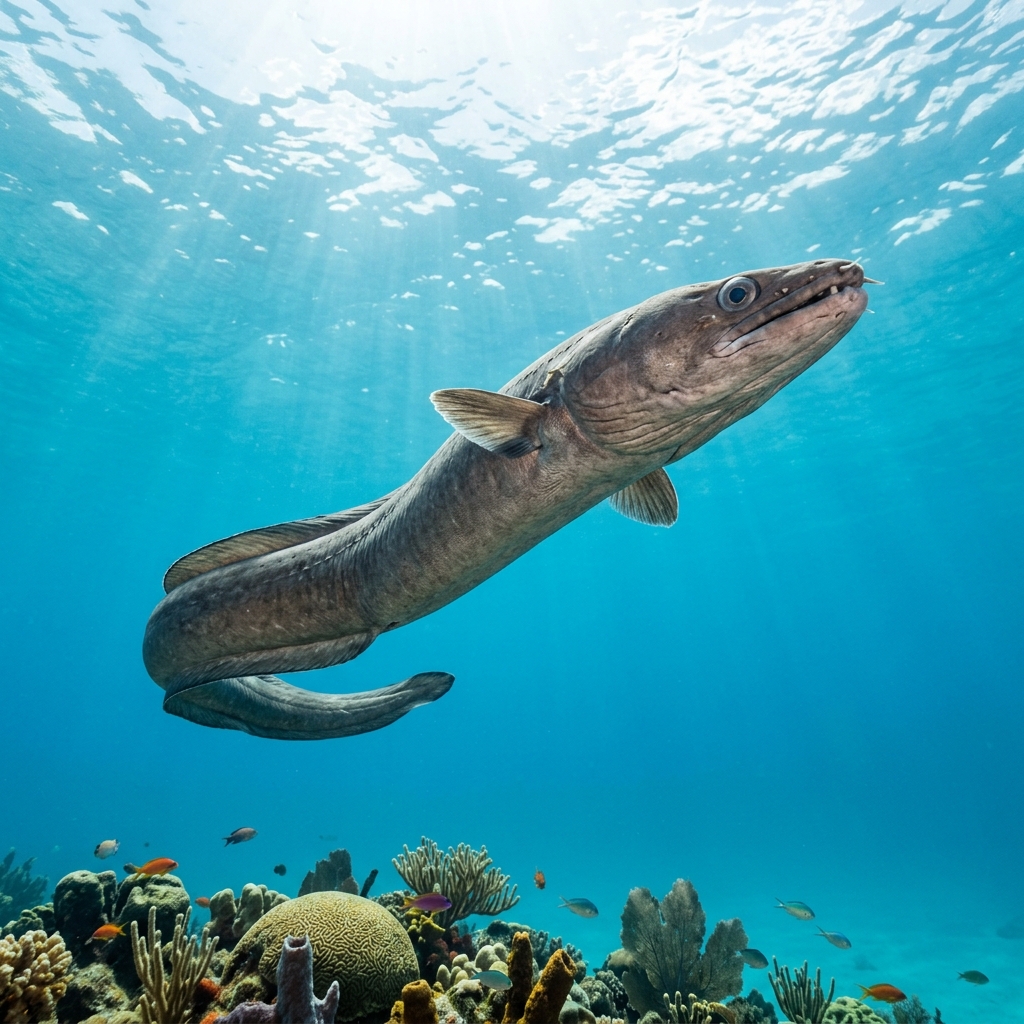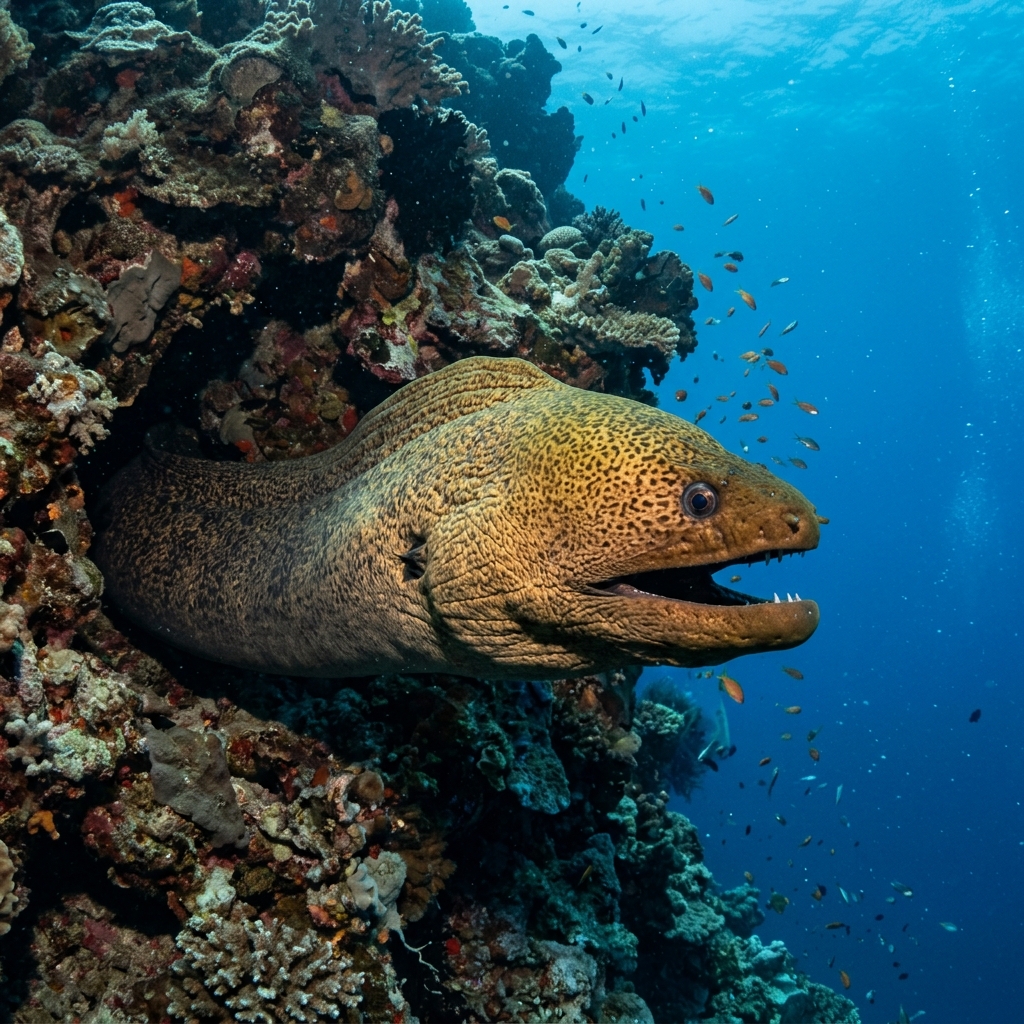
Callechelys marmorata
Marbled snake eels turn up on sandy reef margins in Mafia Island, Phuket and the Red Sea Riviera, in warm 25 to 29C water, year-round.
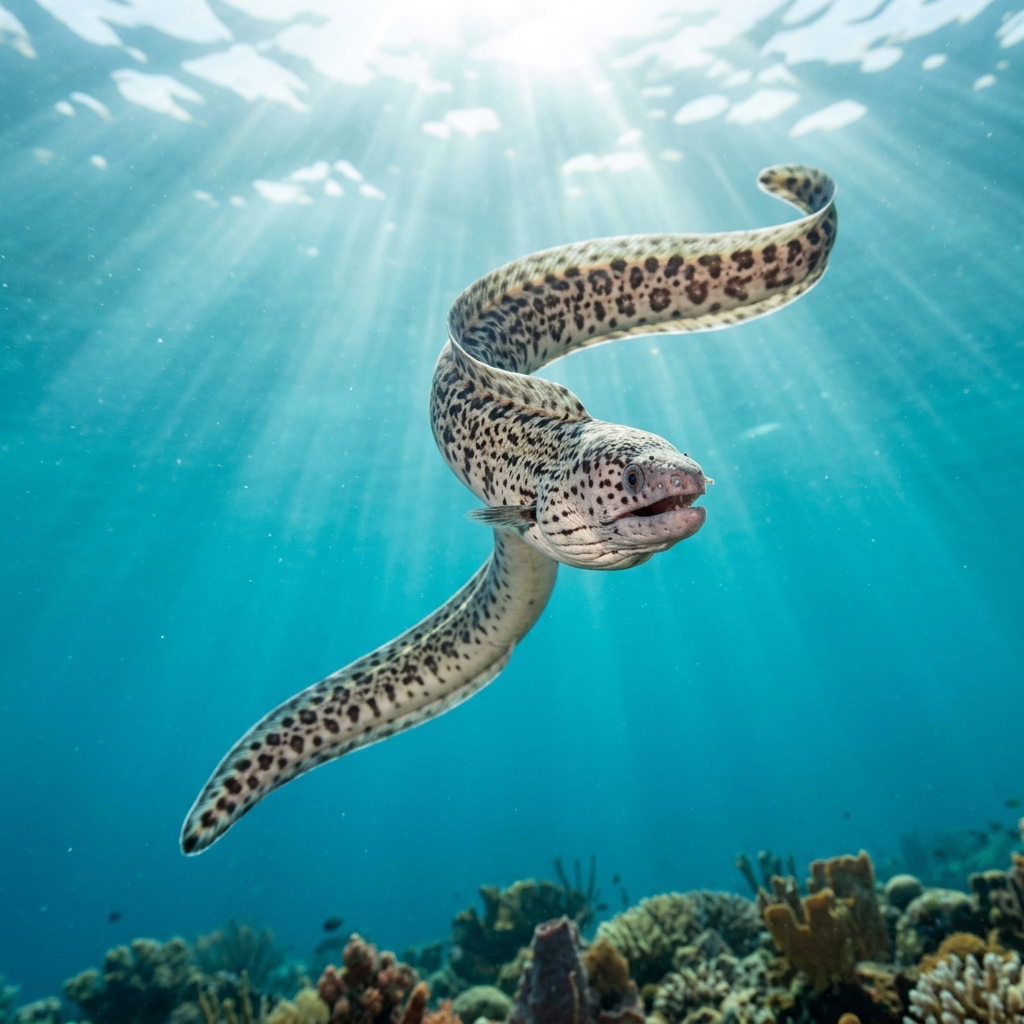
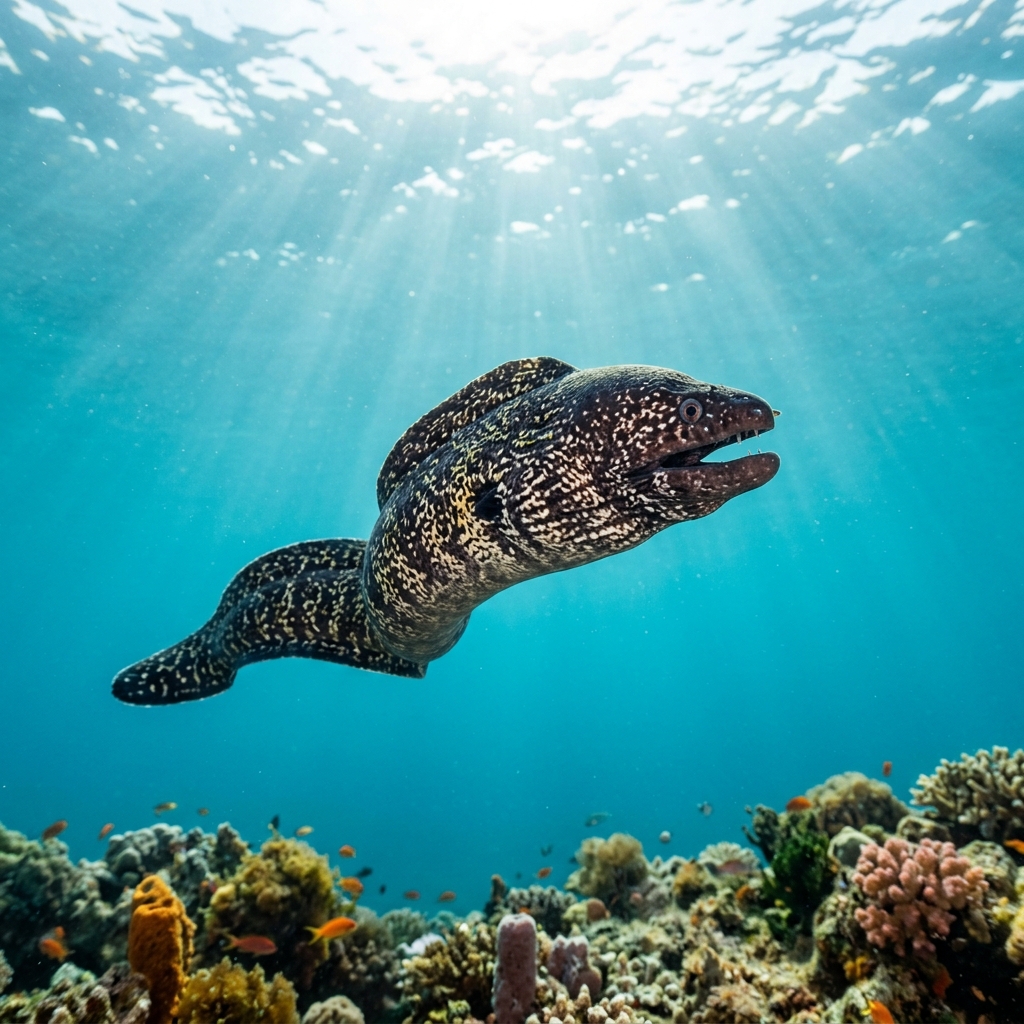
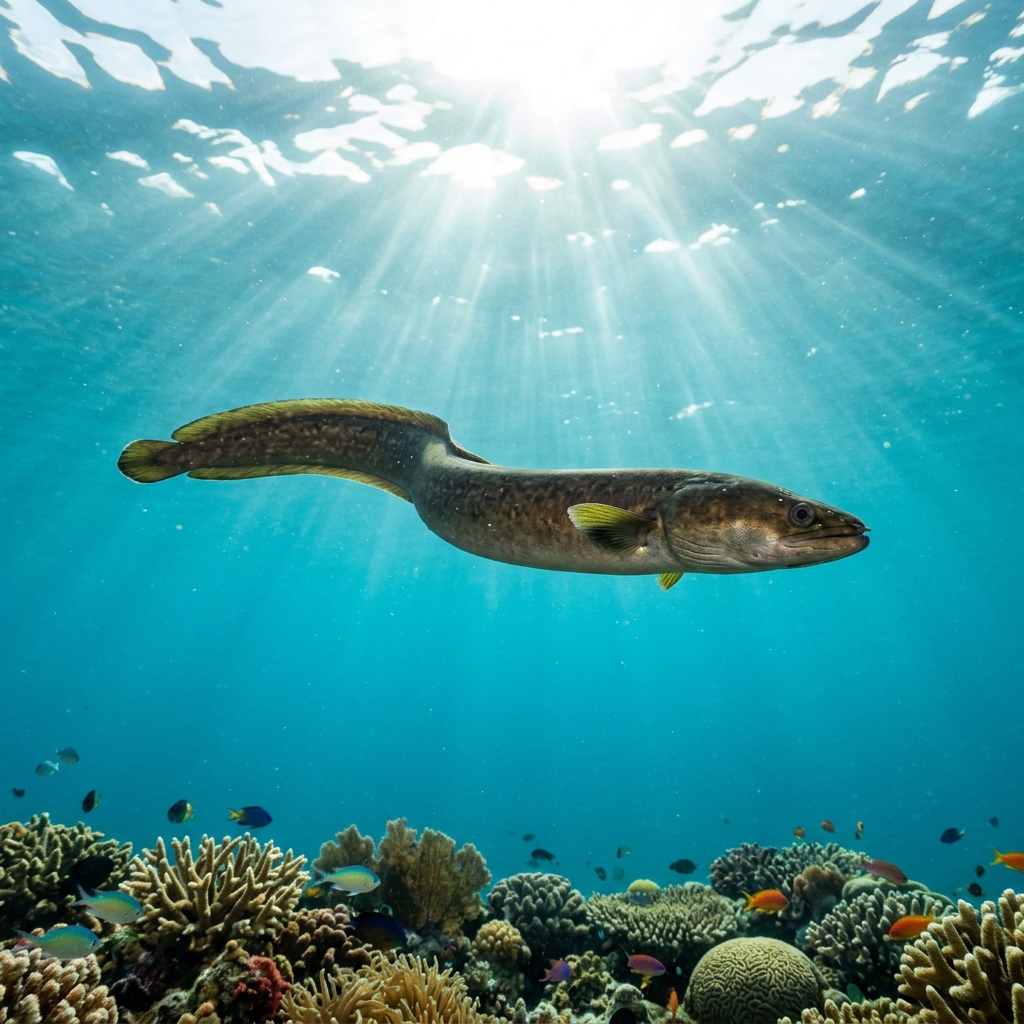
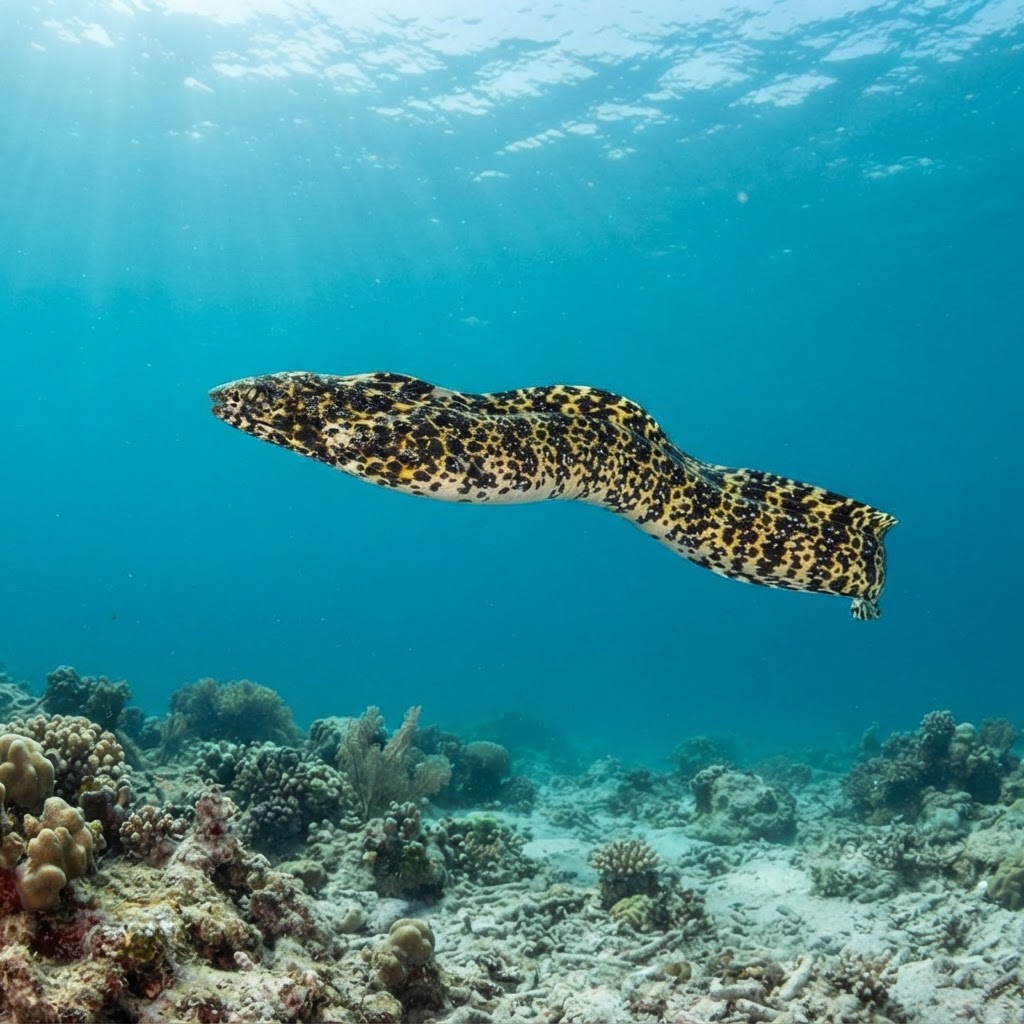
Slender, snake-like body reaching around 61cm, patterned in a mottled marbling of brown, tan and cream that breaks up its outline against sand. Look for the pointed snout and small eyes typical of snake eels, often with just the head or a short length of body showing above the sediment. No dorsal fin frills or showy colour to catch the eye, this is a low-profile animal you tend to spot by its texture against a plain seabed rather than by colour.
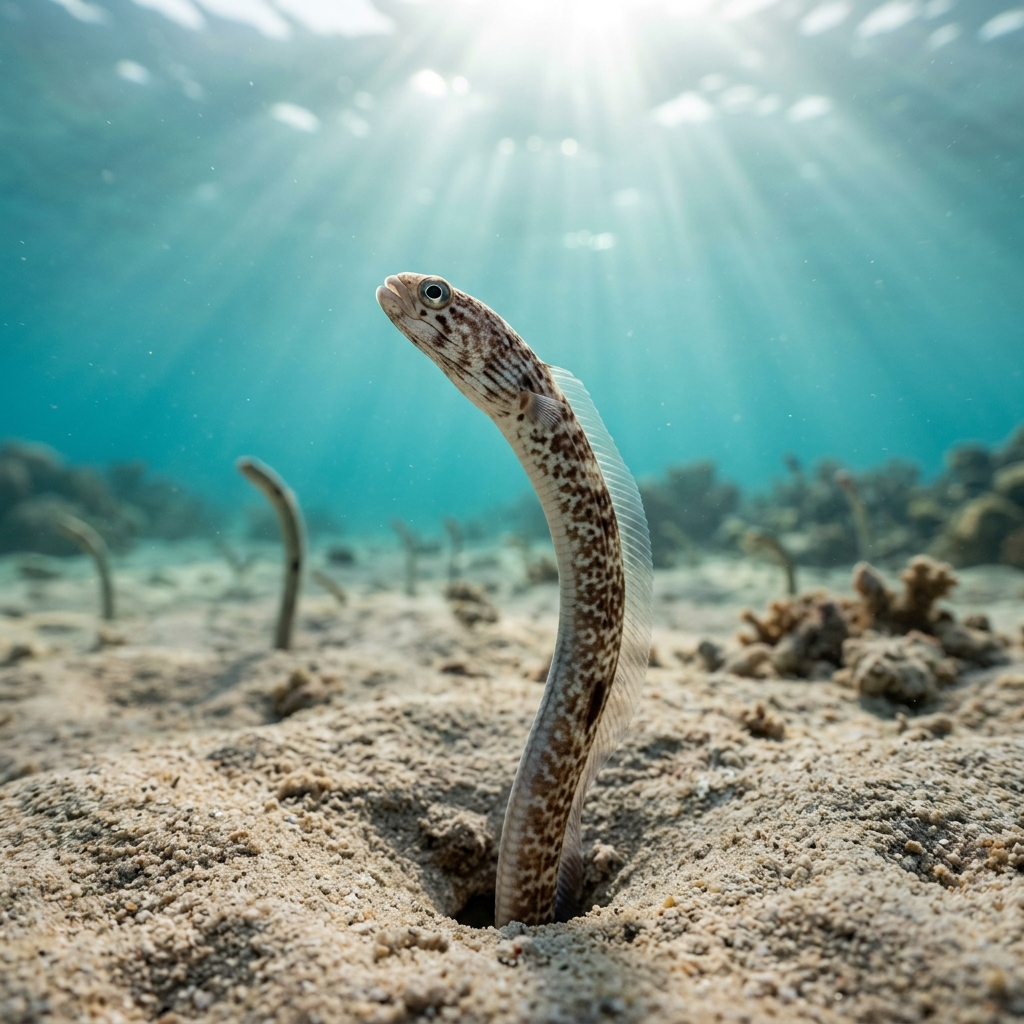
Divers usually find it with just its head or a short stretch of body poking out of sand or fine rubble near a reef edge, staying mostly still and relying on camouflage rather than flight. It is logged as uncommon at every site where it turns up, so sightings tend to come from divers who deliberately slow down and scan open sand patches rather than swim past them. It shows little reaction to a diver's presence unless approached closely, at which point it can withdraw quickly into its burrow.
Like other snake eels, it can burrow tail-first into sand, using a pointed, scale-free tail tip as a tool for digging backward into the substrate rather than emerging head-first from a den like a moray.
No clear seasonal pattern shows up in the sightings, and with a comfortable water-temperature range of roughly 25 to 29C, it sits happily on tropical reefs year-round. Plan around good visibility and a slow, sand-scanning dive rather than a particular month.
Most reliably logged around Mafia Island in Tanzania and Phuket in Thailand, with strong showings too in the Red Sea Riviera in Egypt and Sulawesi in Indonesia. A single logged site in Dili, Timor-Leste, rounds out its known range, but sandy reef margins in these regions give divers the best odds.
Mapping where Marbled Snake Eel is logged…
Best known from Mafia Island in Tanzania and Phuket in Thailand, with reliable records also from the Red Sea Riviera in Egypt and Sulawesi in Indonesia. It has also been logged near Dili in Timor-Leste.
There's no strong seasonal signal in the sightings, and it tolerates a fairly wide warm-water range of about 25 to 29C, so it is seen year-round rather than during a specific window.
Look for a slender, snake-shaped body around 60cm long with a mottled brown-and-cream marbled pattern, usually seen with just the head or a short section poking out of sand near a reef edge. It lacks bold banding or bright colour, so it is easier to spot by shape and texture than by pattern alone.
They typically reach around 61cm in length, making them a modest-sized eel best noticed by careful, close-in scanning of sandy substrate rather than a big profile.
No, they are not considered dangerous to divers. They spend most of their time buried in sand and retreat into their burrow if approached, posing no threat during normal diving.
Rather than resting head-out in a rocky den like a moray, it burrows tail-first into sand using a hardened, scale-free tail tip, leaving just its head visible while it waits and watches.
Site and sighting data is aggregated from diver logs, iNaturalist and GBIF. For taxonomy and conservation status:
Garden Eel
2,448 sites