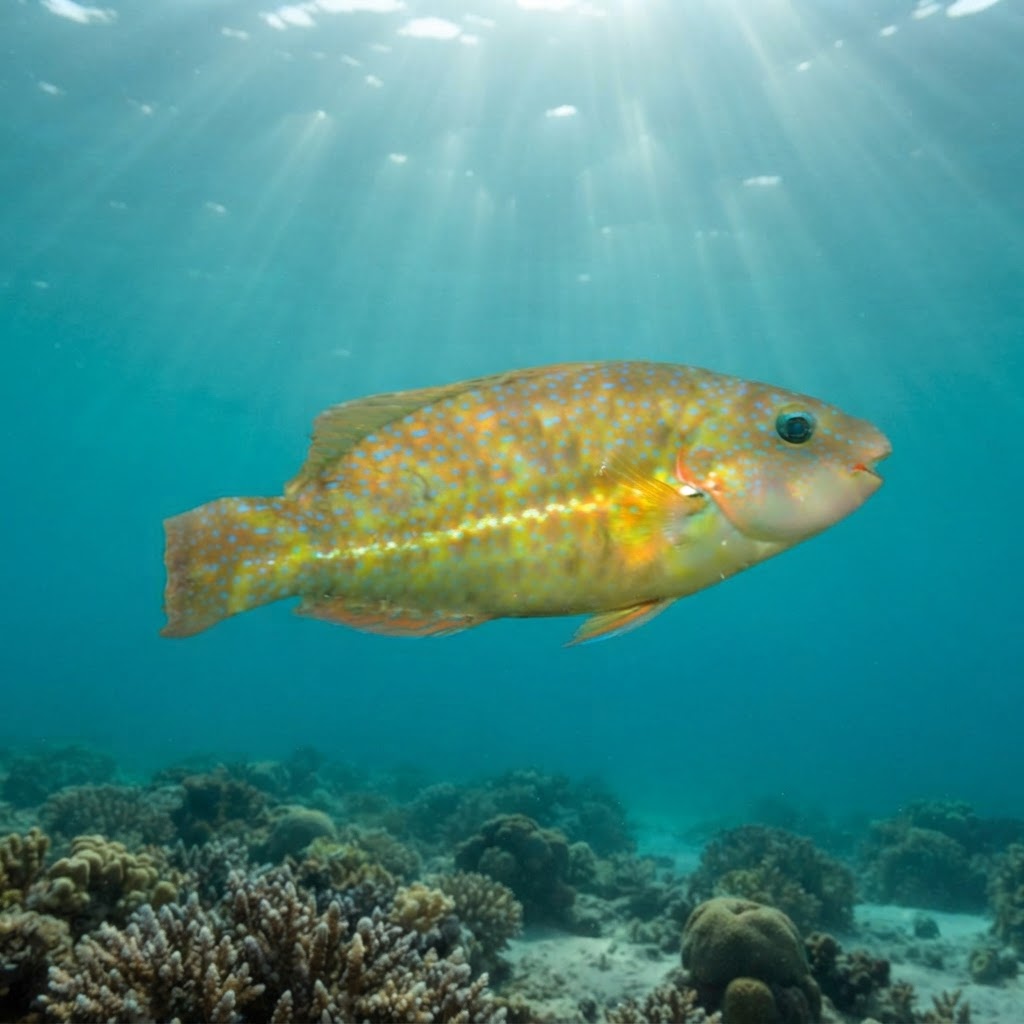
Leptoscarus vaigiensis
Mottled brown reef grazer logged around Viti Levu, Fiji and the Inner Islands, Seychelles in warm water from 24 to 29C.
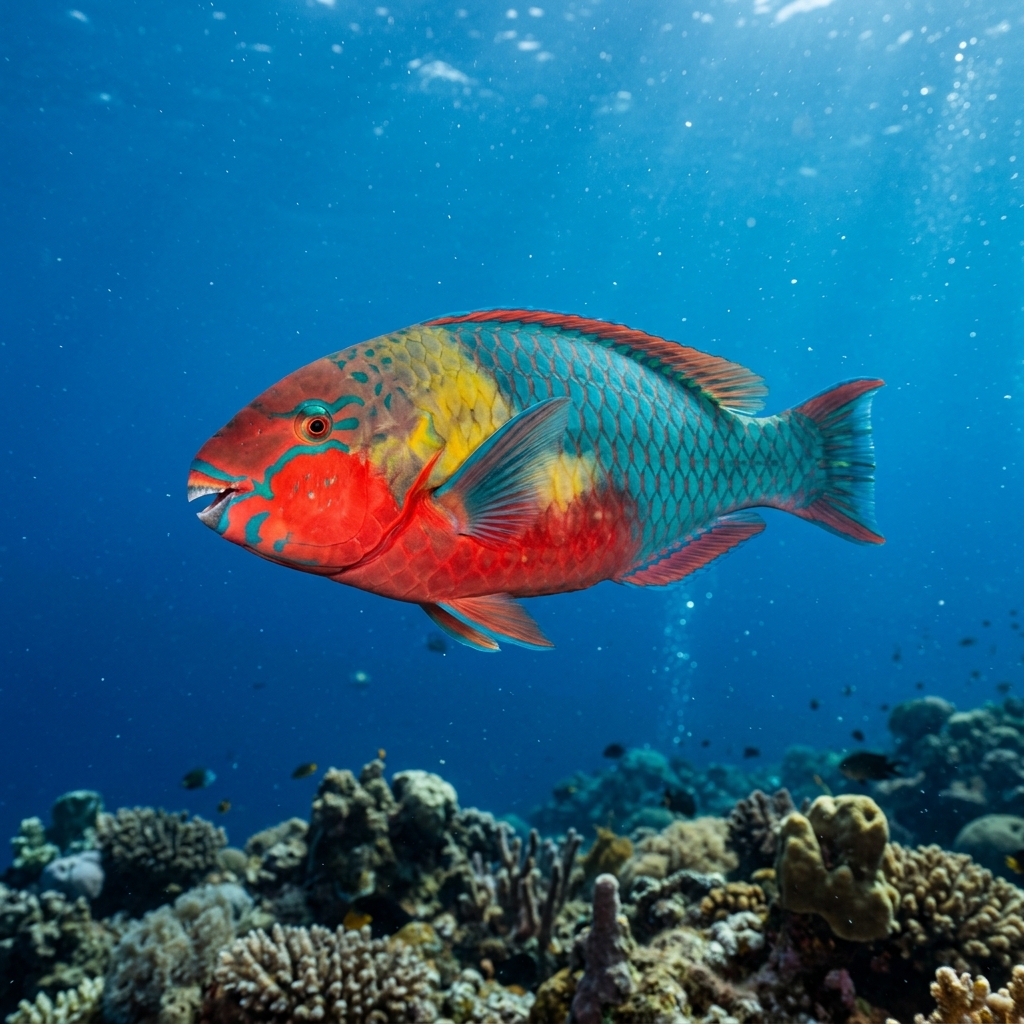
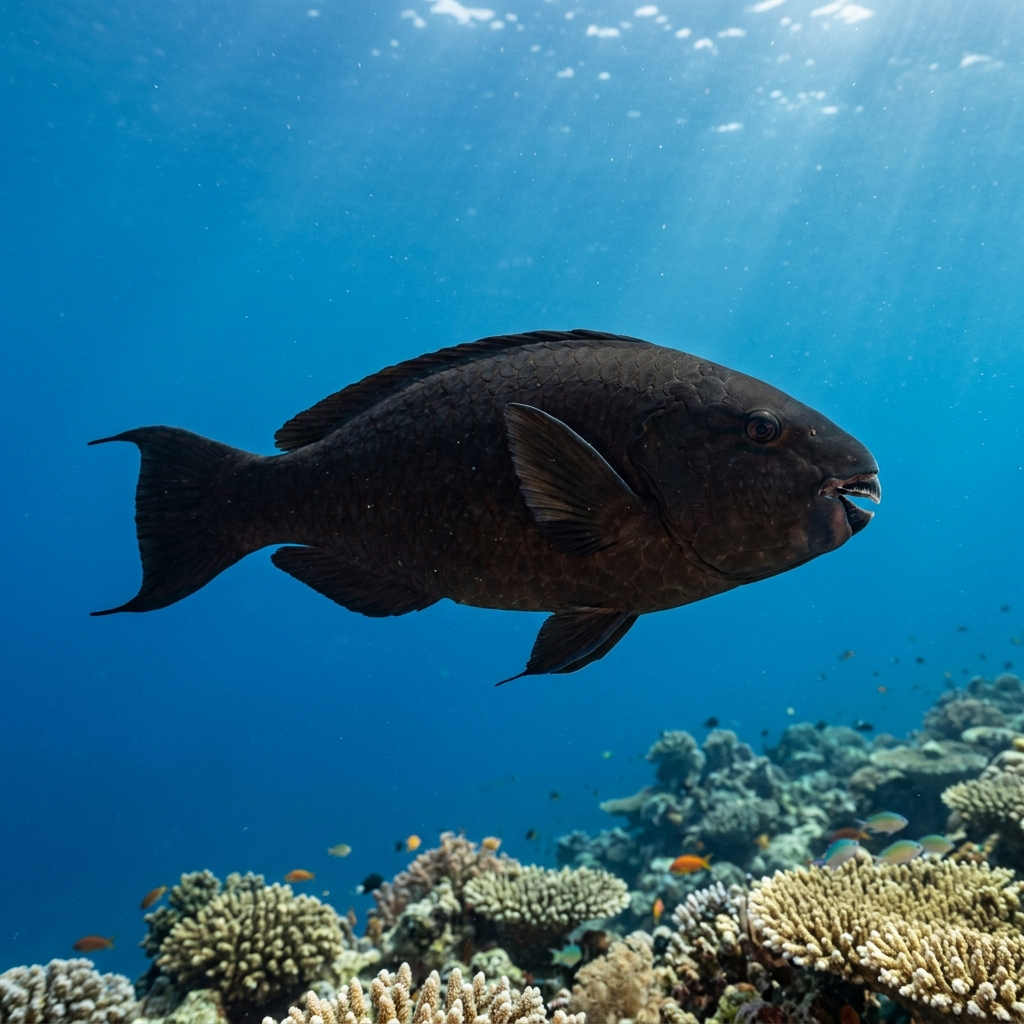
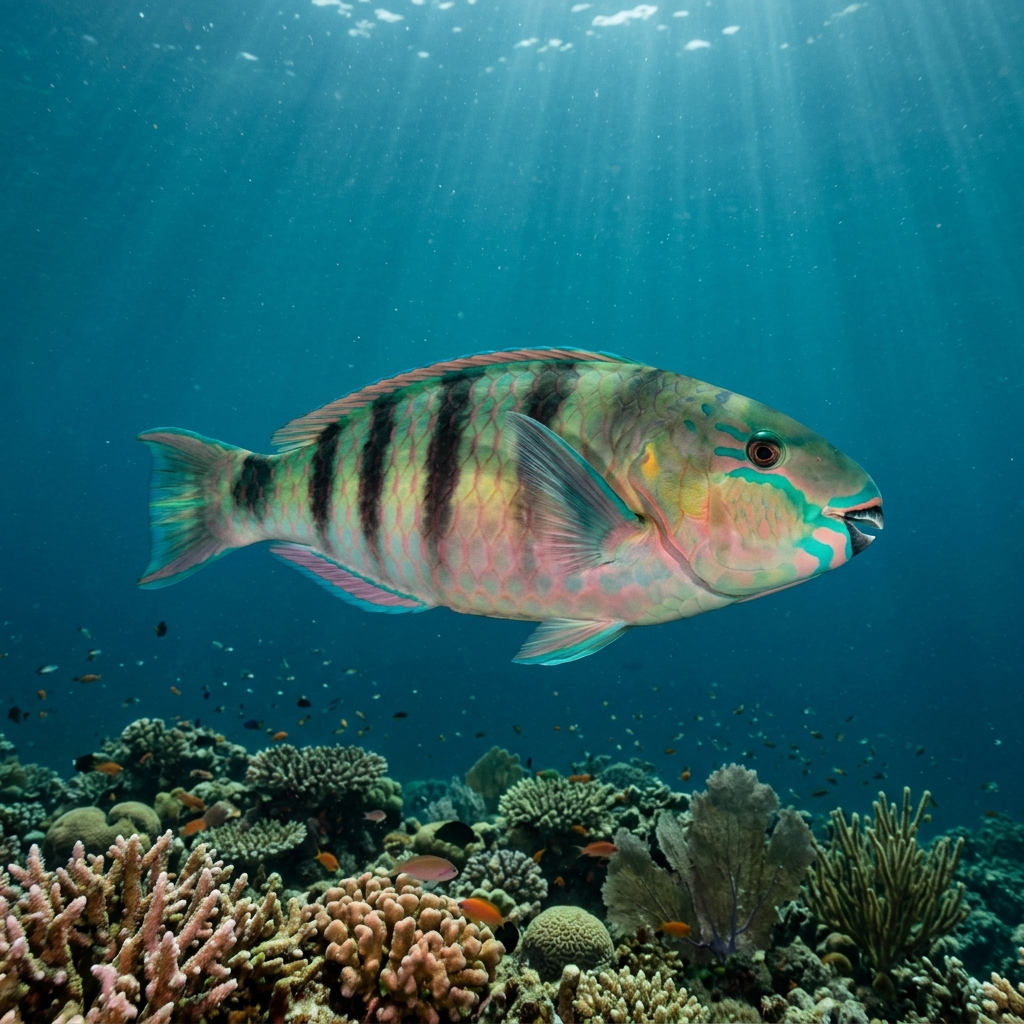
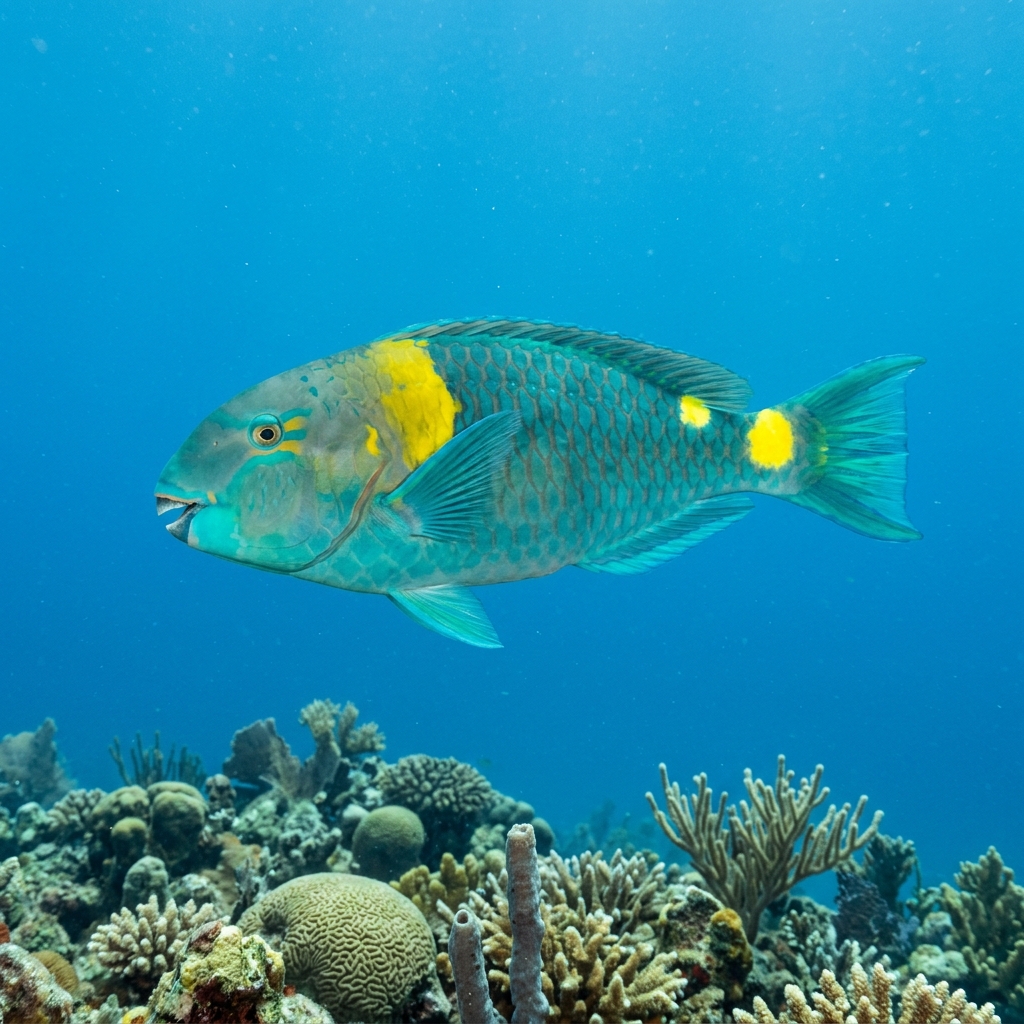
A small, slender parrotfish around 24 cm, with a mottled brown, tan and grey blotched pattern rather than the bold blues or greens of many reef parrotfish. Its body is more elongate than the typical chunky parrotfish shape, and it often sits low over seagrass or algae-covered rubble rather than mid-water. Look for the fused, beak-like front teeth typical of the group when it noses in close to the substrate to feed.
Divers most often find it grazing low over seagrass beds and algae-covered flats rather than cruising open reef, picking at turf algae with its beaked teeth. It tends to hold its ground or drift off slowly rather than bolt, and logged sightings mark it as uncommon rather than a guaranteed find, so it rewards divers who spend time scanning the sand and weed margins of a site rather than the reef wall.
Unlike most reef parrotfish, this species feeds mainly on seagrass and drifting algae rather than scraping coral rock, so it is far more likely to turn up over seagrass meadows and rubble flats than on hard coral reef.
No clear seasonal pattern shows up in the sighting data, and its comfort range of 24 to 29.3C covers tropical reef conditions year-round, so any month at these sites is fair game.
Most reliably logged around Viti Levu in Fiji and the Inner Islands of Seychelles, with a further reliable stretch of sightings around Luzon in the Philippines. Smaller numbers turn up at Saint-Paul in Reunion and Flic-en-Flac in Mauritius, so it has a wide but patchy Indo-Pacific spread.
Mapping where Marbled Parrotfish is logged…
The strongest sightings come from Viti Levu in Fiji and the Inner Islands of Seychelles, with further records around Luzon in the Philippines. It also turns up in smaller numbers at Saint-Paul, Reunion and Flic-en-Flac, Mauritius.
There is no strong seasonal signal in the sightings, and it lives comfortably in water from 24 to 29C, so it is a year-round find at the sites where it occurs rather than a seasonal special.
Look for a slim, small parrotfish around 24 cm with a mottled brown and tan blotchy pattern, quite different from the bright blues and greens of many other parrotfish. It usually stays low over seagrass or algae-covered rubble, feeding with its fused beak-like teeth.
They reach around 24 cm, making them one of the smaller and more slender members of the parrotfish group divers encounter on Indo-Pacific reefs.
They graze mainly on seagrass and drifting algae rather than scraping algae off dead coral like many of their relatives, which is why they favour seagrass beds and weedy rubble flats over hard coral reef.
Site and sighting data is aggregated from diver logs, iNaturalist and GBIF. For taxonomy and conservation status:
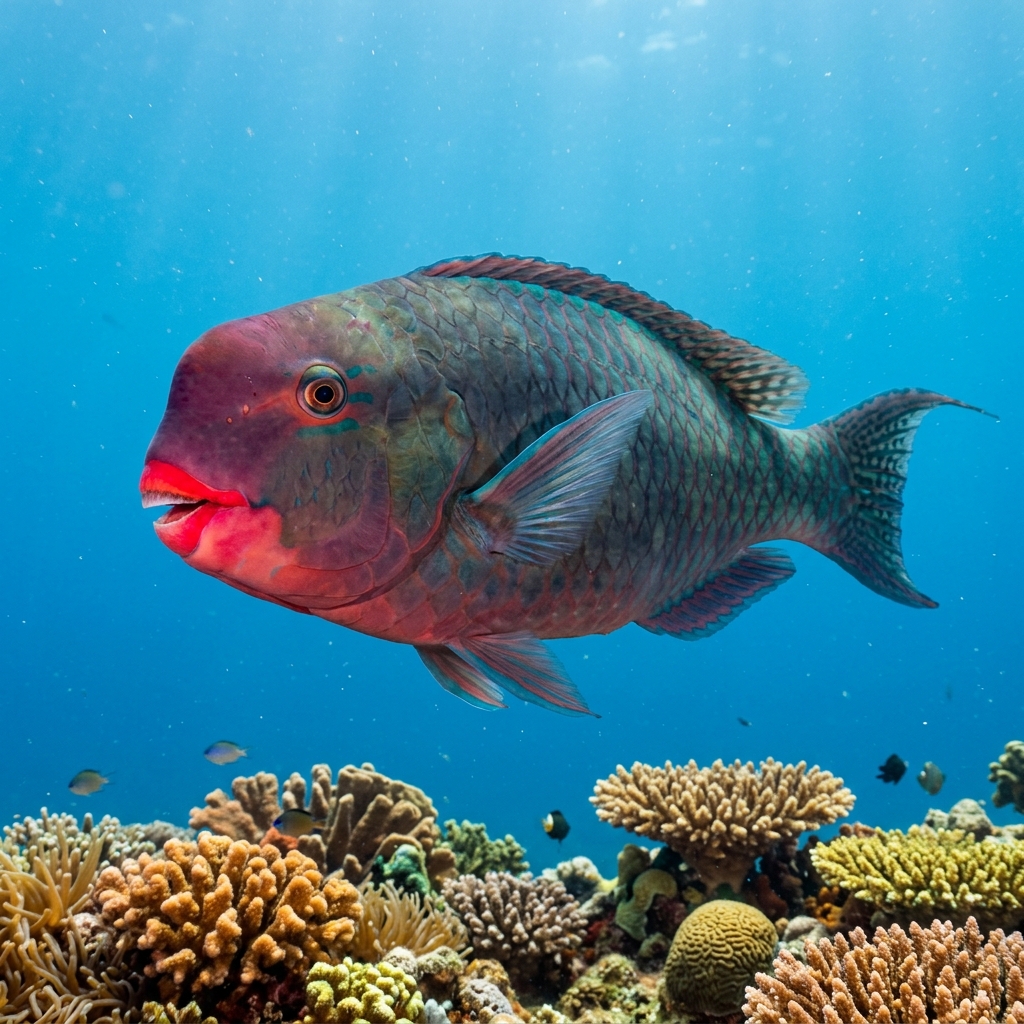
Redlip Parrotfish
2,789 sites