Torpedo sinuspersici
Marbled electric ray spotted year-round in Muscat, Oman's dive sites, resting on sand in 22-28C water. Here's how to spot one safely.
Safety warning
It can deliver a real electric shock strong enough to stun or injure a diver, especially if you kneel on one hidden in sand or grab it out of curiosity. Keep hands and fins off the bottom around sandy patches where it rests, and treat any half-buried ray-shaped outline as one to watch, not touch.
If you're shocked
Electric shockGeneral first-aid guidance, not a substitute for professional medical care. In an emergency, call your local emergency number.
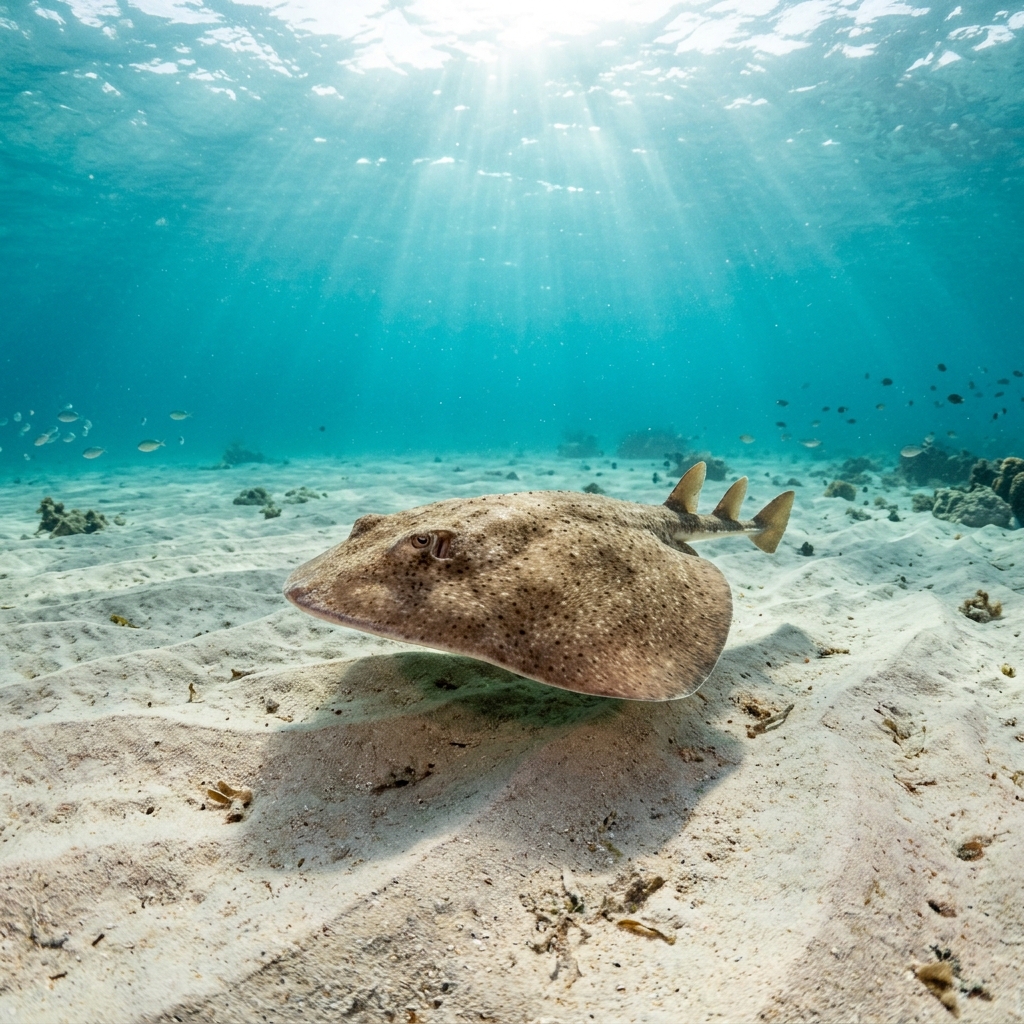
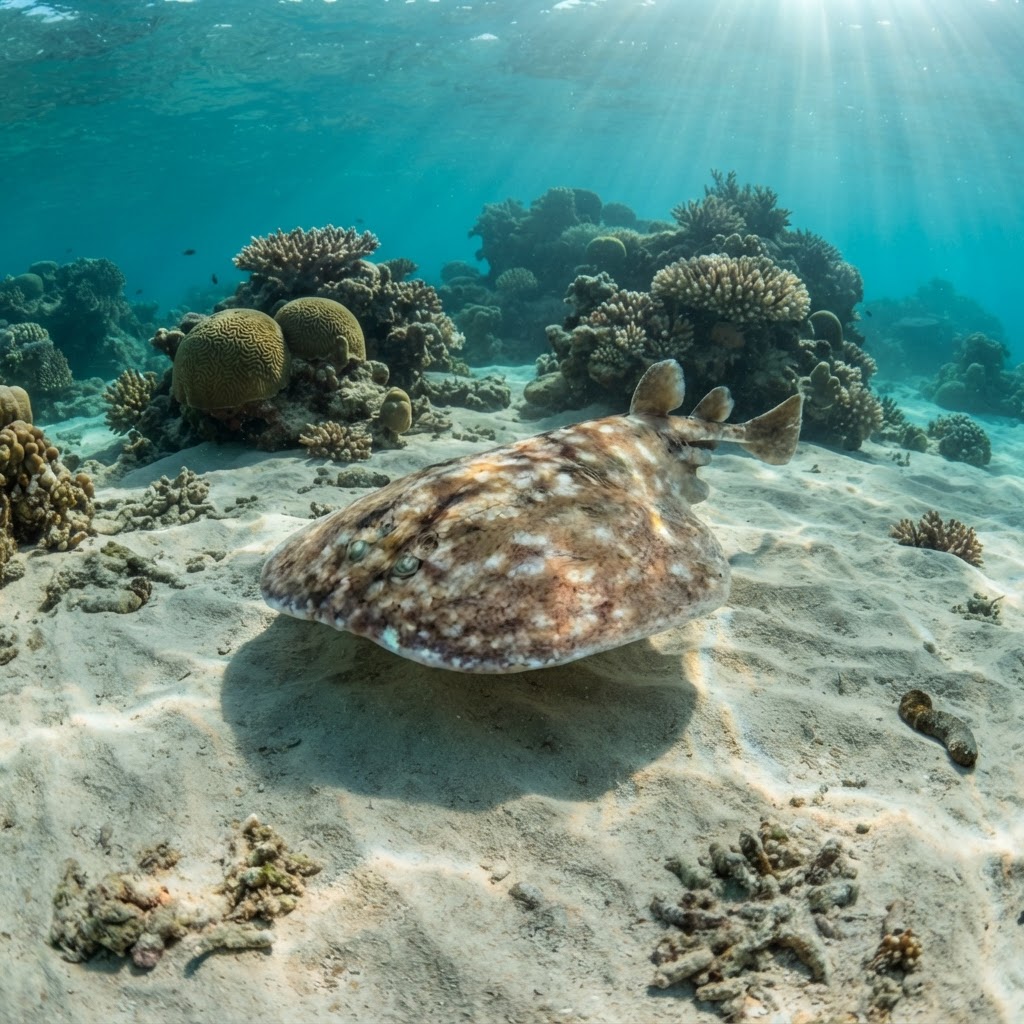
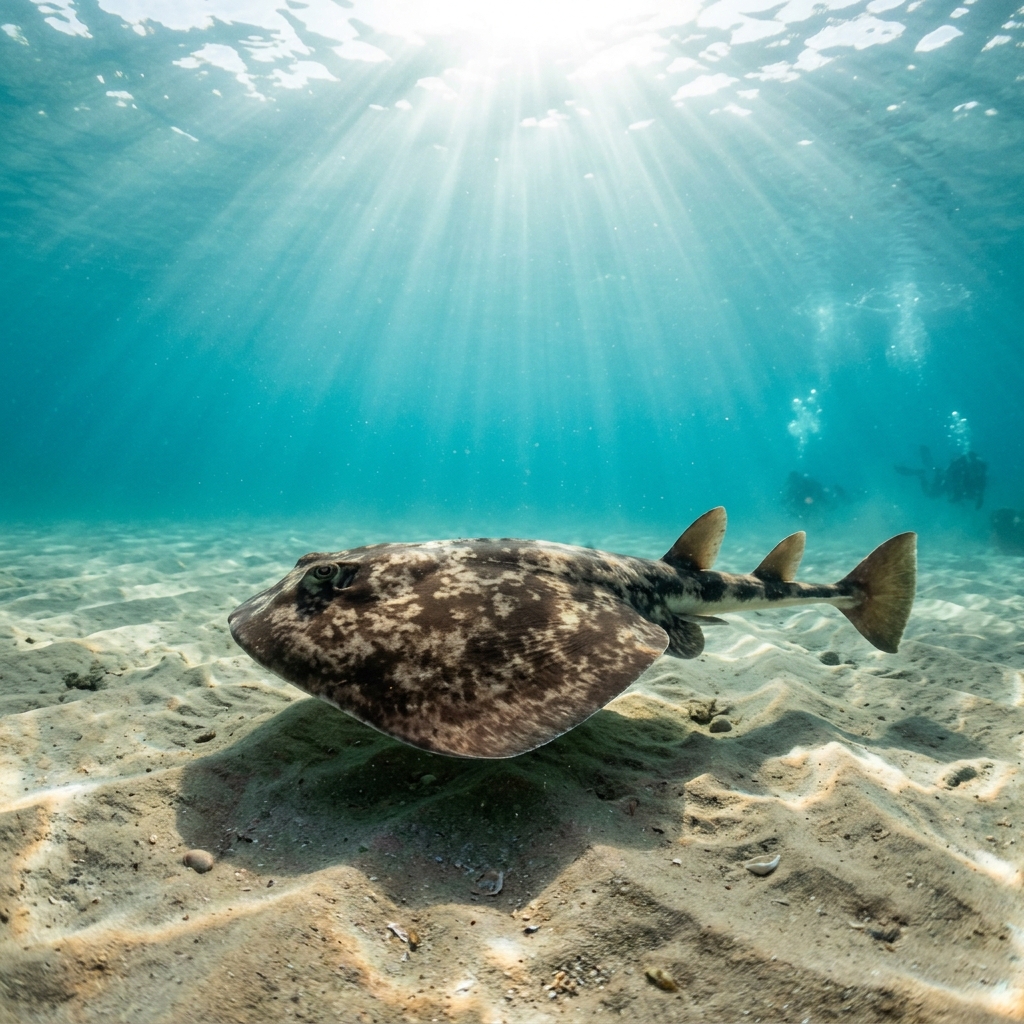
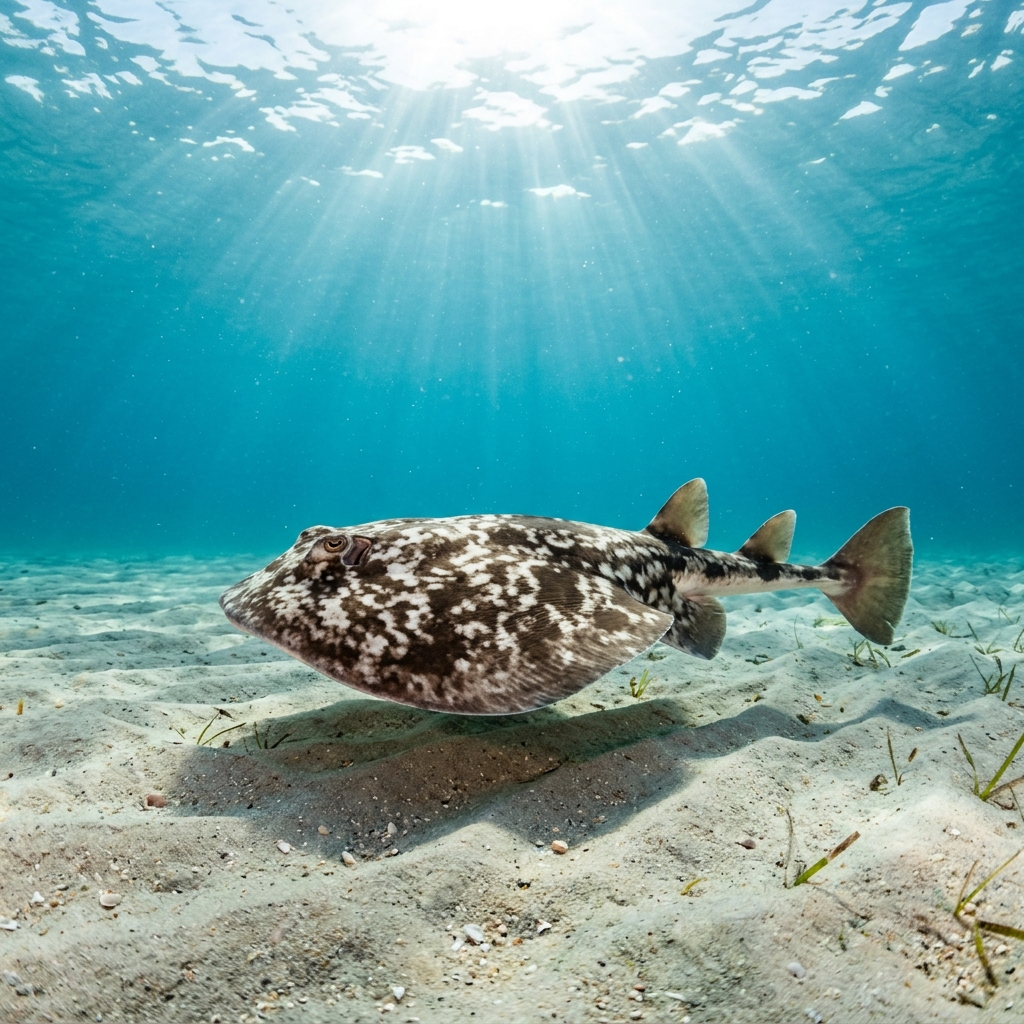
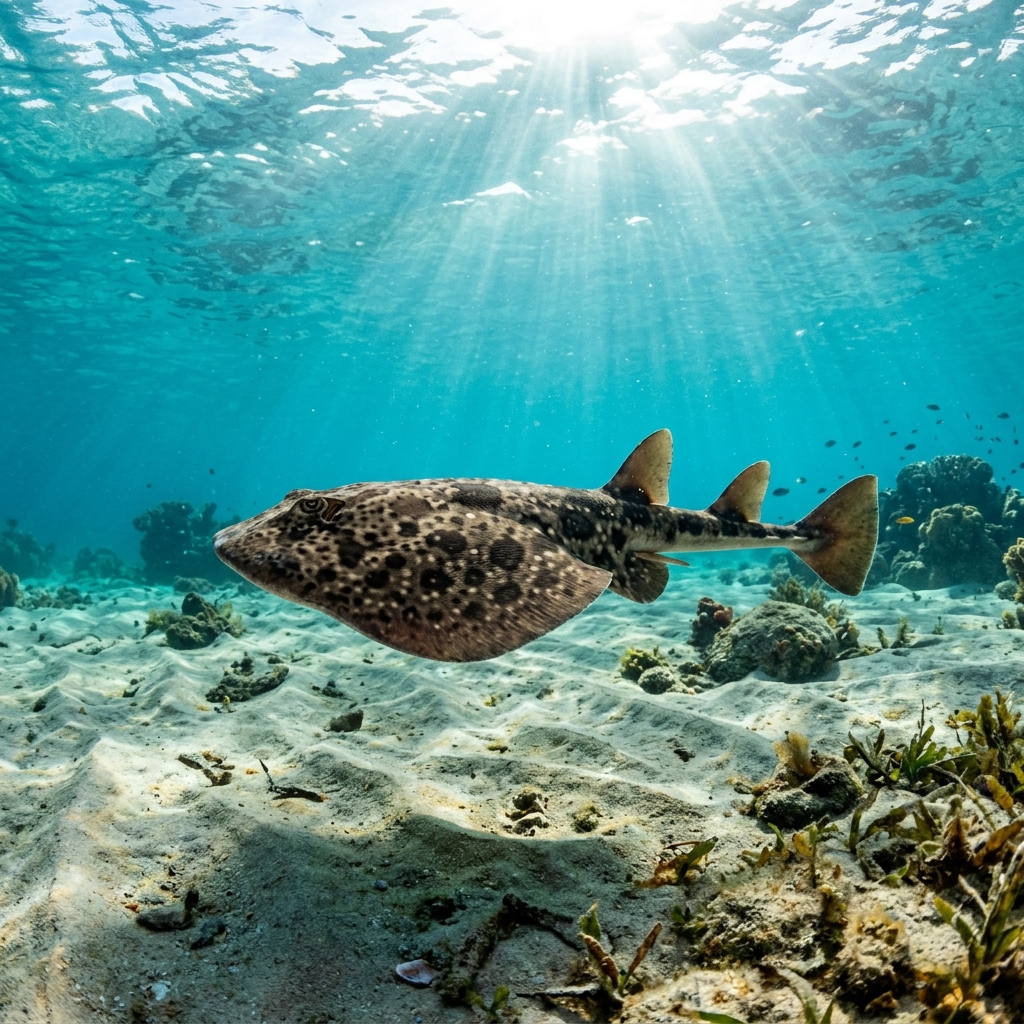
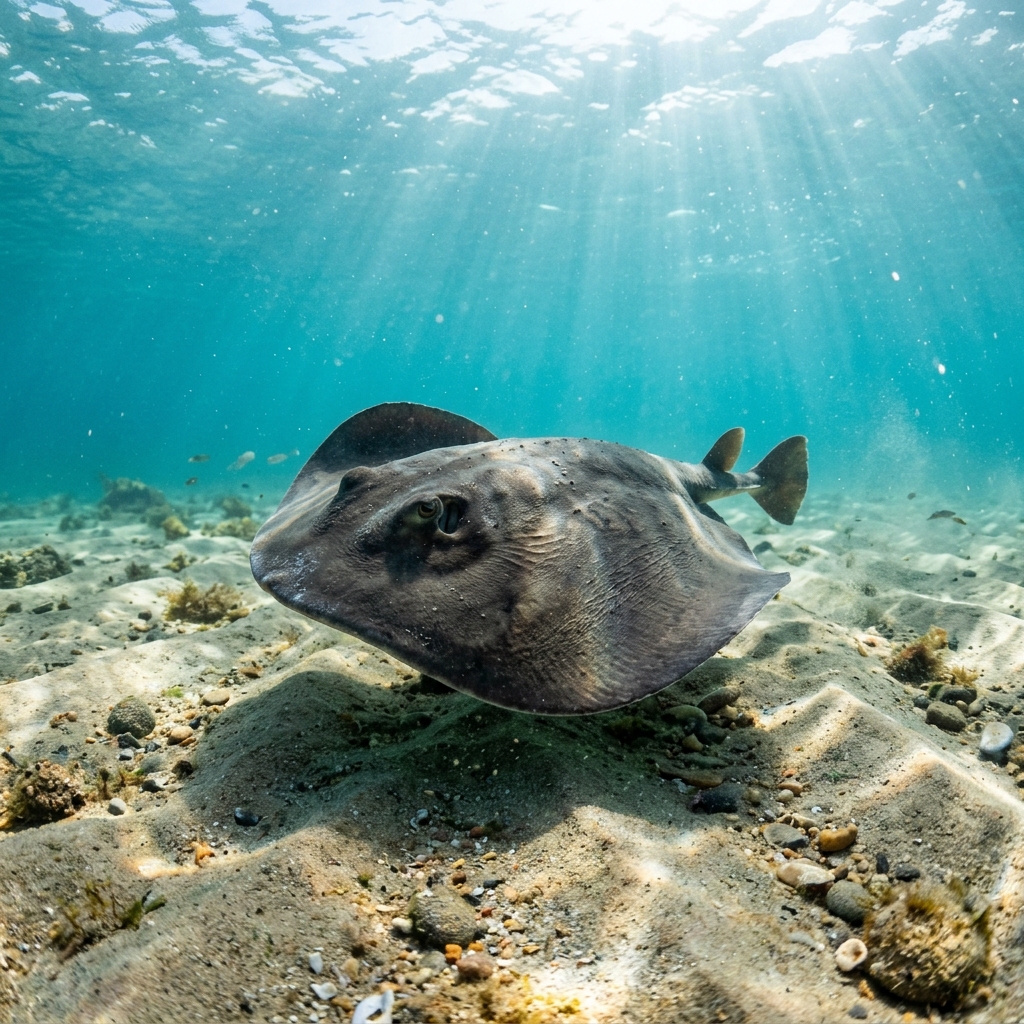
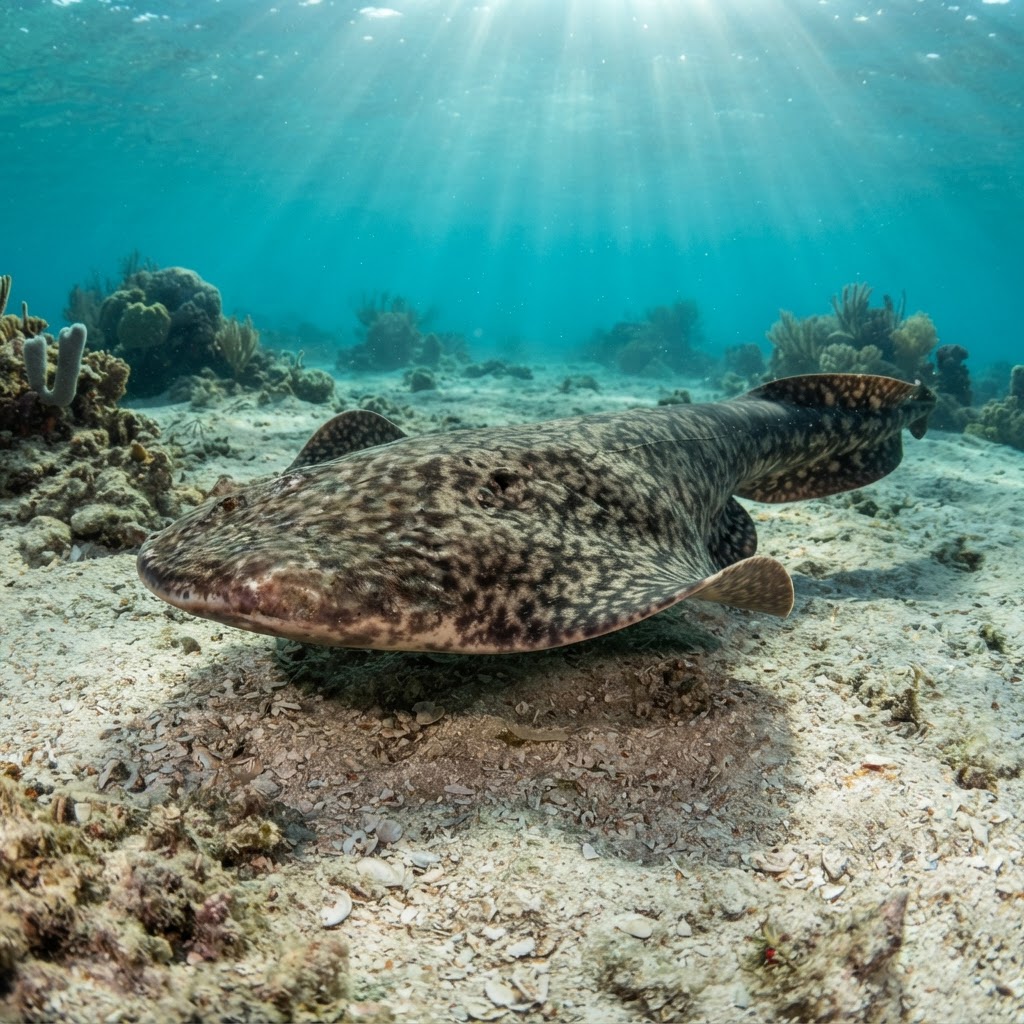
Look for a rounded, almost disc-shaped body with a thick, muscular tail rather than the whip-thin tail of most rays. The skin carries a mottled, marbled brown-and-cream pattern that breaks up its outline against sand, and it grows to around 91 cm, noticeably bulkier than typical reef rays of similar length. It usually lies flat and motionless on the bottom, only the eyes and spiracles (breathing holes) sitting proud of the sand.
Divers most often find it lying still on sand or rubble patches, half-buried and relying on its marbled camouflage rather than movement to avoid attention. It is not a fast swimmer and generally holds its ground unless closely approached or touched, at which point it may swim off in a slow undulating glide. Most logs describe it as an uncommon to occasional find rather than something that turns up on every dive.
It generates a real electric shock from muscle tissue in its disc, used both to stun prey buried in sand and to deter anything that gets too close or steps on it.
Sightings show no detected season, and with a comfortable range of 21.8 to 28.3C it seems to sit on sand year-round rather than migrating with temperature. Plan around general dive conditions in Muscat or KwaZulu-Natal rather than a particular month.
Reef neighbours a diver could mistake it for. Use the identification notes above to tell them apart.
Muscat, Oman is by far the most reliable place to find one, with sightings logged across a wide spread of sites there. KwaZulu-Natal in South Africa is the other confirmed spot, though logged at fewer sites and with more variable frequency.
Mapping where Gulf Torpedo is logged…
Muscat, Oman is the strongest area, with sightings logged across many sites there. KwaZulu-Natal, South Africa also has a smaller but confirmed population.
There is no clear seasonal pattern in the sightings, and the water temperature range it tolerates (21.8 to 28.3C) spans most of the year in these regions, so it is best treated as a year-round possibility rather than a seasonal target.
Yes, they can deliver a real electric shock if handled or accidentally kneeled on. They are not aggressive and pose little risk if left alone on the sand, so the main rule is simply don't touch.
Look for a rounded disc body, a thick muscular tail rather than a thin whip tail, and a mottled brown-and-cream marbled pattern. It usually lies motionless on sand, easy to overlook until it moves.
They reach around 91 cm in length, giving them a noticeably bulkier build than many similarly sized reef rays.
It can produce a real electric shock from specialised muscle tissue in its disc, using it to stun buried prey and to warn off anything that gets too close.
Site and sighting data is aggregated from diver logs, iNaturalist and GBIF. For taxonomy and conservation status:
Pacific Electric Ray
73 sites