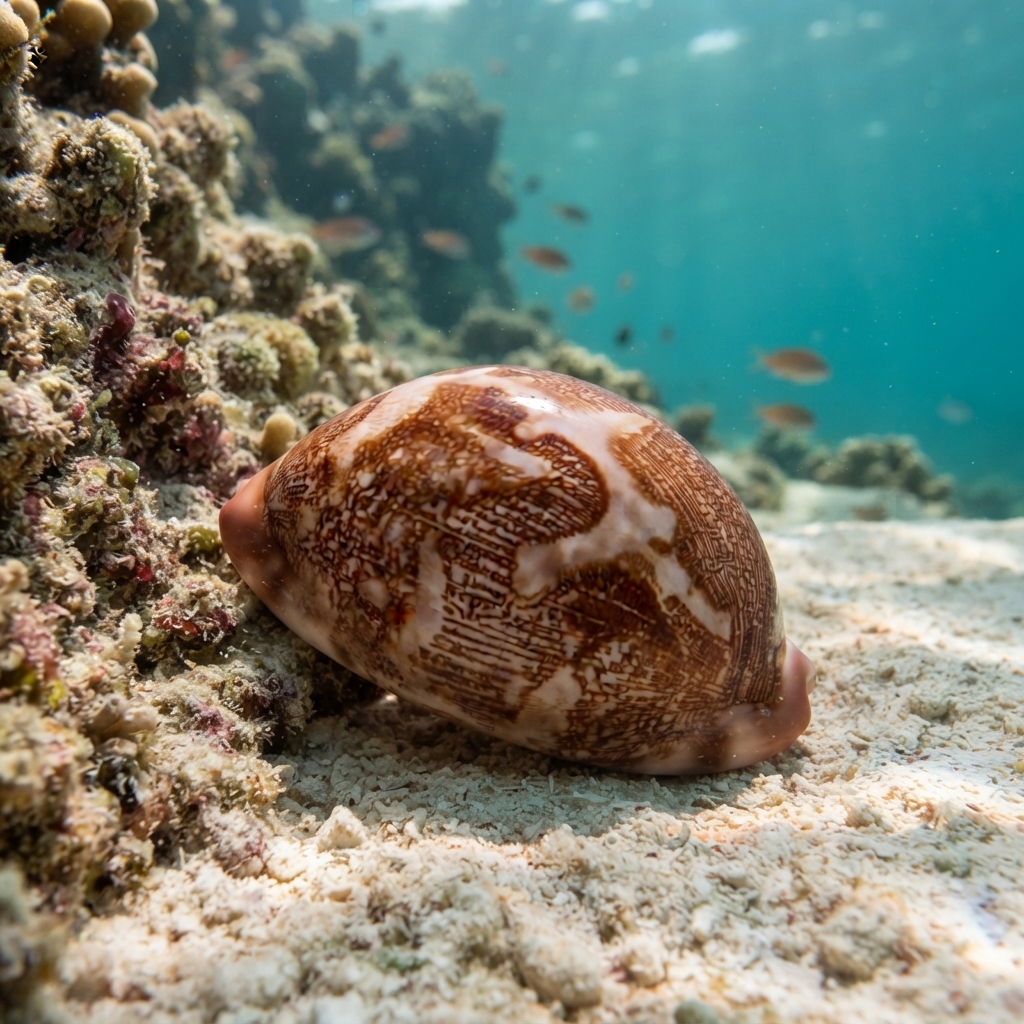
Leporicypraea mappa
Look for map cowrie on night dives around Kwajalein Atoll and Luzon, an uncommon find on warm reefs between 25 and 31C.
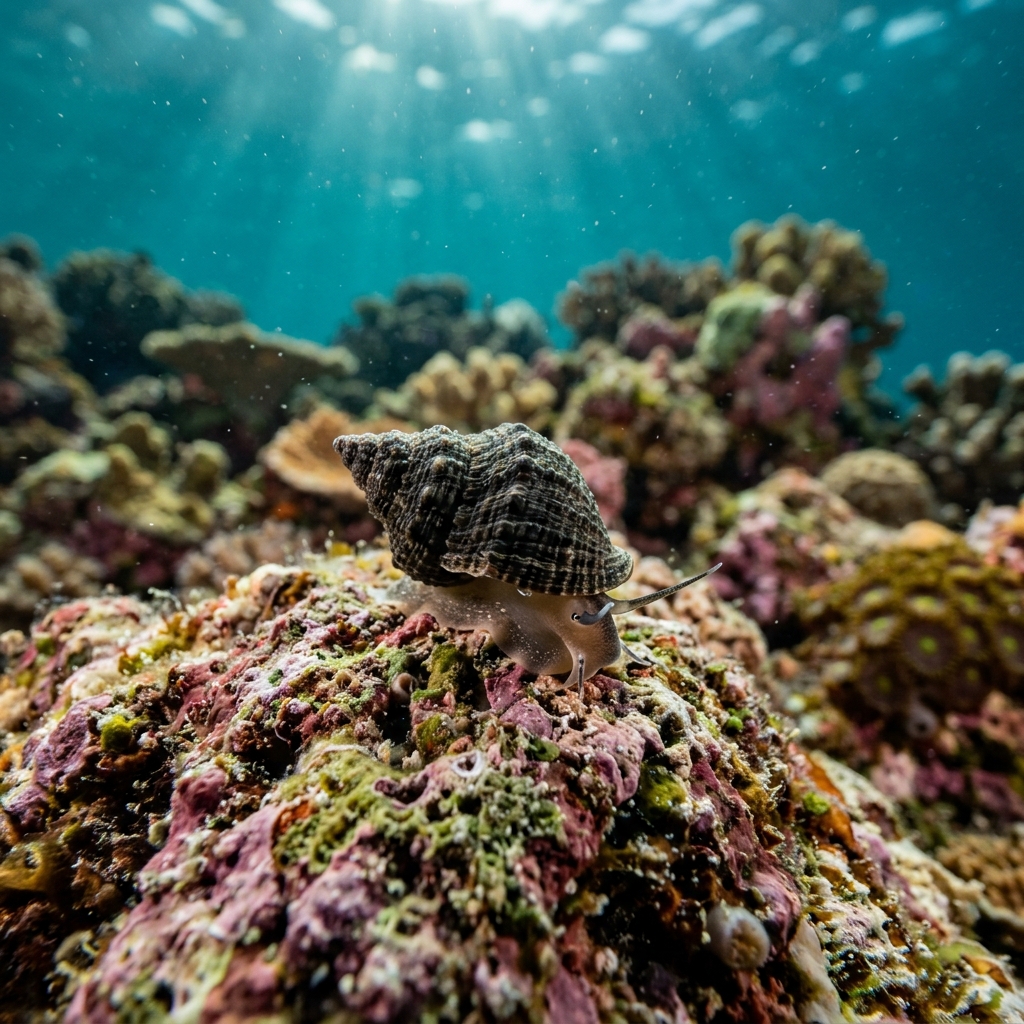
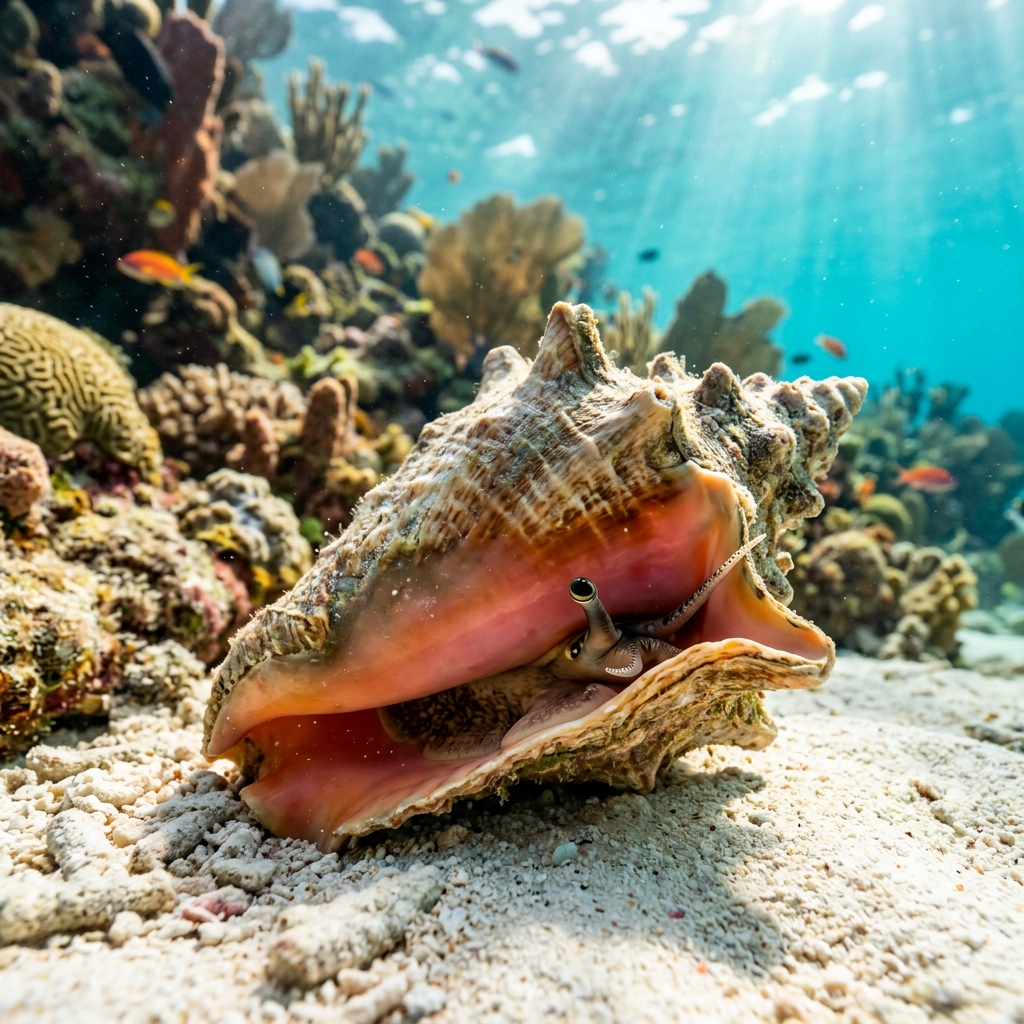
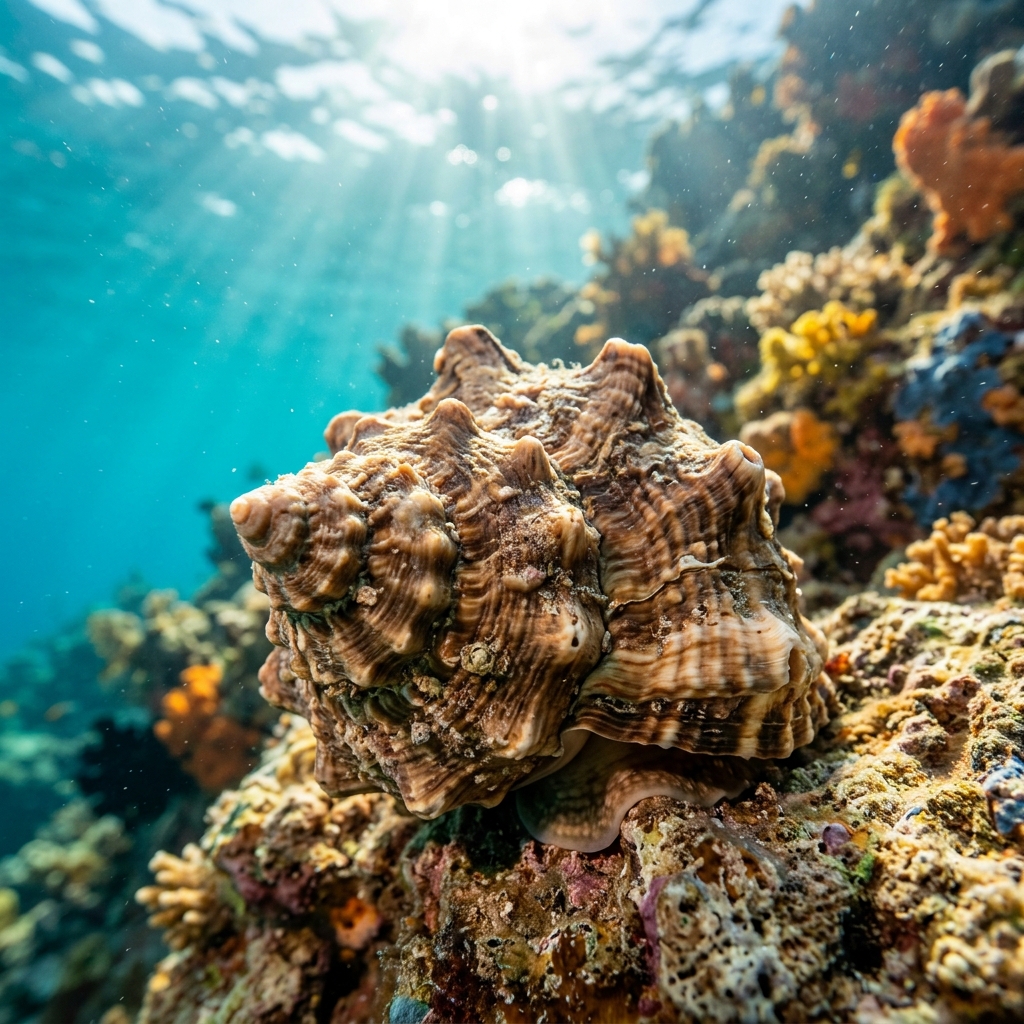
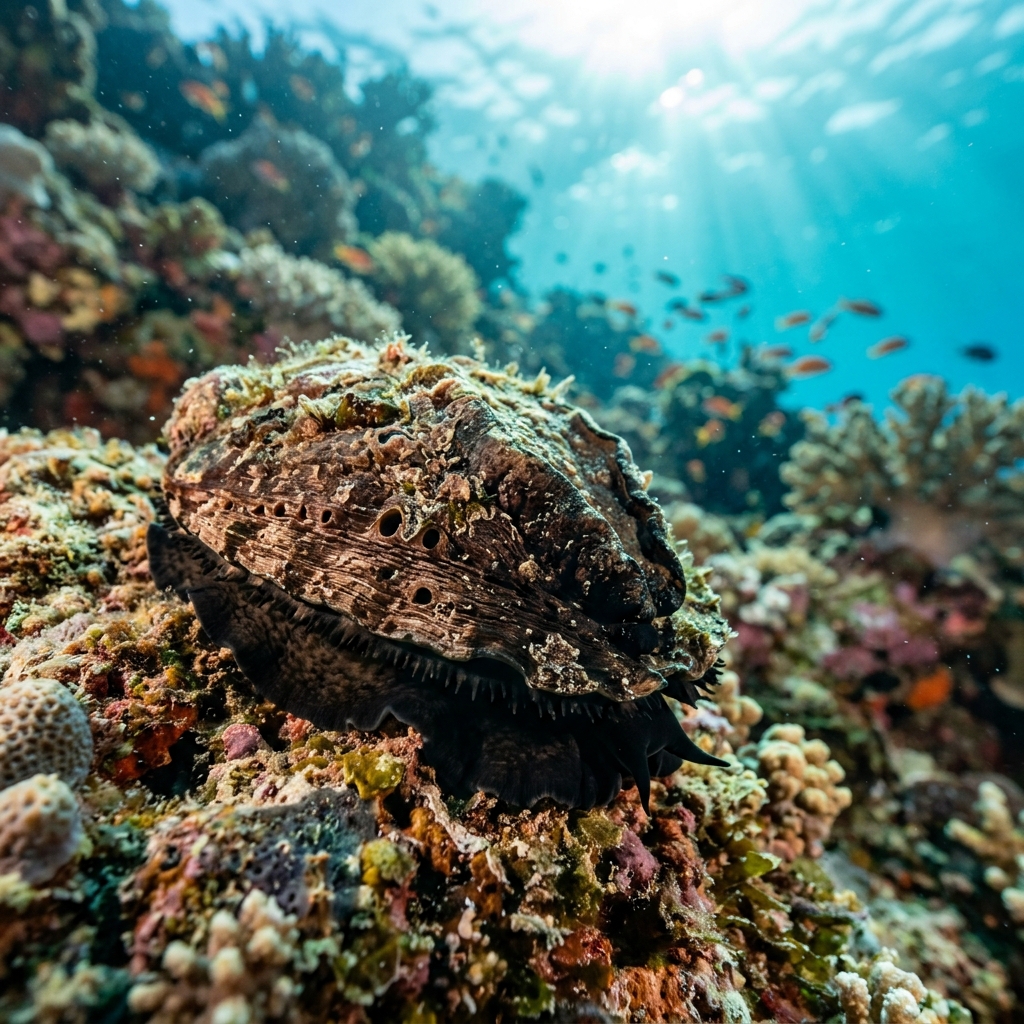
Glossy, oval shell up to around 10cm, patterned with a maze of tan and brown lines that look like a hand-drawn map, giving the species its name. When active, the mantle (the soft tissue that can extend over the shell) spreads out to partly cover the shell, showing dark branching papillae. It moves slowly and is usually found tucked against rock or coral rather than out in the open.
Nocturnal and secretive, spending daylight hours wedged into crevices or under coral ledges with its mantle drawn over the shell for camouflage. Divers most often find it on night dives, when it emerges to graze slowly across the reef surface. It shows no reaction to divers beyond withdrawing into its shell if disturbed.
Like other cowries, it lays eggs in a tight capsule mass and the female stands guard over the clutch, using her foot and mantle to shield the eggs until they hatch.
Sightings don't show a clear seasonal pattern, and with a water-temperature niche of 25.4 to 31.4C it's on warm tropical reefs year-round, so there's no specific month to target.
Most reliably logged around Kwajalein Atoll in the Marshall Islands, which accounts for the bulk of recorded sightings, with a smaller but consistent presence in Luzon, Philippines. Outside these two areas it has not been widely reported, so divers chasing this one should plan around the Marshall Islands first.
Mapping where Map Cowrie is logged…
The strongest sightings come from Kwajalein Atoll in the Marshall Islands, with additional records from Luzon in the Philippines. It's an uncommon to rare find even in these areas, so it takes a dedicated search.
There's no detected seasonal pattern, and it lives on reefs warm enough (25.4 to 31.4C) year-round, so it can turn up on any dive, any month.
Look for a glossy oval shell with a brown, maze-like pattern resembling a map, usually tucked into a crevice or partly wrapped in dark mottled mantle tissue. It moves slowly and is most active at night.
Exact size data isn't confirmed for this listing, but map cowries are among the larger cowrie species, with shells commonly reaching close to 10cm.
No. They have no means of harming divers and simply retreat into their shell or crevice if approached.
Females lay their eggs in a compact capsule mass and physically guard the clutch with their foot and mantle until the young hatch, a level of parental care unusual among sea snails.
Site and sighting data is aggregated from diver logs, iNaturalist and GBIF. For taxonomy and conservation status:
Triton Shell
2,297 sites