Heteroconger perissodon
Uncommon garden eel logged in Visayas and Luzon reefs at 28-29C, poking from sandy burrows year-round.
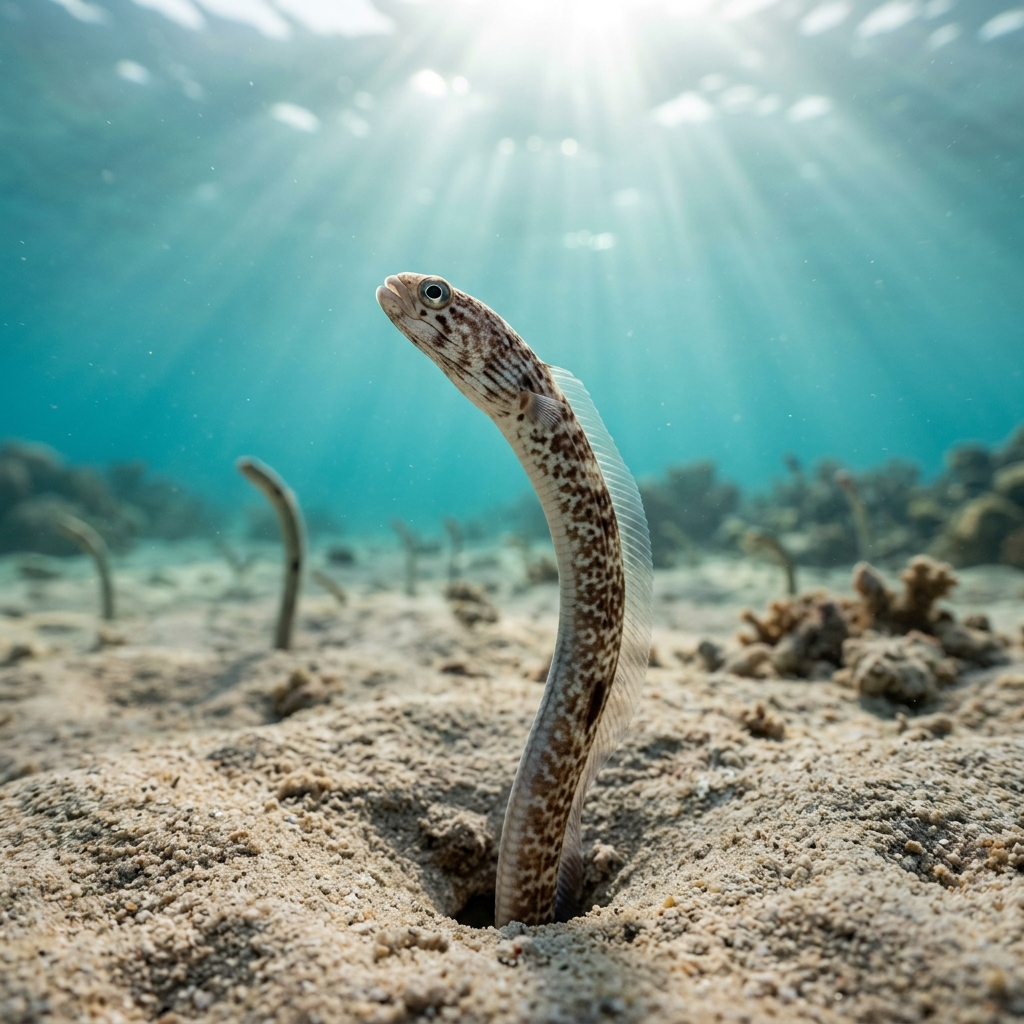
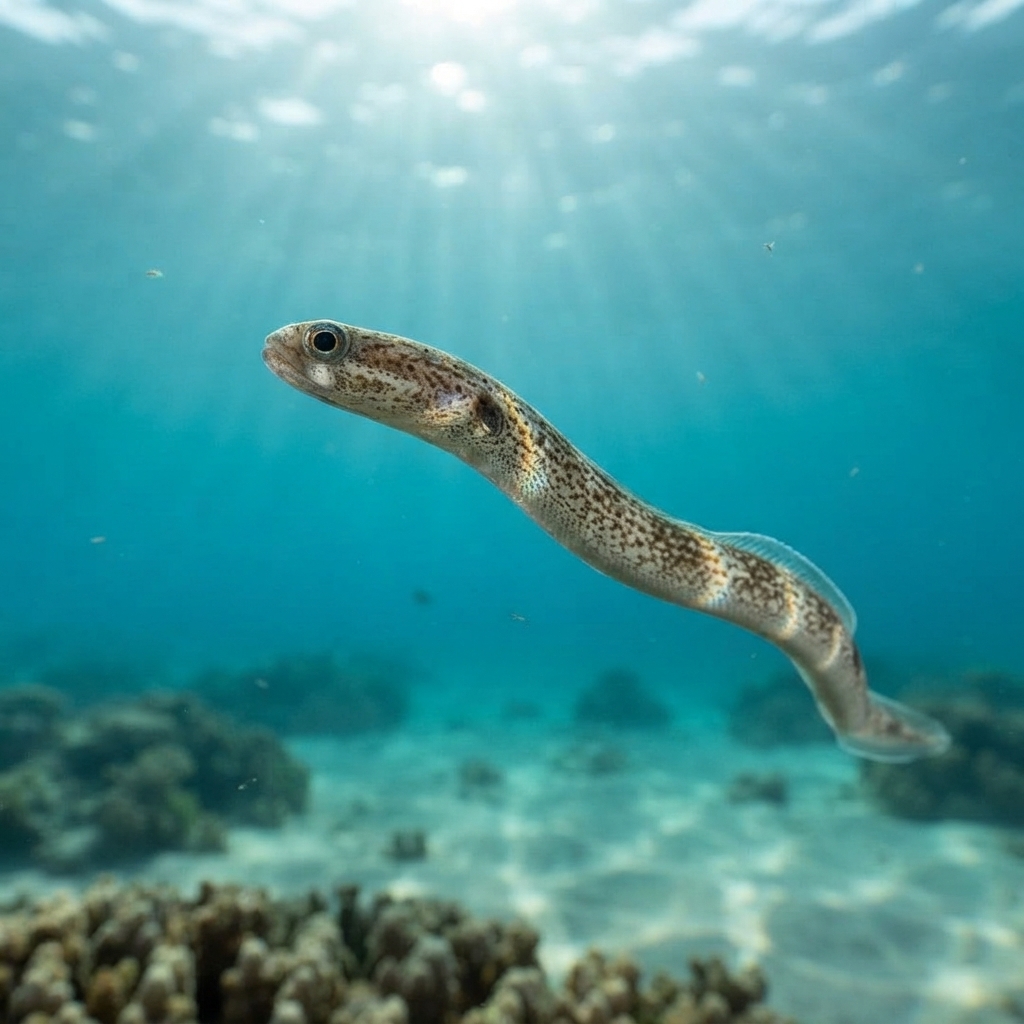
A slender, mottled grey-brown eel that keeps most of its 38cm body hidden in a burrow, showing only the front third swaying above the sand. Look for a slim head, small eyes set close to the tip of the snout, and a speckled or dappled pattern along the visible length rather than bold stripes or spots. It sways gently with the current, facing into the flow, and looks more like a stiff piece of rope than a fish until it moves.
Divers find it anchored in a burrow on open sand or rubble, body extended upright and gently swaying while it picks plankton out of the passing current. It reacts to divers the way most garden eels do: retreat into the burrow starts at a distance, so slow, low approaches and staying still are what let you actually see the full body before it vanishes. Sightings so far have been uncommon to rare, so it is not a species you stumble on casually, more one you go looking for on a sandy patch reef.
Garden eels in this genus live in loose colonies, each individual anchored in its own burrow, feeding on drifting plankton without ever fully leaving the sand, which is why sightings are as much about spotting the colony as spotting one eel.
No clear season shows up in the sightings, and the warm 28.3 to 29.3C range it has been logged in matches Philippine reef water year-round, so there is no particular month to target. Plan around calm, low-current conditions instead, since that is what keeps these eels out of their burrows.
All logged sightings so far come from the Philippines, with the Visayas region the more reliable area and a single site recorded in Luzon. Within the data it is not a species tied to one famous dive site but turns up on sandy slopes and flats scattered across these two regions.
Mapping where Manytooth Garden Eel is logged…
Every confirmed sighting so far is from the Philippines, concentrated in the Visayas region with an additional site in Luzon. It favours open sand or rubble patches rather than coral walls.
There is no detected seasonal pattern, and the warm water it has been recorded in, around 28 to 29C, is typical of Philippine reefs all year. Calm conditions with little current matter more than the calendar for getting a good look.
Look for a slender, mottled grey-brown body rising from a burrow in sand, swaying with the current while feeding. It lacks bold stripes or spots, relying instead on a speckled, understated pattern to blend into the sand.
They reach around 38cm, though most of that length stays tucked inside a sand burrow, so only a portion is ever visible while diving.
It lives permanently anchored in a burrow within a colony of others of its kind, feeding on plankton drifting past without ever fully emerging, a lifestyle shared across garden eel species.
Site and sighting data is aggregated from diver logs, iNaturalist and GBIF. For taxonomy and conservation status:
Garden Eel
2,448 sites