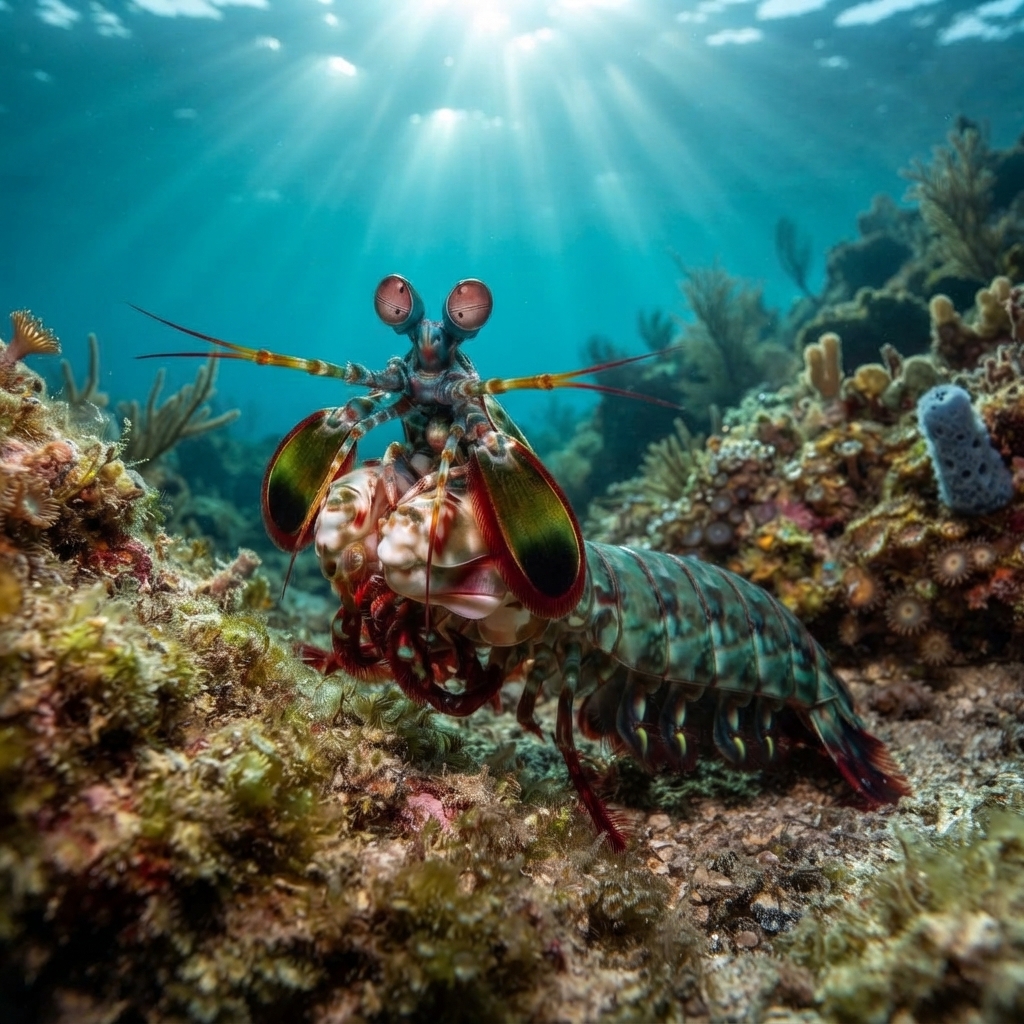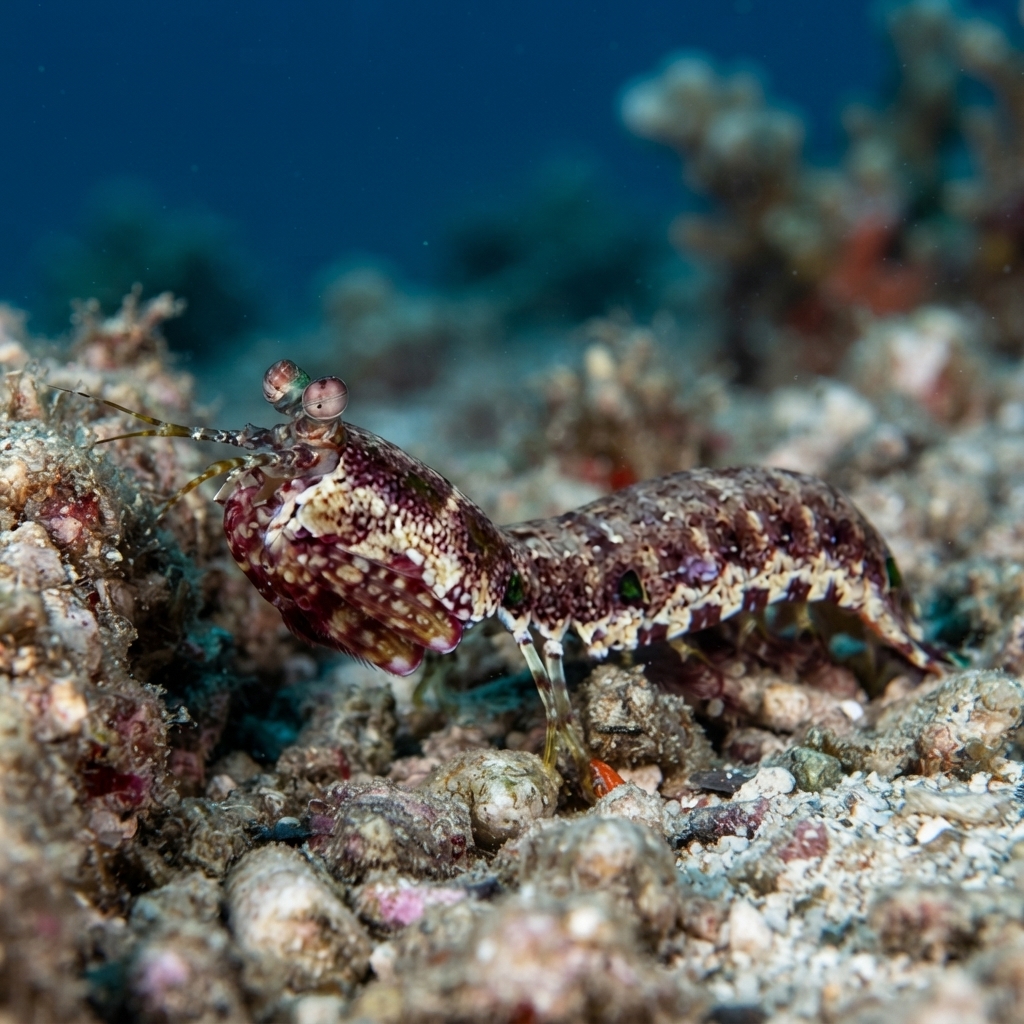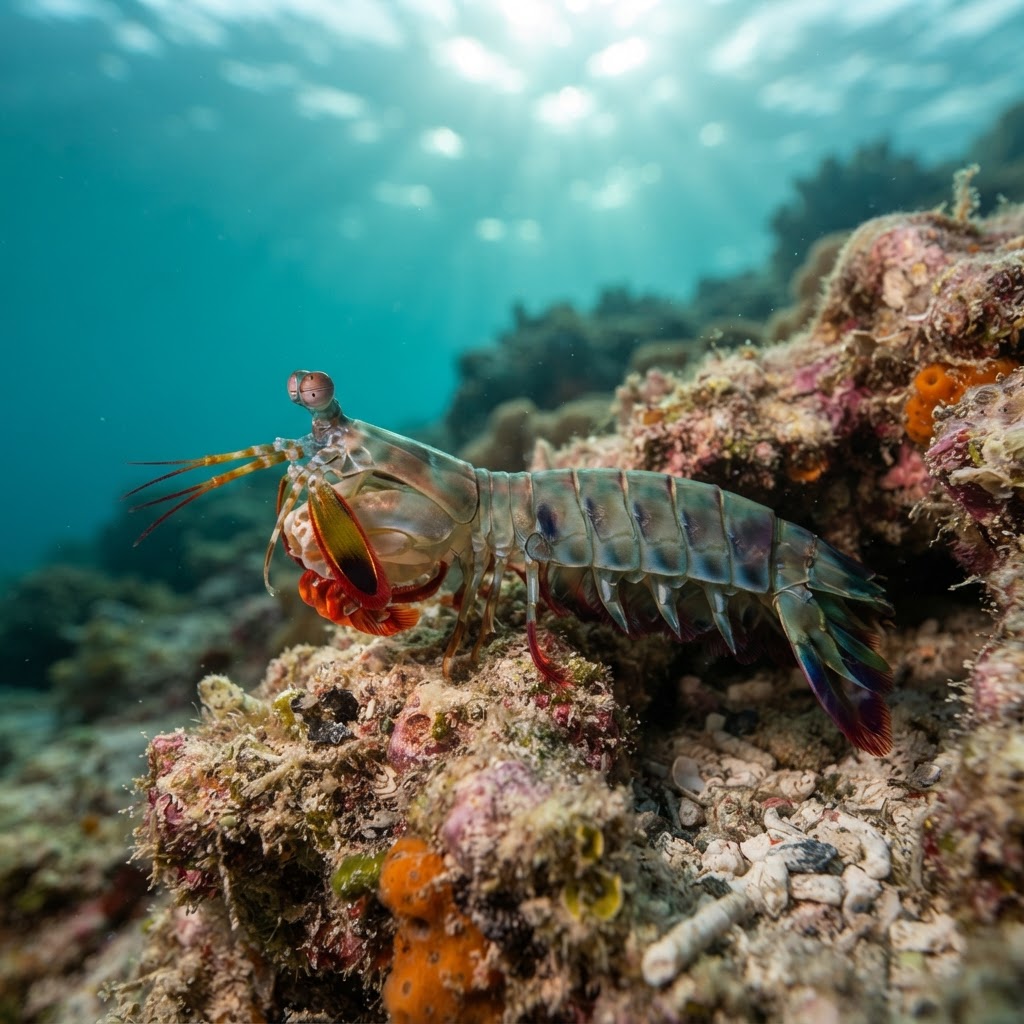
Odontodactylus cultrifer
A small, fast reef predator seen on warm tropical reefs (25-31C), active year-round with a powerful hidden strike.
Safety warning
That same strike can break skin or bruise badly if a diver pokes a hand into a burrow to get a closer look, so treat any mantis shrimp hole as a look-don't-touch situation. Keep fingers and camera housings clear of crevices and it poses no risk from a normal viewing distance.
If you're struck
Powerful strikeGeneral first-aid guidance, not a substitute for professional medical care. In an emergency, call your local emergency number.
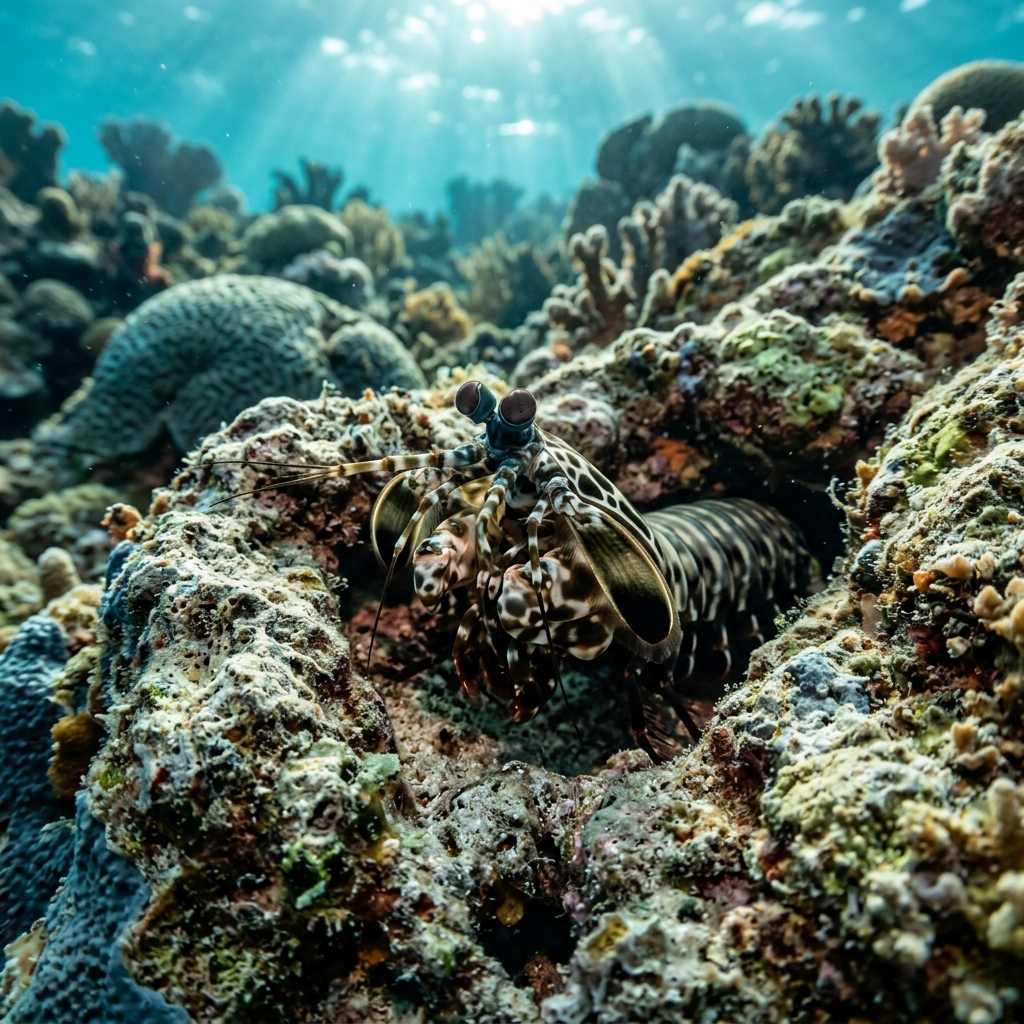
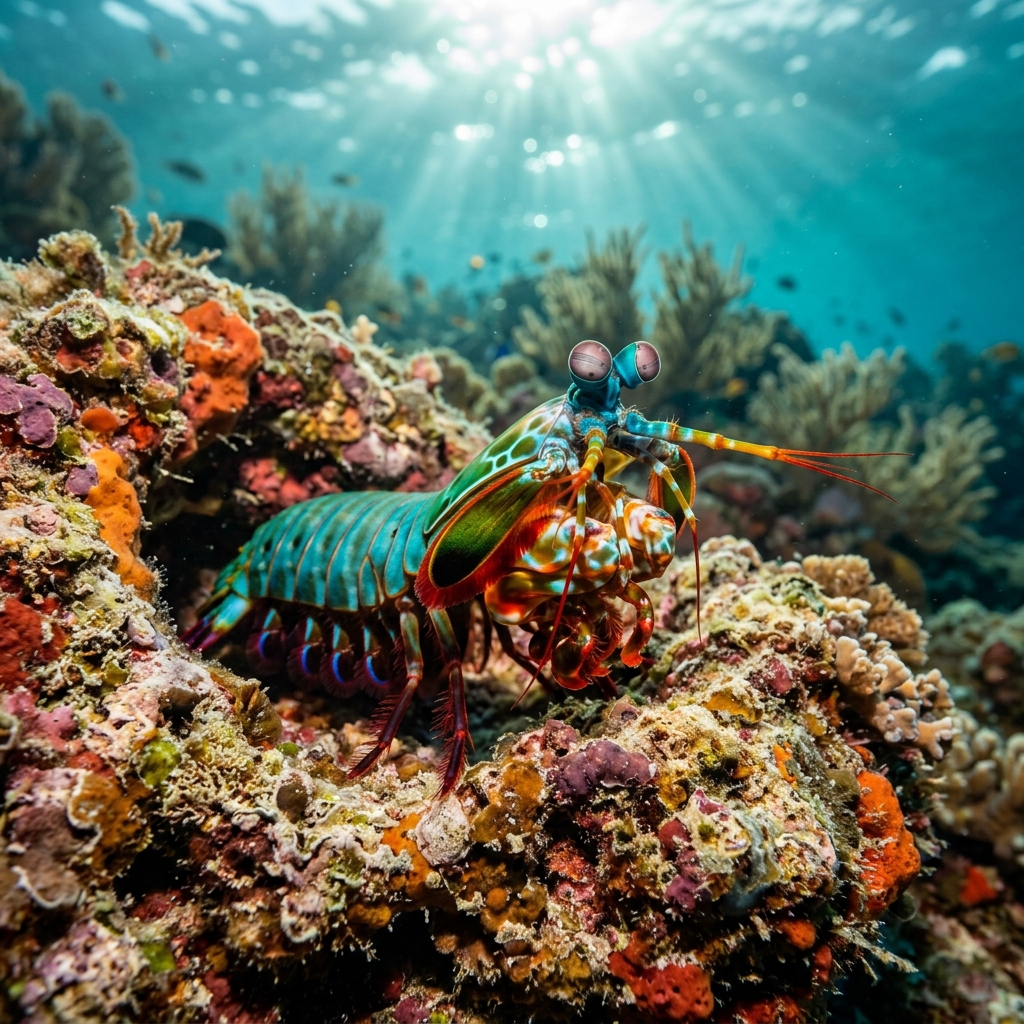
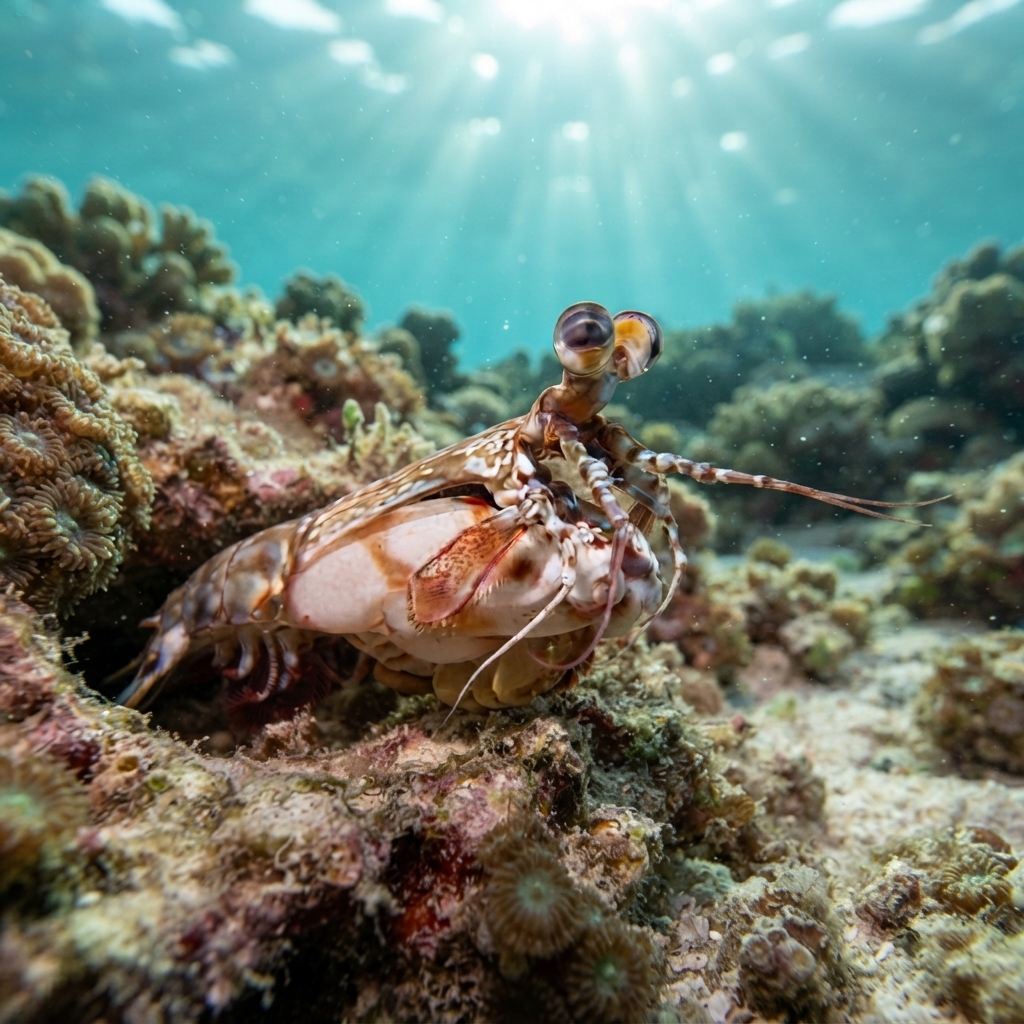
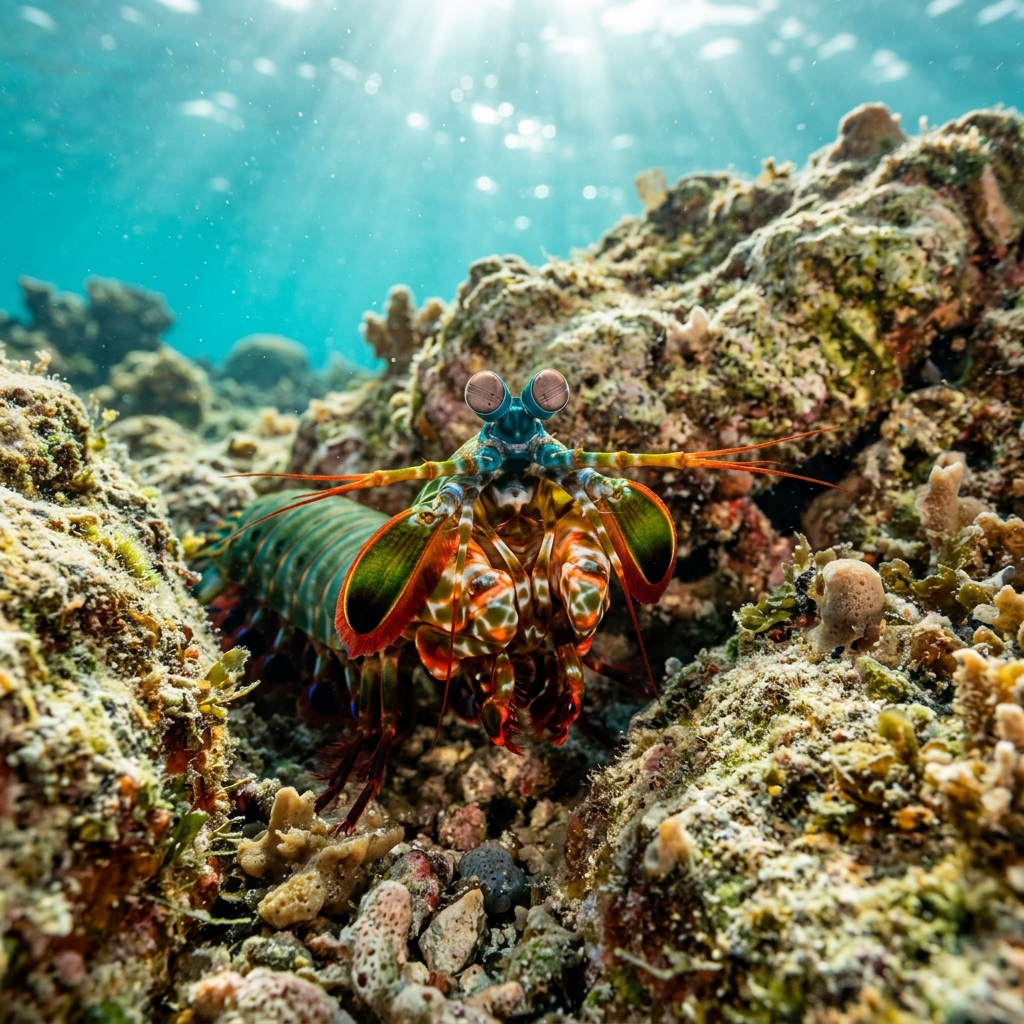
Slender, roughly 8cm body with a mottled brown-green tone that blends into rubble and sand, easy to miss unless it moves. Look for large, mobile stalked eyes that track divers independently and a pair of raptorial (grabbing) front limbs folded tight against the body. It sits at the mouth of a burrow or crevice rather than swimming openly, darting back in the instant it feels threatened.
Divers typically spot this one motionless at a burrow entrance, eyes swivelling to watch for movement before it retreats backwards into its hole. It hunts by ambush, striking at passing prey with a fast, mechanical lunge rather than chasing, and is far more often seen tucked into rubble or coral rubble zones than out in the open. Most sightings happen on slow, close-focus reef scans rather than during a typical cruising dive.
Mantis shrimp strike with raptorial claws fast enough to generate cavitation bubbles in the water, a shockwave effect used to stun or kill prey without ever touching it directly.
Recorded only in warm water between 25.4 and 31.4C, consistent with year-round presence on tropical reefs rather than a tight seasonal window. There isn't enough logged data yet to call out a specific season.
Reef neighbours a diver could mistake it for. Use the identification notes above to tell them apart.
Sighting data for this species is too sparse to name reliable dive regions yet. As more divers log encounters on tropical reef dives, this section will fill in with real hotspots.
Mapping where Keel Tail Mantis Shrimp is logged…
No match
They reach around 8cm in length, making them a small, easy-to-overlook reef animal best spotted with a slow, close-focus search of burrows and rubble.
Yes, their raptorial strike can injure a hand or finger if you reach into a burrow. Viewed from a normal distance without touching, they pose no danger.
Look for a slim, mottled brown-green body around 8cm long, large independently-moving eyes, and folded front claws, usually seen peeking from a burrow rather than swimming in the open.
Sightings come from warm water between about 25 and 31C, suggesting they are present year-round on tropical reefs rather than tied to one season.
Its raptorial claw strikes so fast it creates a cavitation shockwave in the water, a punch strong enough to stun prey without direct contact.
Site and sighting data is aggregated from diver logs, iNaturalist and GBIF. For taxonomy and conservation status:
Mantis Shrimp
30 sites