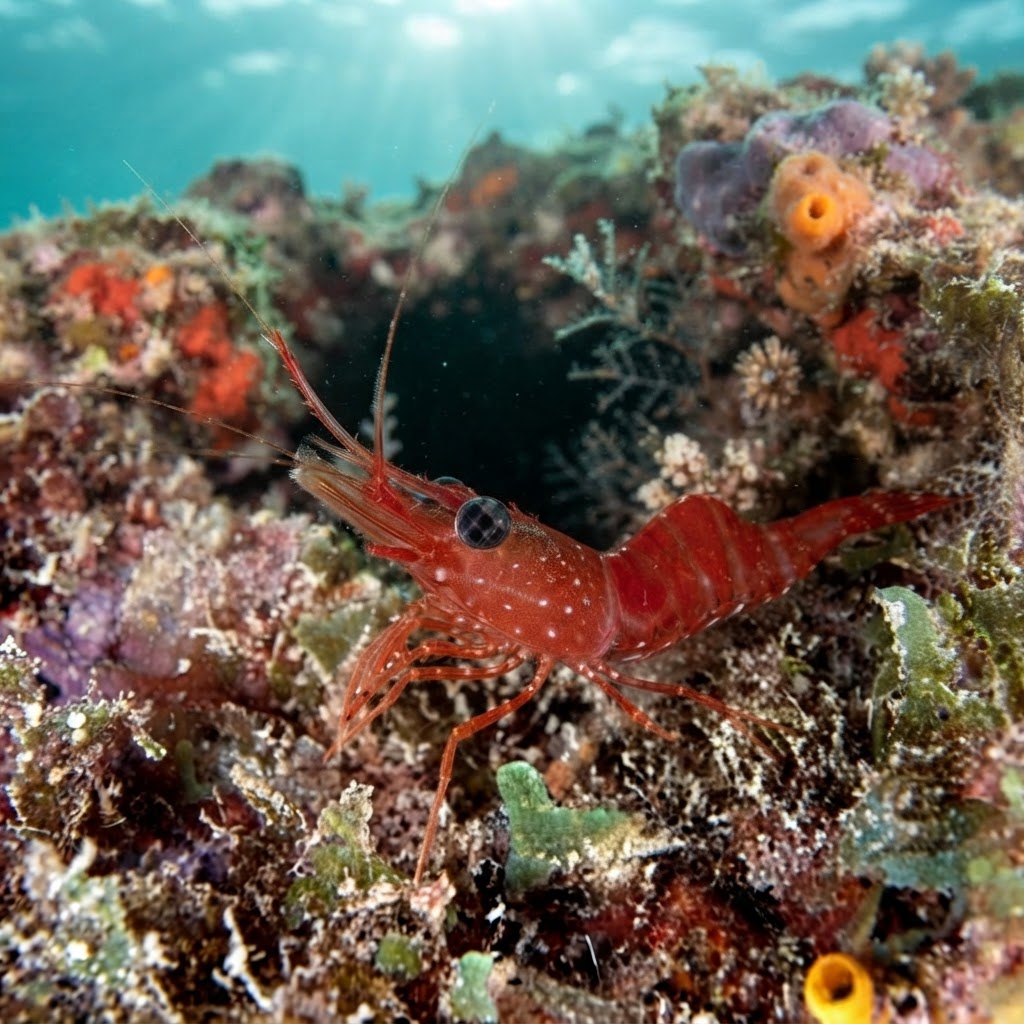
Cinetorhynchus manningi
Look for Manning Hingebeak tucked in reef crevices around the Grenadines, warm water 25-31C, spotted year-round on night and day dives.
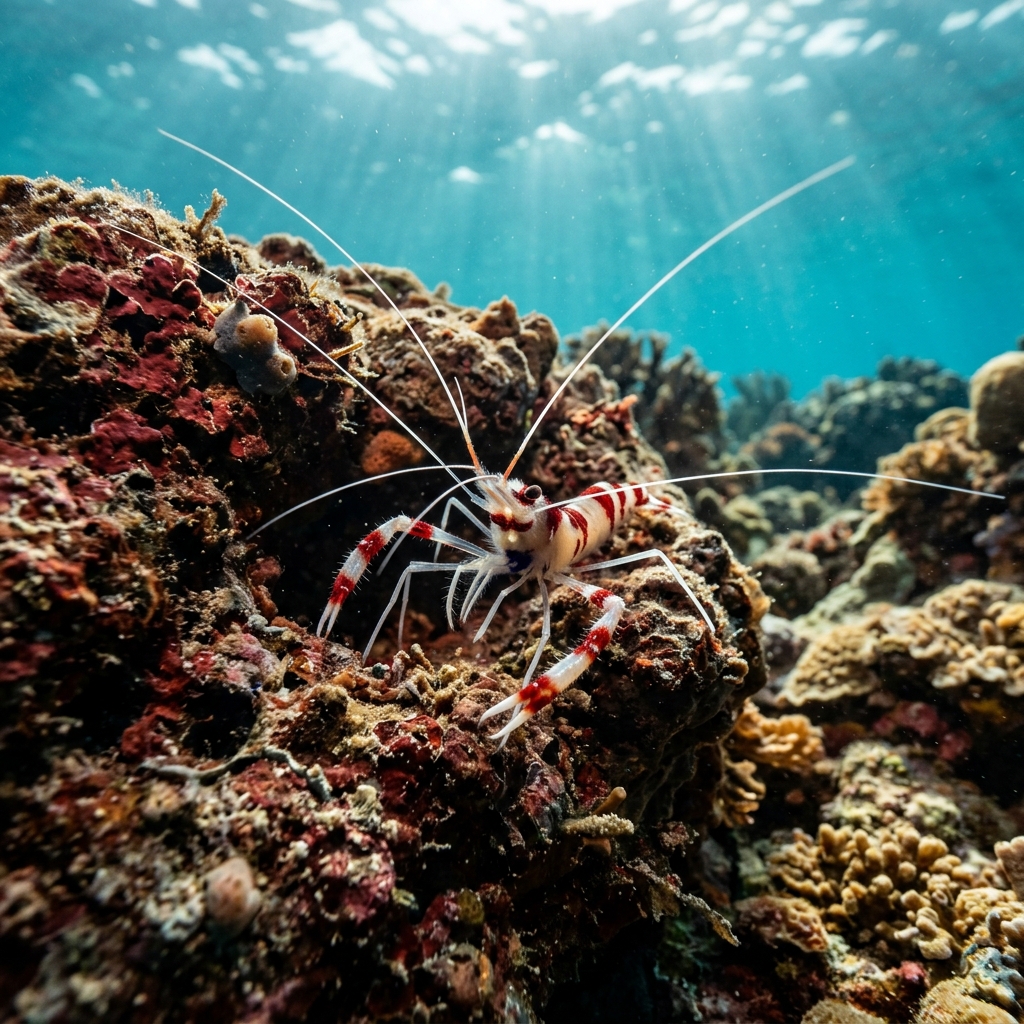
A small, slender shrimp with a strongly angled 'hinged' rostrum (the beak-like spine over its eyes) that gives the family its common name. Body colour runs in red-and-white or maroon banding along a translucent shell, with long, whip-thin antennae that often give away its position before the body does. It tends to sit low in crevices or under ledges, walking rather than swimming, so divers usually clock the antennae waving first.
Divers find it wedged into reef crevices, under coral ledges, and among rubble by day, staying low and mostly motionless with just the antennae probing the current. Like other hingebeak shrimp it becomes more active and easier to spot on night dives, when it emerges to forage over the reef surface. It is not shy of divers so much as simply hard to notice unless you slow down and check dark gaps in the reef.
The hinged rostrum that gives this genus its name folds down over the front of the head, a feature unique among Caribbean shrimp and the fastest way to separate hingebeaks from similarly banded reef shrimp.
No clear seasonal pattern shows up in the sighting data, and it holds to a narrow warm-water band of 25.1 to 31.1C, so it is a year-round find on the reefs where it occurs rather than a seasonal specialty.
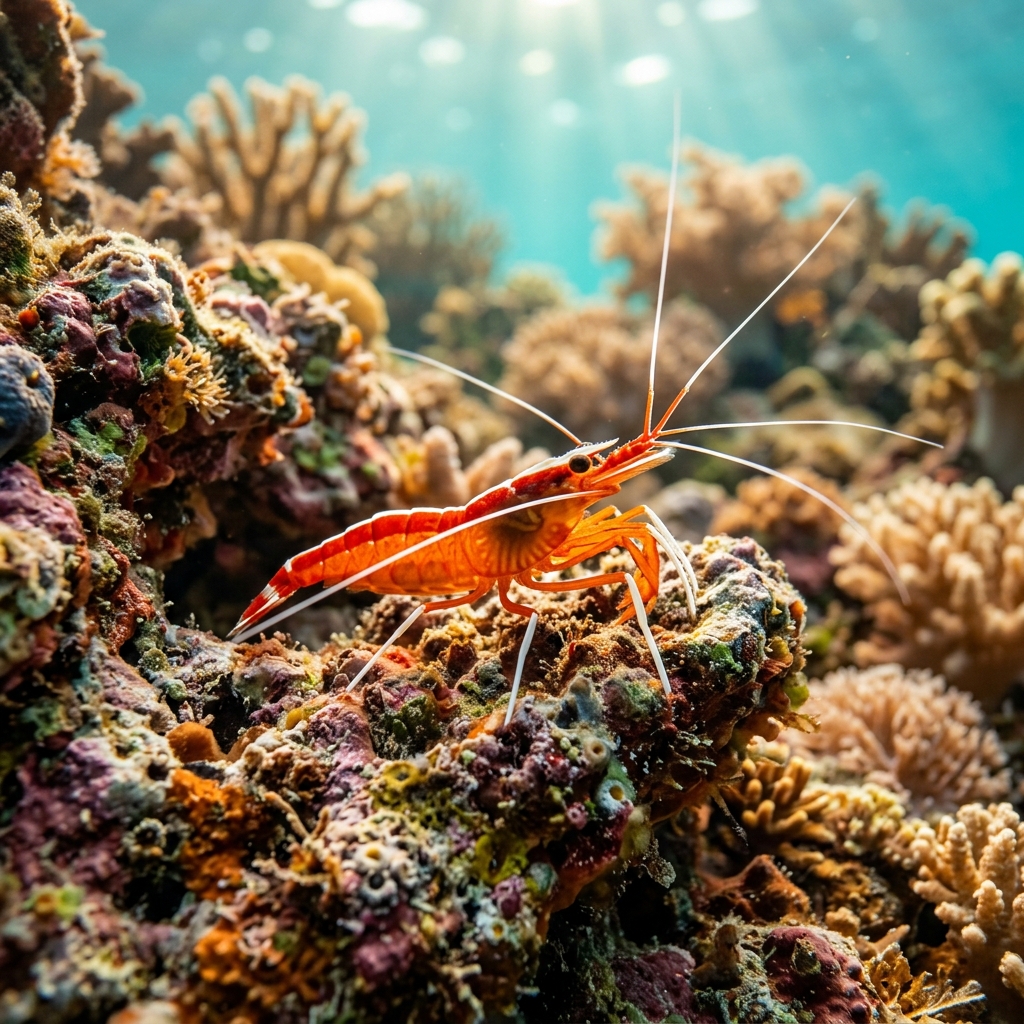
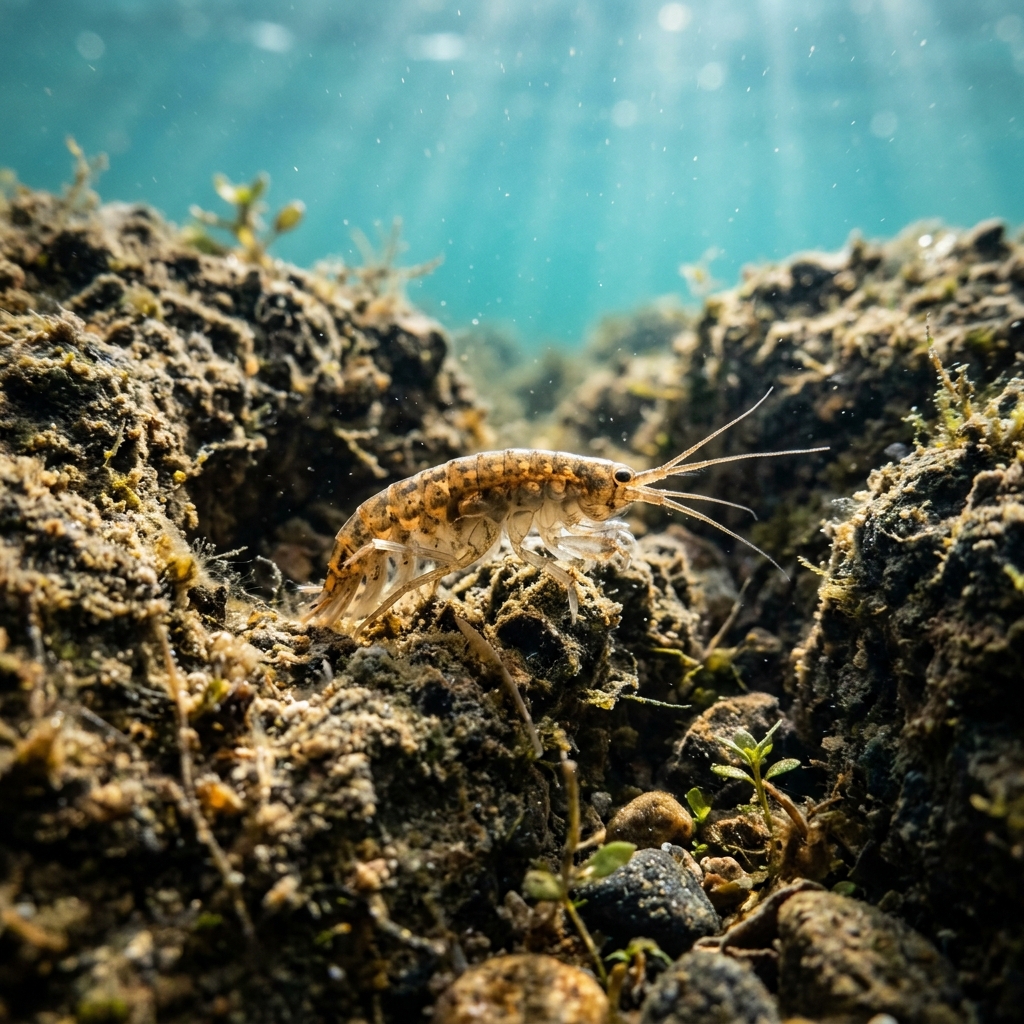
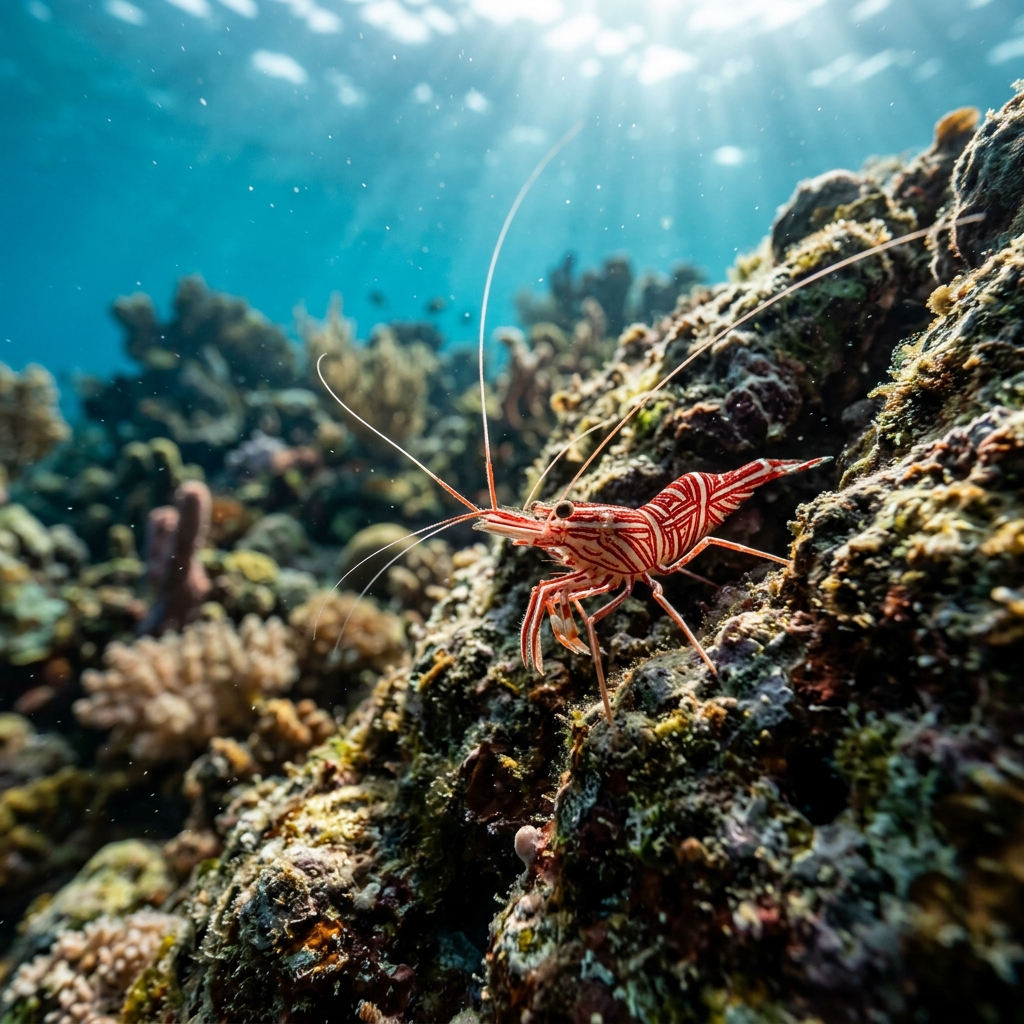
Reef neighbours a diver could mistake it for. Use the identification notes above to tell them apart.
Most reliably logged around the Grenadines in Saint Vincent and the Grenadines, with a further scatter of sightings in the Bay Islands of Honduras. Smaller numbers have turned up at single sites in Ocho Rios, Jamaica, and Grand Cayman, so the Eastern Caribbean is the strongest bet for a dedicated search.
Mapping where Manning Hingebeak is logged…
The Grenadines in Saint Vincent and the Grenadines is the strongest area for sightings, with additional records from the Bay Islands of Honduras and single sites in Jamaica and Grand Cayman.
There is no detected season in the sighting data, and it lives in consistently warm water between 25 and 31C, so it turns up year-round rather than during a specific window.
Look for a small red-and-white banded shrimp with long antennae tucked into reef crevices, with a distinctive hinged rostrum bending down over its eyes rather than pointing straight forward like a Banded Coral Shrimp.
No, it poses no danger to divers. It is a small, retreating shrimp best viewed with a torch rather than handled.
Its rostrum is jointed and can fold down over the head, a feature that gives the whole hingebeak family its name and sets it apart from straight-beaked shrimp like cleaner shrimp.
Site and sighting data is aggregated from diver logs, iNaturalist and GBIF. For taxonomy and conservation status:
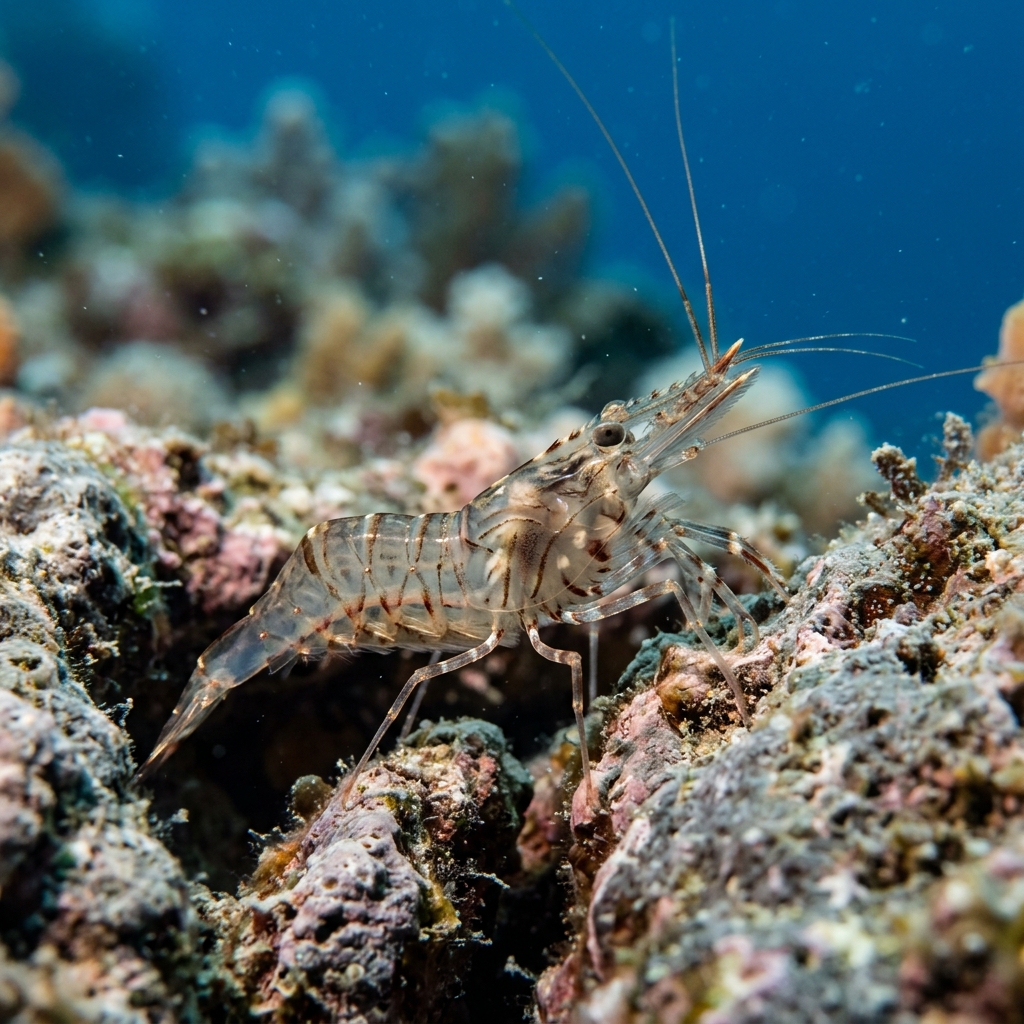
Rockpool Prawn
2,179 sites