Aratus pisonii
Small mottled crab clinging to prop roots in Florida and Honduras's Bay Islands, watching for divers year-round in 23-29C water.
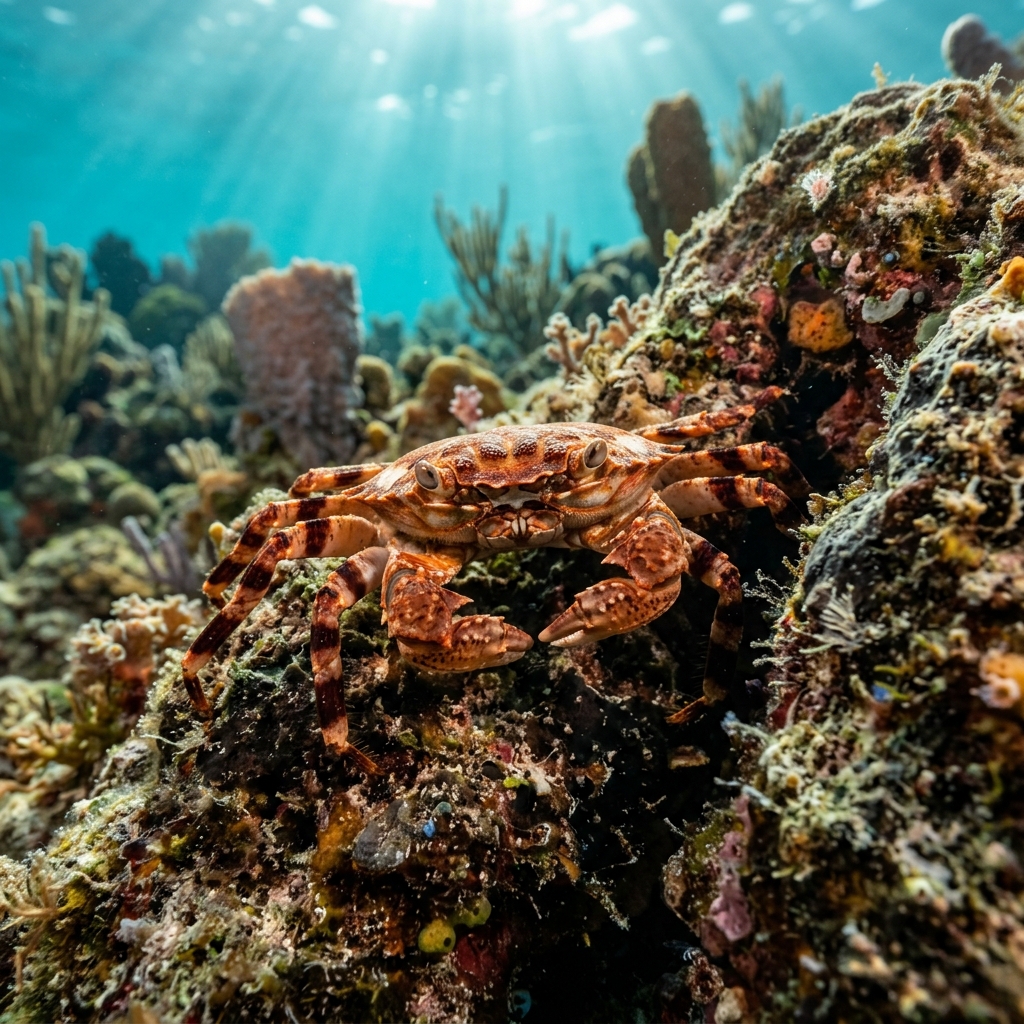
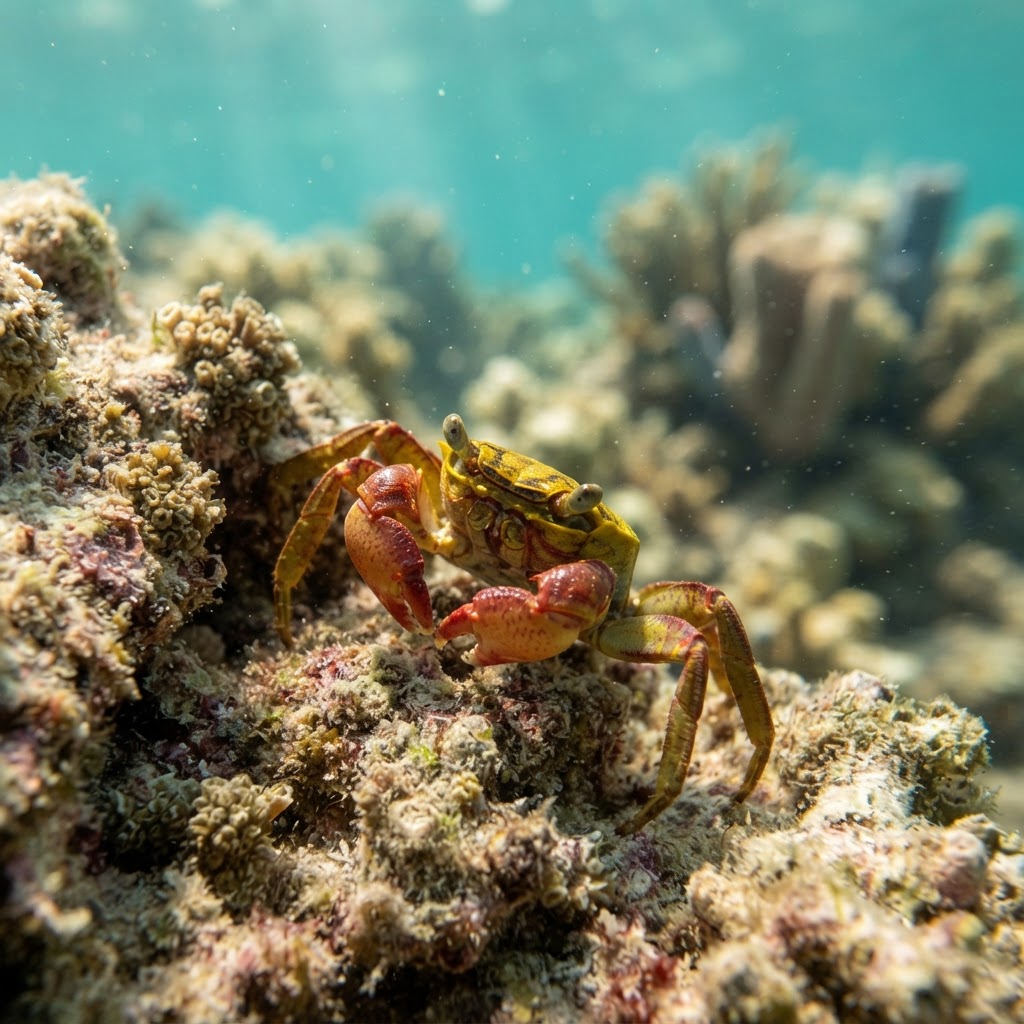
A tiny crab, only about 2 cm across, usually spotted clinging to mangrove roots or branches right at or just below the surface rather than on the reef itself. Its shell is mottled brown, olive and cream, which breaks up its outline against bark and root fibres. Look for pale spots on the carapace and long, spider-like walking legs that let it grip vertical surfaces with ease.
Divers usually find it perched motionless on a mangrove root or low branch just above or at the waterline, relying on its camouflage rather than fleeing. It will scuttle sideways up out of the water or dart to the far side of the root if you get too close, and it is most often noticed on slow drift or snorkel passes along shaded mangrove edges rather than out on open reef.
It is one of the few crabs that spends most of its time out of the water entirely, climbing well above the tideline to feed on mangrove leaves and only returning to the water to breed or escape a threat.
Sightings show no clear season, and with a comfortable range of 23.3 to 29.3 C it is present on mangrove-lined reefs year-round. Any warm-water dive along a mangrove edge gives you a fair shot at spotting one.
Reef neighbours a diver could mistake it for. Use the identification notes above to tell them apart.
Most reliably logged in Florida in the United States and around the Bay Islands of Honduras, with smaller pockets reported off Willemstad and the South Coast of Curacao and on Panama's Caribbean coast. Any dive or snorkel site with intact mangrove fringe bordering the reef is worth a slow look at the roots.
Mapping where Mangrove Tree Crab is logged…
Florida and Honduras's Bay Islands are the strongest spots, with smaller populations reported around Curacao's Willemstad and South Coast and along Panama's Caribbean coast. Look at mangrove roots bordering the reef rather than on coral itself.
There is no strong season in the sighting data, and its temperature range of 23.3 to 29.3 C covers most tropical diving conditions, so it turns up year-round on mangrove-fringed sites.
It is tiny, around 2 cm, with a mottled brown and cream shell that camouflages it against mangrove bark. Check roots and low branches at the surface rather than the open reef, and look for long spidery legs gripping the wood.
They stay small, typically around 2 cm across the shell, which is part of why they are easy to miss against mangrove roots.
Unlike most crabs, it spends the majority of its life out of water, climbing mangrove branches to feed on leaves and only dropping back to the water to breed or dodge predators.
No, they pose no threat to divers. They are small, shy and tend to retreat up the mangrove root the moment they notice you.
Site and sighting data is aggregated from diver logs, iNaturalist and GBIF. For taxonomy and conservation status:
European Green Crab
2,469 sites