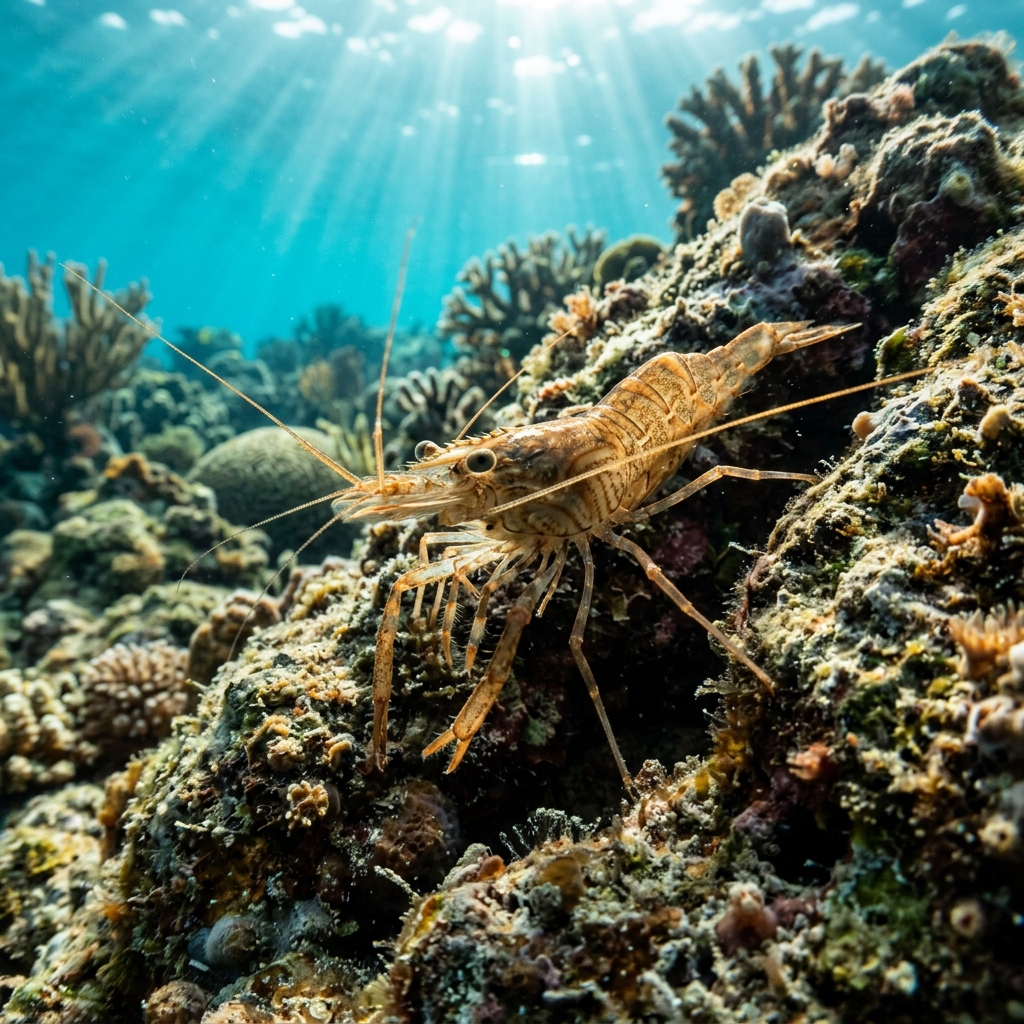
Macrobrachium asperulum
Looking for Asperulum River Prawn? Most sites are logged across Florida and the US Southeast, in water from 20-30 °C. Here's what divers need to know.
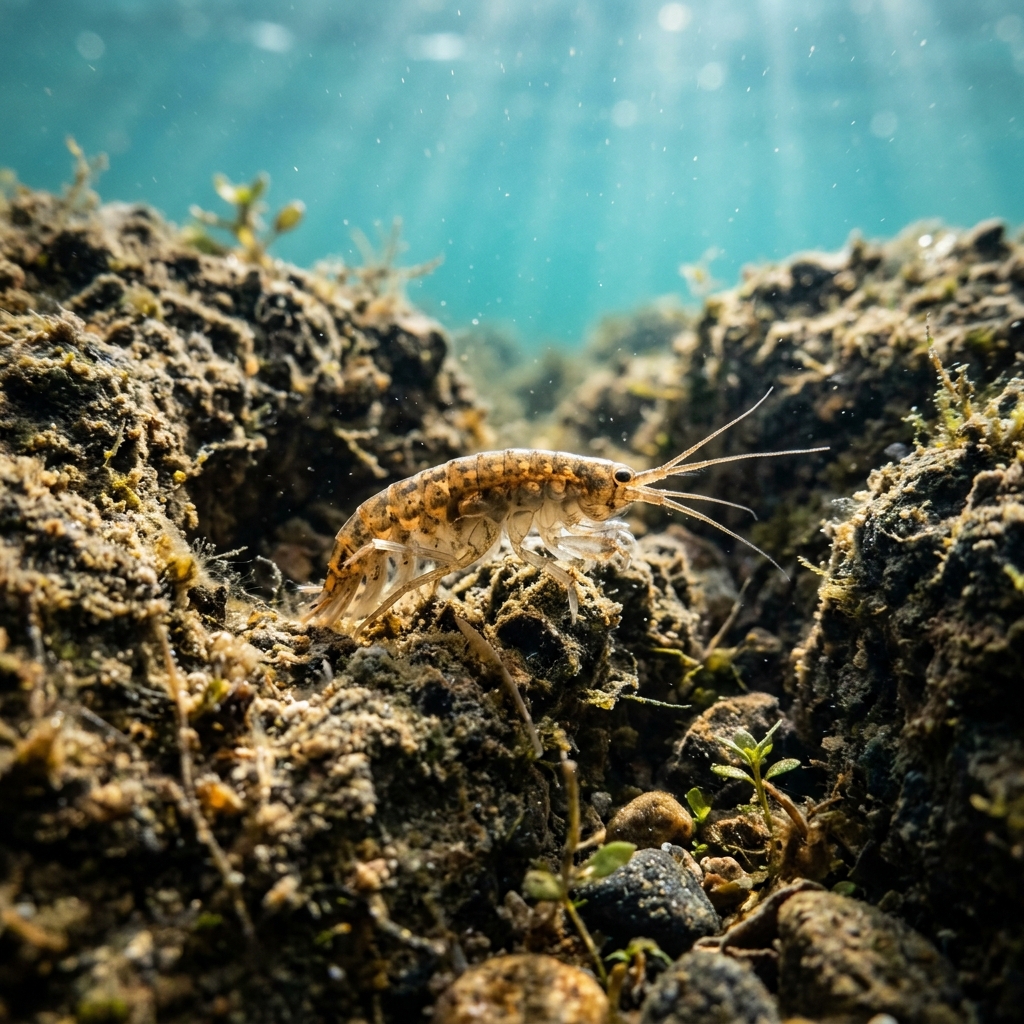
A freshwater palaemonid shrimp with a semi-transparent body and noticeably elongated front chelipeds (claws) relative to its body length, a hallmark of the Macrobrachium genus. Exact colouration in the field is poorly documented, but expect the pale, glassy appearance typical of river and lake shrimps in this family. Females are generally larger than males and, when gravid, carry a visible cluster of eggs tucked under the abdomen, which is the most reliable field cue for distinguishing the sexes.
Like most small freshwater shrimps, it is likely to be found picking over benthic (bottom) surfaces, foraging among leaf litter, rocks, or aquatic vegetation rather than swimming in open water. When a diver approaches, expect it to retreat quickly into cover, so slow, patient movement and a careful eye close to the substrate give the best chance of a sighting. Documented diver interactions are extremely rare, so any observation you record adds real value to what is known about this species.
Females brood their eggs directly on their bodies, carrying them beneath the abdomen until they hatch, a strategy that gives the young a head start in fast-flowing or variable freshwater environments.
No seasonal pattern has emerged from available data, so this species is treated as present year-round where conditions suit it. The observed water-temperature range of roughly 20 to 30 °C points to warm freshwater habitats such as rivers, lakes, and flooded margins that maintain those temperatures consistently.
The overwhelming majority of modelled sites fall within the United States, with Florida and the Southeast accounting for the largest share, followed by the Central and Mountain West. Outside North America, modelled range points exist in Malaysia around Pulau Tioman, inland South Africa, Lake Malawi, and parts of Thailand and Japan, suggesting a wide but patchy freshwater distribution across warm regions.
Mapping where Asperulum River Prawn is logged…
Modelled range data puts most potential sites in the United States, particularly Florida, the Southeast, and the Central and Mountain West. Further sites appear in Malaysia (Pulau Tioman), inland South Africa, Lake Malawi, Thailand, Mexico, and Japan. This is a freshwater species, so look for it in rivers, lakes, and vegetated shallows rather than on coral reefs.
There is no confirmed peak season in the available data, so it is treated as year-round. It has been recorded in water temperatures from about 20 to 30 °C, meaning warm-water freshwater sites in its range should offer consistent conditions throughout the year.
Look for a small, semi-transparent freshwater shrimp with proportionally long front claws typical of the Macrobrachium genus. Gravid females carry a visible clutch of eggs under the abdomen, making sex identification straightforward. Confirmed underwater records are scarce, so photographs of any individual you find would be scientifically useful.
No. It poses no threat to divers. Like most small freshwater shrimps, it is far more likely to flee than to stand its ground when approached.
No. The species is currently assessed as Least Concern on the IUCN Red List, meaning it is not considered at elevated risk of extinction at a global level.
Females brood fertilised eggs directly on their bodies, attaching the clutch beneath the abdomen between the swimming legs. The eggs remain there until they hatch, which is a common reproductive strategy across the Macrobrachium genus and one of the easier ways to confirm you are looking at a female.
Site and sighting data is aggregated from diver logs, iNaturalist and GBIF. For taxonomy and conservation status:
Rockpool Prawn
2,179 sites