Canthigaster capistrata
Small reef puffer common year-round in Tenerife and Gran Canaria, thriving in 19-24C water off the Canary Islands, Madeira and Cape Verde.
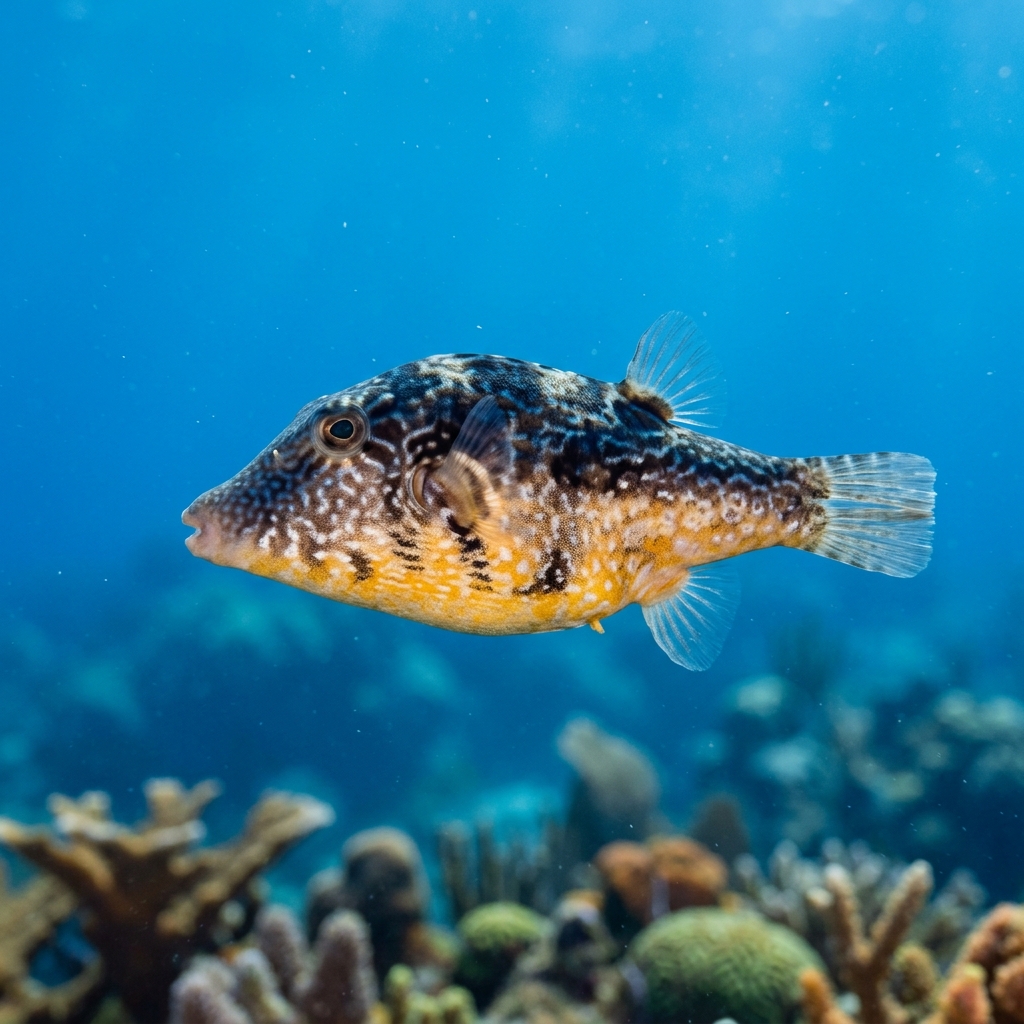
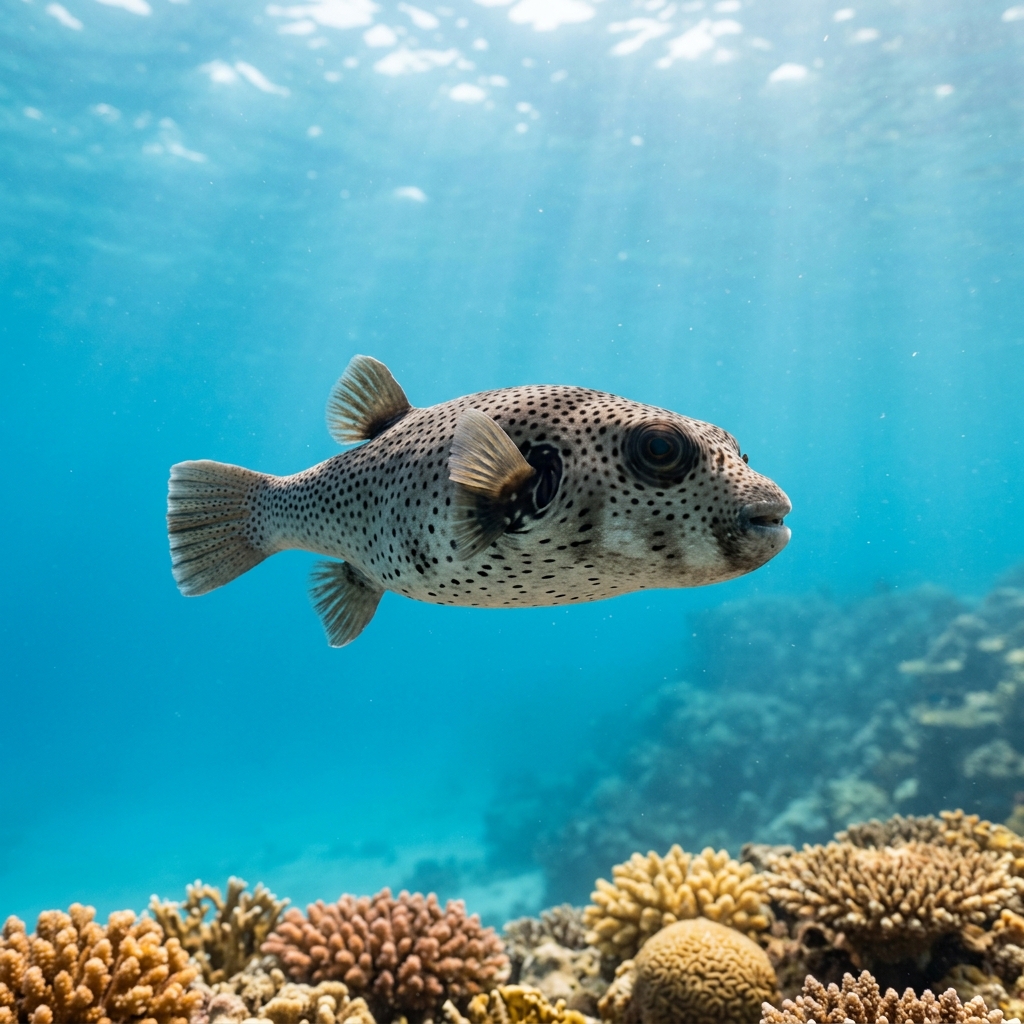
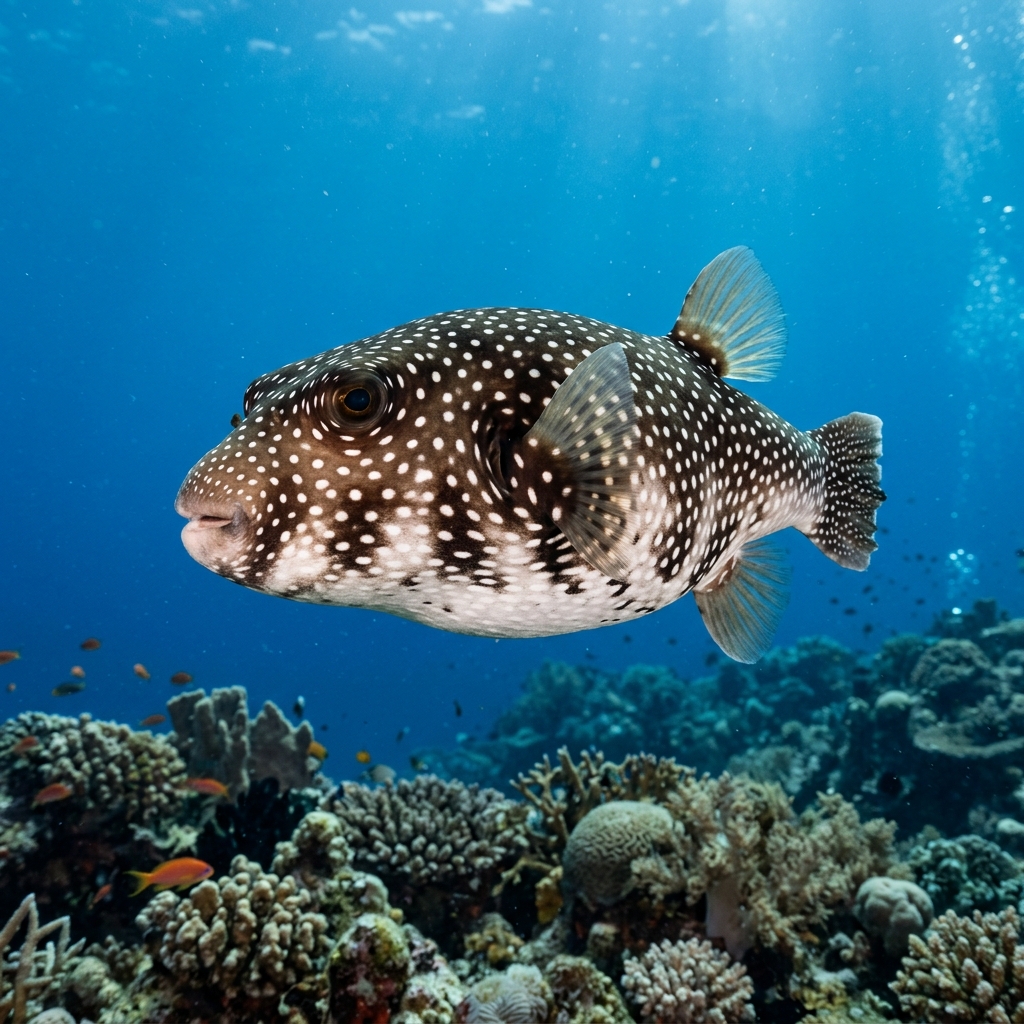
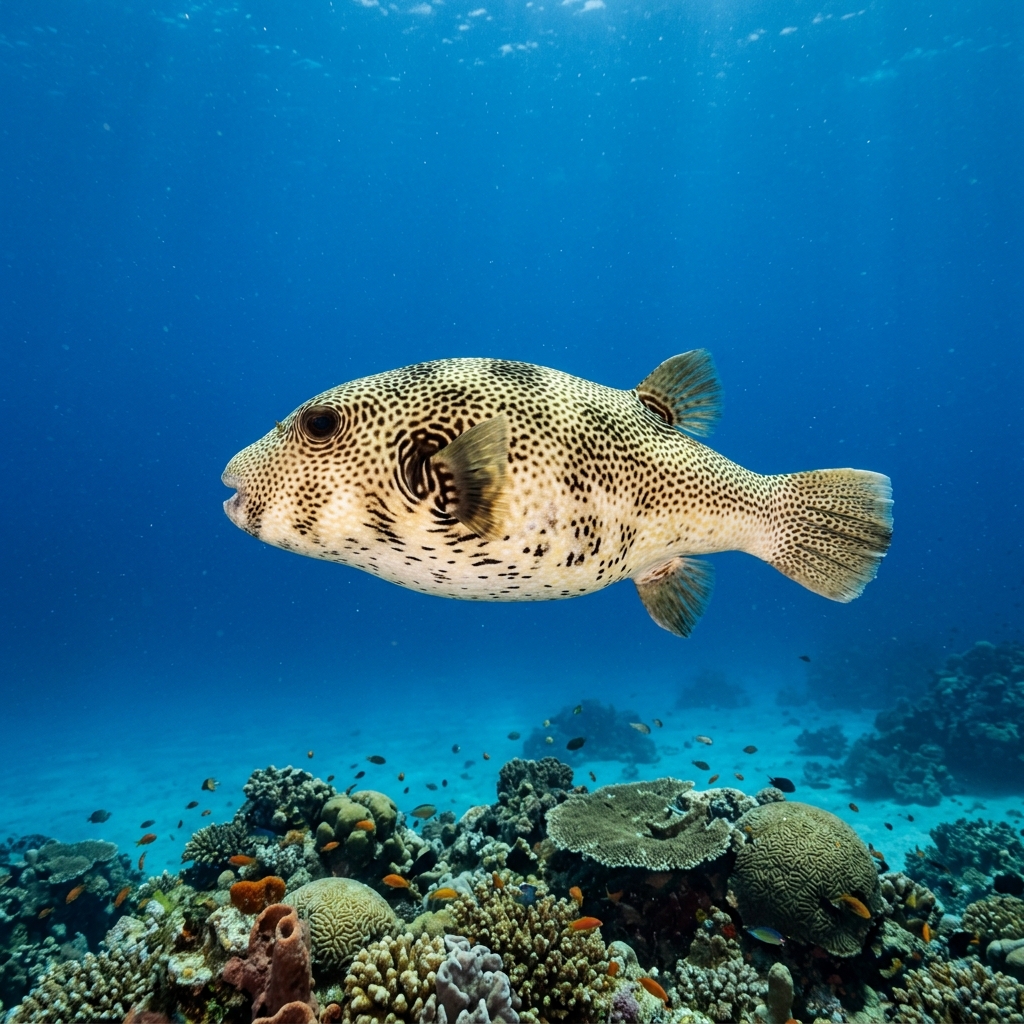
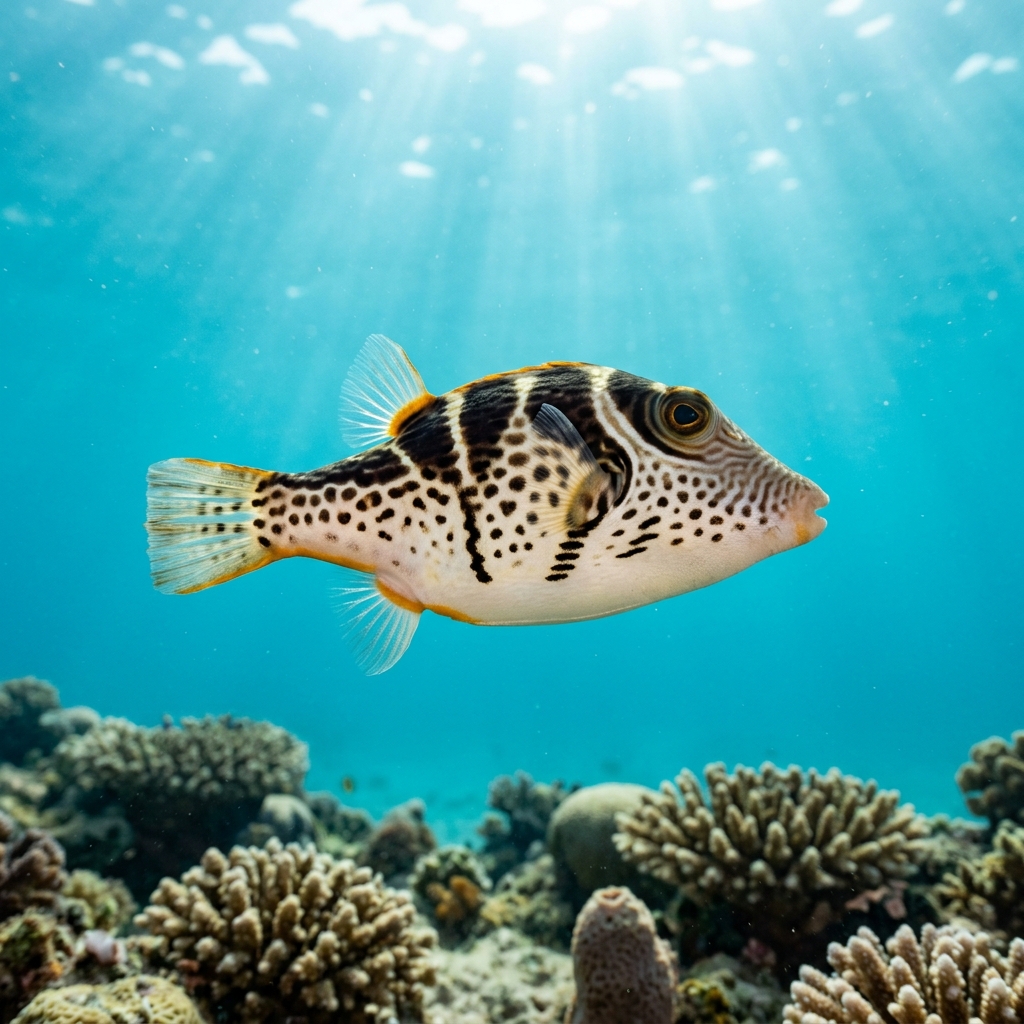
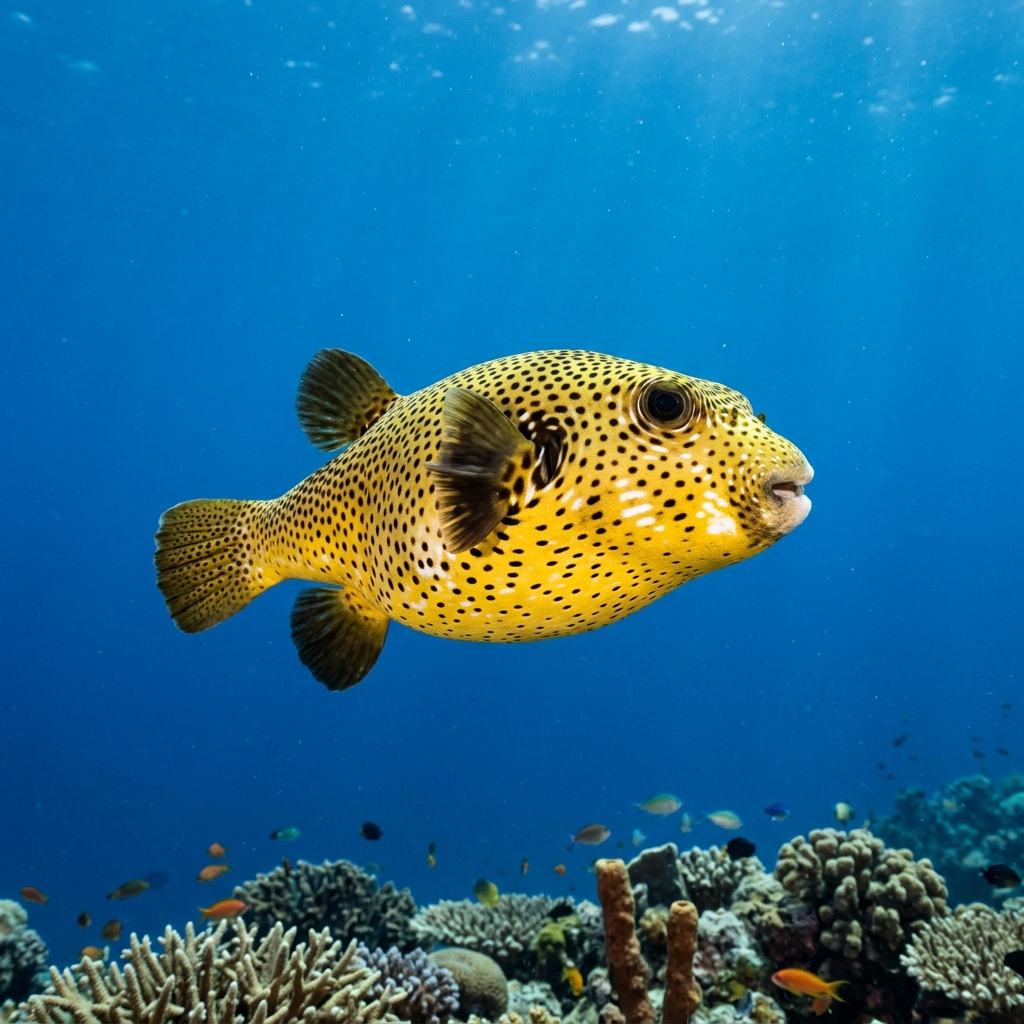
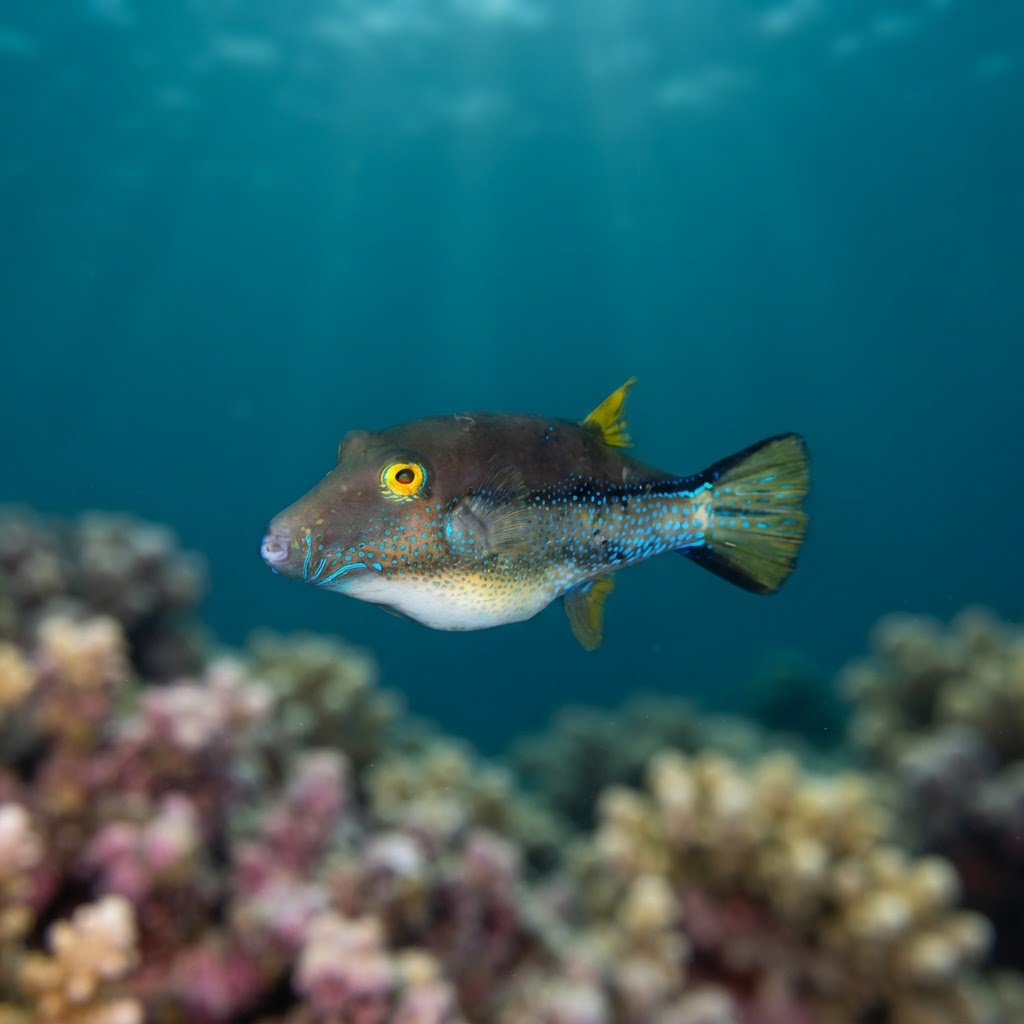
A tiny, tapered puffer that rarely exceeds 6 cm, with a pointed snout and a brownish to olive body covered in faint darker mottling. Look for fine pale blue lines and spots radiating around the eyes and snout, a diagnostic feature at close range. It swims with slow, hovering fin beats close to rock or reef structure rather than darting like smaller reef fish.
Divers most often spot it cruising low over rock and rubble patches or hovering near small crevices on the reef, picking at algae and invertebrates rather than schooling or patrolling open water. It's an unhurried, approachable fish that generally keeps its distance without bolting, making it an easy subject for a slow macro pass. Most logs describe single individuals rather than groups, spotted at any time of day on shallow reef dives.
Like other sharpnose puffers, its skin and internal organs carry tetrodotoxin as a predator deterrent, so it faces very few threats on the reef despite its small size and slow swimming style.
Sightings are logged year-round with no strong seasonal pattern, which fits its comfort range of roughly 19 to 24C, a span these Macaronesian island waters hold for most of the year. Plan around your destination's usual dive season rather than chasing a specific month for this species.
Reef neighbours a diver could mistake it for. Use the identification notes above to tell them apart.
This is a Canary Islands fish first and foremost, with the densest sightings around Tenerife, Gran Canaria, Lanzarote and Fuerteventura, and it also turns up reliably around El Hierro. Beyond the Canaries it's well logged in Madeira, along Spain's Andalusian coast, and around São Vicente in Cape Verde, with occasional records from the Azores.
Mapping where Macaronesian Sharpnose-puffer is logged…
It's most reliably seen around the Canary Islands, especially Tenerife, Gran Canaria, Lanzarote and Fuerteventura, with strong populations also in Madeira and around São Vicente in Cape Verde.
There's no strong season logged for this species, it's seen year-round across its Canary Islands and Macaronesian range, matching the stable warm-temperate water temperatures there.
Look for a small, pointed-snout puffer under 6 cm, olive to brown with faint mottling and fine pale blue lines around the eyes and face. It hovers close to rocky reef rather than swimming in open water.
They stay small, typically around 6 cm in length, making them one of the smaller pufferfish divers encounter on Macaronesian reefs.
No, they pose no threat to divers. Like related sharpnose puffers they carry tetrodotoxin internally as a defence against predators, but this poses no risk to divers who simply observe them.
Despite its slow, unhurried swimming style, it's rarely bothered by predators because its tissues contain tetrodotoxin, a potent natural toxin that makes it an unappealing meal.
Site and sighting data is aggregated from diver logs, iNaturalist and GBIF. For taxonomy and conservation status:
Valentini Pufferfish
2,830 sites