Bodianus anthioides
Spot lyretail hogfish on Red Sea reefs in South Sinai or Marsa Alam, comfortable year-round in 24-29C water.
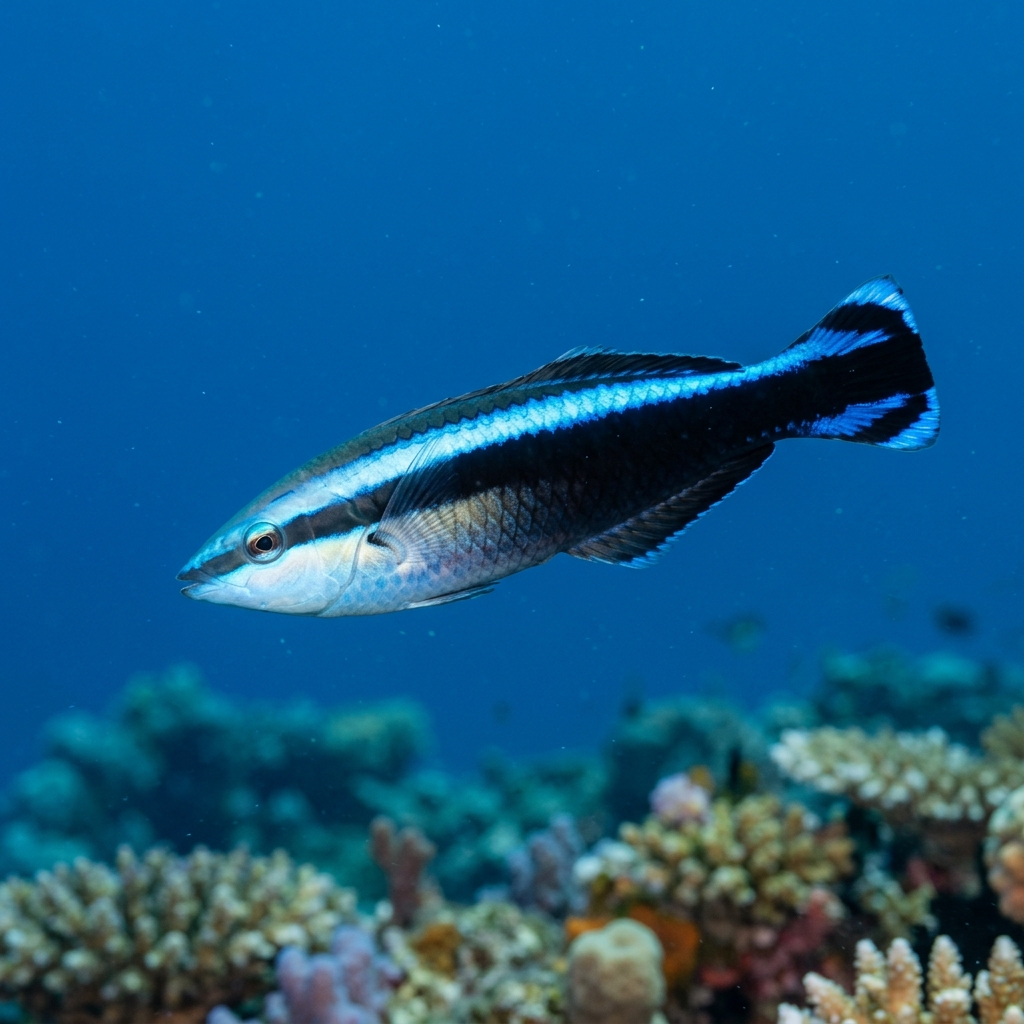
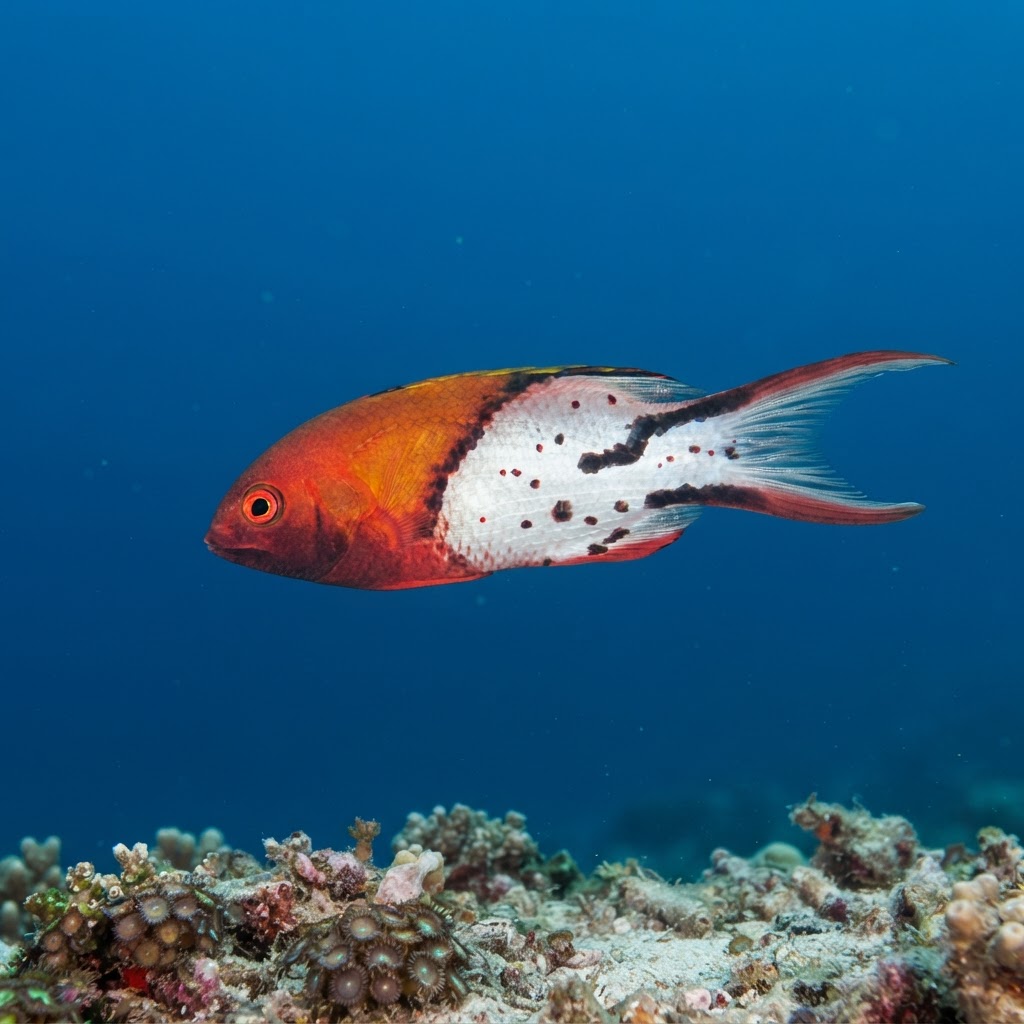
A small, slender wrasse rarely more than 16 cm long, easy to spot by its white to pale body, a black-edged dorsal fin, and a distinctive lyre-shaped tail with elongated upper and lower lobes. A dark spot sits at the base of the pectoral fin, and an orange-red stripe often runs along the back. It hovers just above the reef rather than swimming in open water, which helps separate it from bulkier reef wrasses.
Divers typically find it hovering a body length or two above coral rubble or reef slopes, picking at small invertebrates rather than chasing prey. It is not shy exactly, but it keeps its distance and will dart into cover if approached too fast, so a slow, steady pass usually gets you a closer look. Most sightings are logged as uncommon rather than common, so it rewards divers who check the lower reef edges rather than just the open water.
Like many wrasses in the Bodianus genus, it feeds by picking small crustaceans and molluscs out of crevices and rubble, making it a useful indicator of a healthy, structurally complex reef.
No strong season shows up in the sighting data, and its comfort range of roughly 24 to 29C matches tropical reef temperatures year-round, so it is a fish you can reasonably expect on any dive in its range rather than one tied to a particular month.
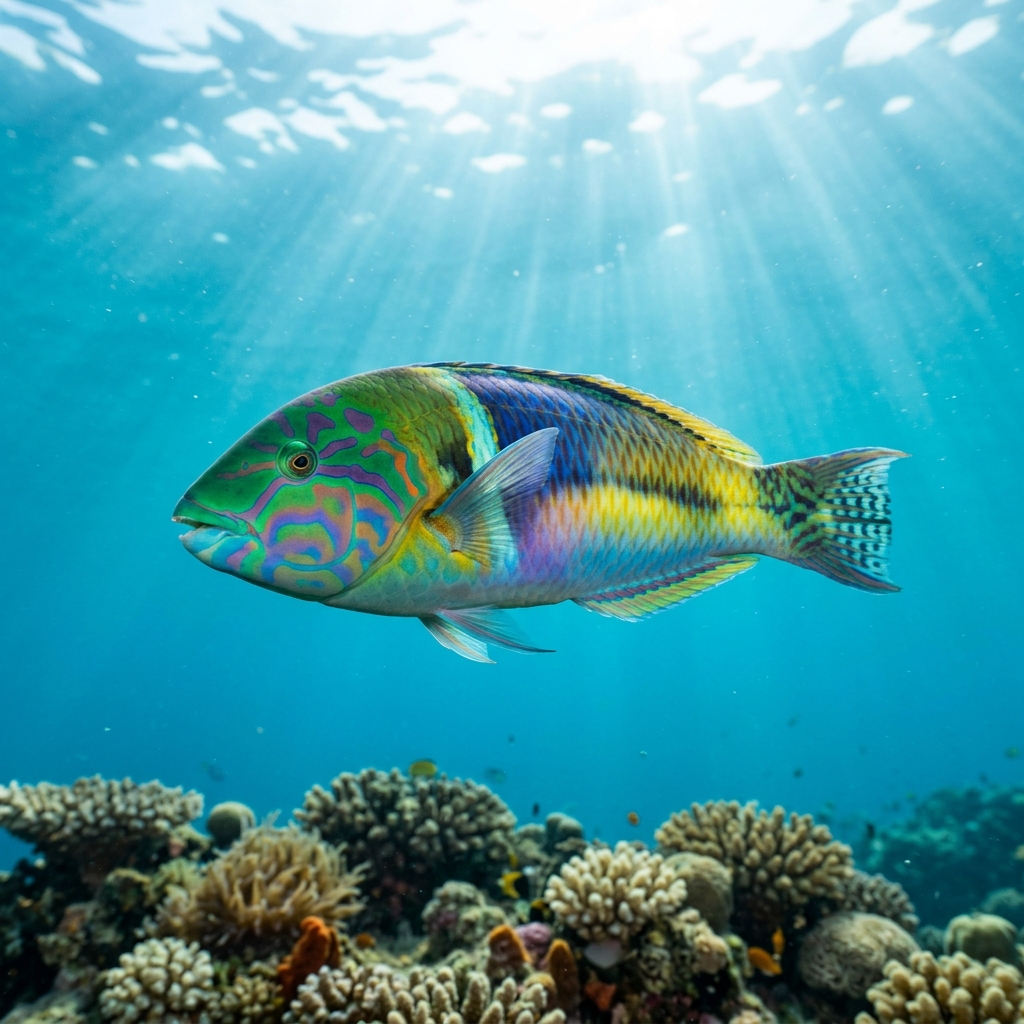
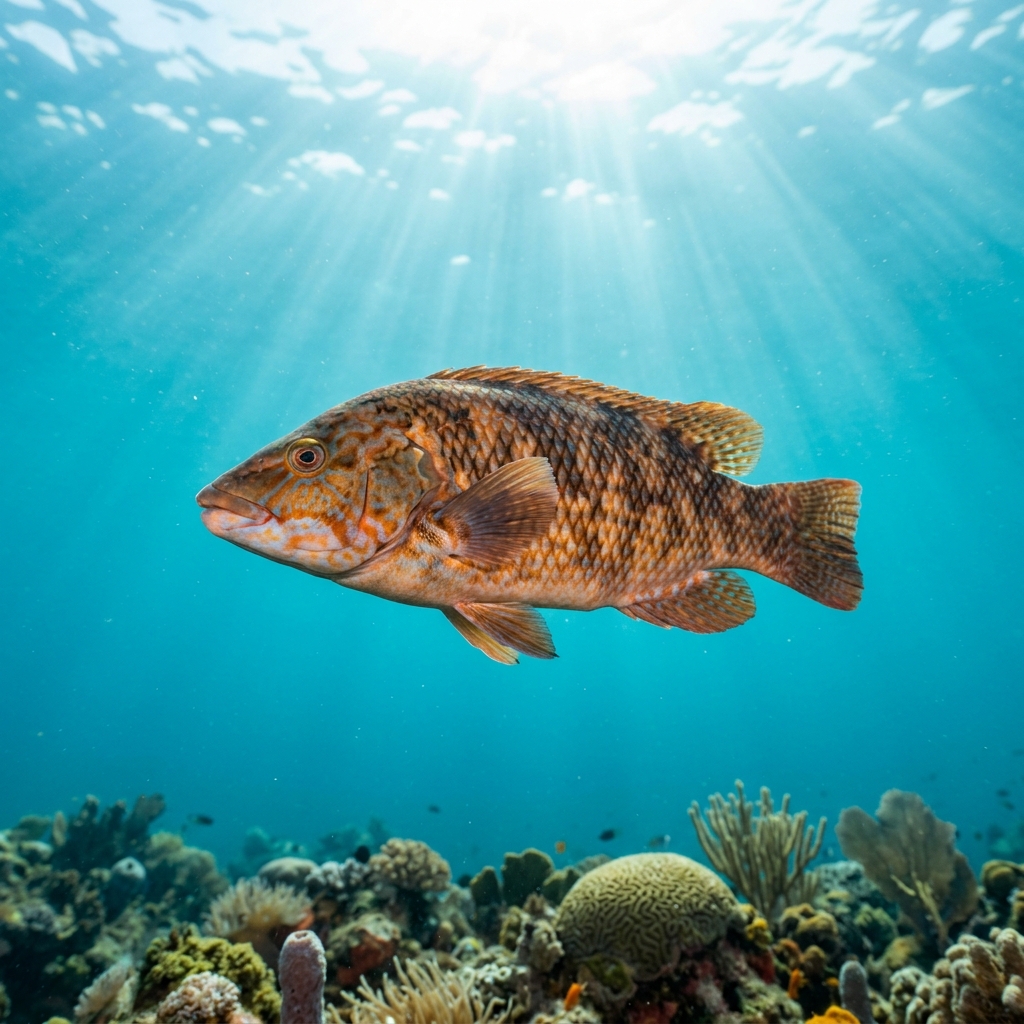
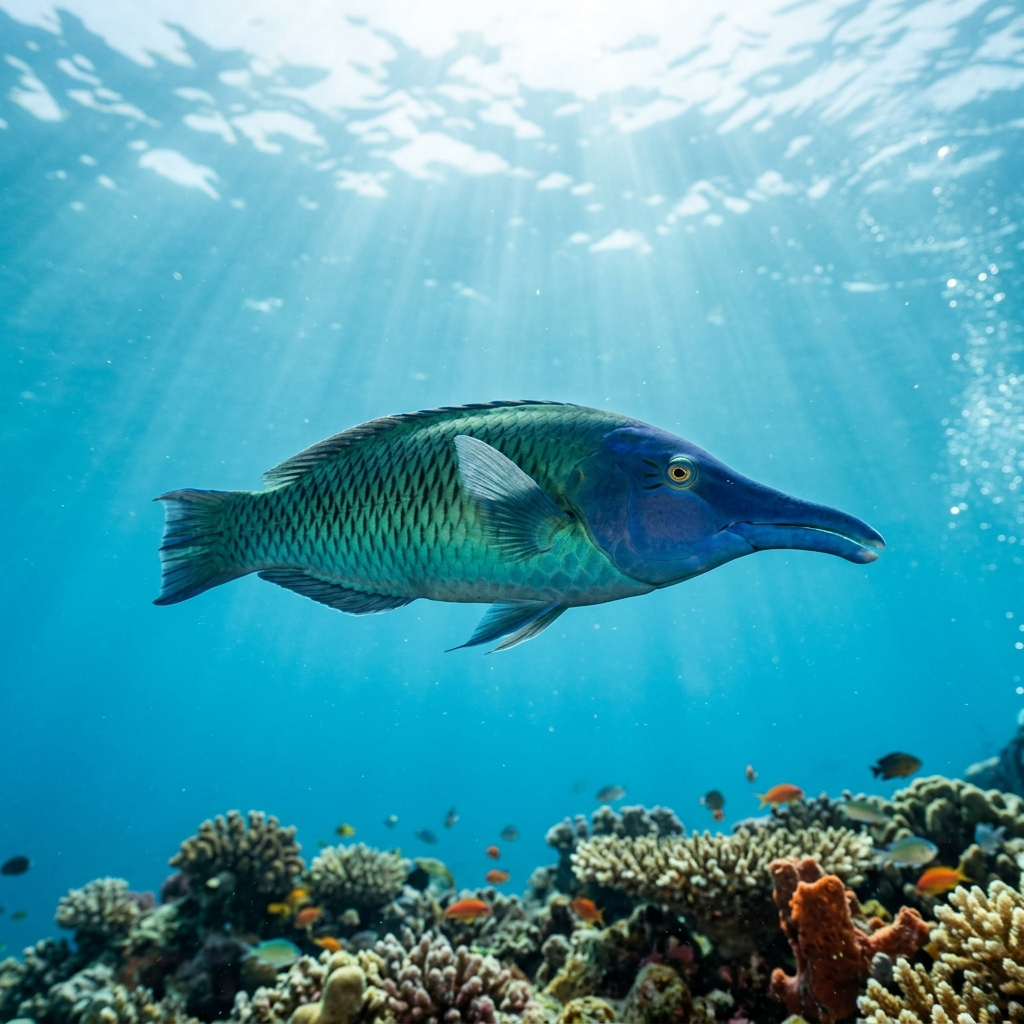
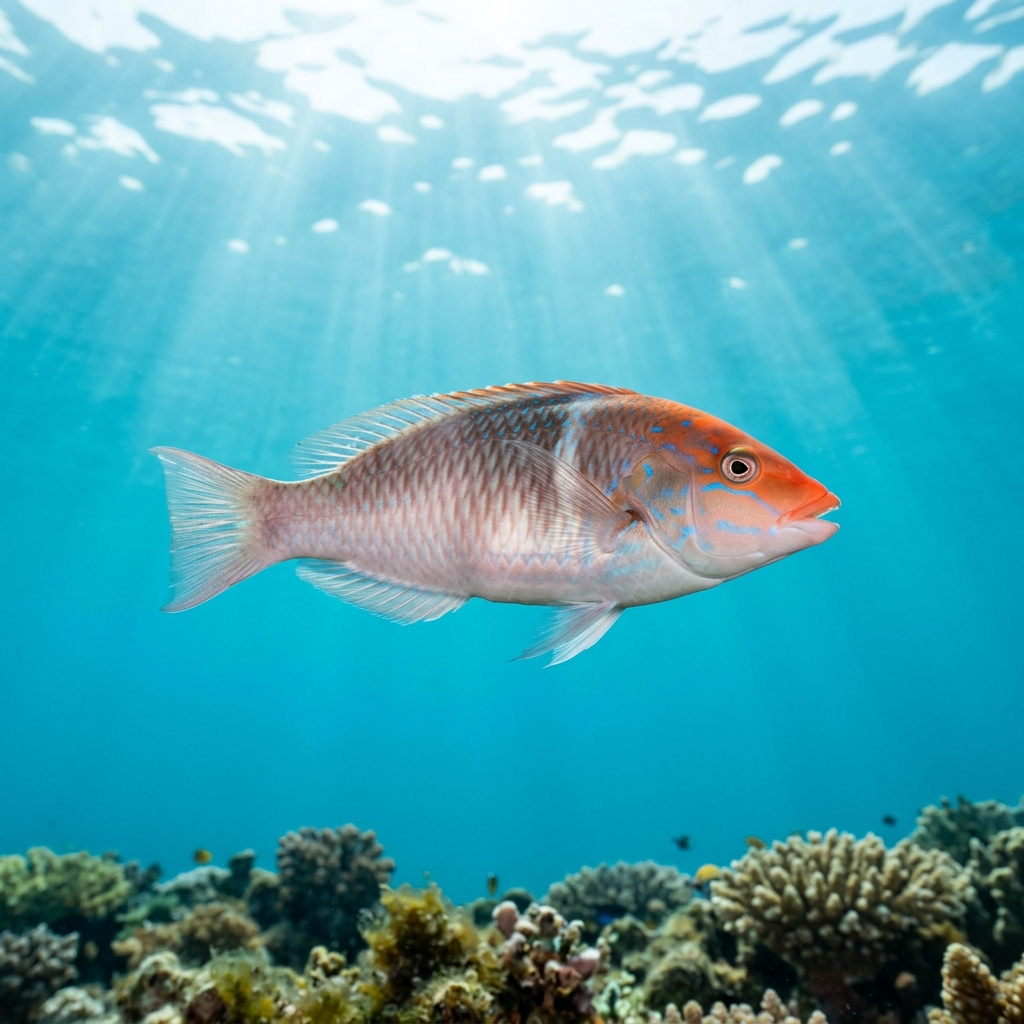
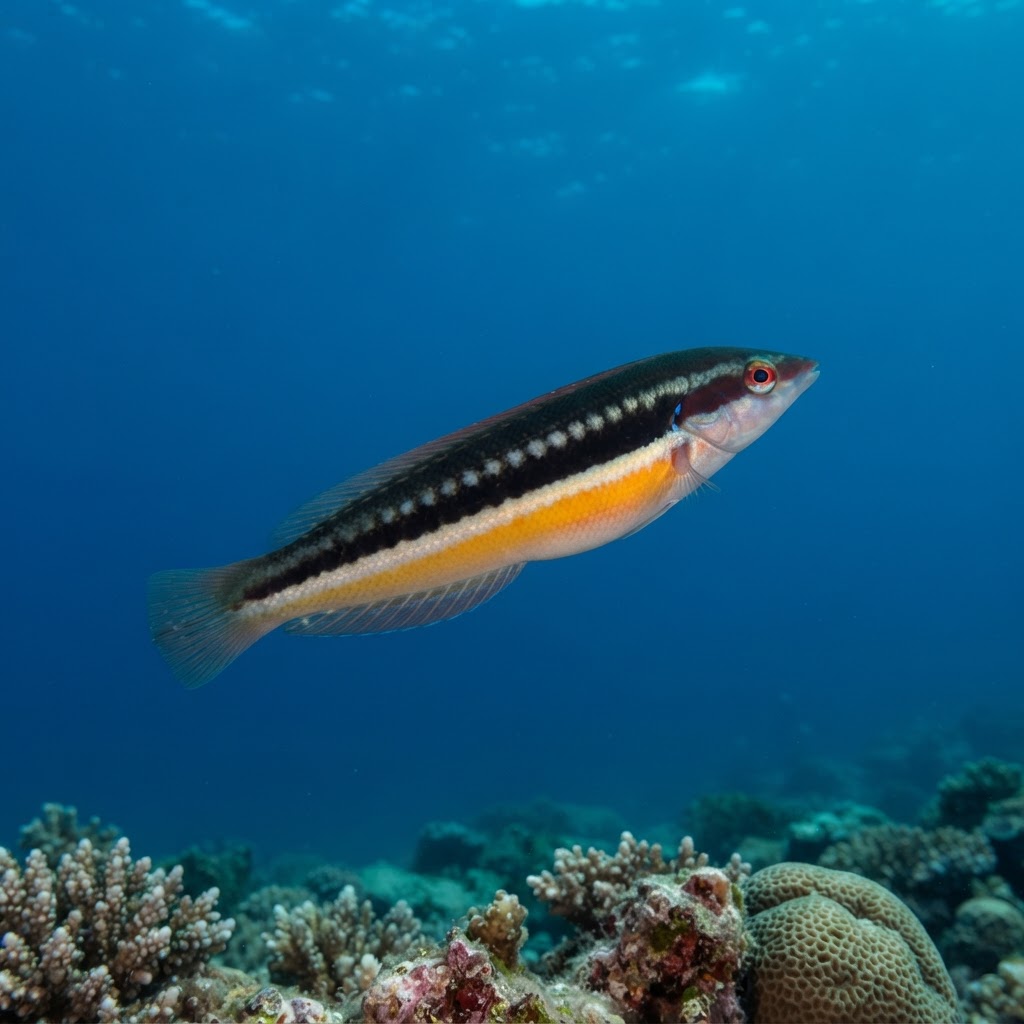
Reef neighbours a diver could mistake it for. Use the identification notes above to tell them apart.
Most reliably found on Red Sea reefs, with strong numbers logged across South Sinai, the Red Sea Riviera, and Marsa Alam and the Deep South in Egypt. It also turns up around Aqaba in Jordan, Eilat in Israel, and Flic-en-Flac in Mauritius, with scattered sightings in the Philippines, Mozambique, Madagascar and Fiji.
Mapping where Lyretail Hogfish is logged…
South Sinai, the Red Sea Riviera and Marsa Alam in Egypt are the most reliable regions, with additional sightings around Aqaba in Jordan, Eilat in Israel and Flic-en-Flac in Mauritius.
There is no clear seasonal pattern in the sighting data. It tolerates water from about 24 to 29C, so it is present on tropical reefs throughout the year rather than during a specific season.
Look for a small, slender wrasse with a white body, a black-edged dorsal fin, a dark spot at the pectoral fin base, and a tail with long lyre-shaped lobes. It hovers just above the reef rather than swimming through open water.
They are small reef fish, typically reaching around 16 centimetres in length, which is one reason they are easy to overlook against busier reef backgrounds.
No. They pose no threat to divers and simply forage over the reef, keeping a cautious distance if approached quickly.
Most divers who log it describe it as uncommon rather than common, so sightings are a nice find rather than a guaranteed one, even in its strongholds like the Egyptian Red Sea.
Site and sighting data is aggregated from diver logs, iNaturalist and GBIF. For taxonomy and conservation status:
Bird Wrasse
3,632 sites