Ptereleotris monoptera
A slender 8cm goby hovering over sandy patches in New South Wales, Australia, in warm 23-29C water year-round.
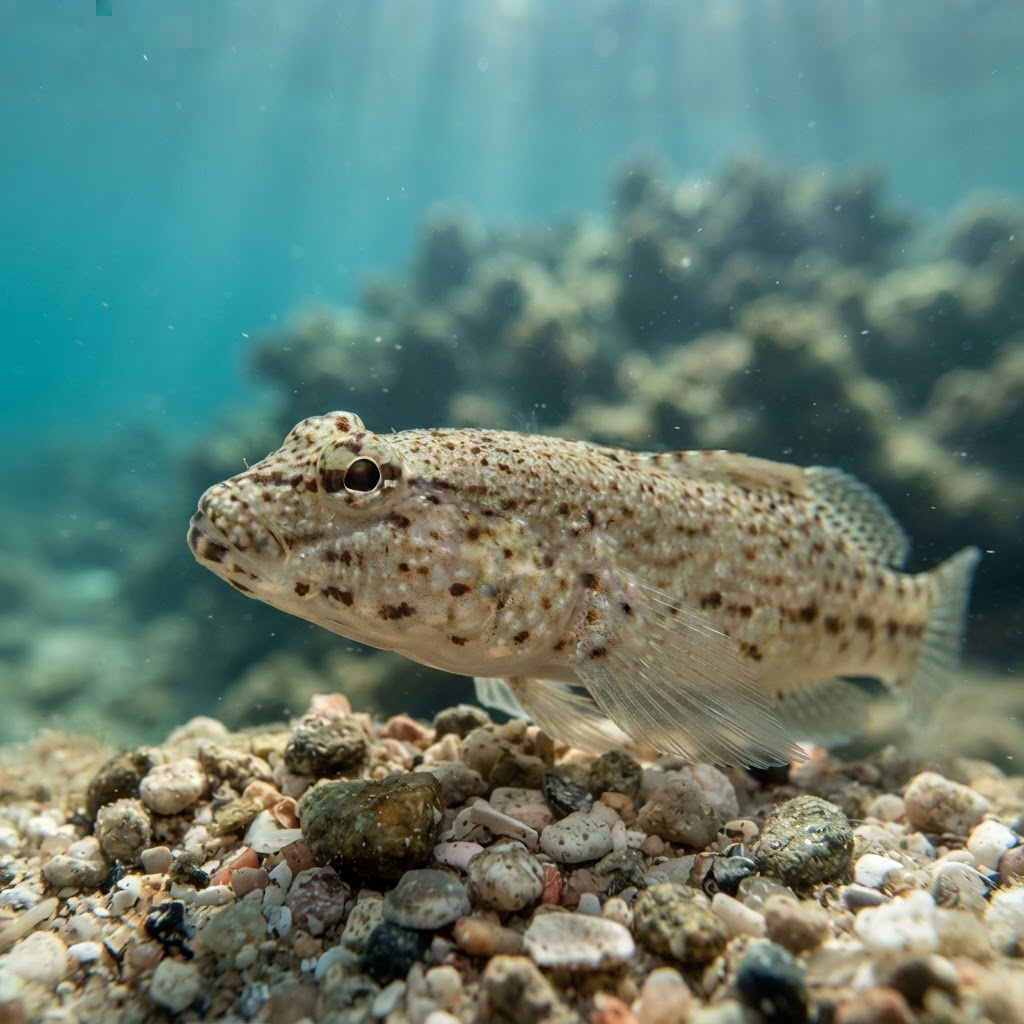
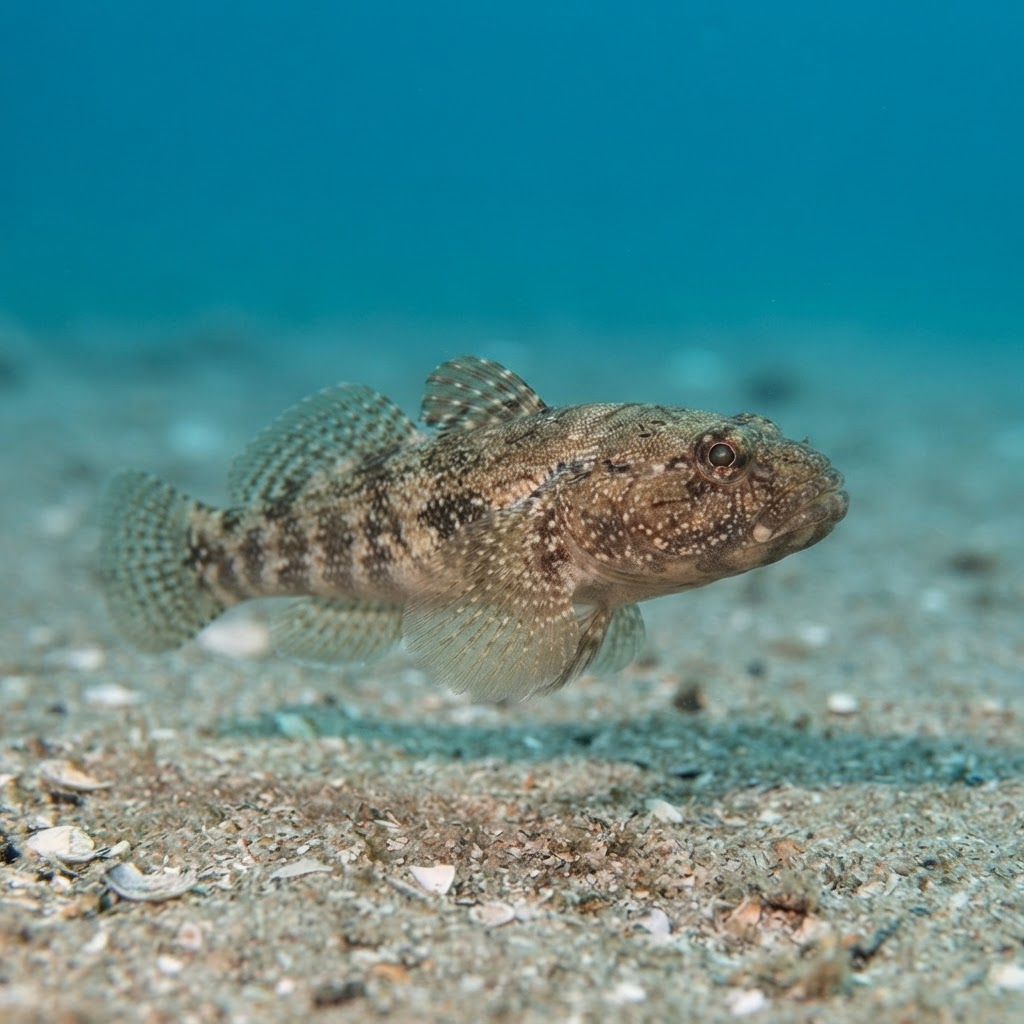
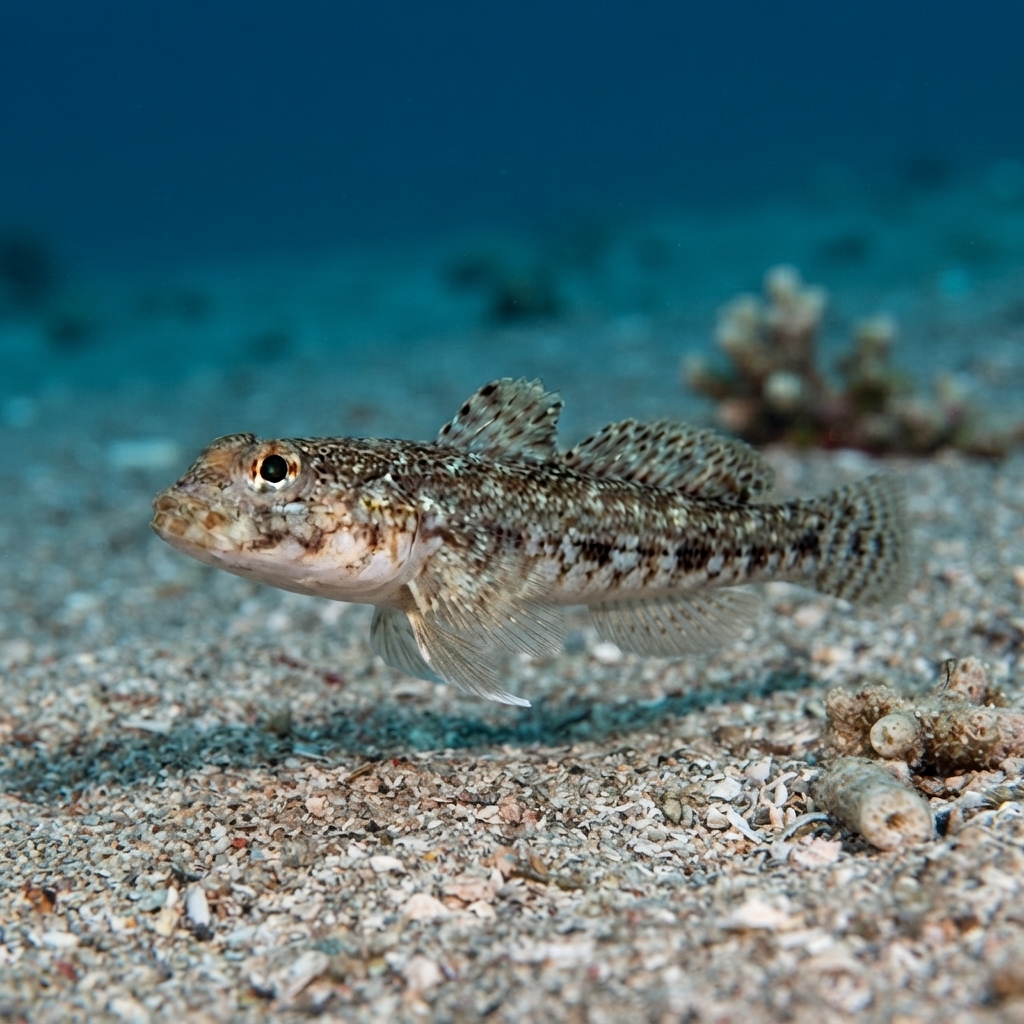
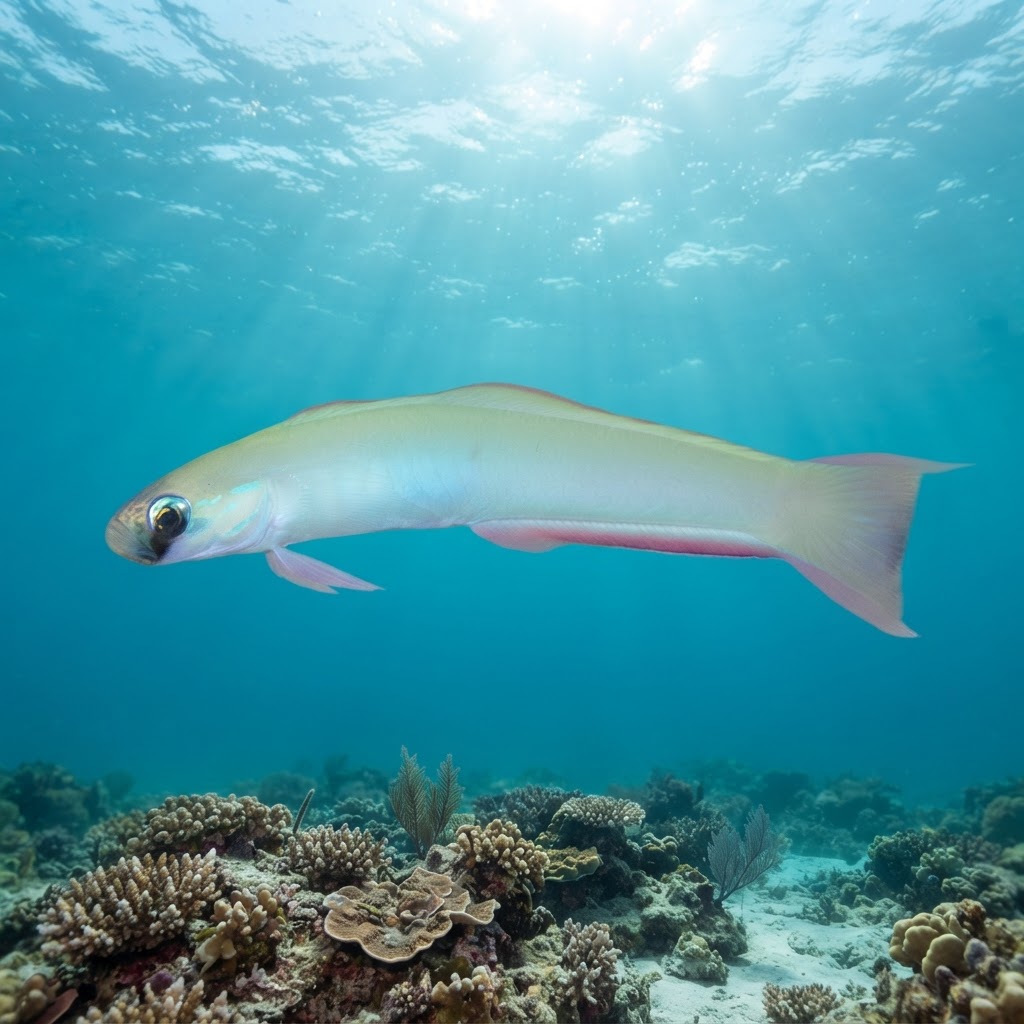
A slim, torpedo-shaped goby around 8 cm long, usually seen hovering just above the substrate rather than resting on it. Look for a pale, slightly translucent body with a subtly forked (lyre-shaped) tail, the feature that gives it its name. It holds a near-vertical, alert posture over sand or rubble patches, ready to dart for cover.
Divers typically find it hovering a few centimetres above sand or rubble, facing into the current and picking at drifting plankton. It's a wary fish, quick to drop into a burrow or crevice the moment a diver gets too close, so a slow approach and some patience pay off. Most sightings describe it as scarce even at sites where it does occur, so expect a scan-and-wait rather than a guaranteed encounter.
It's logged as rare at almost every site where divers have recorded it, with only one site showing it as common, so finding one at all is a reasonable result for a dive in New South Wales.
No clear seasonal pattern shows up in the sighting data, and its temperature niche of 23.3 to 29.1C spans NSW's water temperature swings across the year, so it's reasonable to look for it on any dive rather than planning around a specific month.
Every logged sighting in the data comes from Australia, concentrated in New South Wales, making it the region to target if you want to find this species. It turns up on sites with sandy or rubble patches rather than solid coral reef, so scan those open areas rather than the reef face itself.
Mapping where Lyretail Dartgoby is logged…
Sightings are concentrated in New South Wales, Australia, where divers find it hovering over sandy or rubble patches on a number of sites. It hasn't been logged elsewhere in the available data, so NSW is currently the place to look.
There's no detected seasonal pattern, and its recorded temperature range of 23.3 to 29.1C covers most of the year in NSW waters, so it can turn up on any dive rather than a specific season.
Look for a slender, pale, torpedo-shaped goby around 8 cm long hovering just above sand or rubble, with a subtly forked tail. It holds an upright, alert posture and darts into cover quickly if approached.
They reach about 8 cm in length, making them one of the smaller gobies you'll spot hovering over open sand patches.
No, they pose no danger to divers. They're small, shy fish that retreat into burrows rather than approach or interact with people.
Site and sighting data is aggregated from diver logs, iNaturalist and GBIF. For taxonomy and conservation status:
Slender Goby
806 sites