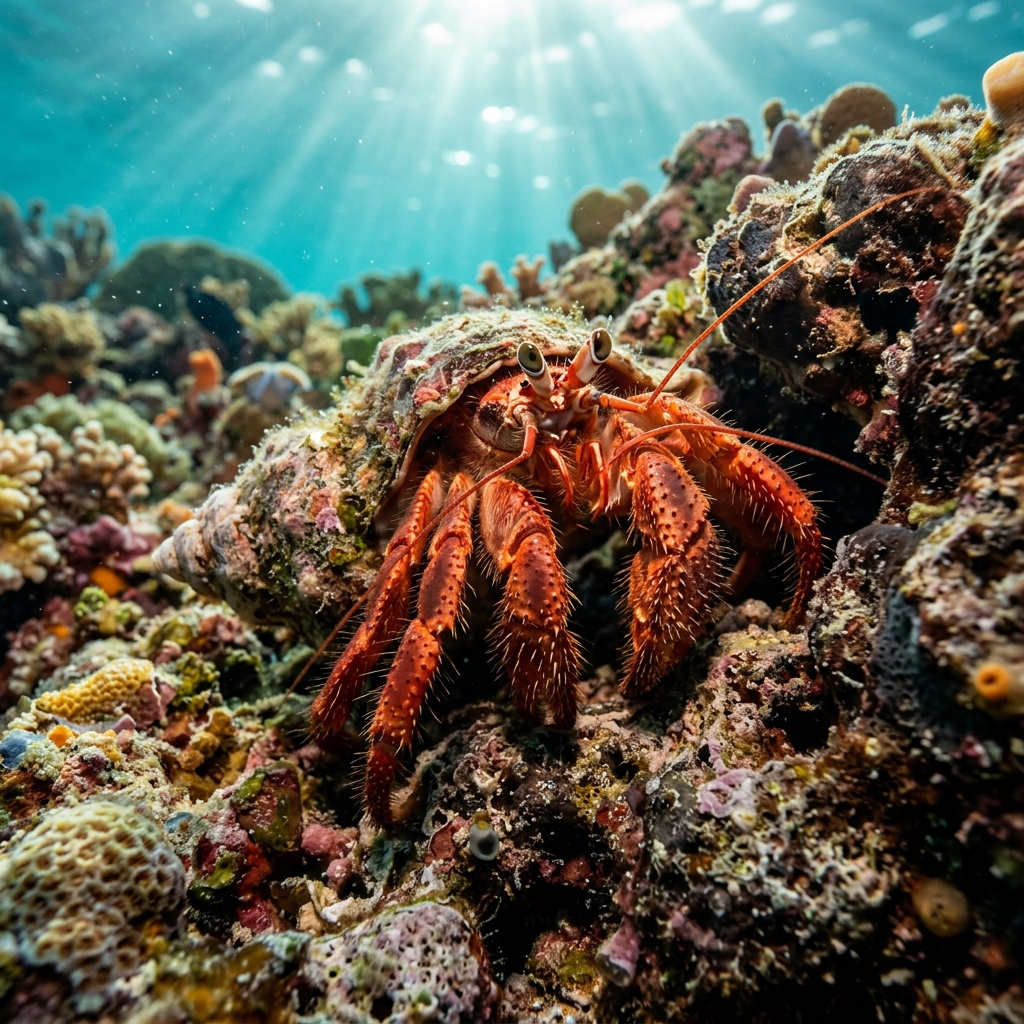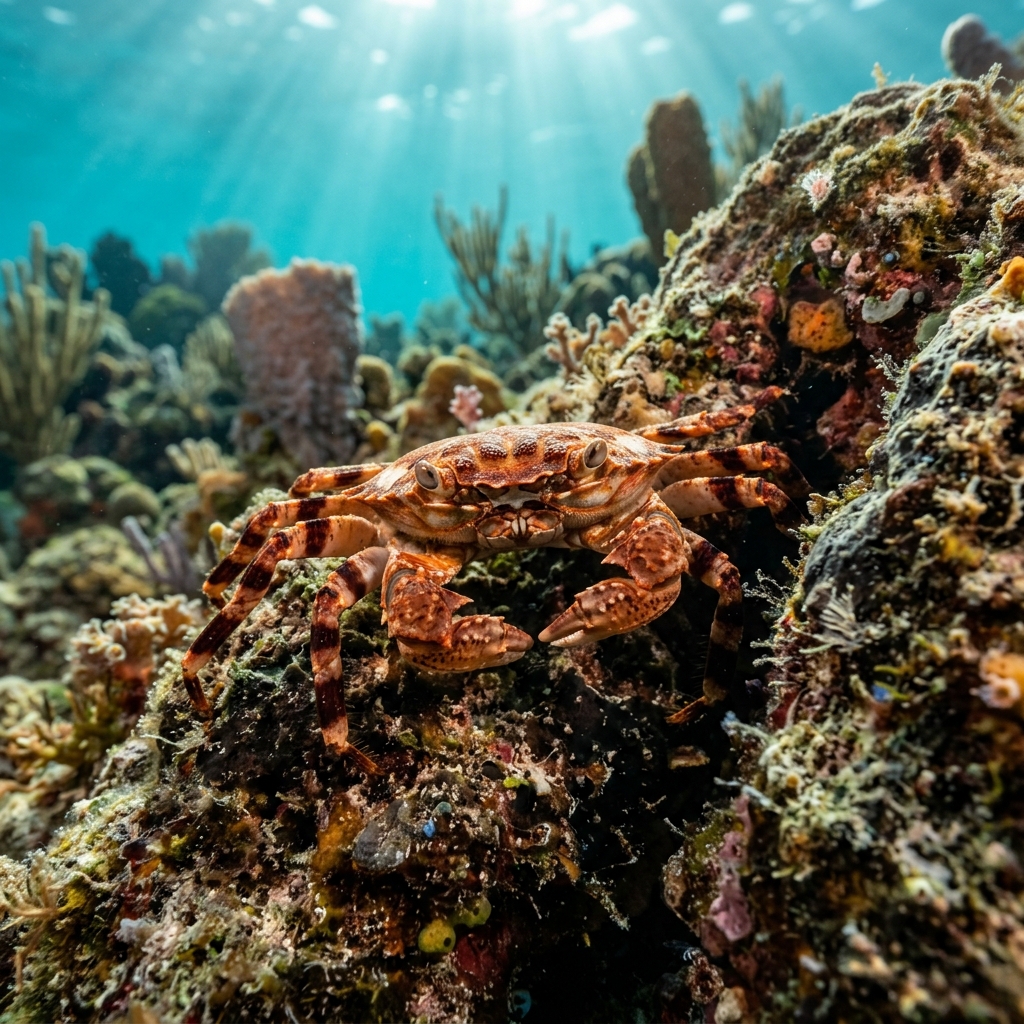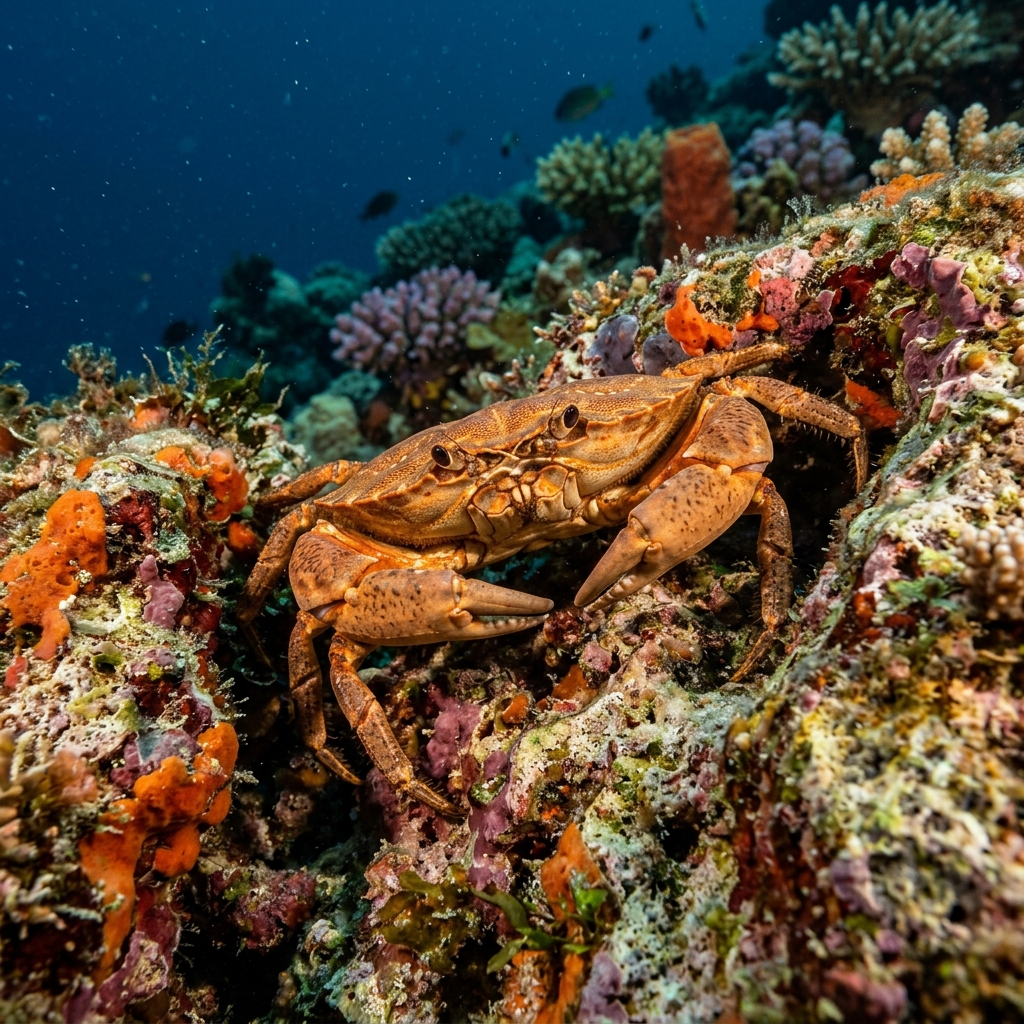
Lybia caestifera
Spot the Boxer Crab, famous for wielding tiny anemones like boxing gloves. Found in warm tropical waters around 27-29 °C.
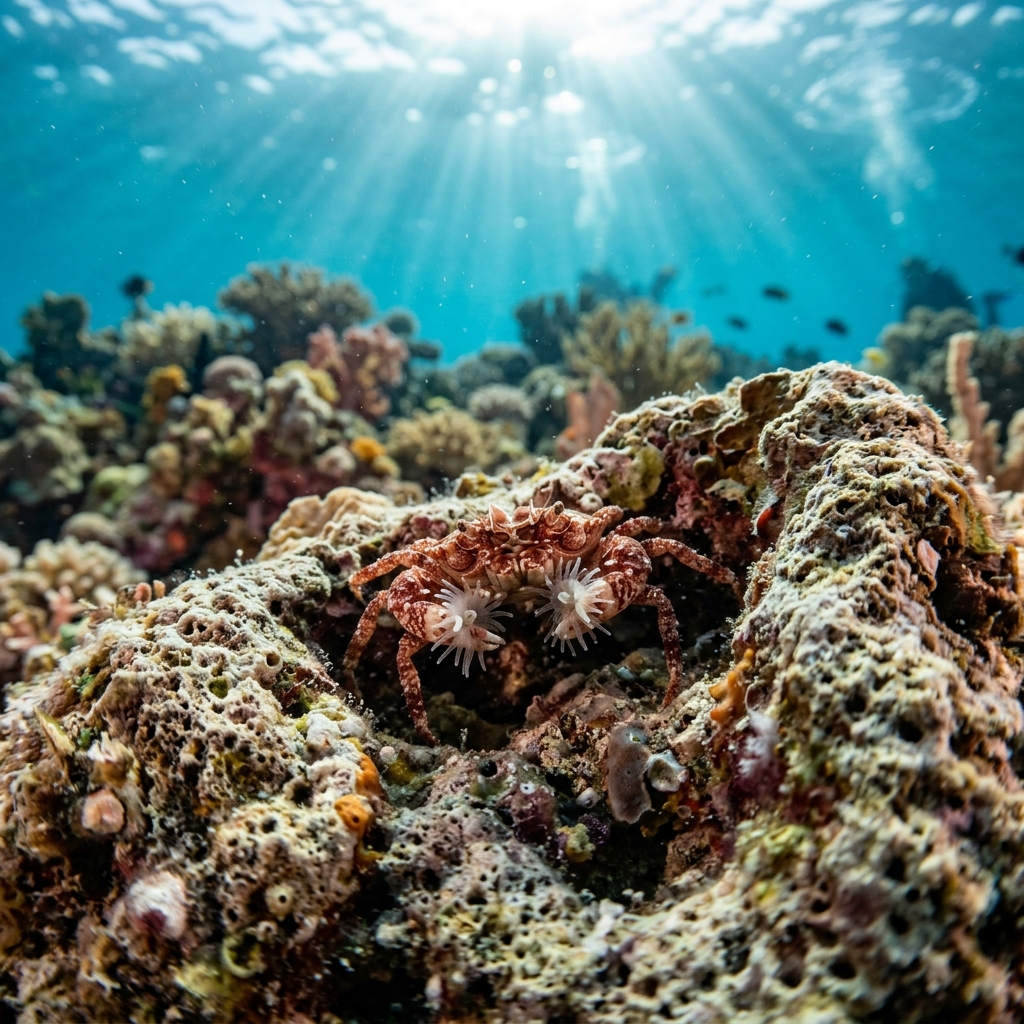
Look for a small, pale crab carrying a tiny anemone in each claw, the pom-pom-like anemones are the unmistakable giveaway and make this species unlike anything else on the reef. The body is cream to whitish with reddish-brown mottling, and the overall build is compact and low-slung. The anemones are held aloft and waved defensively, which means a slow-moving crab that seems to be constantly brandishing something is almost certainly this species.
Boxer crabs move slowly across rubble and sandy reef patches, holding their anemones raised and outward-facing in a clear deterrent display towards anything that approaches. When a diver gets close, the crab tends to freeze or shuffle sideways rather than flee, relying on those stinging anemones for protection. They are most often spotted during night dives when they venture out onto open substrate.
Boxer crabs are known to clone their anemones: if a crab loses one, it will tear the remaining anemone in two, and both halves regenerate into full individuals, an extraordinary mutualism where the crab ensures it is never left unarmed.
No seasonal pattern has been detected from current sighting data, so it should be treated as a year-round resident where present. Its narrow warm-water niche of 26.9 to 29.3 °C ties it to consistently tropical conditions.
Sighting data for this species is not yet logged across dive sites on Fin, so no specific regions or countries can be confirmed from diver observations. Based on its observed water-temperature range of 26.9 to 29.3 °C, it belongs to shallow tropical reef environments typical of the Indo-Pacific. As new sightings are logged, the site map will fill in.
Mapping where Boxer Crab is logged…
The easiest tell is the pair of small anemones held in the claws like pompoms. No other crab does this reliably. The body is pale cream with reddish-brown mottling and is quite small, so look carefully on rubble and sandy patches near the reef.
The anemones provide defence: their stinging tentacles deter predators, so the crab waves them at threats. In return, the anemones gain mobility and food scraps from the crab's feeding. It is one of the most well-known examples of mutualism in reef invertebrates.
No. They pose no risk to divers. The anemones they carry can sting small predators, but the sting is negligible to human skin. Simply observe without handling them.
No strong seasonal peak has been identified from current data. Where they occur in tropical waters of roughly 27-29 °C, they appear to be present year-round. Night dives tend to produce the best sightings as they are more active after dark.
Boxer crabs are small animals, typically only a centimetre or two across the carapace (shell). Their size makes them easy to overlook, so slow down and scan rubble zones carefully rather than expecting a prominent subject.
Site and sighting data is aggregated from diver logs, iNaturalist and GBIF. For taxonomy and conservation status:
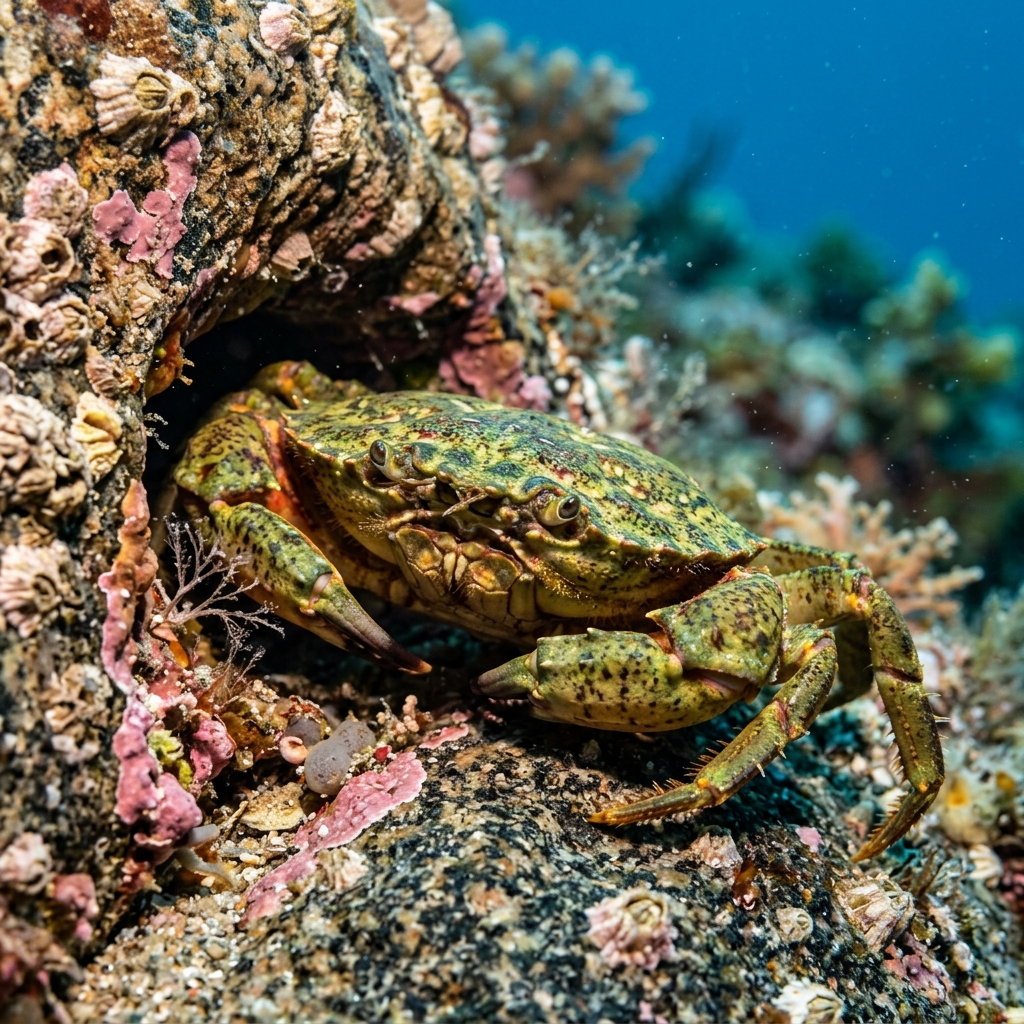
European Green Crab
2,469 sites