Caesio lunaris
Blue-silver schooling fish common in Marsa Alam and South Sinai reefs, comfortable in 25-29C water year-round.
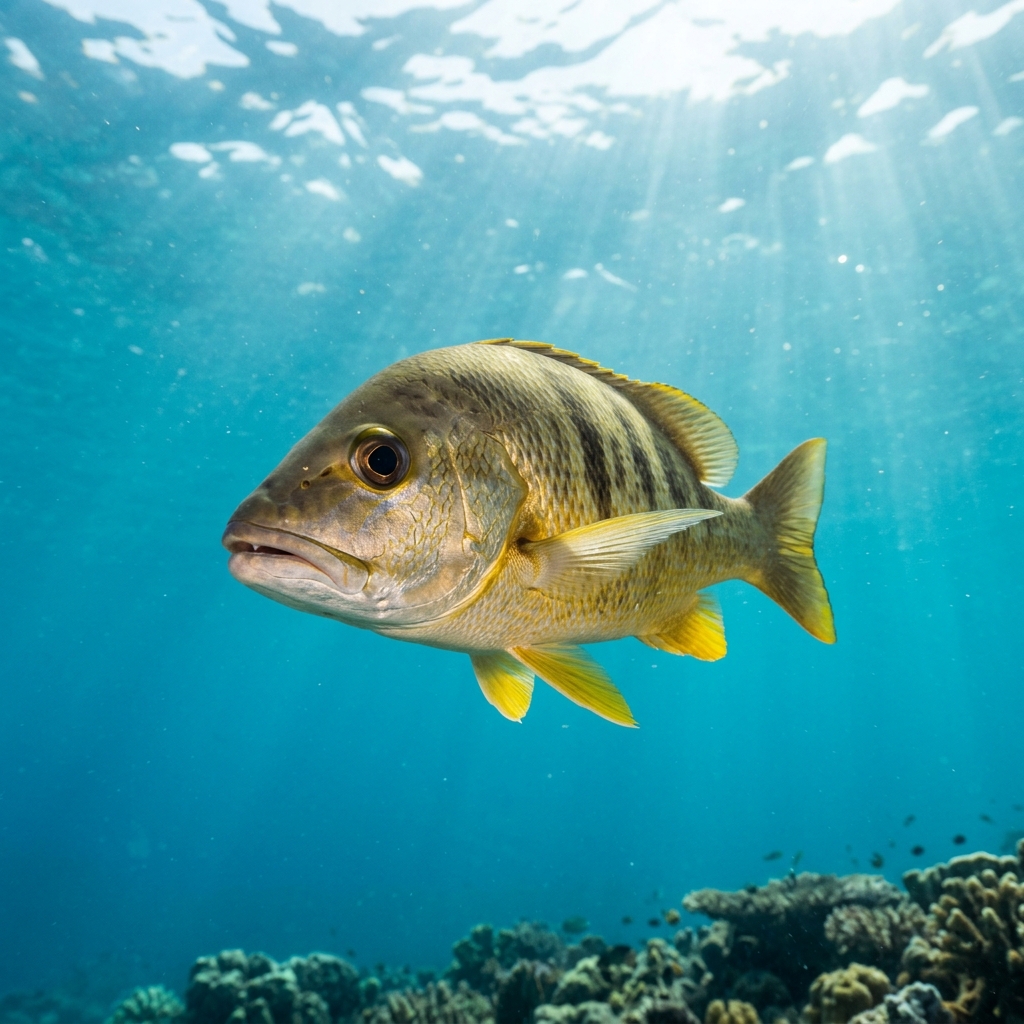
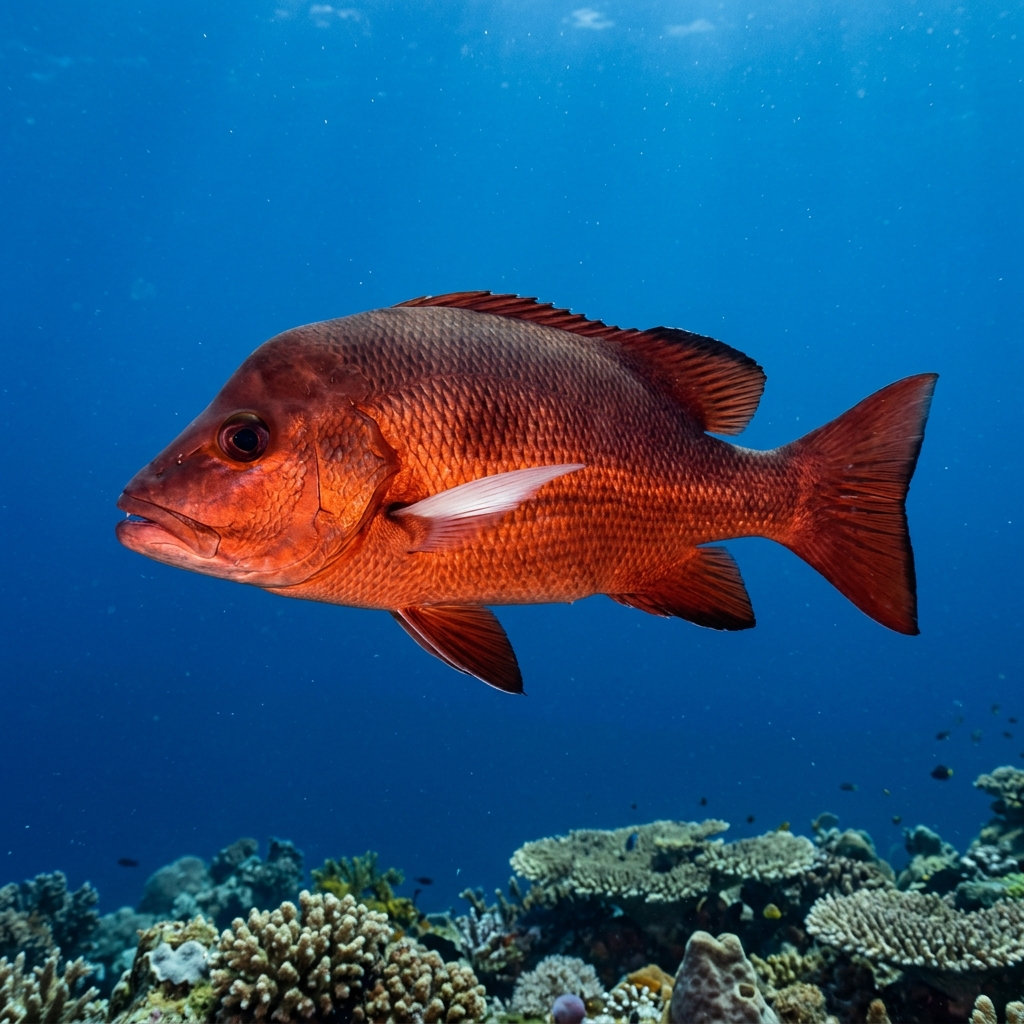
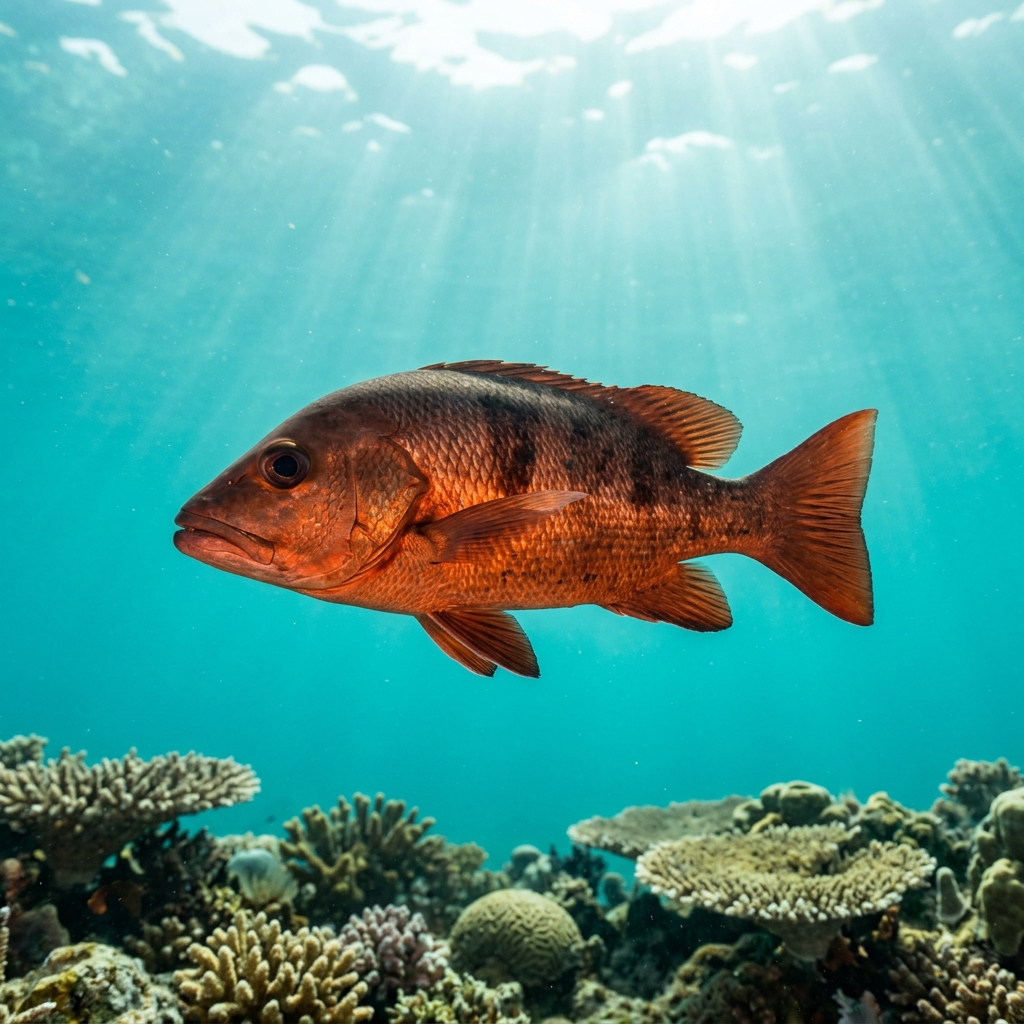
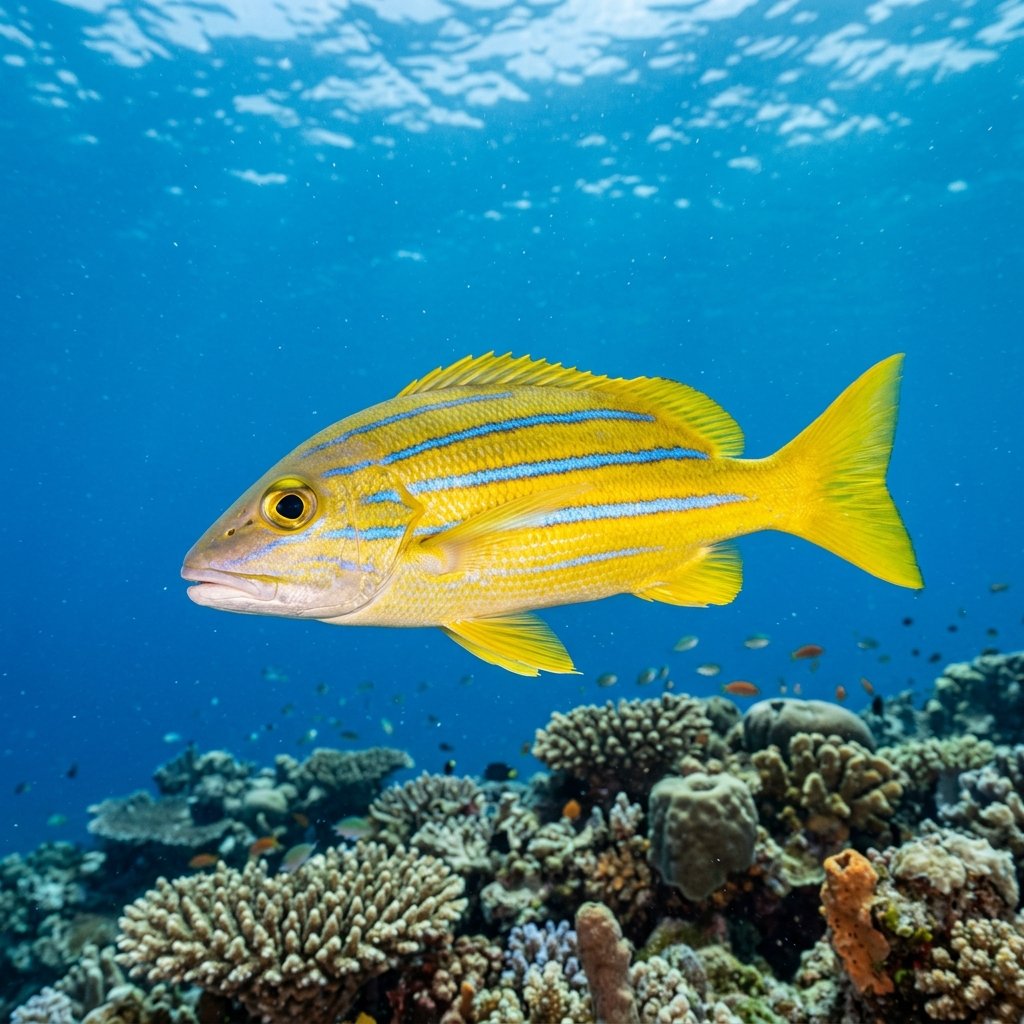
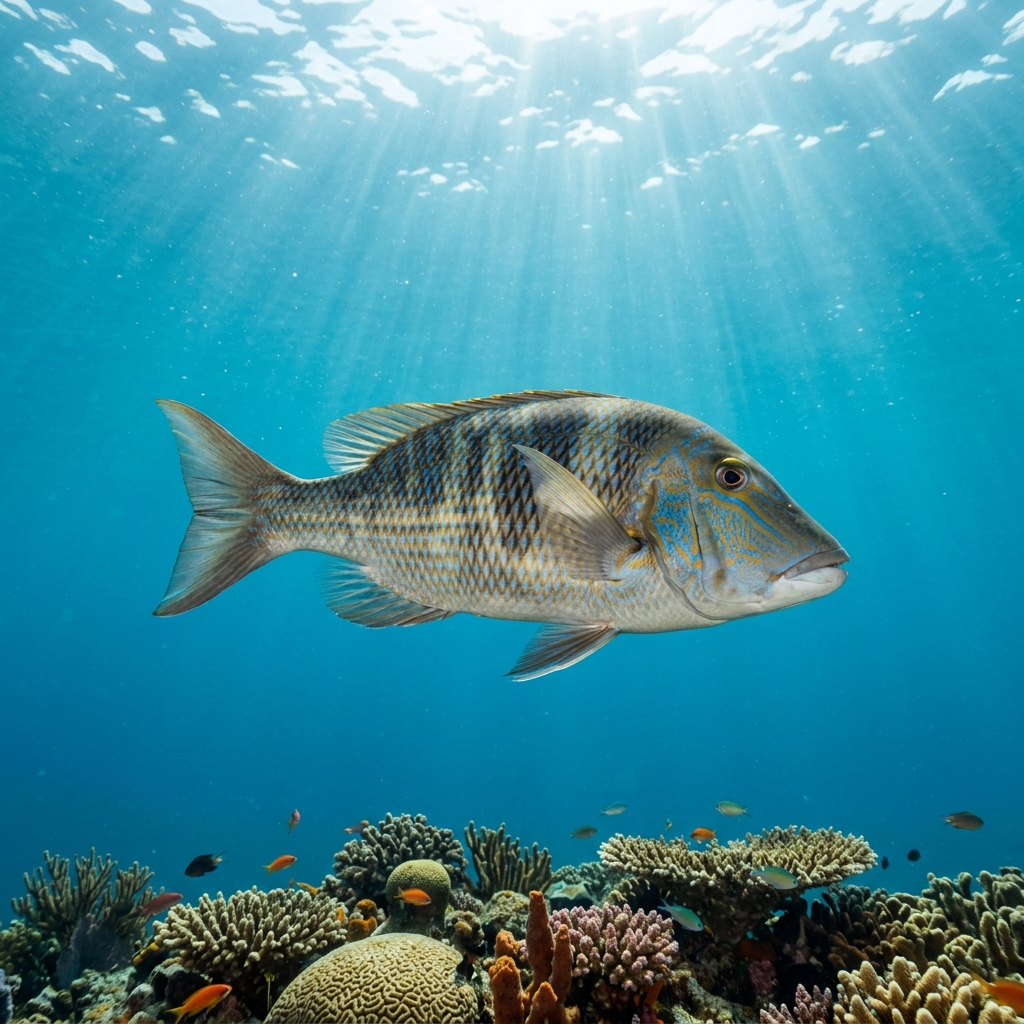
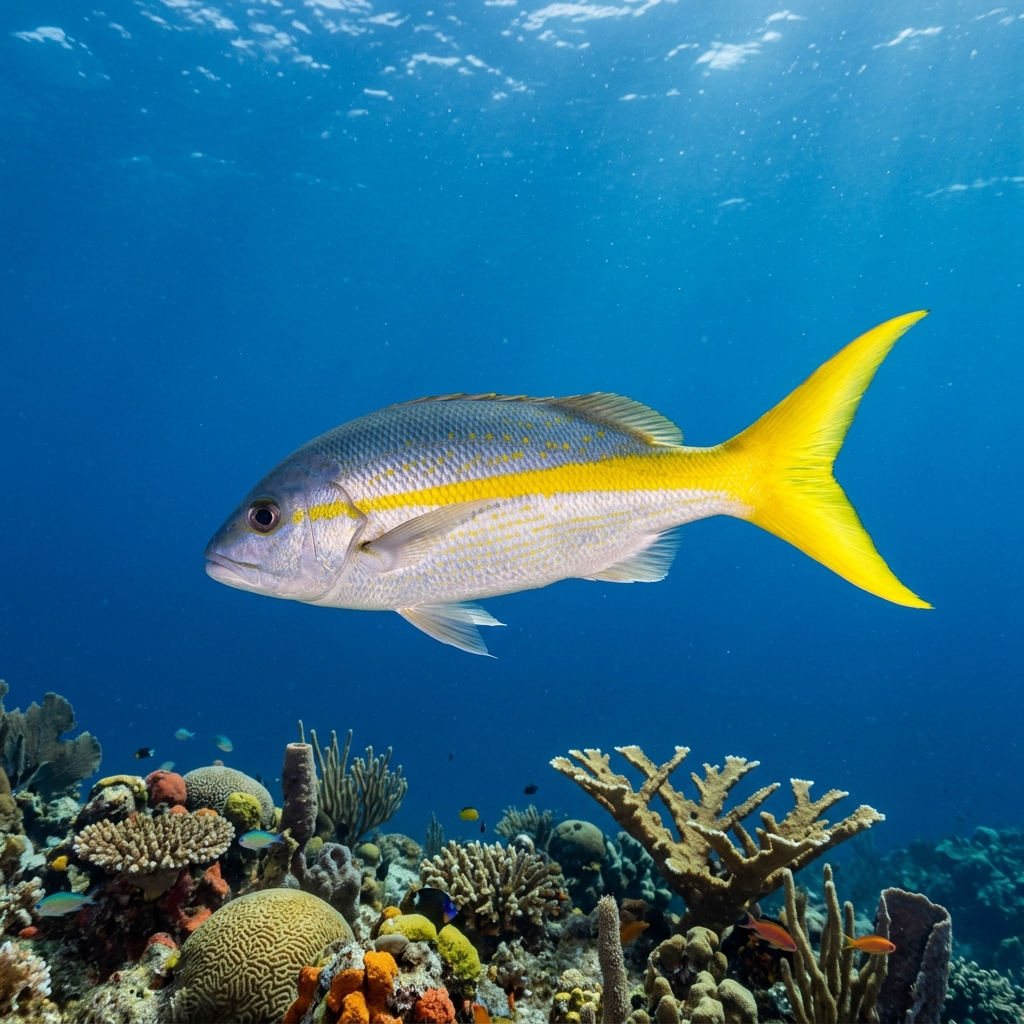
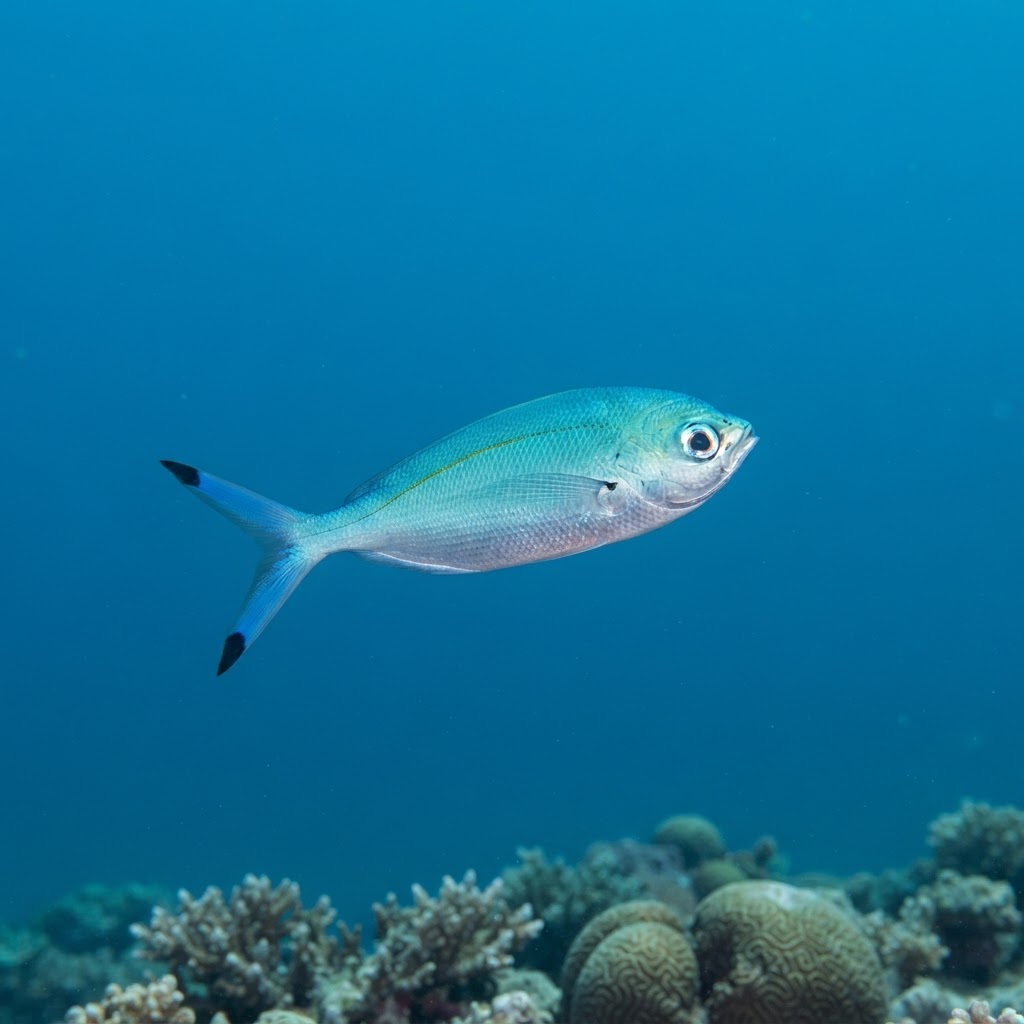
A slim, torpedo-shaped fish around 28 cm, moving in loose to tight schools over reef slopes. Look for a blue-grey back fading to silver on the flanks, with a lunate (crescent-shaped) tail often washed with yellow or pale colour toward the tips. There's no bold stripe or blotch to key on, so the schooling habit and streamlined shape are the giveaways rather than any single mark.
Typically seen cruising in loose schools along reef slopes and drop-offs, sometimes mixing in with other fusiliers or reef fish rather than sticking to a single species group. They tend to hold mid-water over the reef during the day, picking off plankton, and show little concern for divers, usually just parting around you and reforming a few metres on.
Fusiliers like this one are mostly daytime plankton feeders that swim almost constantly, then settle and change colour at night to hide among the reef structure while resting.
No clear seasonal pattern shows up in the sightings, and the observed water temperature range of roughly 24.7 to 29.2C spans most of the year on these reefs, so it's fair to treat this as a year-round sighting rather than something tied to a particular month.
Most reliably logged across the Egyptian Red Sea, especially Marsa Alam and the Deep South and South Sinai, with a strong secondary presence in Khao Lak, Thailand and Raja Ampat, Indonesia. Smaller but steady populations turn up in Eilat, Israel, the Maldives' Northern Atolls, and the Andaman Islands, India, so it's a fish you can plan around across the wider Indo-Pacific and Red Sea rather than one single hotspot.
Mapping where Lunar Fusilier is logged…
Egypt's Red Sea is the strongest area, particularly Marsa Alam and the Deep South and South Sinai, with good numbers also logged in Khao Lak, Thailand and Raja Ampat, Indonesia. It also shows up around Eilat in Israel and in the Maldives' Northern Atolls.
There's no strong seasonal signal in the sightings, and the water temperature range it's found in spans most of the year on tropical reefs, so divers report it across all seasons rather than a specific window.
Look for a slender, blue-grey to silver fish around 28 cm swimming in loose schools over reef slopes, with a crescent-shaped tail often tinged yellow. It lacks a single bold marking, so the schooling behaviour and streamlined shape are the main clues underwater.
They typically reach around 28 cm in length, a fairly average size for a fusilier, and are usually seen in schools rather than as large solitary individuals.
No, they pose no danger to divers. They are a plankton-feeding schooling fish that simply moves around divers rather than reacting defensively.
Like other fusiliers, they feed on plankton in open water during the day and are thought to shift colour and settle near reef structure at night to rest, a pattern typical of the fusilier group.
Site and sighting data is aggregated from diver logs, iNaturalist and GBIF. For taxonomy and conservation status:
Bluestriped Snapper
2,054 sites