Luisella engeli
Rare, small nudibranch logged mostly in Grande-Terre, Guadeloupe, in warm 24.6-30.6C water, seen year-round on Caribbean reefs.
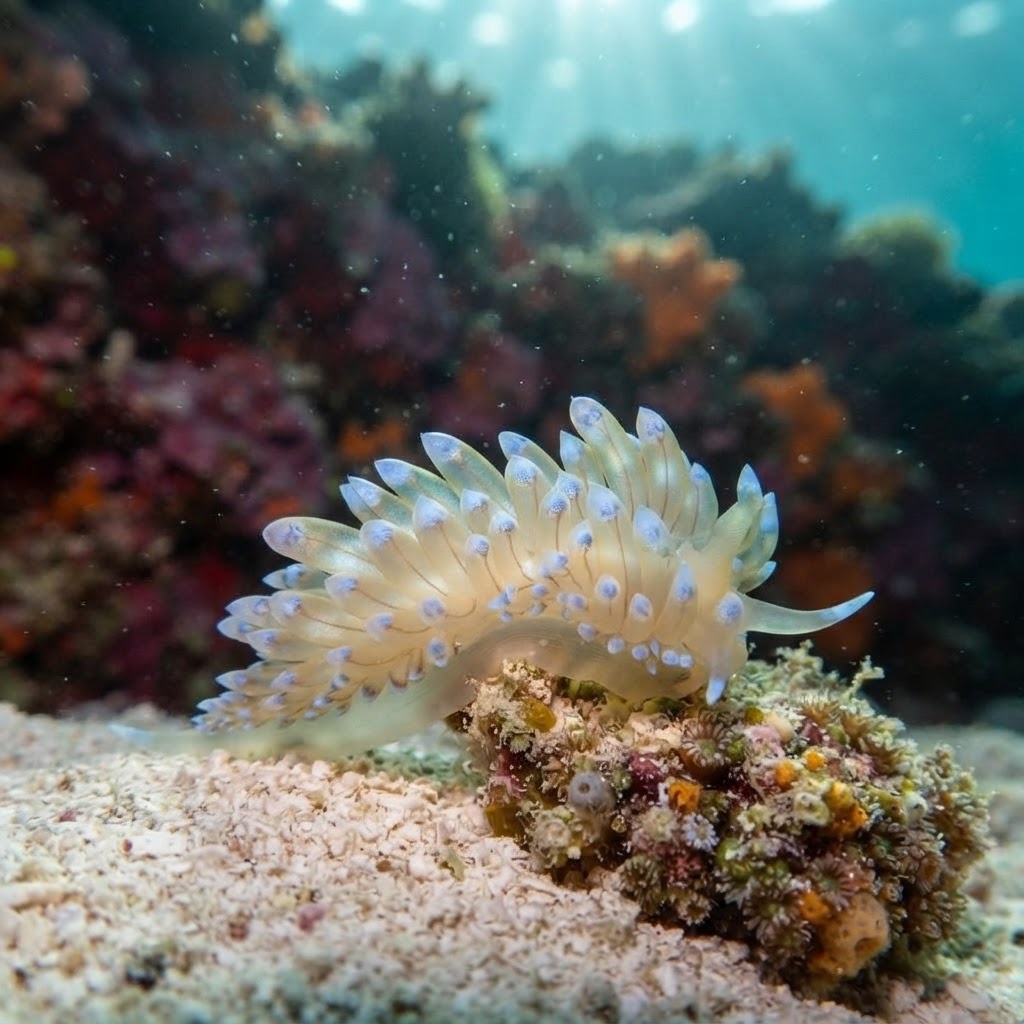
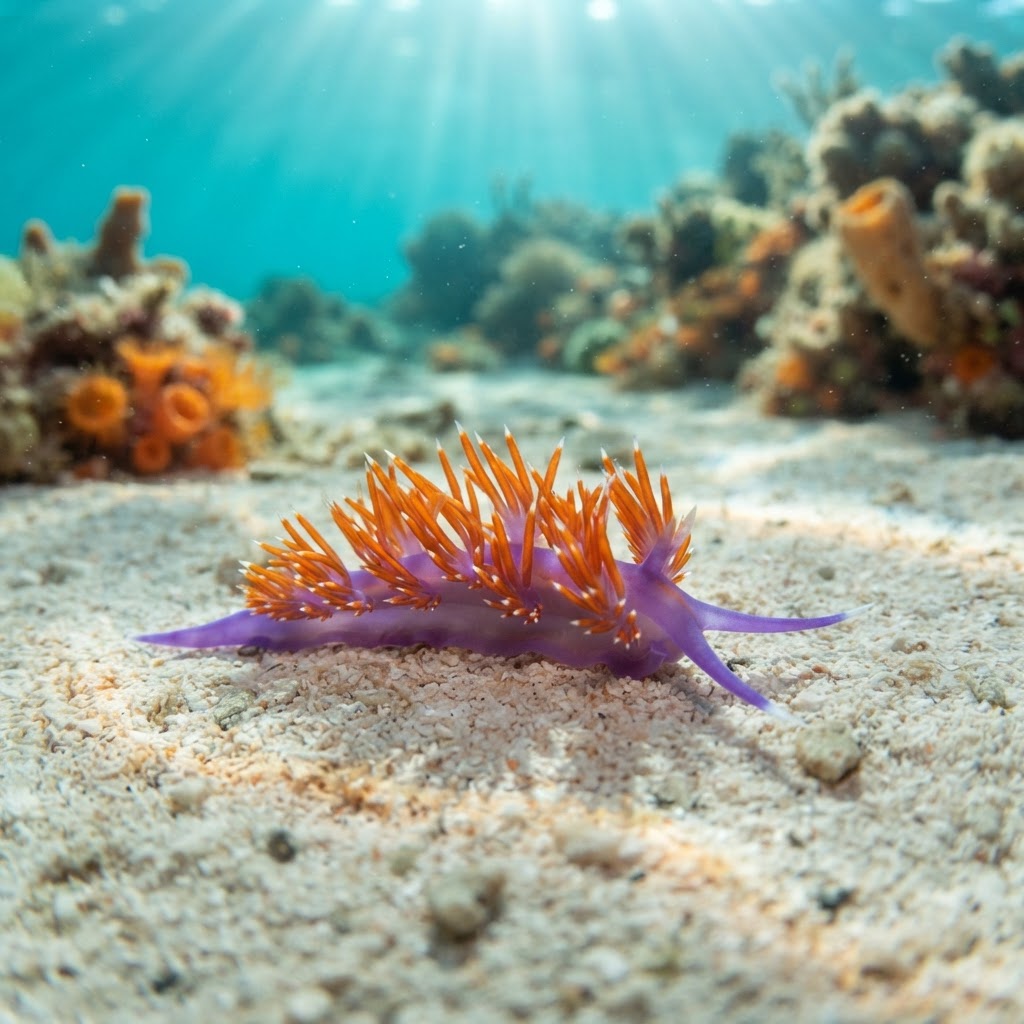
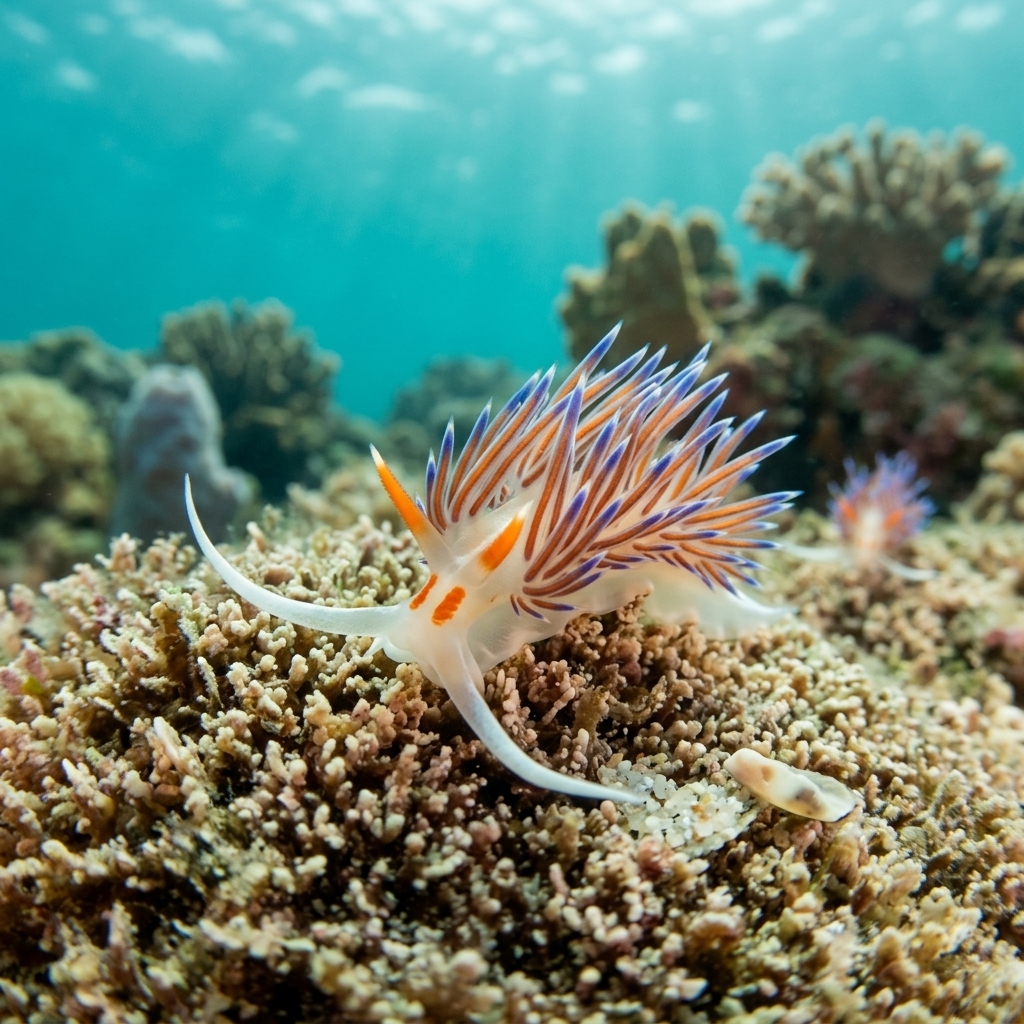
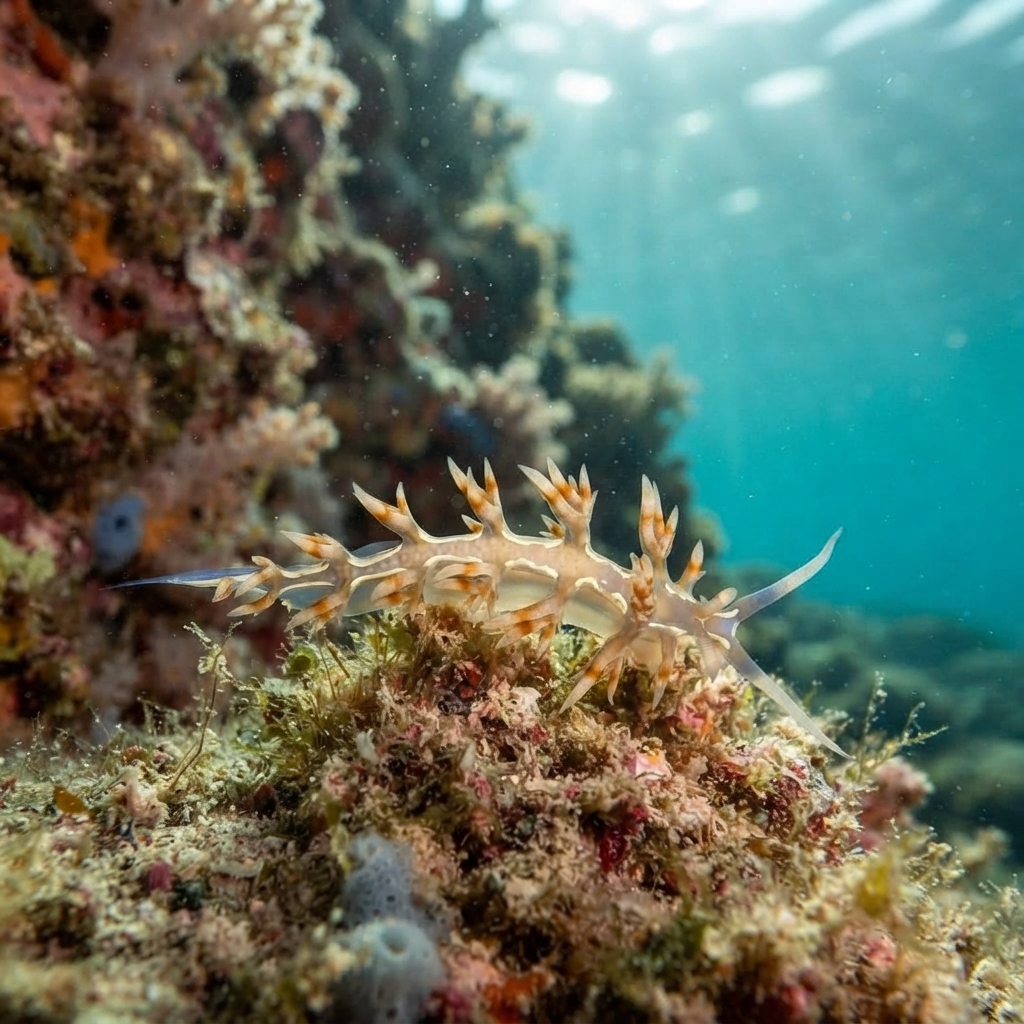
A small, slender nudibranch with the tapered body and finger-like projections (cerata) typical of flabellinids, giving it a slightly fuzzy or spiky outline. Size in the water is modest, closer to a thumbnail than a palm, so divers usually spot it while scanning rubble and algae close up rather than from a distance. Colouring separates it from lookalikes, so a close, patient look and ideally a photo for later comparison is the reliable way to confirm it.
Turns up as a slow-moving speck on rubble, sponge, or algal turf where divers are doing close-focus muck diving rather than reef cruising. It shows no reaction to divers beyond its normal unhurried crawl, so a steady hand and a macro lens are more useful than caution. Most logs come from divers actively searching substrate rather than spotting it in open water.
Like other flabellinids, it likely feeds on hydroids and can store stinging cells from that diet in its cerata as a defence, though this has not been specifically documented for the species.
Sightings show no detectable seasonal pattern, and with water in the 24.6 to 30.6C range year-round across its Caribbean sites, it is best treated as a species you can look for on any dive rather than one tied to a particular month.
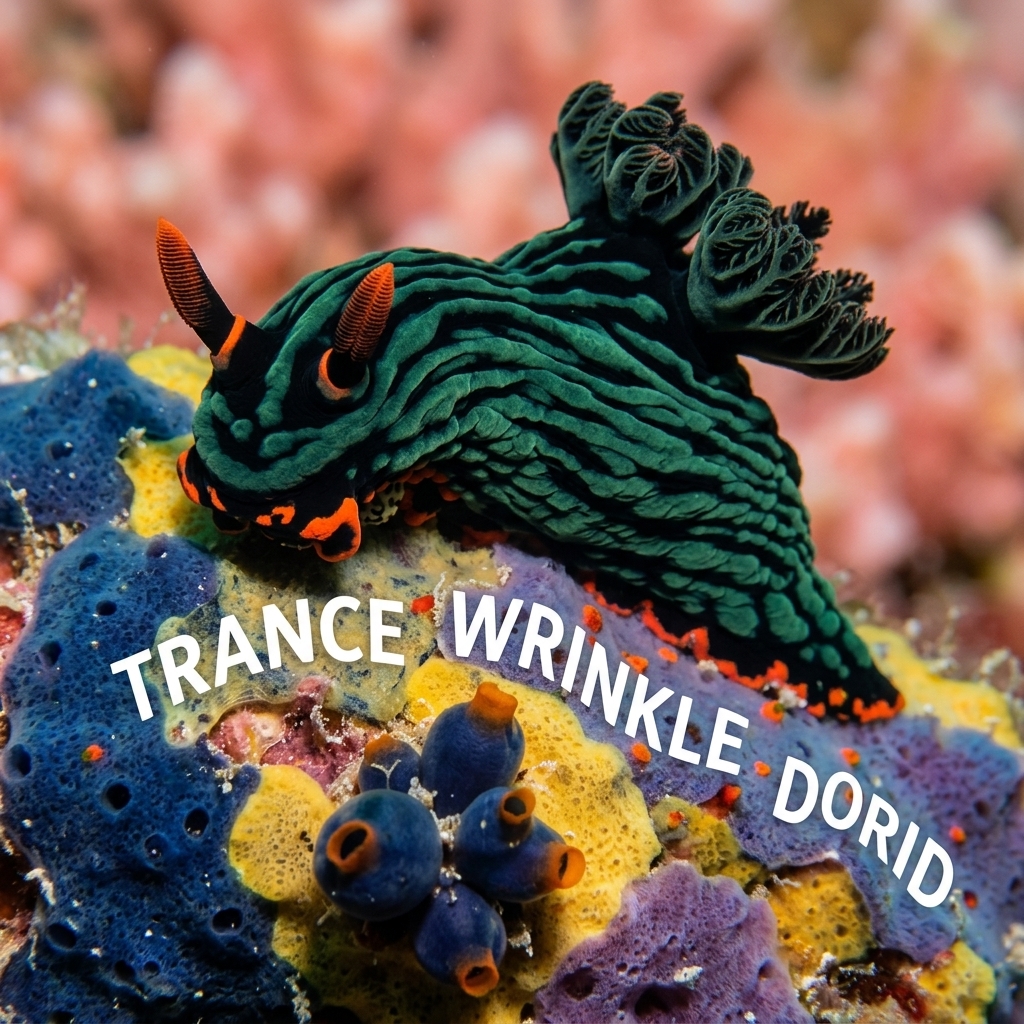
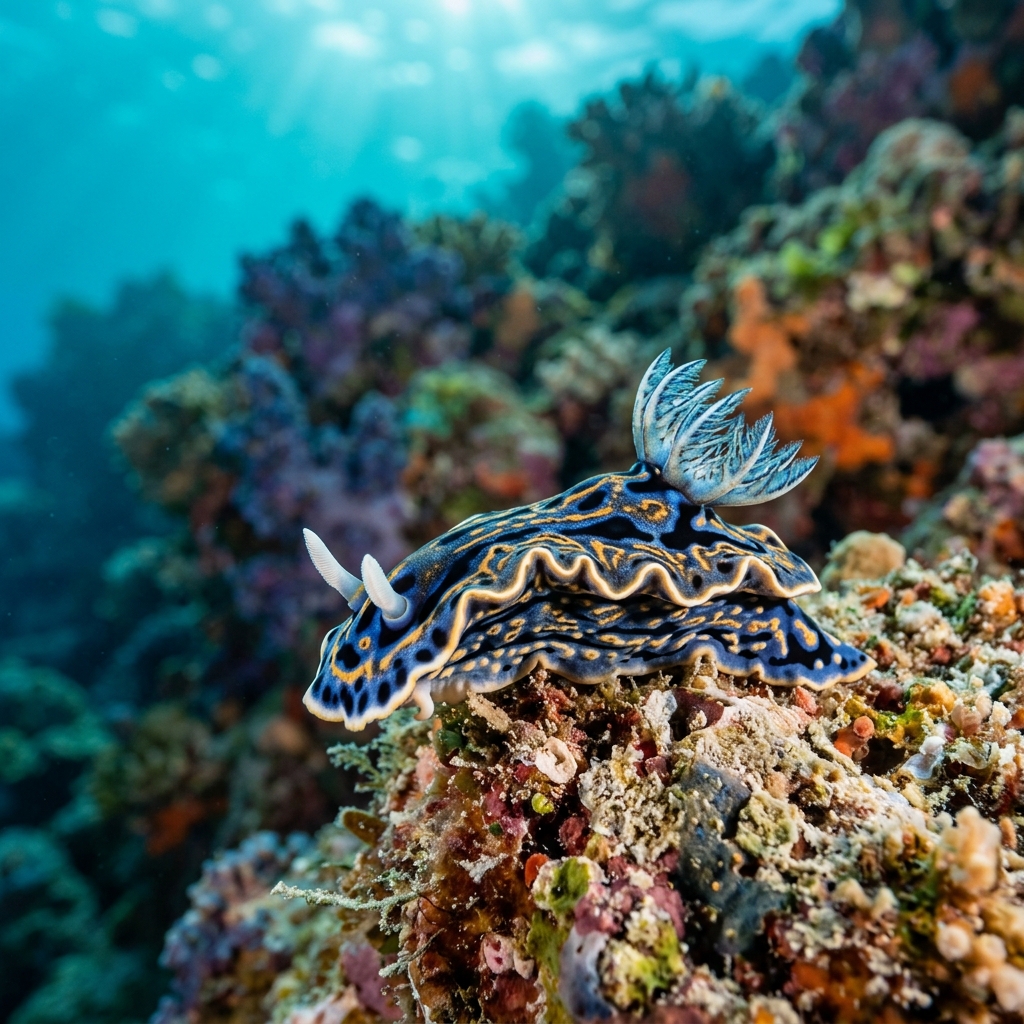
Reef neighbours a diver could mistake it for. Use the identification notes above to tell them apart.
Most reliably logged around Grande-Terre in Guadeloupe, which accounts for the bulk of recorded sightings, with a smaller but consistent presence in the US Virgin Islands, particularly Saint John and Saint Thomas. Outside these two countries it has not been documented, so Guadeloupe is the strongest bet for a targeted search.
Mapping where Luisella Engeli is logged…
It is most consistently found around Grande-Terre in Guadeloupe, with additional records from Saint John and Saint Thomas in the US Virgin Islands. It has not been logged outside these two Caribbean countries.
There is no clear season in the sighting data, and warm water between roughly 24.6 and 30.6C persists year-round at its known sites, so it can be looked for on any dive trip to the region.
Look for a small, slender nudibranch with finger-like cerata along its back, giving it a spiky rather than smooth profile. It is easiest to find by scanning rubble and algae closely rather than searching open reef.
Exact size data is not confirmed, but as a flabellinid nudibranch it falls in the typical small range for the family, closer to a thumbnail than a hand span, so it requires close, careful searching to spot.
It is logged as uncommon at some sites and rare at others, so it is not a guaranteed sighting even in Guadeloupe. Patient macro divers searching rubble and algae have the best chance of finding one.
Site and sighting data is aggregated from diver logs, iNaturalist and GBIF. For taxonomy and conservation status:
Nudibranch
3,168 sites