Nicholsina denticulata
A rare find in the Galápagos and Baja California, spotted in 22 to 29 C water. Here's how to recognise it on the reef.
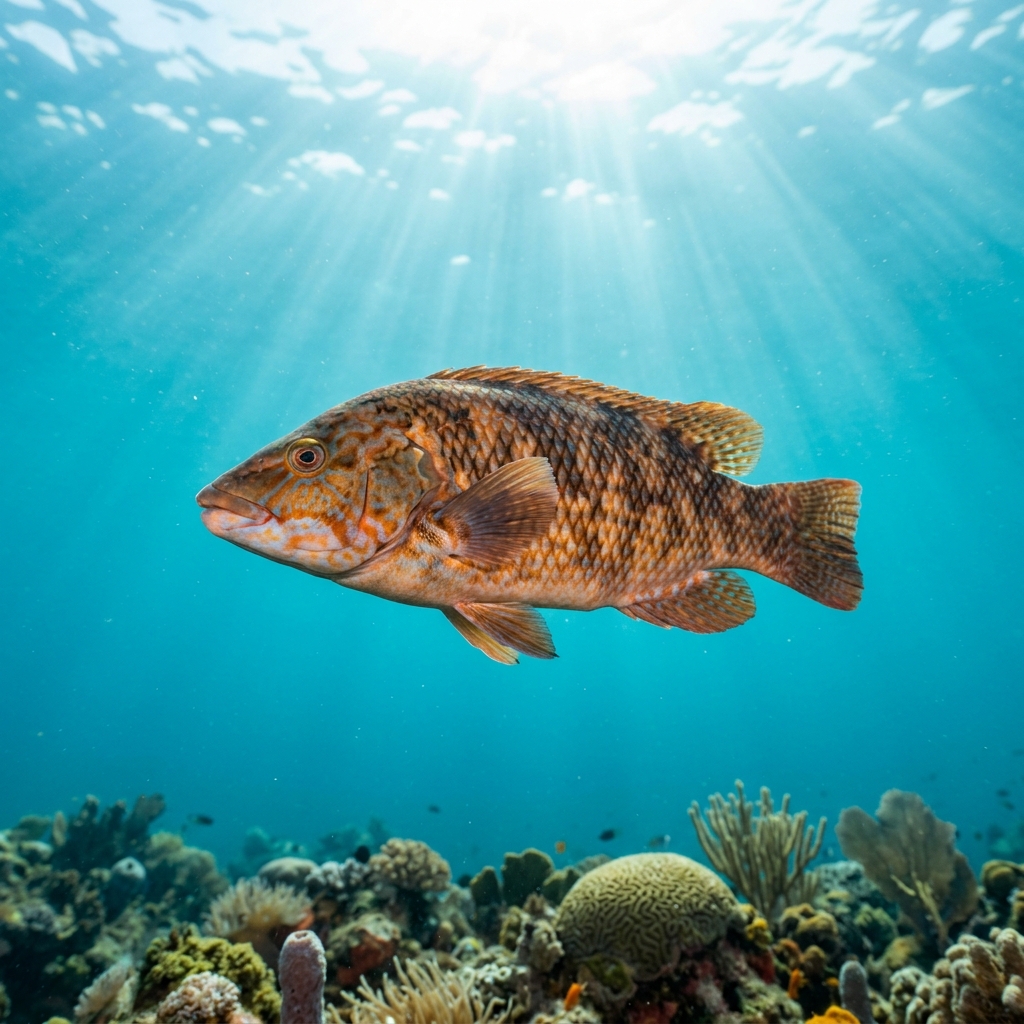
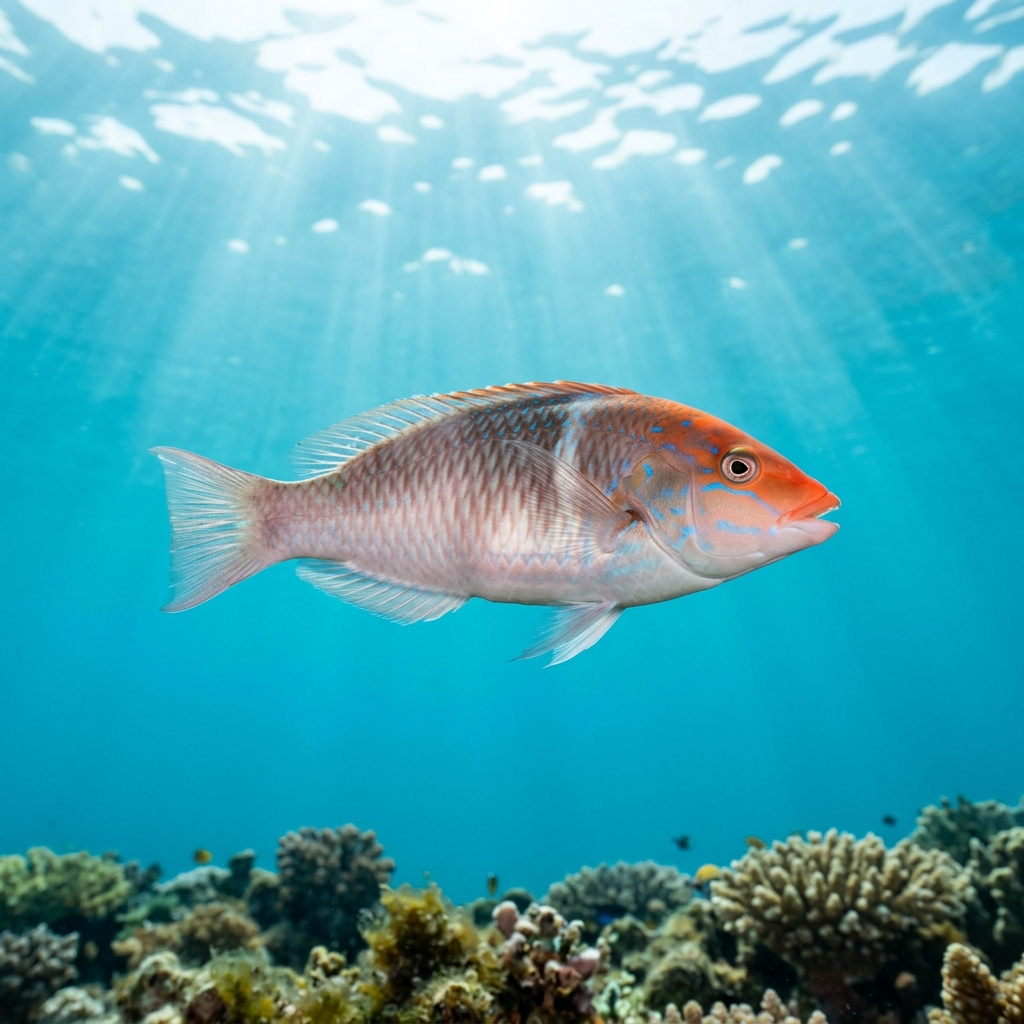
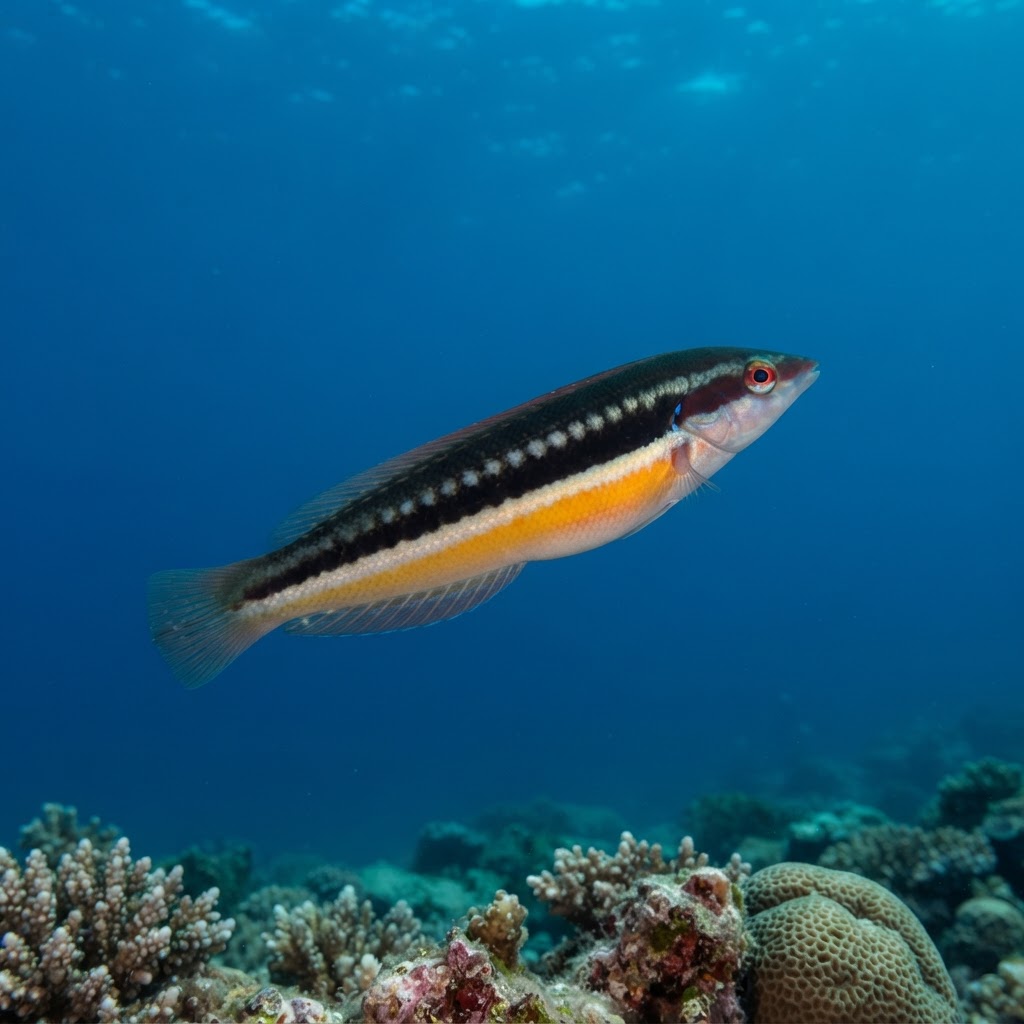
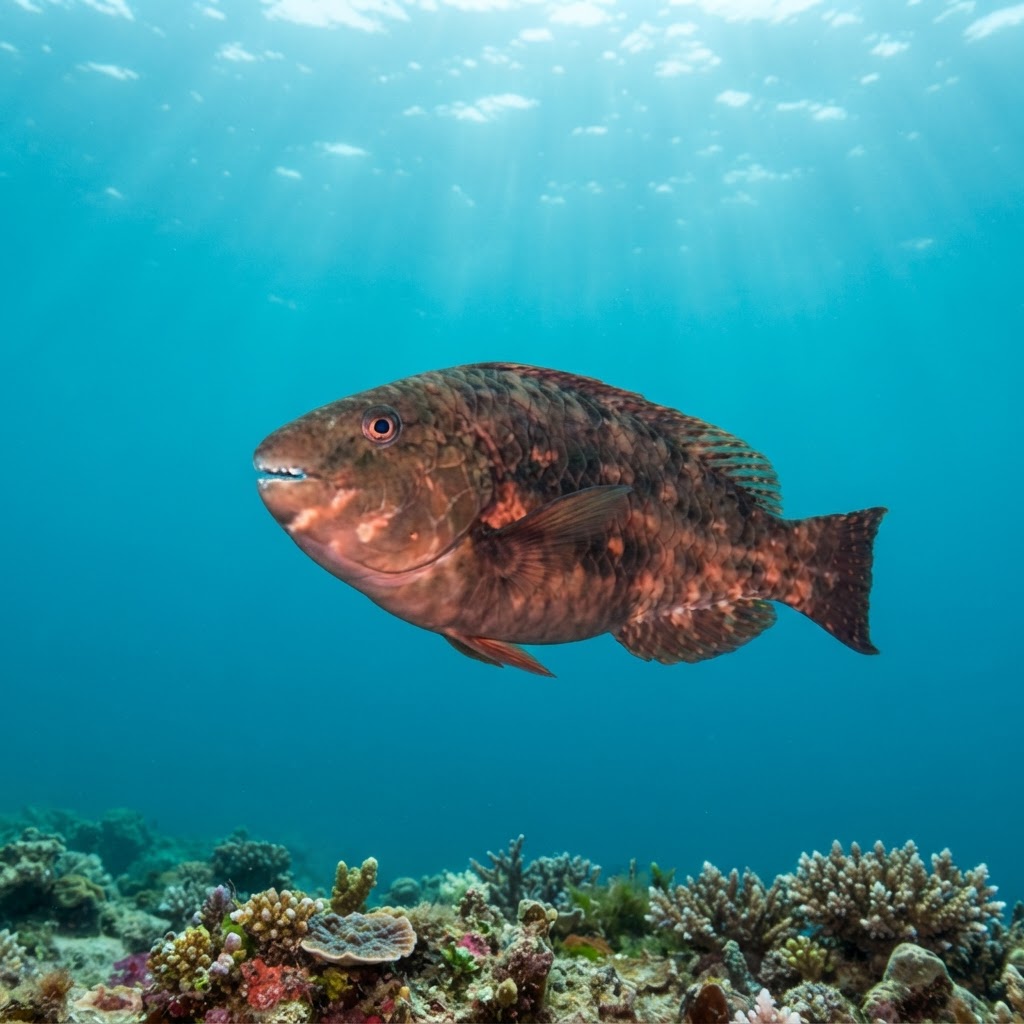
A small, stocky parrotfish reaching around 22 cm, with a deep-bodied, almost blunt profile compared to typical reef parrotfish. Colouring runs olive to brownish-grey with faint mottling rather than the bright blues and greens of tropical parrotfish, which makes it easy to overlook against rocky reef and boulder terrain. Look for the beak-like fused teeth typical of parrotfish, but on a fish that stays close to rock rather than coral.
Divers typically find it grazing low over rock and boulder substrate rather than cruising open reef, picking at algae with its fused beak. It tends to stay close to structure and isn't often seen in open water, which combined with its muted colouring makes it a real spot-the-fish challenge rather than a guaranteed sighting. Logged as rare to uncommon even at its best sites, so patience and a slow, careful scan of the bottom pay off.
It belongs to the wrasse family and browses algae with fused, beak-like teeth, the same feeding tool that gives all parrotfish their name, but it does so on temperate rocky reef rather than tropical coral, an unusual niche for the group.
Sightings show no clear seasonal pattern, so treat it as a year-round possibility. It turns up across a water-temperature range of roughly 22 to 29 C, which covers most of the diving calendar at these Pacific sites.
Most reliably logged around the Galápagos Islands in Ecuador, with a further stronghold along Baja California in Mexico and at Pucusana on Peru's coast. These are rocky, cool-current sites rather than classic coral reef, which fits this fish's low-key, bottom-hugging habits.
Mapping where Loosetooth Parrotfish is logged…
Best chances are around the Galápagos Islands in Ecuador, plus Baja California in Mexico and Pucusana in Peru. It's a rocky-reef species rather than a coral-reef regular, so look for boulder and rock habitat at these sites.
There's no strong seasonal pattern in sightings, so it can be spotted year-round. Water temperatures at its known sites range from about 22 to 29 C across the year.
Look for a stocky, blunt-bodied fish around 22 cm long with olive-brown mottled colouring, quite different from the bright tropical parrotfish look. It grazes low over rocky substrate rather than swimming over open coral.
They typically reach around 22 cm, making them a smaller, easy-to-miss member of the parrotfish group.
Yes, it's logged as rare at most sites where divers have recorded it, with uncommon sightings at a smaller number of locations. Its dull colouring and habit of sticking close to rock make it easy to swim past.
Site and sighting data is aggregated from diver logs, iNaturalist and GBIF. For taxonomy and conservation status:
Bird Wrasse
3,632 sites