Sphoeroides lobatus
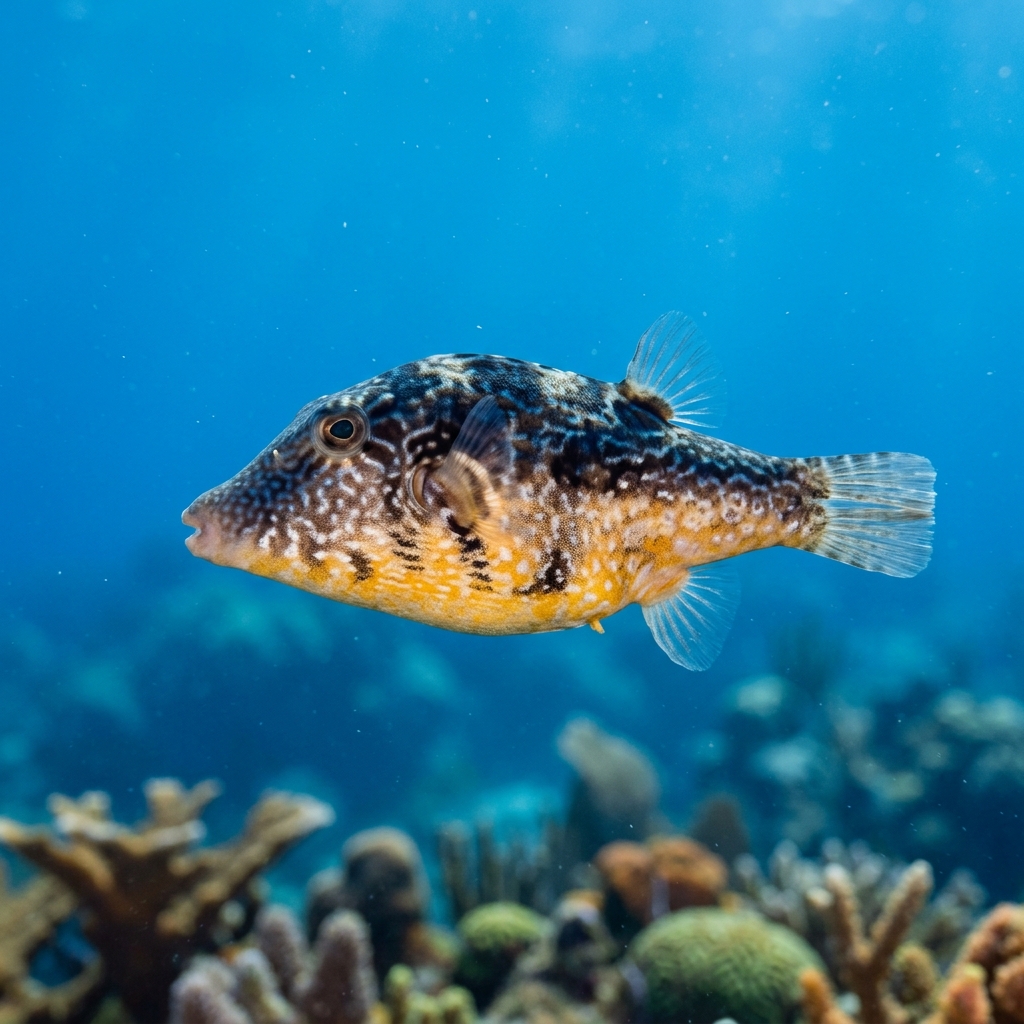
A grey-brown puffer with a pointed snout, most reliably found off Baja California and Mexico's Pacific coast in 20-29C water.
Safety warning
Its internal organs and skin carry tetrodotoxin, a potent nerve toxin, so the real risk is off the reef rather than in the water: never handle or attempt to eat one. In the water it poses no threat to divers who simply observe it and keep hands to themselves.
Handle with care
Toxic if eatenGeneral first-aid guidance, not a substitute for professional medical care. In an emergency, call your local emergency number.
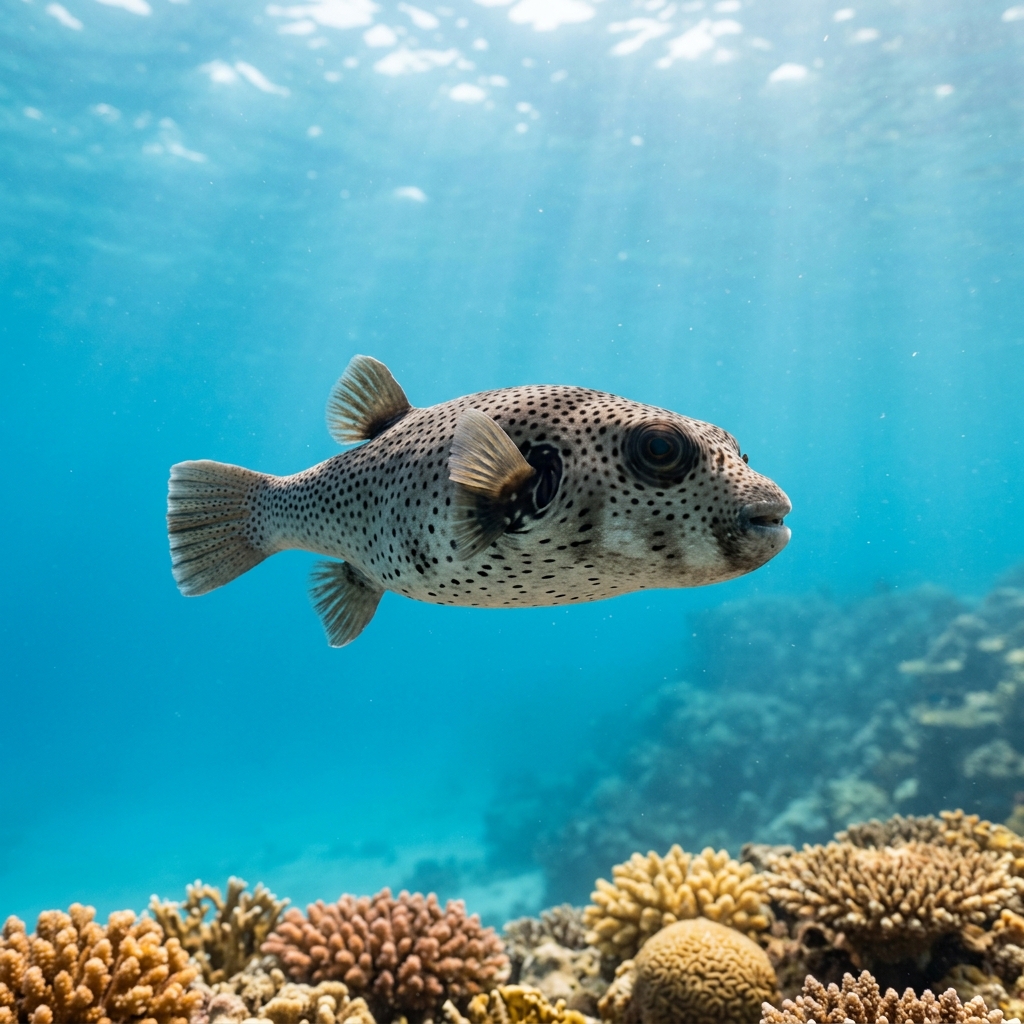
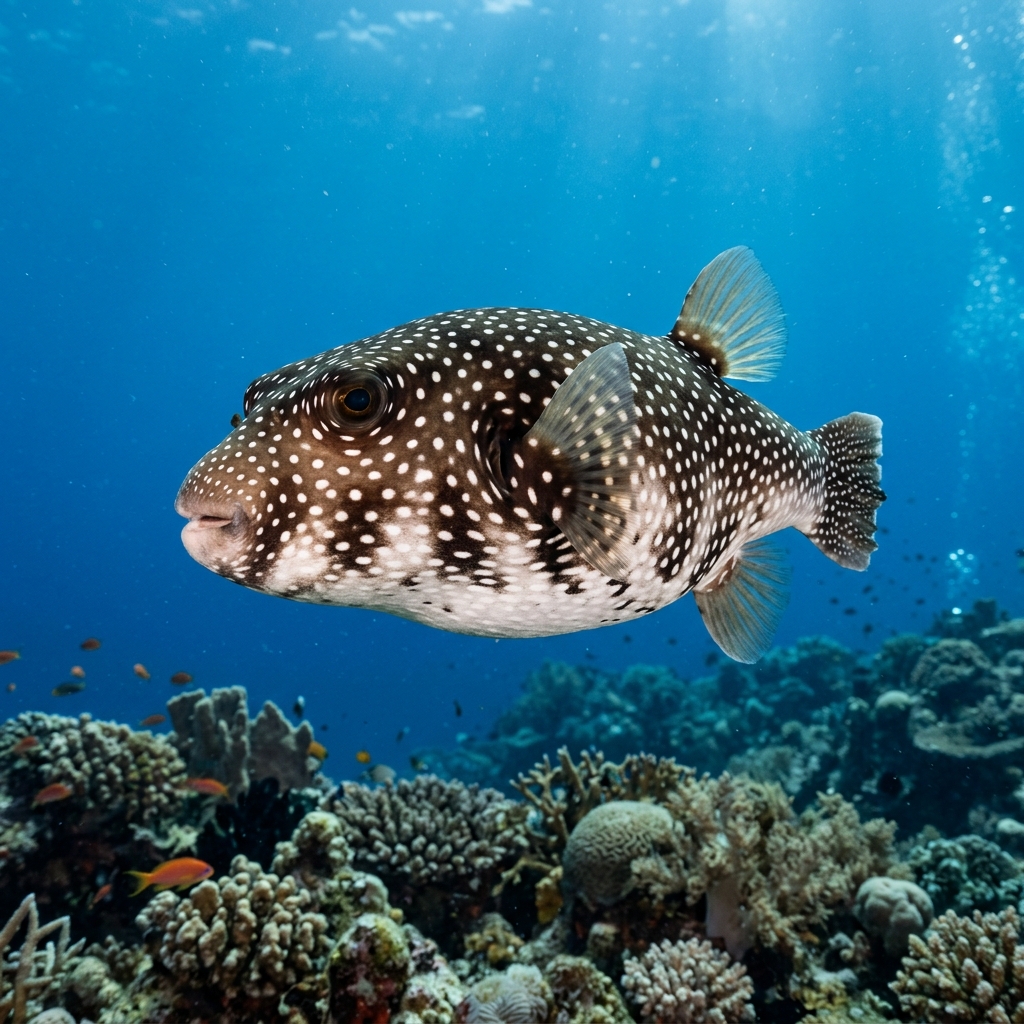
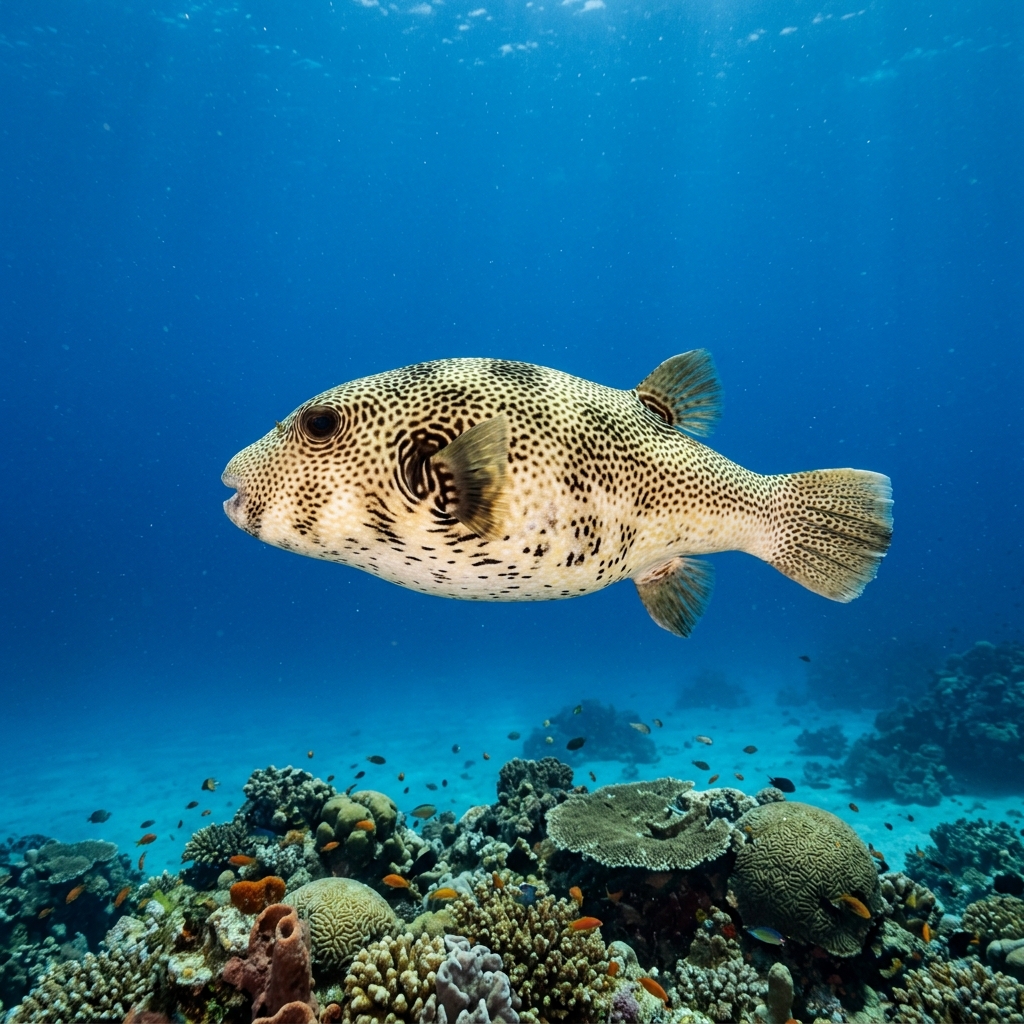
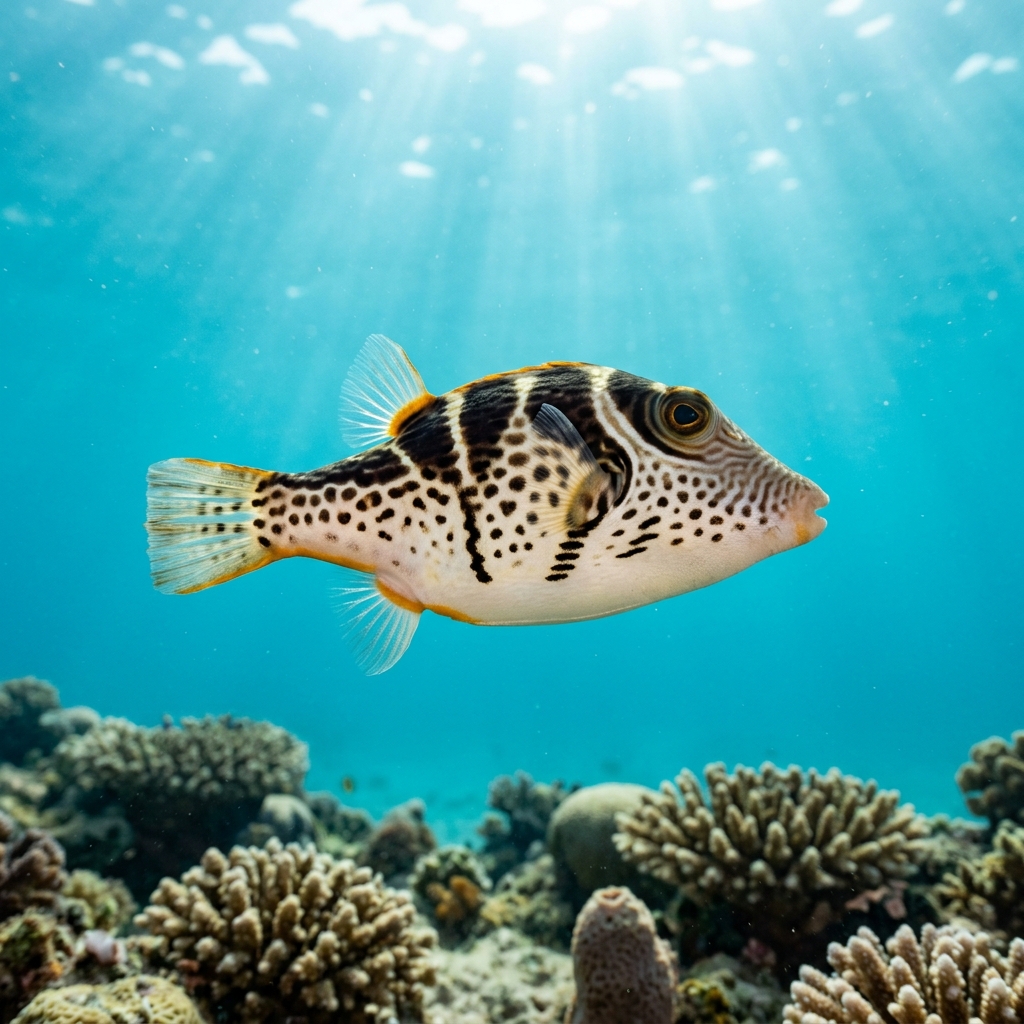
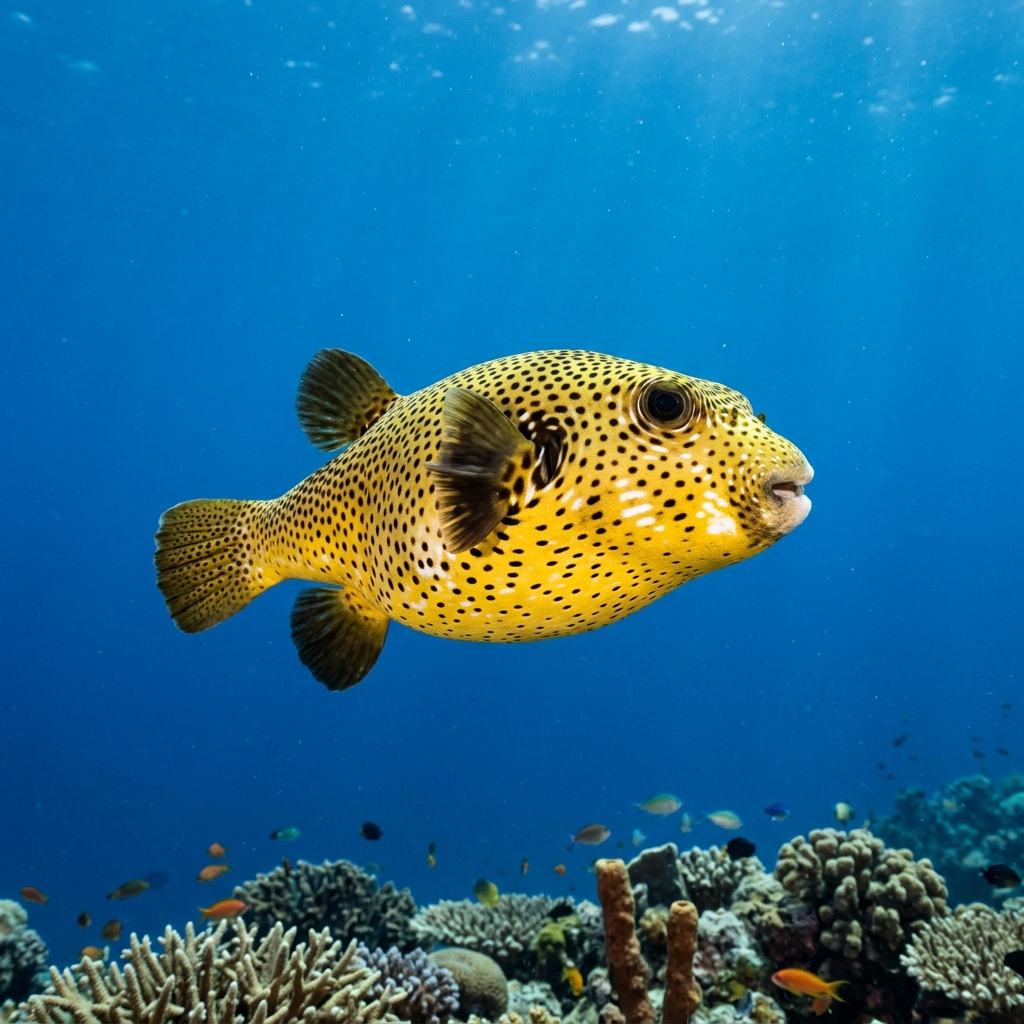
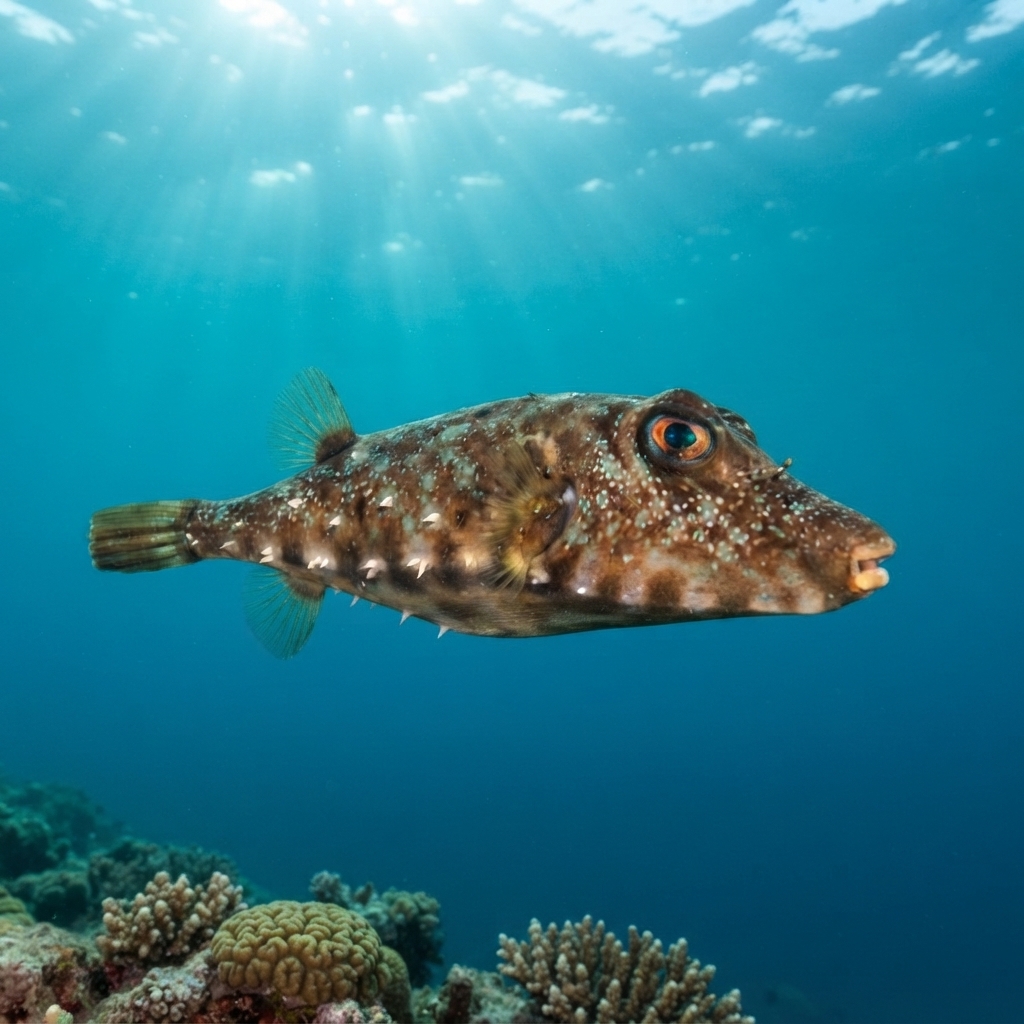
Grows to around 25 cm with a stretched, pointed snout that sets it apart from rounder-faced puffers. Body is mottled grey to olive-brown with a pale belly, and the skin looks loose and baggy rather than sleek. Small dark spots or blotches scatter across the back, and the eyes sit high and forward on that elongated face.
Usually seen resting on sand or rubble patches near rocky reef, moving with slow, almost lazy fin strokes rather than darting off. Divers tend to log it as an occasional single fish rather than in groups, and it will often hold its position and let you get a good look before easing away.
Like other pufferfish, it can gulp water to inflate itself into a spiny ball when threatened, a last-resort defence that makes it a much harder mouthful for a predator to swallow.
No clear season shows up in the sighting data, and with a comfortable range of roughly 20 to 29C it seems to be a year-round find on the Pacific coasts where it's logged.
Most reliably logged along Mexico's Pacific coast and around Baja California, with Pucusana in Peru also producing steady sightings. A single logged site in Guanacaste, Costa Rica, suggests the odd sighting further south too.
Mapping where Longnose Puffer is logged…
Best chances are along Mexico's Pacific coast and around Baja California, where it turns up as an uncommon to rare sighting. Pucusana in Peru is another dependable spot, with occasional sightings further south in Guanacaste, Costa Rica.
There's no strong seasonal pattern in the sighting data, and it tolerates a wide temperature range of about 20 to 29C, so it's considered a year-round sighting rather than a seasonal one.
Look for a grey-brown, mottled puffer around 25 cm long with a distinctly pointed, elongated snout compared to rounder-faced pufferfish. It has a baggy-looking body, a pale belly, and scattered dark spots along its back.
They reach around 25 cm in length, a modest size that makes them easy to overlook against rocky rubble unless you're looking closely.
They're not aggressive and pose no direct threat to divers who observe without touching. The danger is their tetrodotoxin, a toxin in their skin and organs, so never handle or attempt to eat one.
When threatened they gulp water to inflate into a spiny ball, a defence that makes them far harder for a predator to bite down on.
Site and sighting data is aggregated from diver logs, iNaturalist and GBIF. For taxonomy and conservation status:
Valentini Pufferfish
2,830 sites