Hipposcarus harid
A slender, olive-gold parrotfish logged across South Sinai and the Central Atolls, spotted year-round in 25 to 29 C water.
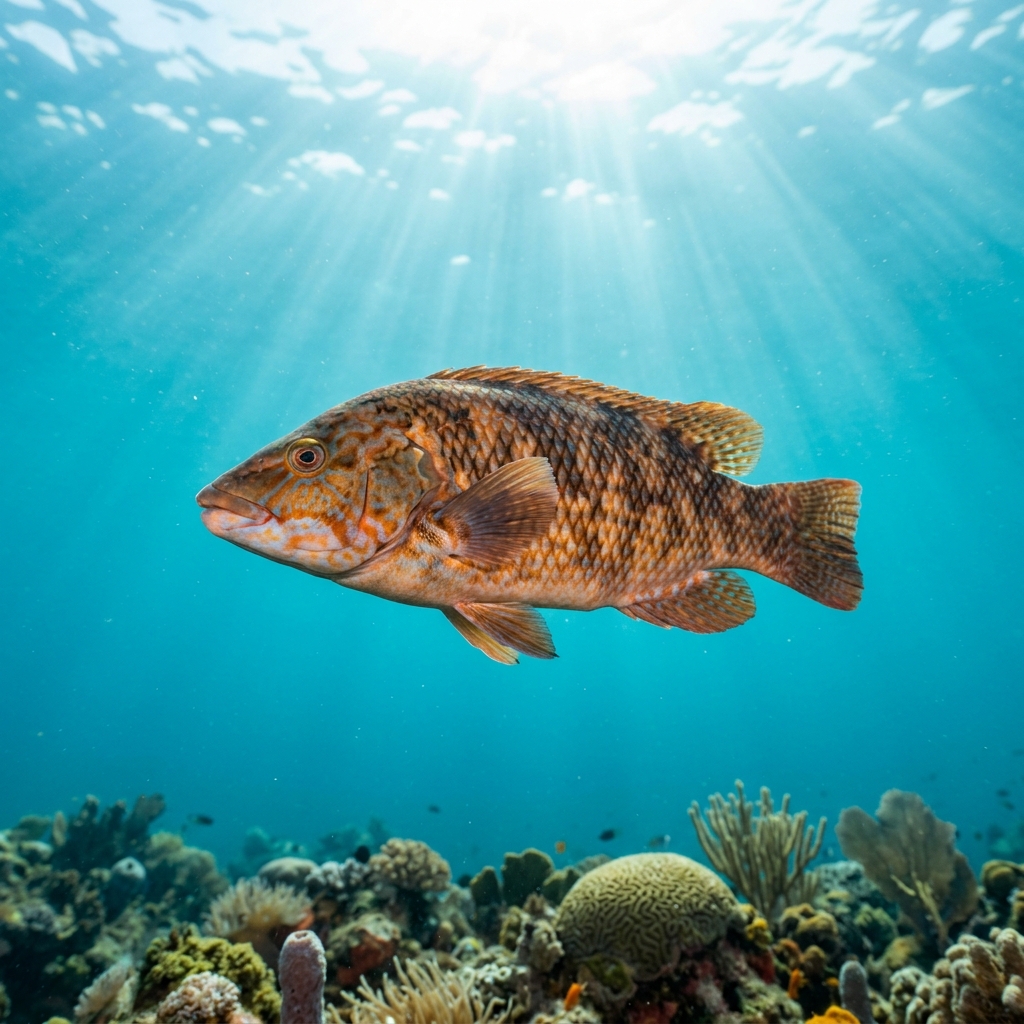
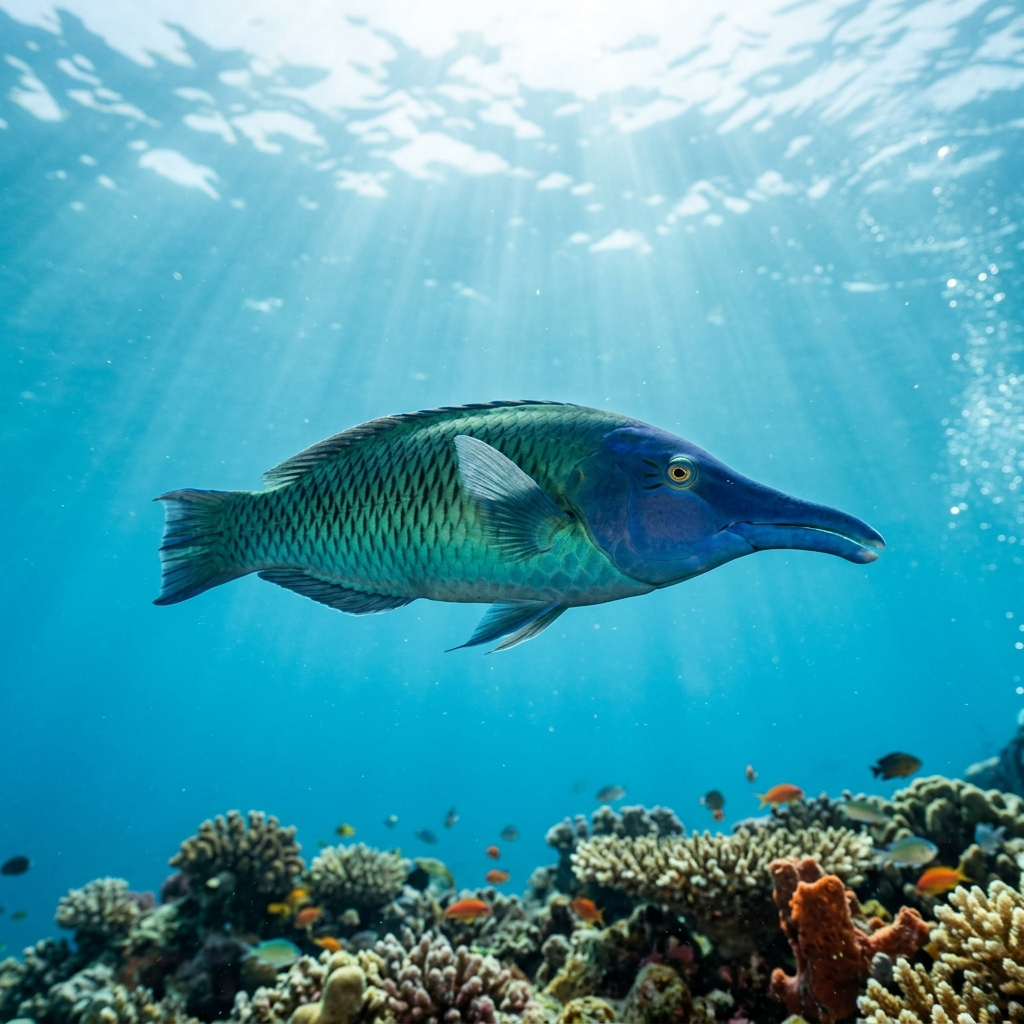
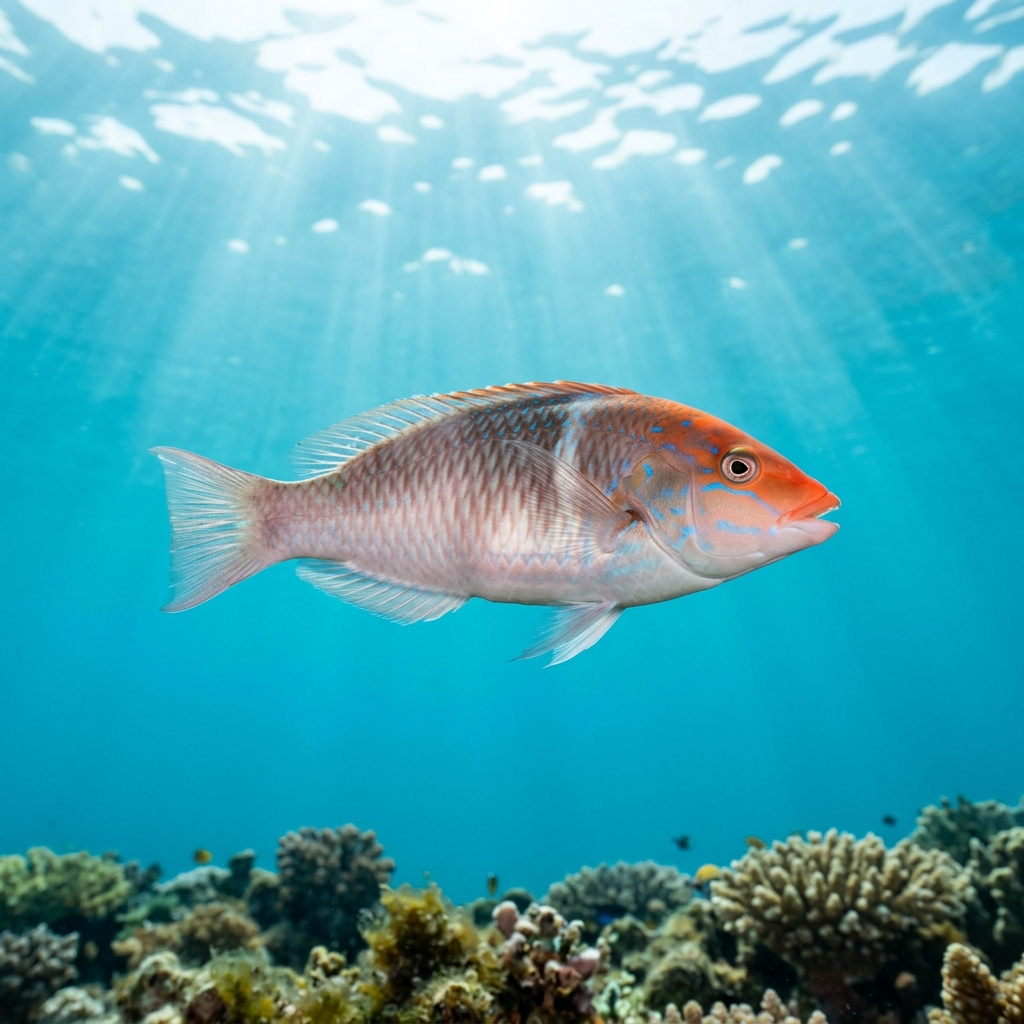
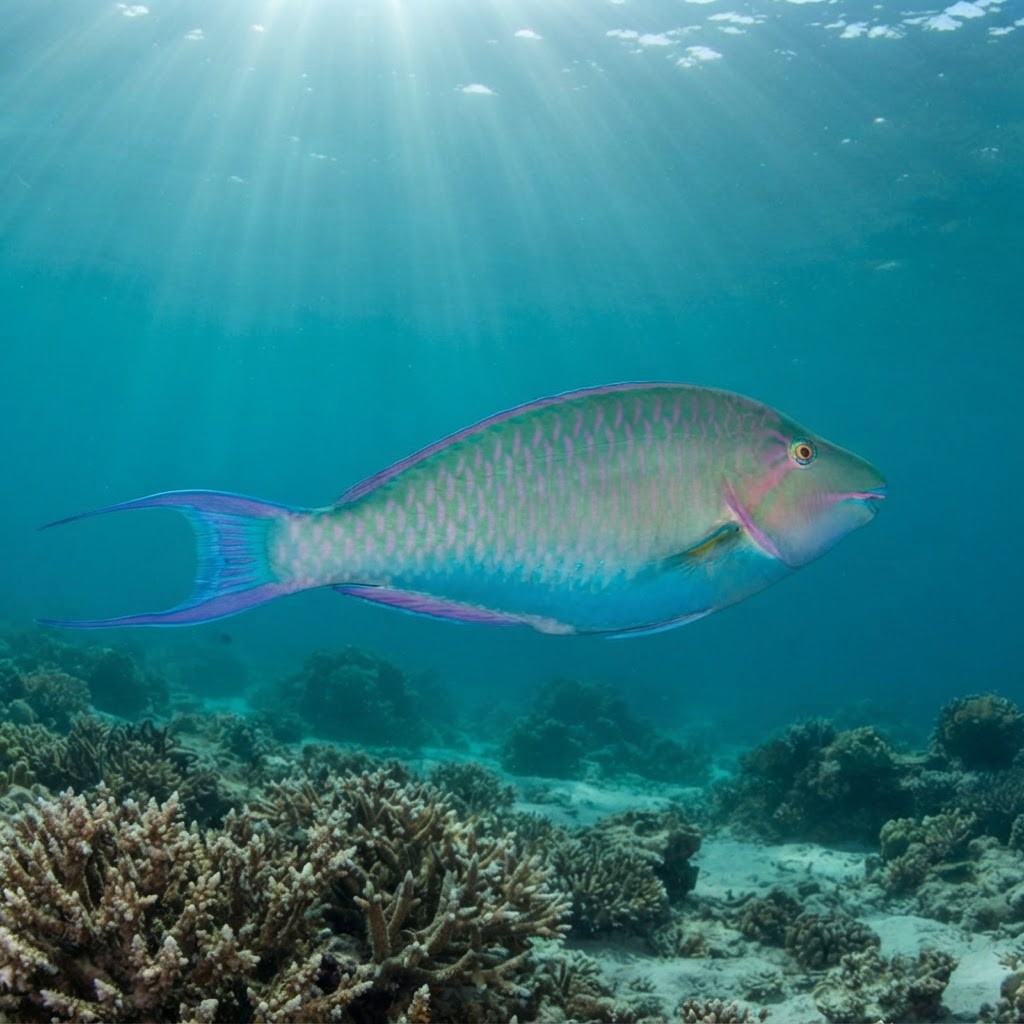
A slim, torpedo-shaped parrotfish with a noticeably elongated snout compared to other parrotfish, which gives the head a pointed, almost pike-like profile. Adults run olive to tan with a rosy or purplish wash along the flanks and a pale underside, growing to around half a metre. Look for the fused, beak-like teeth typical of parrotfish and a steady, unhurried swim just off the reef rather than tight against it.
Usually seen cruising over reef flats and slopes in loose groups, grazing algae off rock and dead coral rather than living coral itself. It tends to keep a bit of distance from divers and won't linger for a photo, moving off steadily rather than darting away. Most logs mark it as an uncommon to common sighting, so it's a nice bonus fish rather than a guaranteed tick on the dive.
Like other parrotfish, it grazes algae from dead coral and rock with fused beak-like teeth, and the sand-fine waste it excretes is a real contributor to the white sand on reef flats nearby.
Sightings are spread across the year with no clear seasonal spike in the data, which fits a fish comfortable in a wide 25.2 to 29.3 C range on tropical and subtropical reefs. Plan around good reef visibility at your chosen destination rather than a particular month.
This is a Red Sea and Indian Ocean fish, most reliably logged in South Sinai and Marsa Alam & the Deep South in Egypt, and in the Central Atolls of the Maldives. Smaller but consistent populations turn up in the Inner Islands of Seychelles, at Eilat in Israel, and along the Red Sea Coast of Saudi Arabia and Jordan.
Mapping where Longnose Parrotfish is logged…
South Sinai and Marsa Alam in Egypt and the Central Atolls of the Maldives are the strongest areas, with smaller but regular sightings in Seychelles' Inner Islands, Eilat in Israel, and the Red Sea coasts of Saudi Arabia and Jordan.
There's no strong season in the logs, so it's effectively a year-round sighting on Red Sea and Indian Ocean reefs where water stays between roughly 25 and 29 degrees Celsius.
Look for a slender olive to tan body with a rosy flank wash, a pointed elongated snout, and a calm, steady swim over reef flats grazing algae off rock rather than coral.
They reach around 52 centimetres, giving them a noticeably longer, more torpedo-shaped body than many reef parrotfish species.
No, they pose no threat to divers and simply graze algae while keeping a cautious distance if approached.
Their grazing on dead coral and rock produces fine calcareous waste that helps build the white sand found on nearby reef flats and beaches.
Site and sighting data is aggregated from diver logs, iNaturalist and GBIF. For taxonomy and conservation status:
Bird Wrasse
3,632 sites