Neoniphon marianus
Reddish nocturnal reef fish with big eyes, most often logged in Honduras's Bay Islands and Grenada, comfortable in 24-28C year-round.
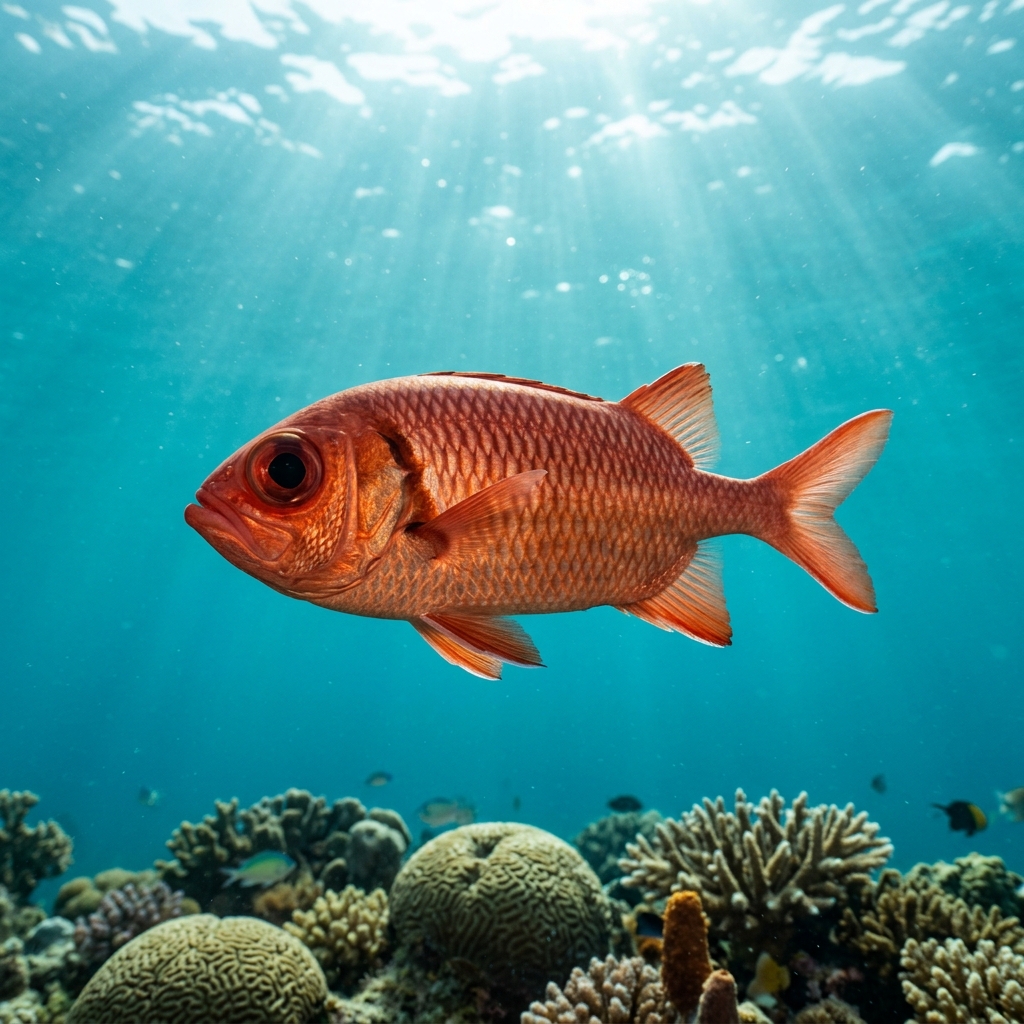
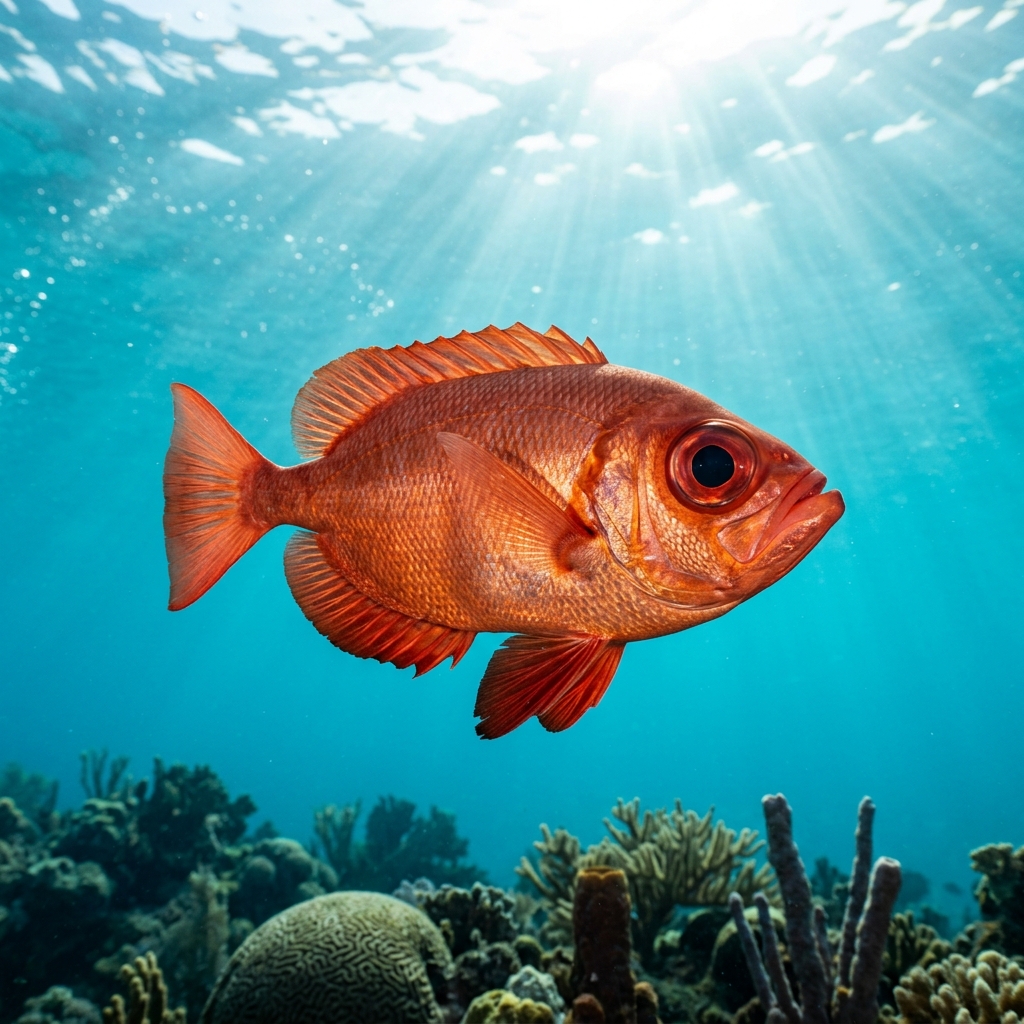
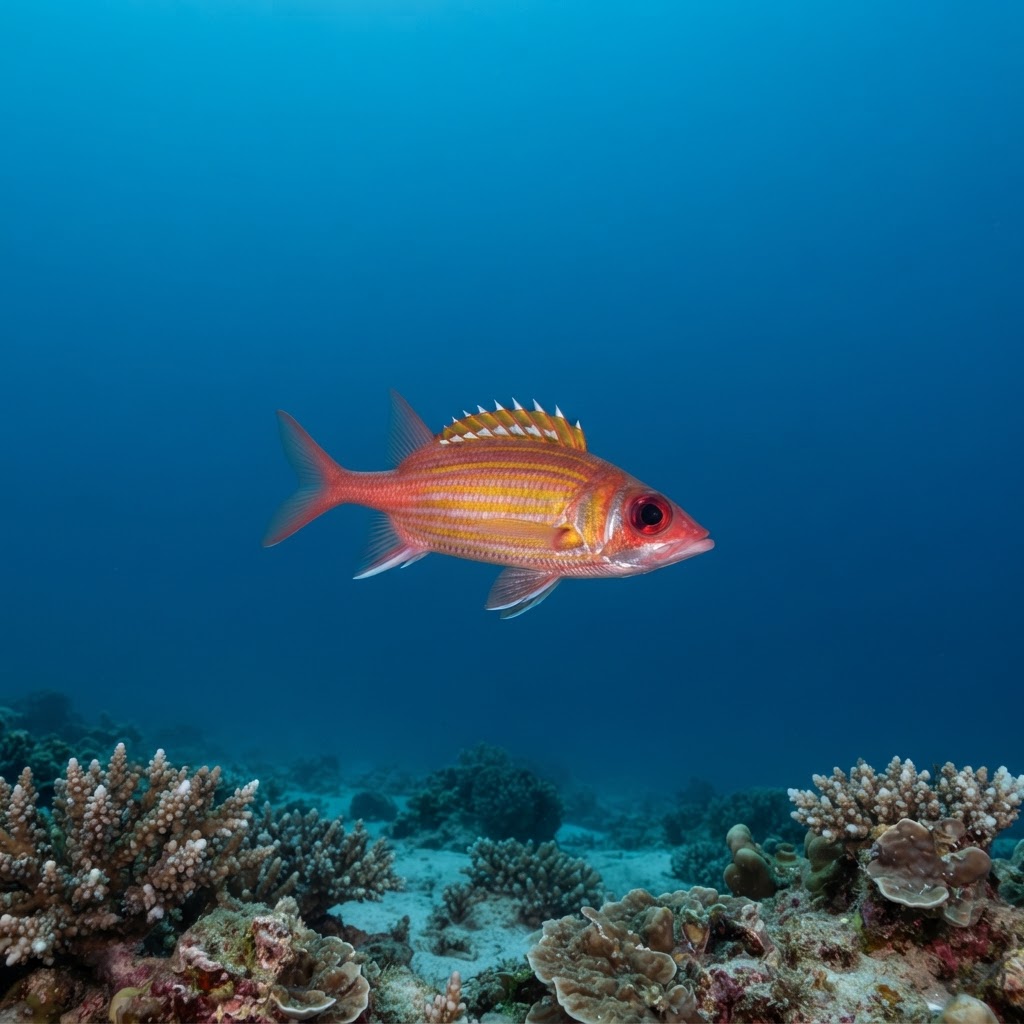
A slim, red to reddish-pink fish about the length of a hand, with faint pale stripes running along the body and unmistakably large, dark eyes built for low light. The elongated lower jaw that gives this species its name is visible in close looks, and the tail lacks the strong dark tips some related squirrelfish show. It tends to hover near cover rather than swim openly, so the eyes and red colouring are usually your first clue before the shape confirms it.
Look for it tucked under ledges, in crevices, or hovering close to coral heads during the day, since this is a nocturnal feeder that shelters while the sun's up. At night it moves out to hunt small invertebrates over the reef, and on day dives divers usually catch it holding still and retreating deeper into cover rather than bolting when approached.
The oversized eyes are a real nocturnal adaptation, tuned to gather light so the fish can hunt small crustaceans and other invertebrates well after dark, long after most reef fish have settled down.
Sightings don't follow a clear seasonal pattern, and with a comfortable range of roughly 24 to 28C, it's present on Caribbean reefs year-round rather than tied to a particular month.
This species turns up most reliably in the Bay Islands of Honduras, which log it far more than anywhere else, followed by Grenada, Bonaire, and Martinique. It's also a steady find around Saba, the Cayman Islands, Sint Eustatius, and Dominica, making it a widespread but always uncommon presence across the Caribbean.
Mapping where Longjaw Squirrelfish is logged…
The Bay Islands of Honduras are the most consistent spot, with Grenada, Bonaire, and Martinique also strong. Saba, the Cayman Islands, Sint Eustatius, and Dominica round out the reliable Caribbean locations.
There's no strong seasonal pattern in the sightings data. With a comfortable temperature range of about 24 to 28C, they're present on reefs throughout the year.
Look for a small reddish fish with faint pale stripes, an elongated lower jaw, and notably large dark eyes suited to low light. It usually sits still near reef crevices rather than swimming in the open.
They're small reef fish, typically reaching around 12cm in length, so they're easy to miss unless you're checking ledges and crevices closely.
Their oversized eyes are a nocturnal adaptation that helps them hunt small invertebrates at night. During the day they use the same low-light vision to stay tucked into shaded reef crevices.
No, they pose no threat to divers. They're shy, reef-associated fish that retreat into cover rather than approach or defend territory aggressively.
Site and sighting data is aggregated from diver logs, iNaturalist and GBIF. For taxonomy and conservation status:
Soldierfish
3,612 sites