Hippocampus guttulatus
Spot the long-snouted seahorse in Istria's shallows, a mane-crowned, twig-thin seahorse logged year-round in waters from 12 to 21C.
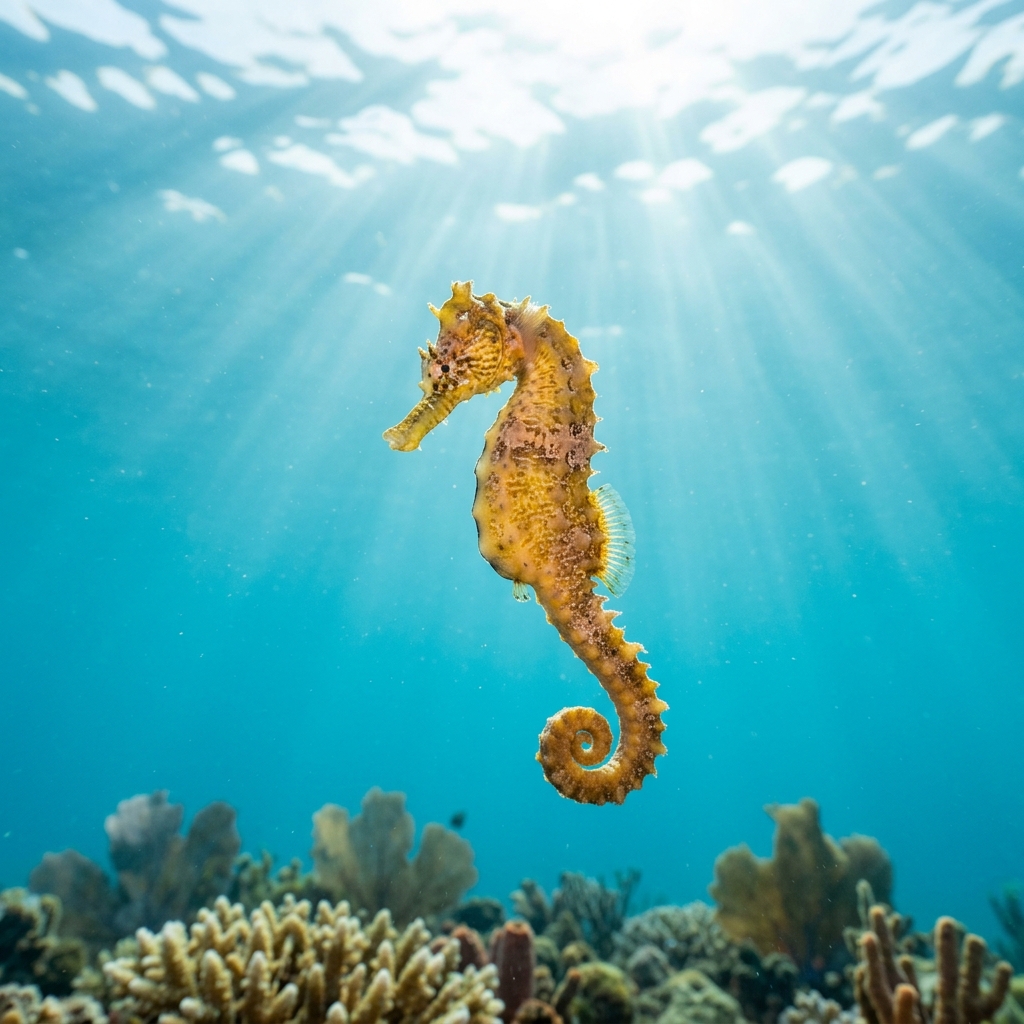
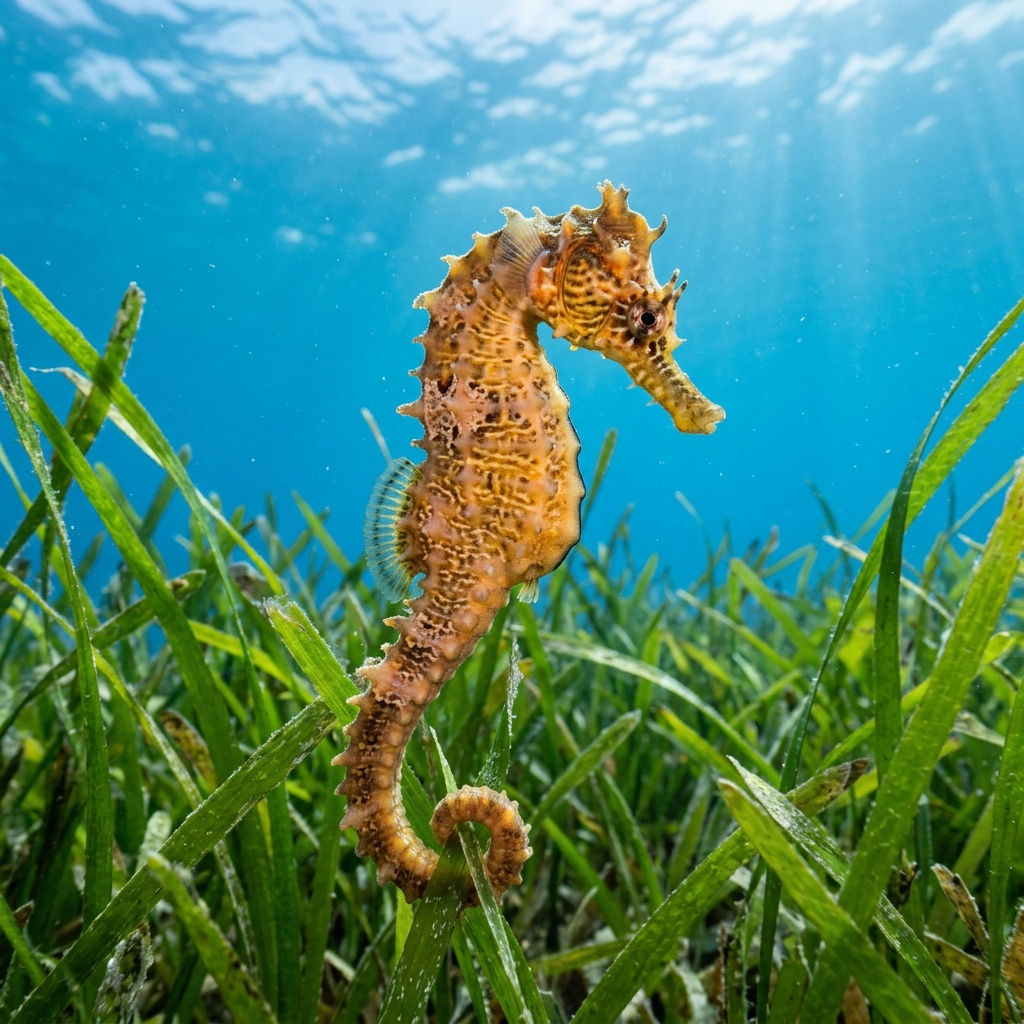
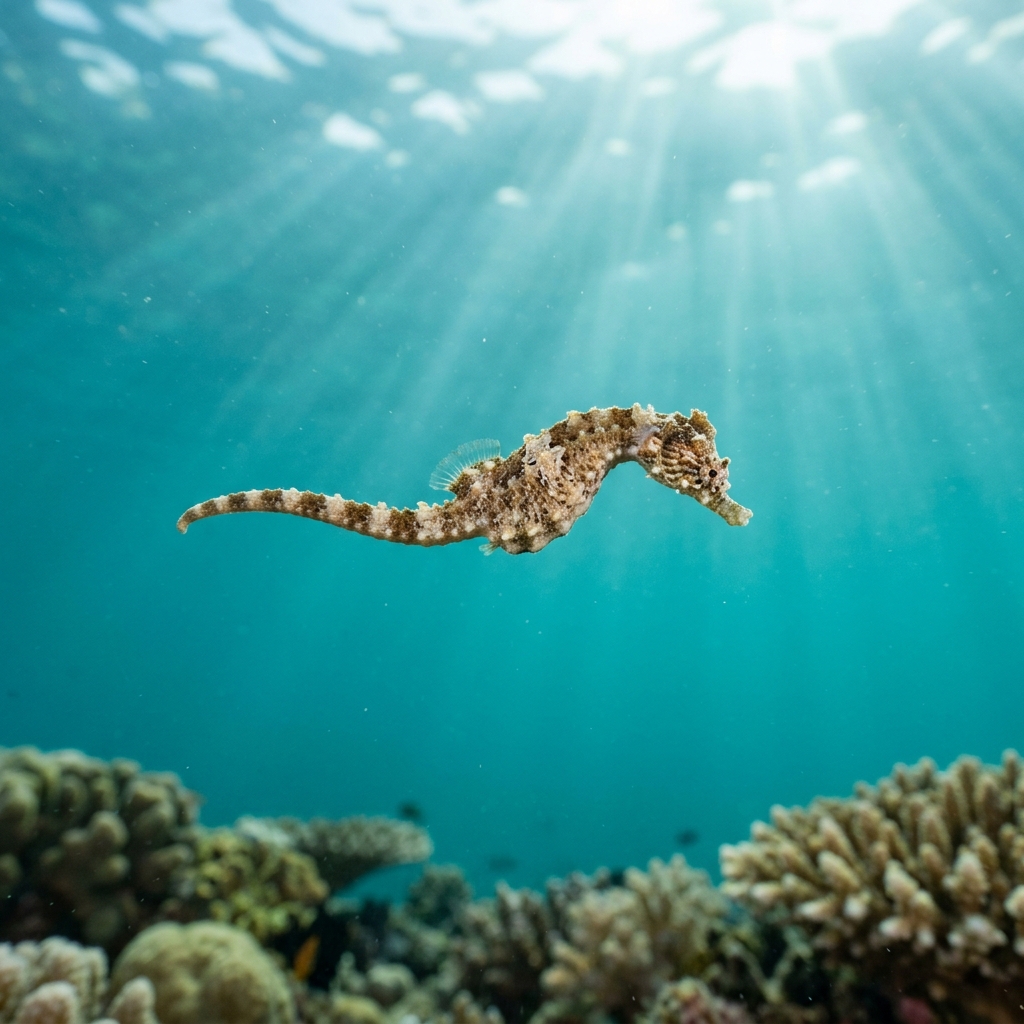
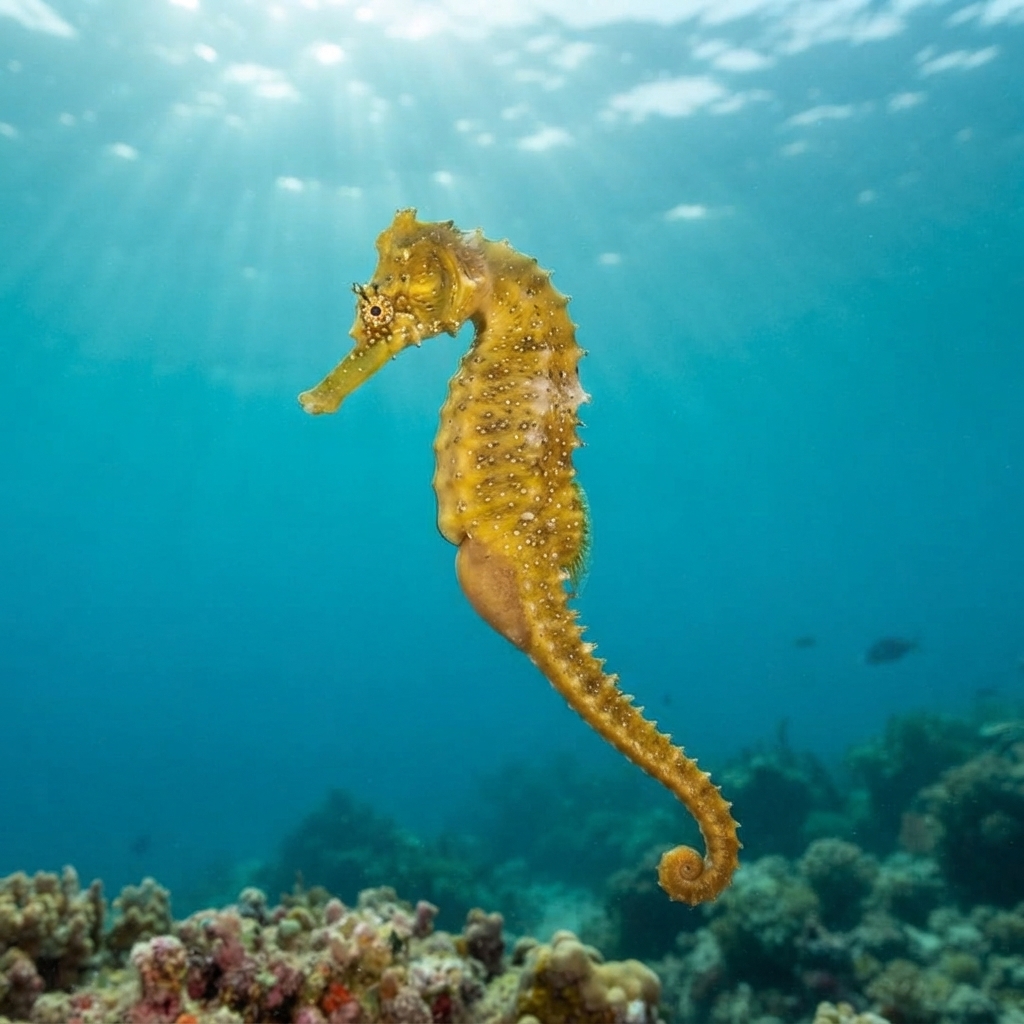
Grows to around 15 cm with a slender, ridged body and a long, tapering snout that gives the species its name. Look for a mane of thin skin filaments along the head and neck, more developed on some individuals, which breaks up its outline against seagrass and algae. Colour ranges from mottled brown to grey with fine pale speckling, and it holds still with its tail curled around a holdfast rather than swimming openly.
Divers typically find it gripping a strand of seagrass or a bit of algae with its tail, staying put rather than fleeing when approached slowly. It relies on its mottled skin and filamentous mane to disappear into the background, so most sightings come from divers scanning slowly rather than spotting movement. Logged as uncommon at most sites and rare at a handful, it rewards a careful, patient search over a quick swim-by.
Males carry the fertilised eggs in a brood pouch on the belly and give birth to fully formed young, one of the few reversed-parenting setups in the animal kingdom.
No clear seasonal pattern shows up in the sighting data, and with a wide comfort range of roughly 12 to 21C it can turn up across the diving calendar. Treat it as a year-round possibility at its Adriatic sites rather than something tied to a particular month.
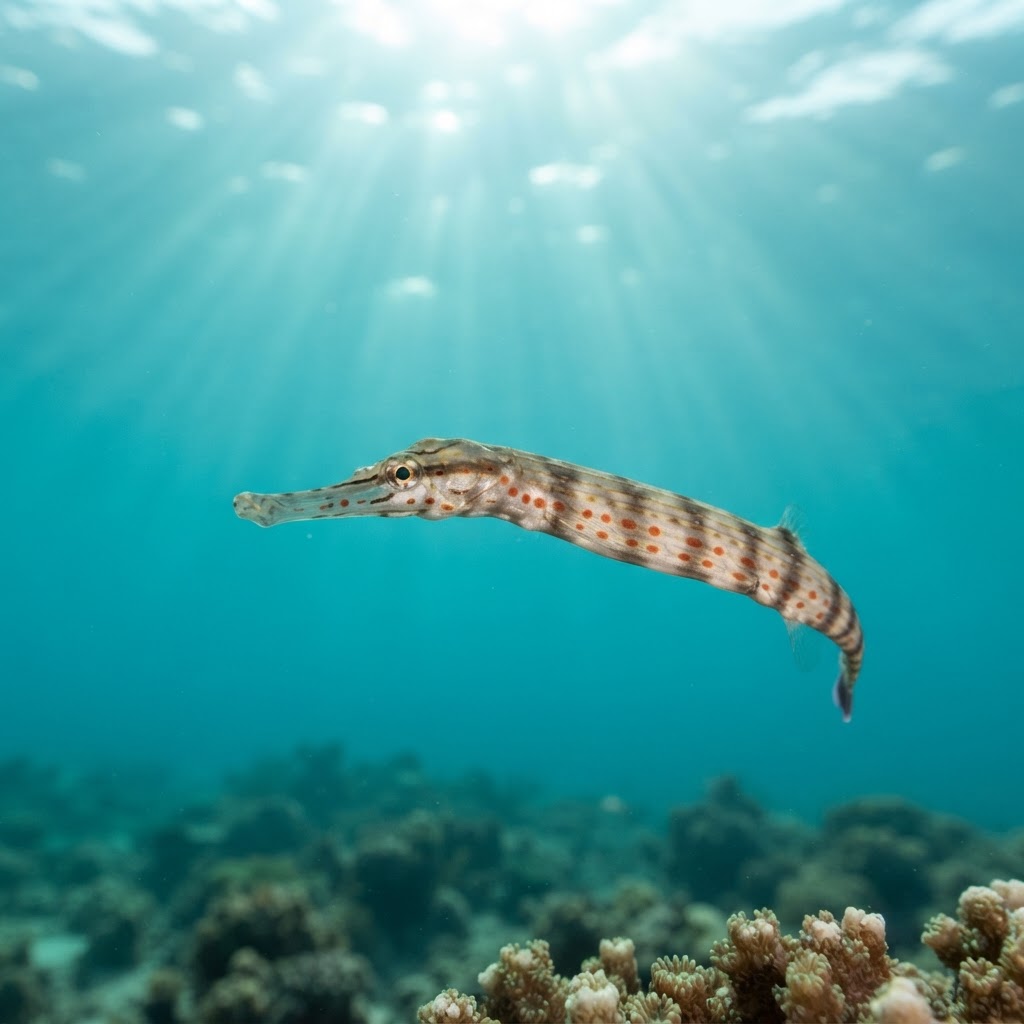
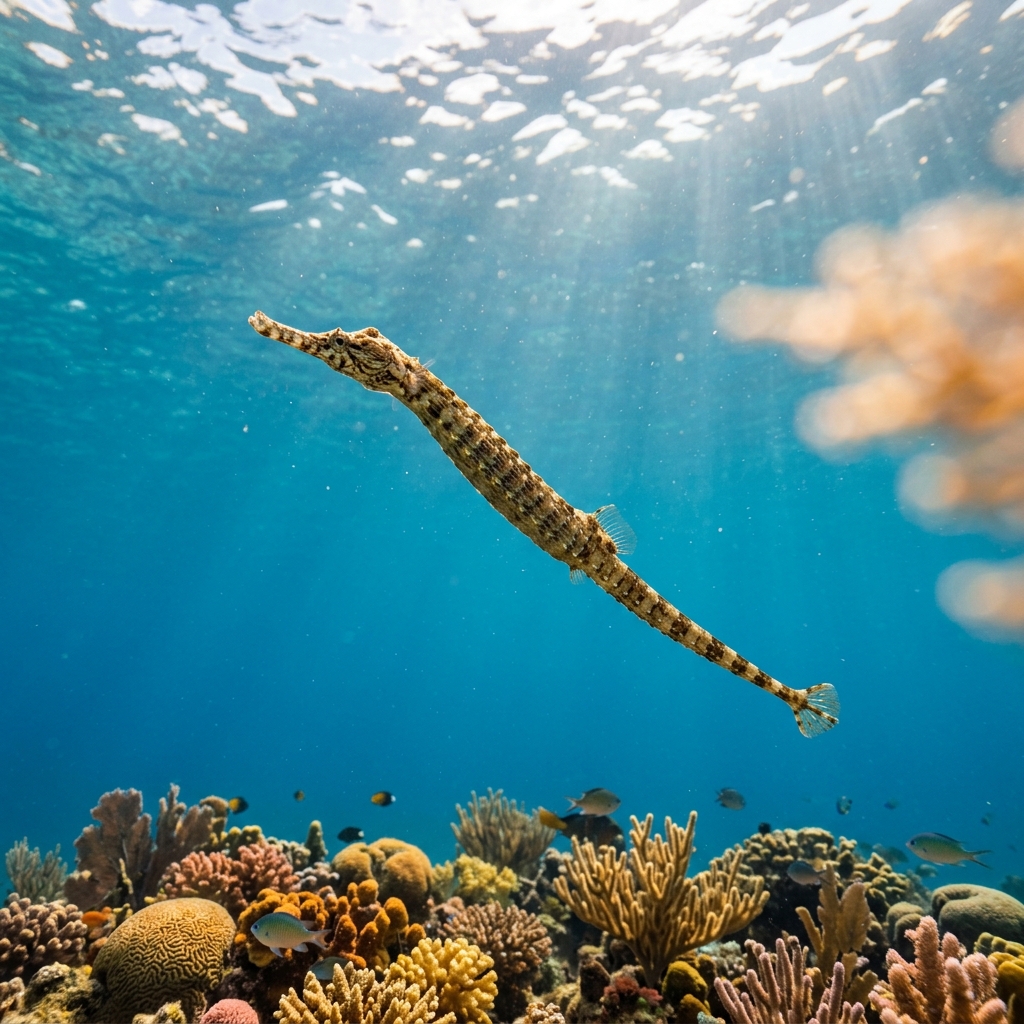
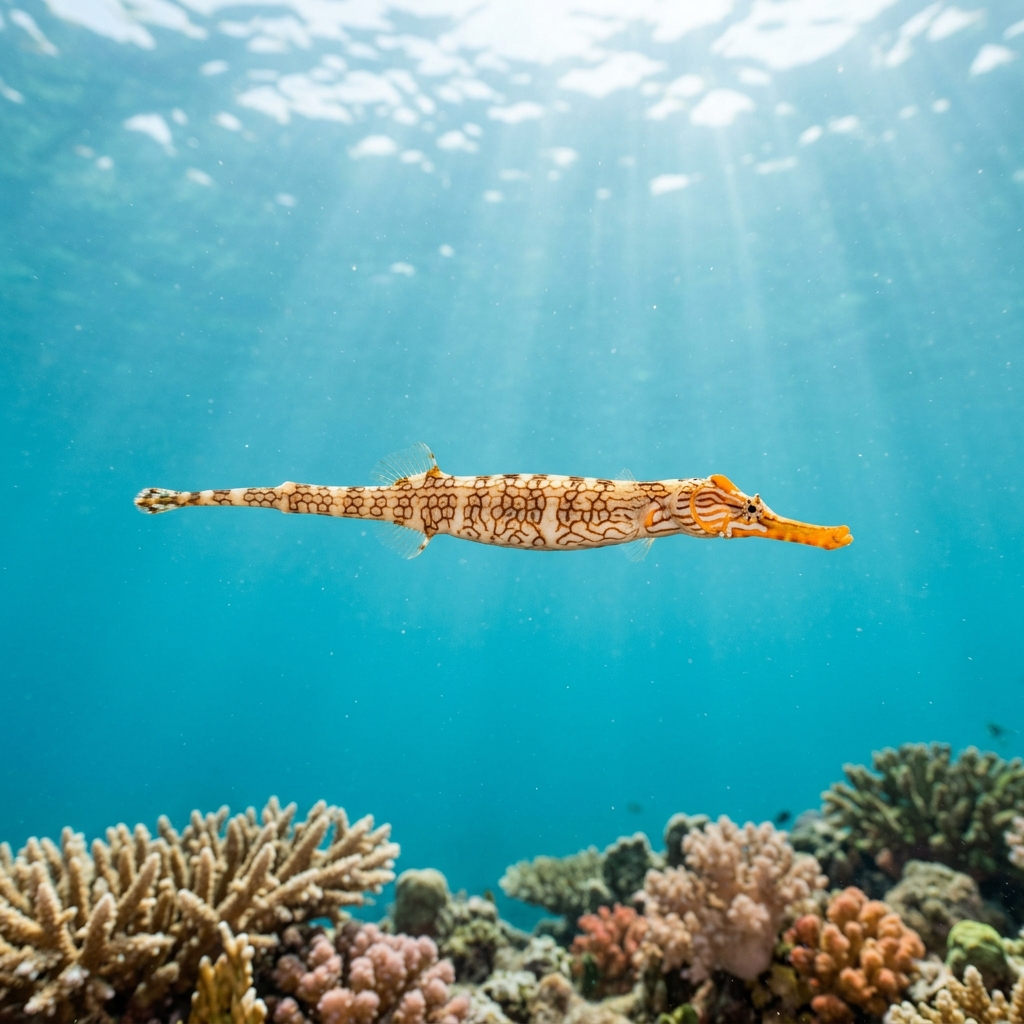
Reef neighbours a diver could mistake it for. Use the identification notes above to tell them apart.
Most reliably logged in Croatia, especially around Istria and the Kvarner region, which together account for the vast majority of recorded sightings. Smaller numbers turn up in Occitanie, France, and along the Lisbon Coast in Portugal, so the northern Adriatic is by far the strongest bet.
Mapping where Long-snouted Seahorse is logged…
Croatia is the standout location, with strong records across Istria and the Kvarner region. It also turns up occasionally in Occitanie, France, and along Portugal's Lisbon Coast.
Sightings don't show a strong season, so it's considered a year-round find at its Adriatic sites. Its comfort range of roughly 12 to 21C means it can be encountered across most of the diving calendar.
Look for a slender seahorse around 15 cm long with a notably long, thin snout and a mottled brown or grey body flecked with pale spots. Many individuals sport a mane of skin filaments around the head and neck that helps them blend into seagrass.
They reach around 15 cm in length, making them a mid-sized seahorse rather than a pygmy species.
Like other seahorses, males carry developing eggs in a belly pouch and give birth to live young, reversing the typical pregnancy roles seen in most animals.
Site and sighting data is aggregated from diver logs, iNaturalist and GBIF. For taxonomy and conservation status:
Seahorse
1,346 sites