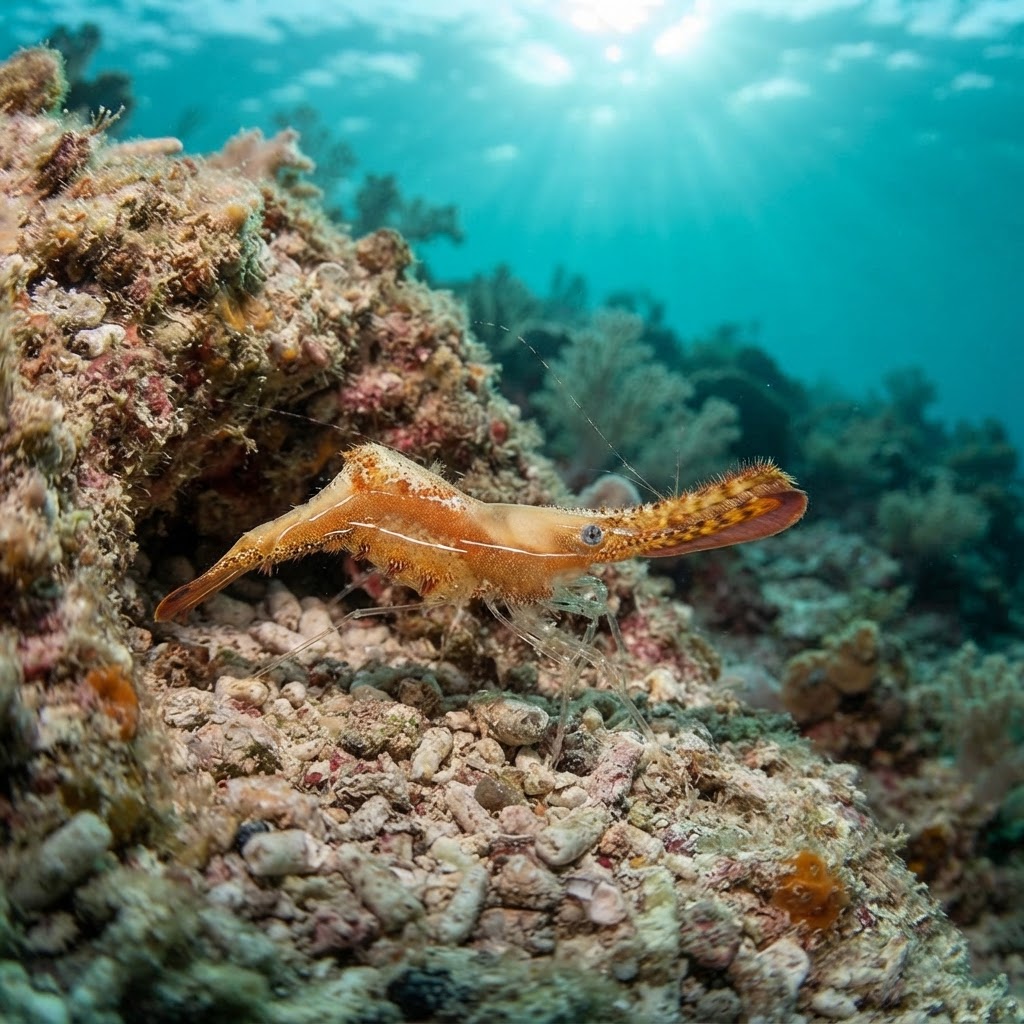
Leander plumosus
Uncommon but findable, this needle-nosed shrimp shows up on night dives in Zanzibar, Bali and Milne Bay in warm 25-31C water year-round.
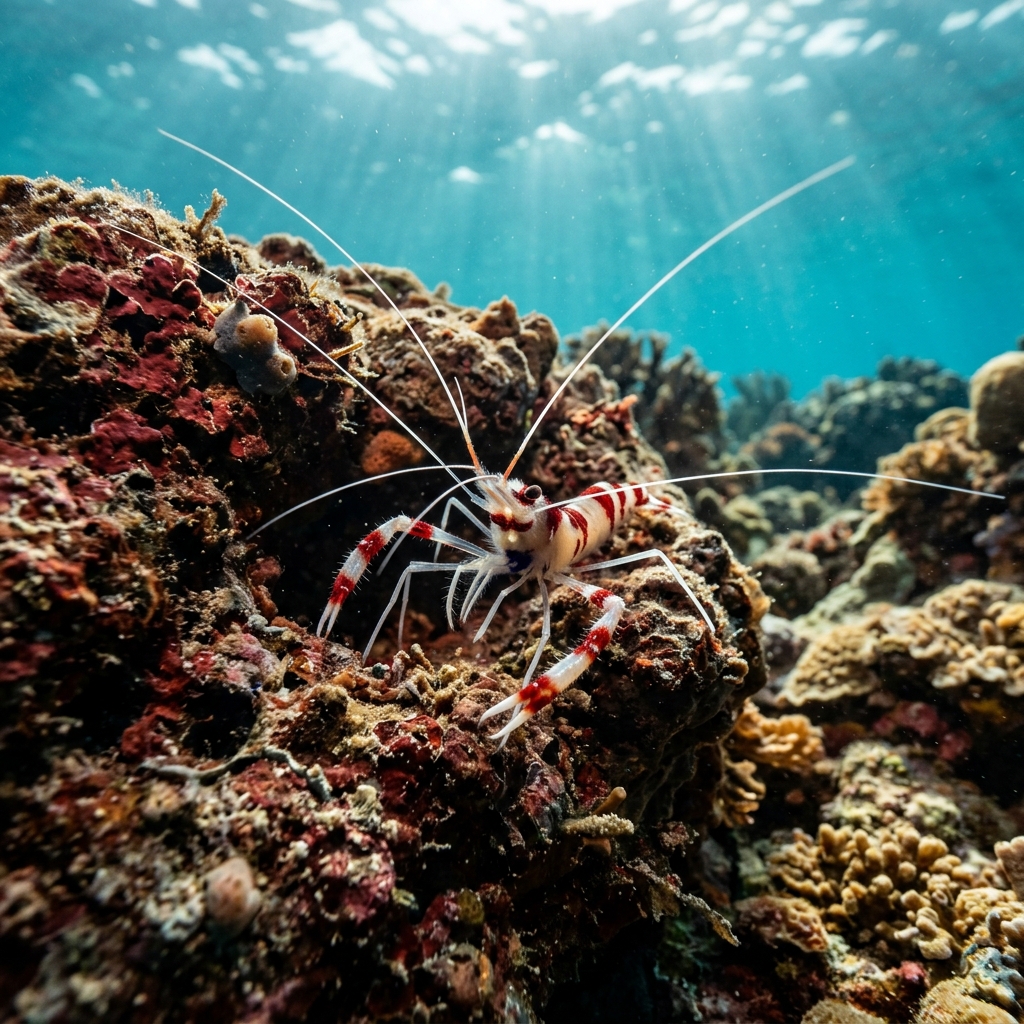
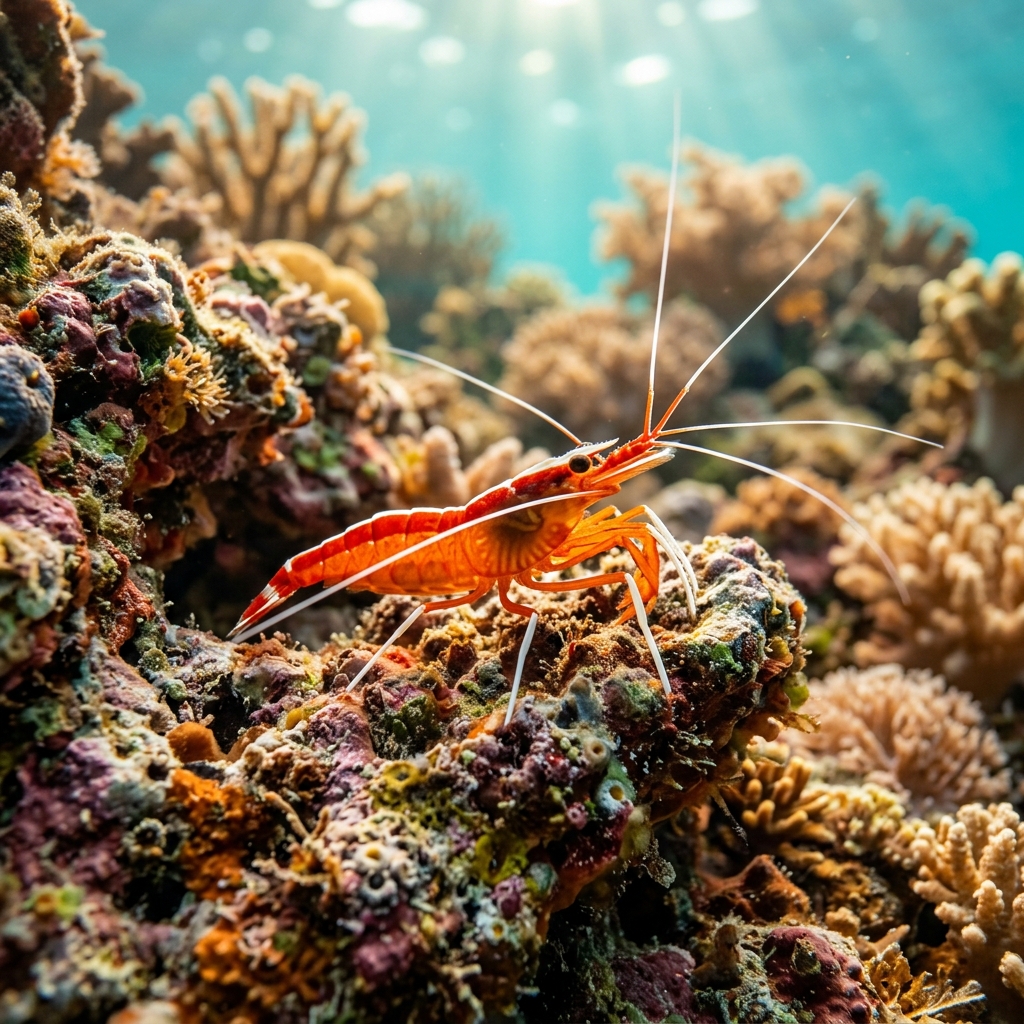
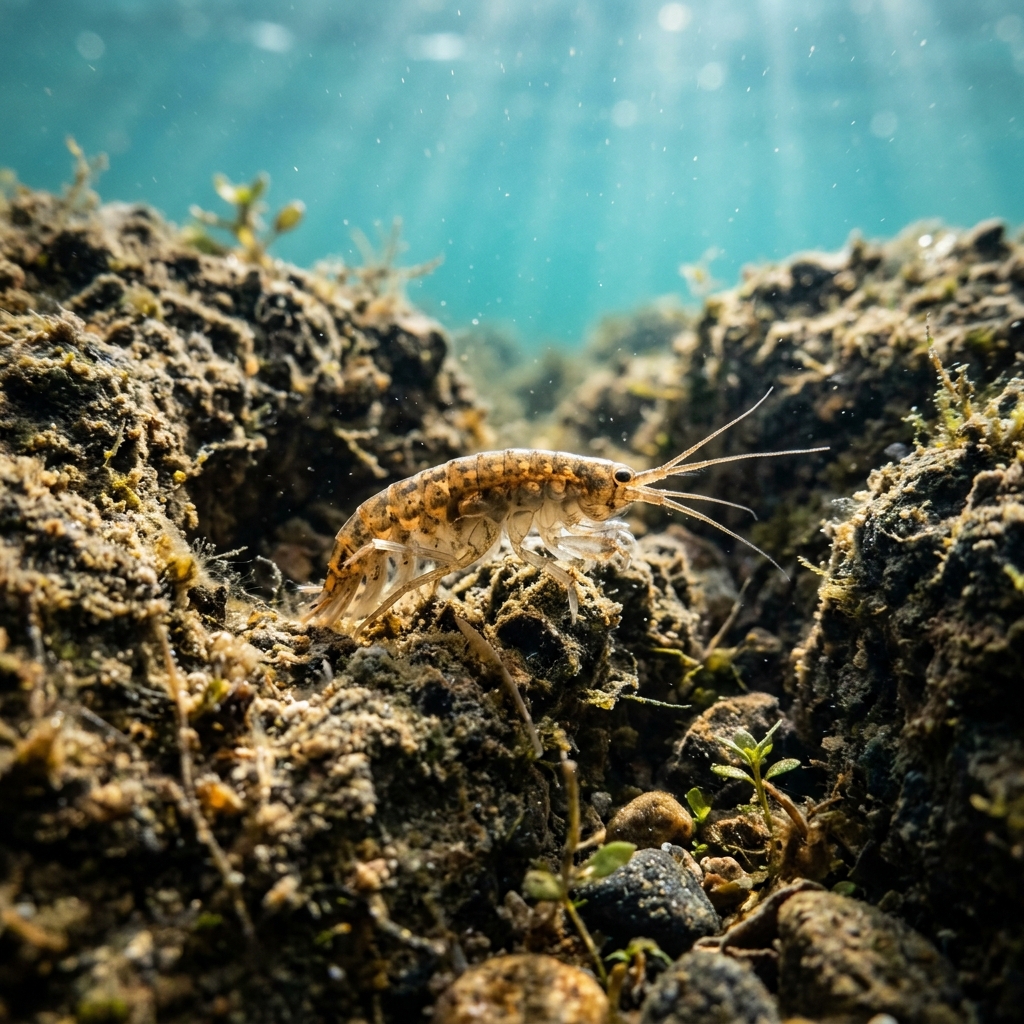
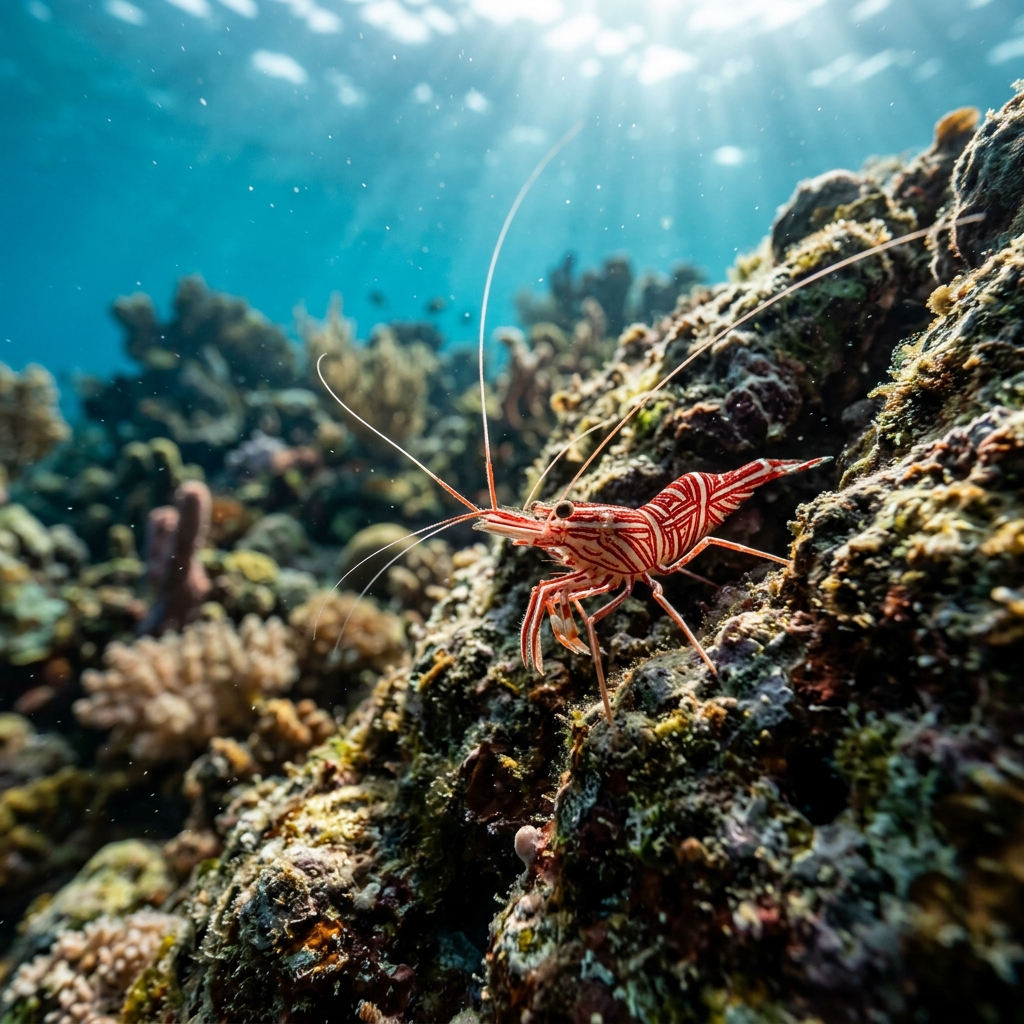
Look for a slim, almost see-through body with a noticeably long, forward-pointing rostrum (the pointed snout between the eyes) that gives it its name. It sits low on the reef, often on rubble or under ledges, and its thin legs and antennae make it easy to miss against a torch beam unless it catches the light. There is no strong colour pattern to key on, it is more about the elongated snout and wiry silhouette than any bold markings.
This is a benthic (bottom-dwelling) shrimp, usually found tucked against rubble, coral debris or under overhangs rather than out in the open. Divers most often pick it out on night dives when its eyes reflect a torch beam, since by day it tends to stay still and blend into the substrate. It is not a cleaner shrimp and does not actively approach divers or fish, so patient, slow scanning of the bottom is the best way to find one.
Its stretched-out rostrum is thought to help it probe into crevices and rubble for scraps, a useful trick for a small shrimp competing for space on a crowded reef bottom.
Sightings are spread across the year with no clear seasonal spike, which fits its comfort range of roughly 25.5 to 31.5C, warm water that holds steady on these tropical reefs year-round. There is no need to time a trip around a particular month for this one.
Zanzibar in Tanzania is by far the most reliable spot for this shrimp, logged at more sites there than anywhere else, with Bali in Indonesia also producing steady sightings. Smaller but consistent numbers turn up in Milne Bay and Maluku, and it has been logged at a handful of sites in the Philippine Visayas as well.
Mapping where Long Nose Shrimp is logged…
Zanzibar in Tanzania is the strongest area for this shrimp, with Bali in Indonesia also a solid bet. It also turns up in Milne Bay and Maluku, and occasionally in the Philippine Visayas.
There is no strong season for this species, it is logged year-round on reefs sitting between roughly 25.5 and 31.5C, so any month works for a dive trip aimed at finding one.
Check for a slender, semi-transparent body and an unusually long, pointed rostrum extending from between the eyes. It sits low on rubble or under ledges rather than swimming in the open, and lacks bold colour bands.
No, this shrimp poses no threat to divers. It is a small, non-aggressive bottom-dweller that keeps to itself among rubble and coral debris.
They tend to stay still and camouflaged against rubble during the day, but their eyes reflect a dive torch at night, which is usually how divers spot them. Night dives on rubble patches give the best odds.
Site and sighting data is aggregated from diver logs, iNaturalist and GBIF. For taxonomy and conservation status:
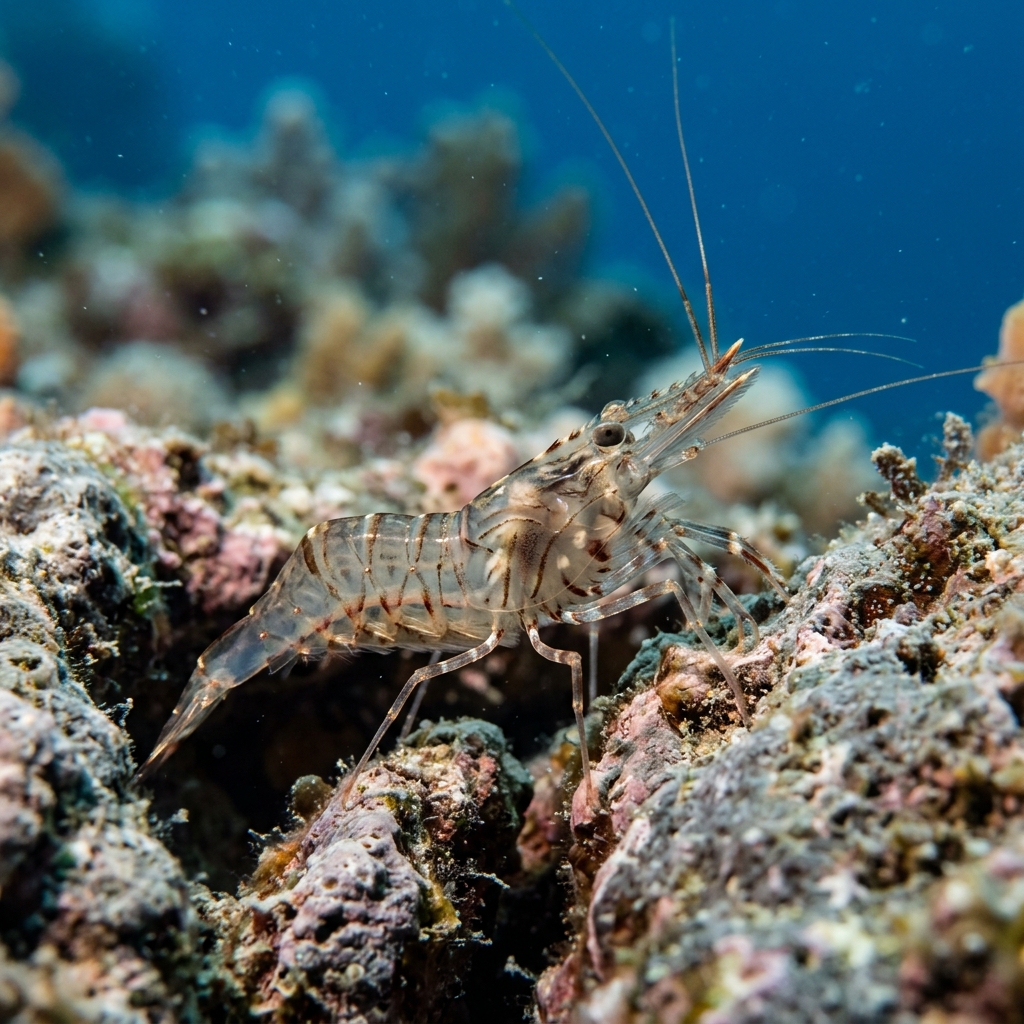
Rockpool Prawn
2,179 sites