Zanclistius elevatus
Deep-bodied, spiny fish logged uncommonly around North Island, New Zealand, in cool 13-19.5C water year-round.
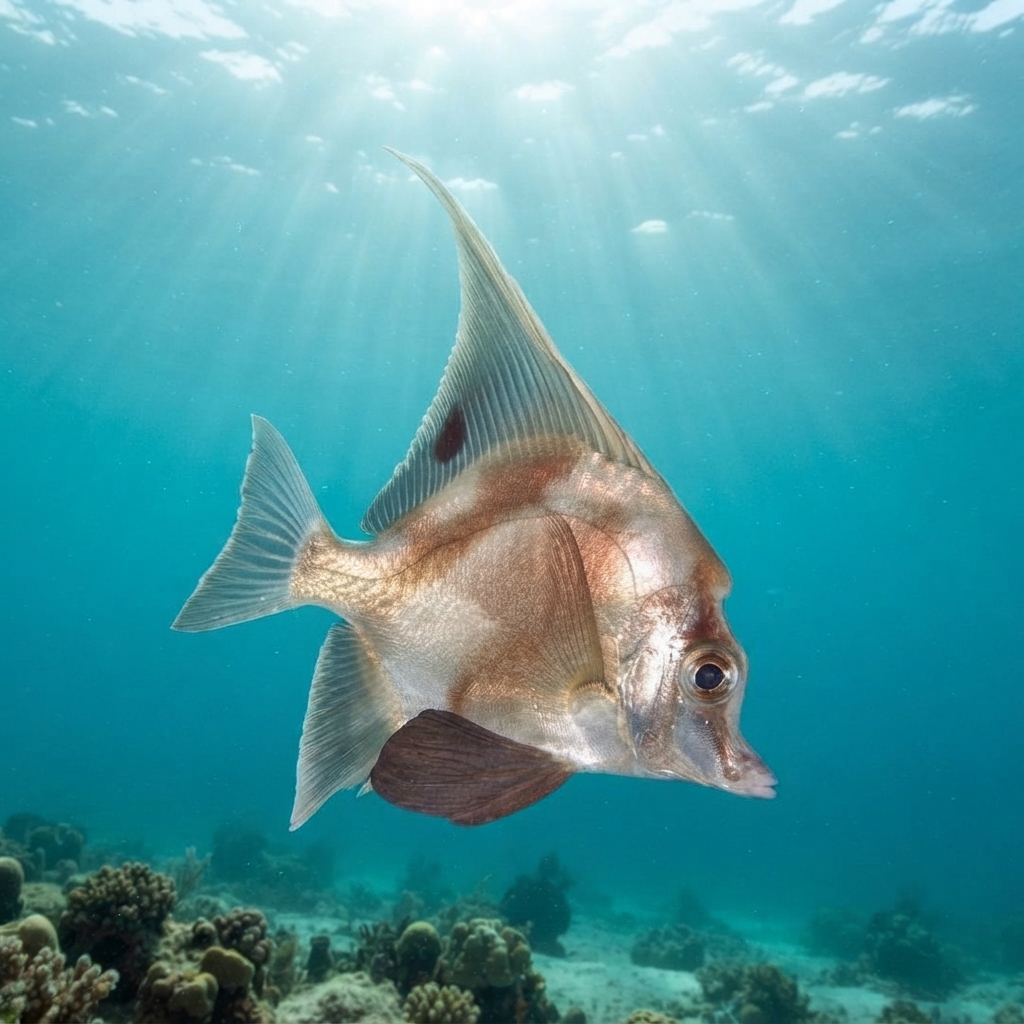
Look for a strongly compressed, almost diamond-shaped body reaching about 23cm, with a noticeably steep forehead profile. The dorsal fin carries long, trailing spines that give the fish its name and are the easiest feature to pick out from a distance. Colouring tends toward muted reddish or silvery tones typical of deeper temperate reef fish, blending against rocky reef and rubble backgrounds.
Divers typically find this one hovering close to reef structure or rubble bottoms rather than out in open water, consistent with its status as an uncommon but steady sighting at the sites where it occurs. It is not a schooling fish you will see in numbers, more a single or occasional find worked into a reef dive. Its deep, compressed shape and long fin spines make it easy to identify once spotted, even at a glance from a distance.
Its family, the boarfishes, are named for their pig-like snout shape and deep, disc-like bodies, an unusual profile among reef fish that makes them stand out even without bright colouring.
Sightings show no detectable seasonal pattern, and the fish tolerates a fairly wide cool-water range of 13 to 19.5C, so it turns up year-round rather than at a specific time of year.
North Island, New Zealand is the only place this fish shows up reliably in diver logs, with sightings spread across a range of sites there rather than concentrated at one spot. If you are diving New Zealand's temperate reefs, this is the region to watch for it.
Mapping where Long-finned Boarfish is logged…
North Island, New Zealand is the main place divers log this species, recorded across a range of sites there. It has not been reported as a reliable sighting anywhere else in the current data.
There is no clear seasonal pattern, so it is considered a year-round sighting. It has been observed across a cool water range of 13 to 19.5C.
Check for a deep, laterally compressed body around 23cm long, a steep forehead, and long trailing spines on the dorsal fin. Its muted reddish or silvery colouring helps it blend against rocky reef, so the body shape and fin spines are the real giveaway.
They reach roughly 23cm, a modest size that keeps them easy to overlook against rocky reef and rubble.
No, they pose no danger to divers and are simply observed rather than approached with any caution.
They belong to the boarfish family, named for a pig-like snout shape and an unusually deep, disc-shaped body, a profile that sets them apart from most reef fish divers encounter.
Site and sighting data is aggregated from diver logs, iNaturalist and GBIF. For taxonomy and conservation status:
Soldierfish
3,612 sites