Maxillicosta scabriceps
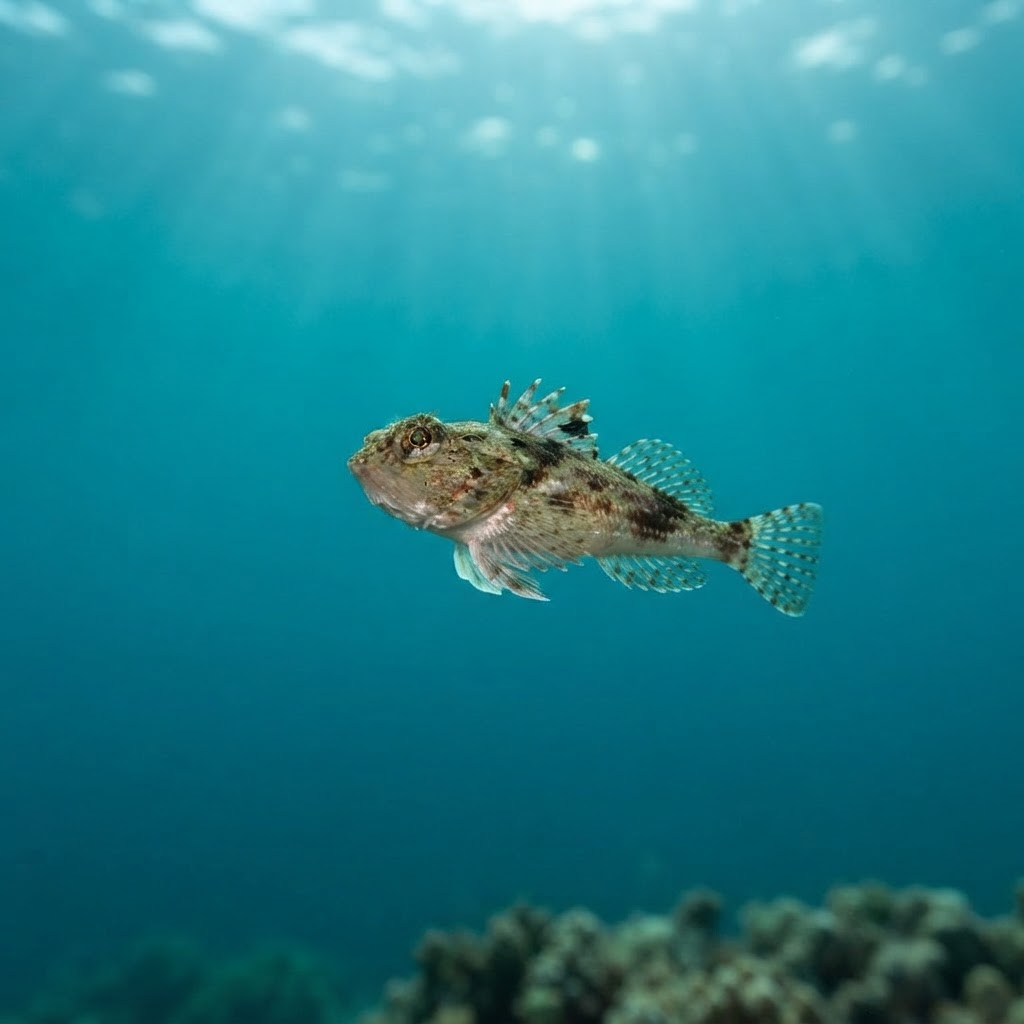
An 8cm venomous perch found across South Australia and Western Australia in 16 to 20C water, most sites report it as uncommon to rare.
Safety warning
Like other members of its family, it carries venomous spines along the dorsal fin, and a sting can cause sharp, lasting pain even from an 8 cm fish. The real risk is accidental contact: because it sits still and matches the bottom so well, divers most often get stung by kneeling, gripping rock, or resting a hand where one is lying unseen. Keep hands off the substrate in the rocky reef habitats where it's logged and you avoid the issue entirely.
If you're stung
Venomous spinesGeneral first-aid guidance, not a substitute for professional medical care. In an emergency, call your local emergency number.
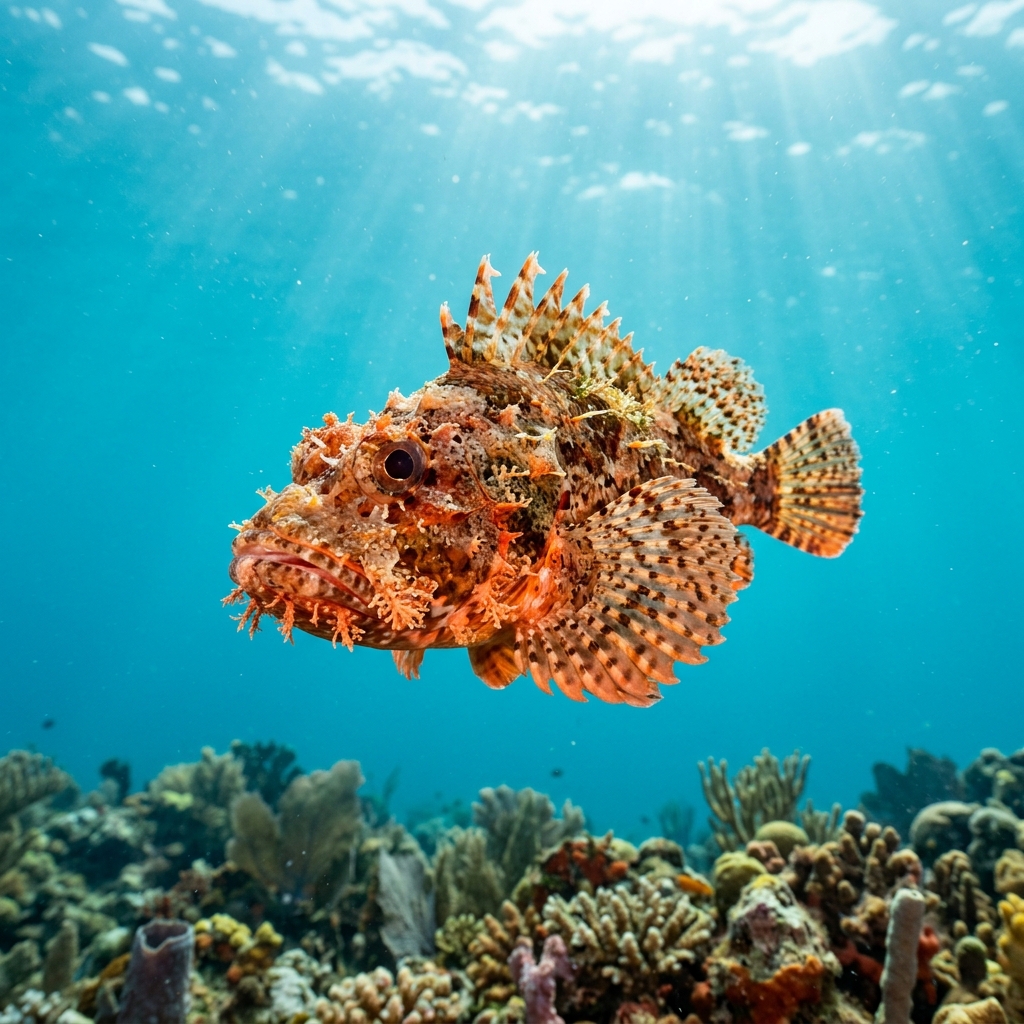
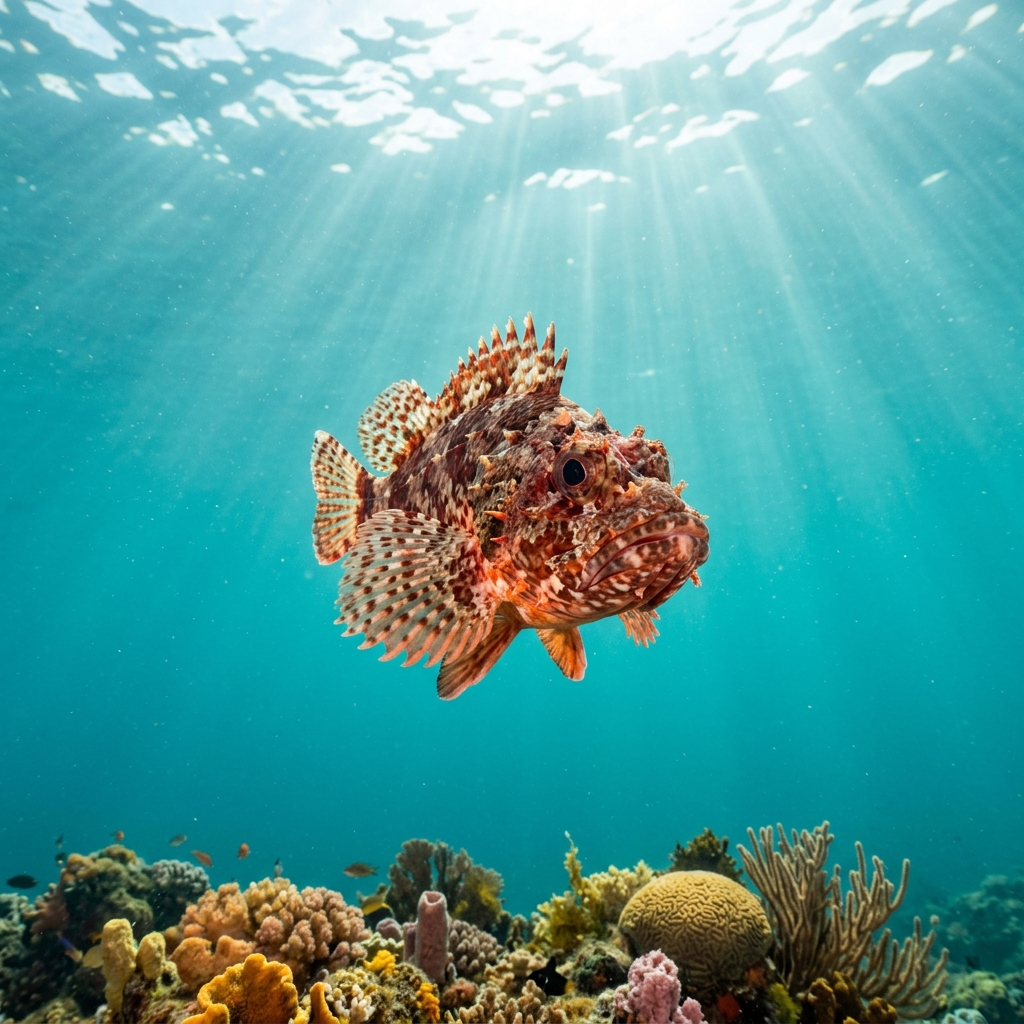
A tiny reef fish, only around 8 cm long, with a mottled brown and grey body that breaks up its outline against rock and rubble. It has the boxy, spiny head typical of scorpionfish relatives, with ridged bony plates over the face rather than smooth skin. Look for it sitting motionless on the bottom rather than swimming in open water, where its camouflage does the work of hiding it in plain sight.
Expect it sitting still on rock, rubble, or sand rather than swimming out to meet you, relying on its mottled colouring to blend into the bottom. Most divers describe it as uncommon at best, so finding one usually takes a slow, deliberate scan of the substrate rather than a passing glance. It doesn't seem to spook easily once spotted, staying put while you get a closer look.
It belongs to the same broad scorpionfish lineage as gurnard perches and waspfishes, a group built around ambush stillness and venomous spines rather than speed, which is why it's so easy to swim straight past one.
Sightings don't show a clear seasonal pattern, and the observed water temperature range of 16.3 to 20.6C fits the year-round conditions of southern Australia's temperate coast, so there's no single best month to plan around. Divers logging it in South Australia, Western Australia, or Victoria report it turning up at similar rates across the year.
Almost all logged sightings come from Australia, with South Australia the strongest region, followed closely by Western Australia and then Victoria. These are cool-temperate reef and rocky-bottom sites rather than tropical coral reefs, so this is very much a southern Australian speciality.
Mapping where Little Gurnard Perch is logged…
Sightings are concentrated in southern Australia, with South Australia the top region, followed by Western Australia and Victoria. It's tied to cool-temperate rocky reef habitat rather than tropical coral sites.
There's no strong seasonal pattern in the sighting data, so it's effectively a year-round find in the 16 to 20C water typical of southern Australian dive sites.
Yes, it carries venomous dorsal spines that can deliver a painful sting. The main risk is accidental contact since it camouflages well against rock and rubble, so avoid resting hands on the substrate at sites where it's known.
Look for a small, roughly 8 cm fish with a mottled brown and grey body and a spiny, armoured-looking head, sitting motionless on rock or rubble rather than swimming in the open.
They're small, typically around 8 cm long, making them one of the more overlooked finds on a temperate Australian reef dive.
Most divers who log it describe it as uncommon, with some sites reporting it as rare, so it's a species you need to search for rather than expect on every dive.
Site and sighting data is aggregated from diver logs, iNaturalist and GBIF. For taxonomy and conservation status:
Madeira Rockfish
2,773 sites