Palmadusta asellus
A tiny 2cm cowry logged reef-side in the Central Atolls of the Maldives and New South Wales, year-round in 20 to 30 C water.
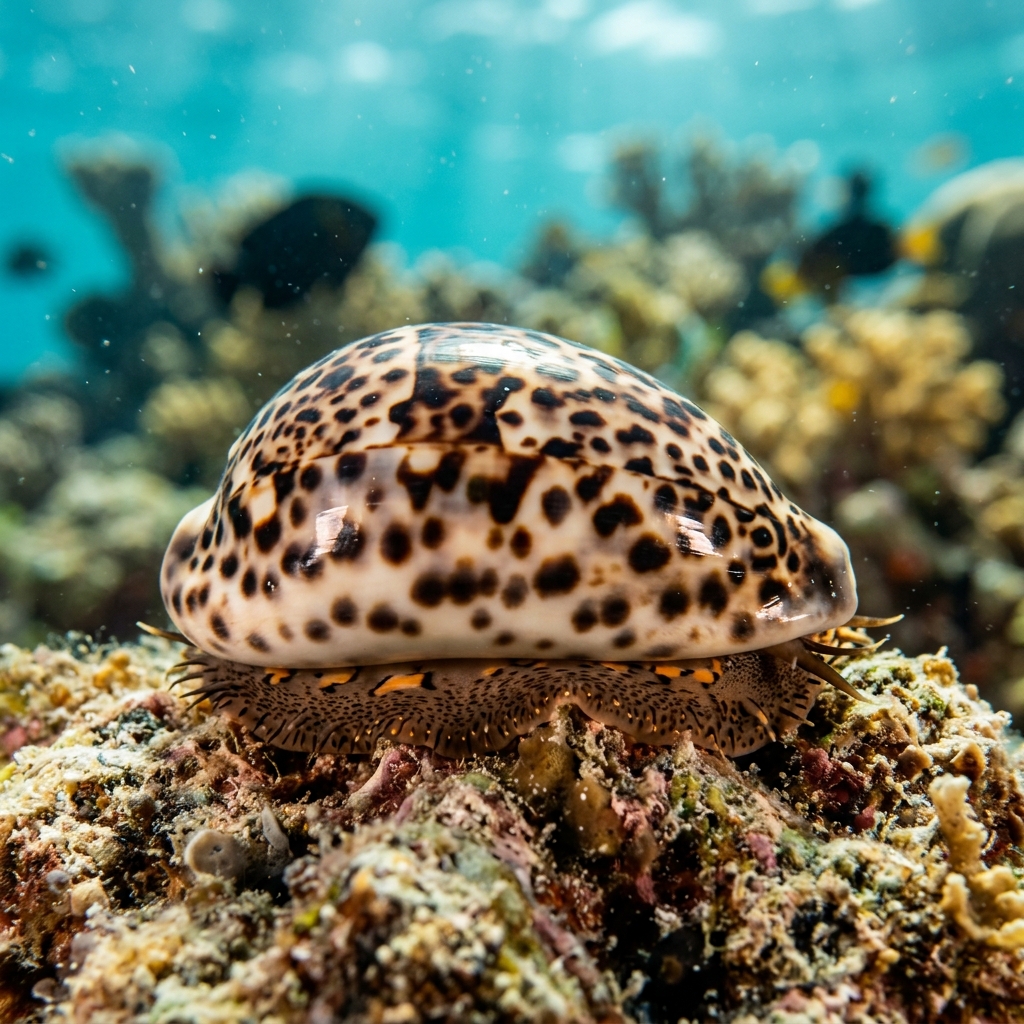
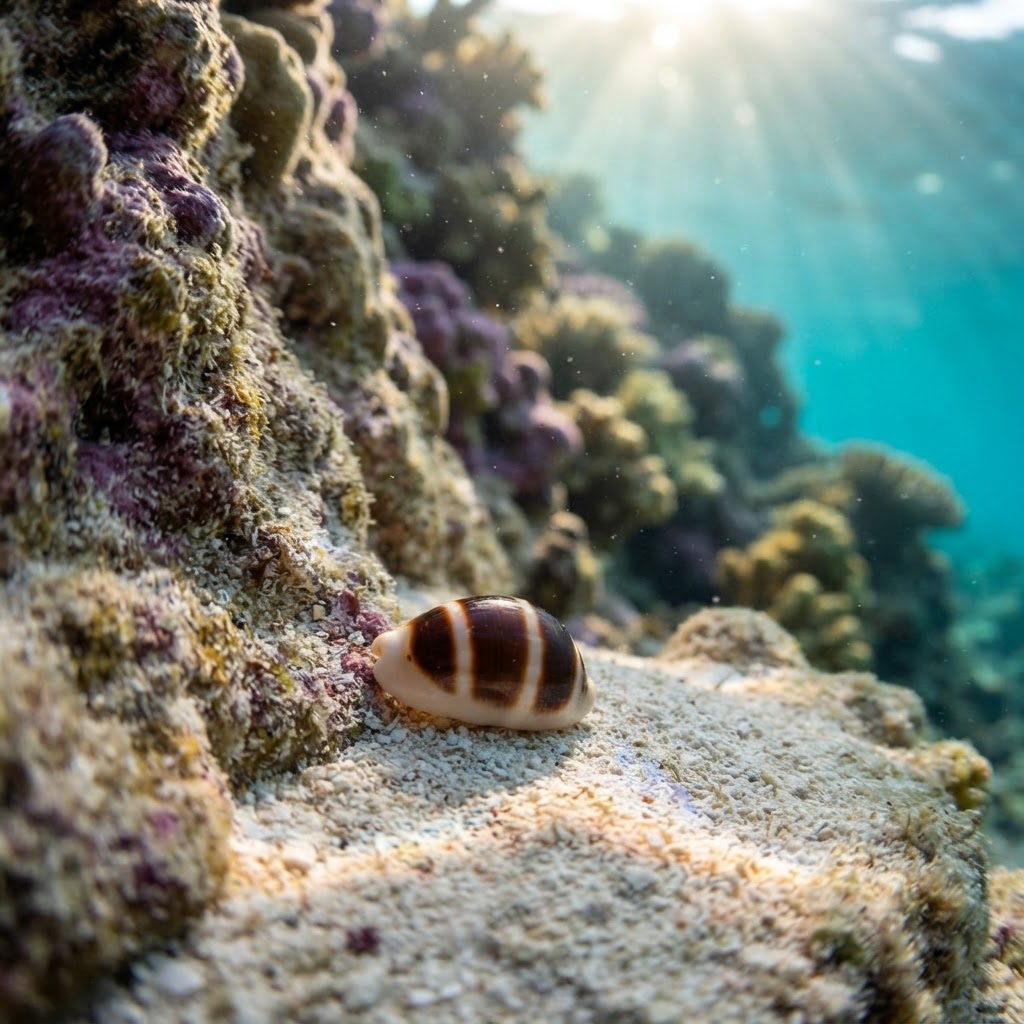
A tiny cowry, rarely more than 2cm, with a glossy, domed oval shell that looks almost polished underwater. The shell base is pale with scattered dark brown to black spots, and the mantle (the fleshy tissue that can extend over the shell when the animal is active) is often patterned or translucent when partly withdrawn. Look closely into crevices and under coral rubble at night or when the animal is exposed, since the shell alone is the main giveaway.
Divers mostly find this cowry tucked into reef crevices or under rubble and coral rock, staying still and easy to swim past without noticing. It is most often spotted as an uncommon extra on a dive rather than a target sighting, and shows no reaction to divers beyond retracting its mantle if disturbed. Night dives and slow, close looks at reef nooks give the best odds of spotting one.
Like other cowries, it can extend its mantle tissue up over the shell surface while active, which is why the shell often looks duller or patchier in photos taken during the day when the mantle is partly withdrawn.
No clear seasonal pattern shows up in the sightings, and the observed water temperature range of 19.8 to 29.8 C spans both tropical and temperate conditions, so this is a year-round find rather than a seasonal one.
Most reliably logged in the Central Atolls of the Maldives, with a second population recorded along the coast of New South Wales, Australia. Sites in these two regions account for all the confirmed diver sightings so far, making the Maldives the stronger bet for a dedicated look.
Mapping where Little Ass Cowry is logged…
The most consistent sightings come from the Central Atolls of the Maldives, with a smaller number logged off New South Wales, Australia. Outside these two regions it has not been reliably recorded by divers.
There is no detected seasonal pattern, and it has been observed across a wide temperature range of roughly 20 to 30 C, so it can turn up on a dive at any time of year.
Look for a small, glossy oval shell around 2cm long with dark spots scattered over a pale base, tucked into reef crevices or under rubble. The mantle tissue may partly cover the shell when the animal is active, giving it a mottled look.
They are a small species, typically reaching around 2cm in shell length, so a careful eye is needed to spot one on the reef.
No, they pose no danger to divers. They are small, slow-moving reef dwellers that simply retract into their shell if disturbed.
It is logged as uncommon at most sites where divers have recorded it, with only a handful of sites reporting it as rare or common, so it counts as a nice spot rather than a guaranteed one.
Site and sighting data is aggregated from diver logs, iNaturalist and GBIF. For taxonomy and conservation status:
Elysia Timida
573 sites