Limacia mcdonaldi
Small white nudibranch with orange-tipped gills, most reliably logged on cold-water dive sites across California and Baja California.
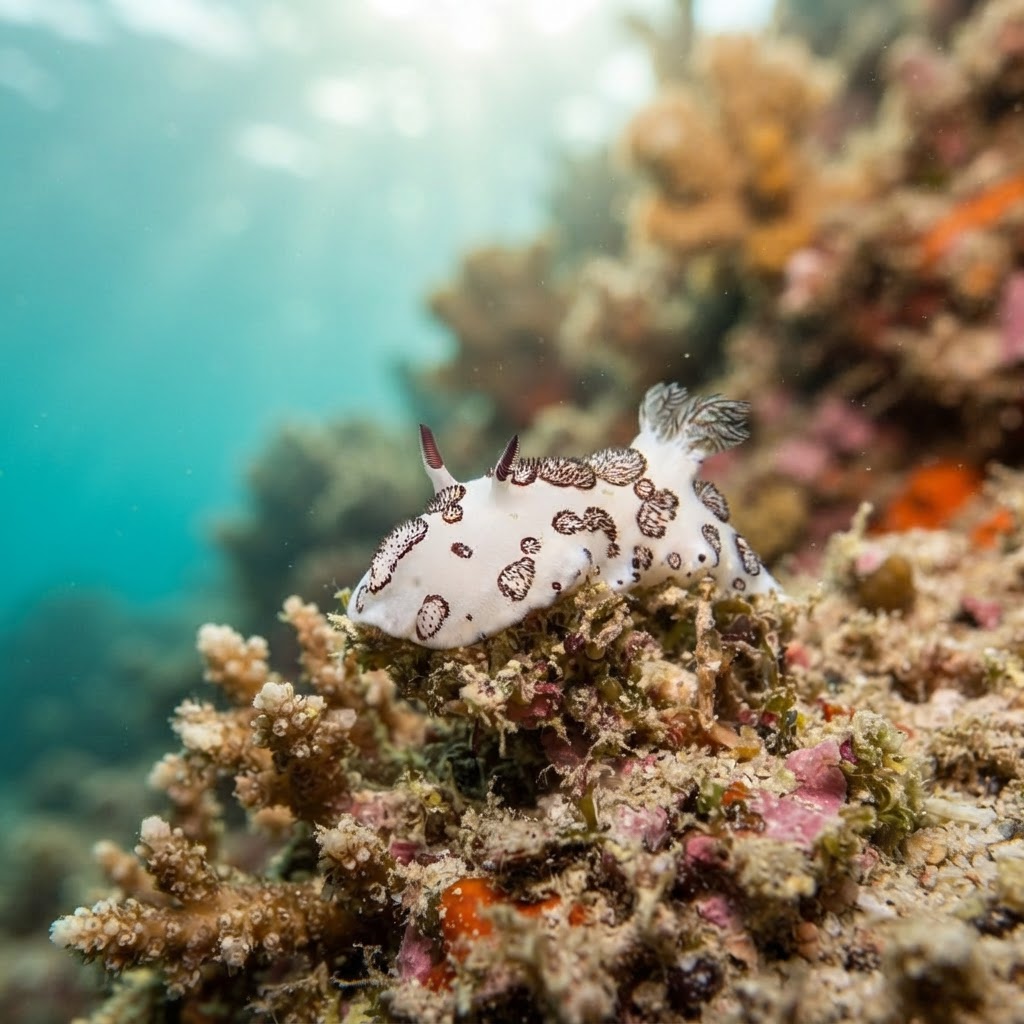
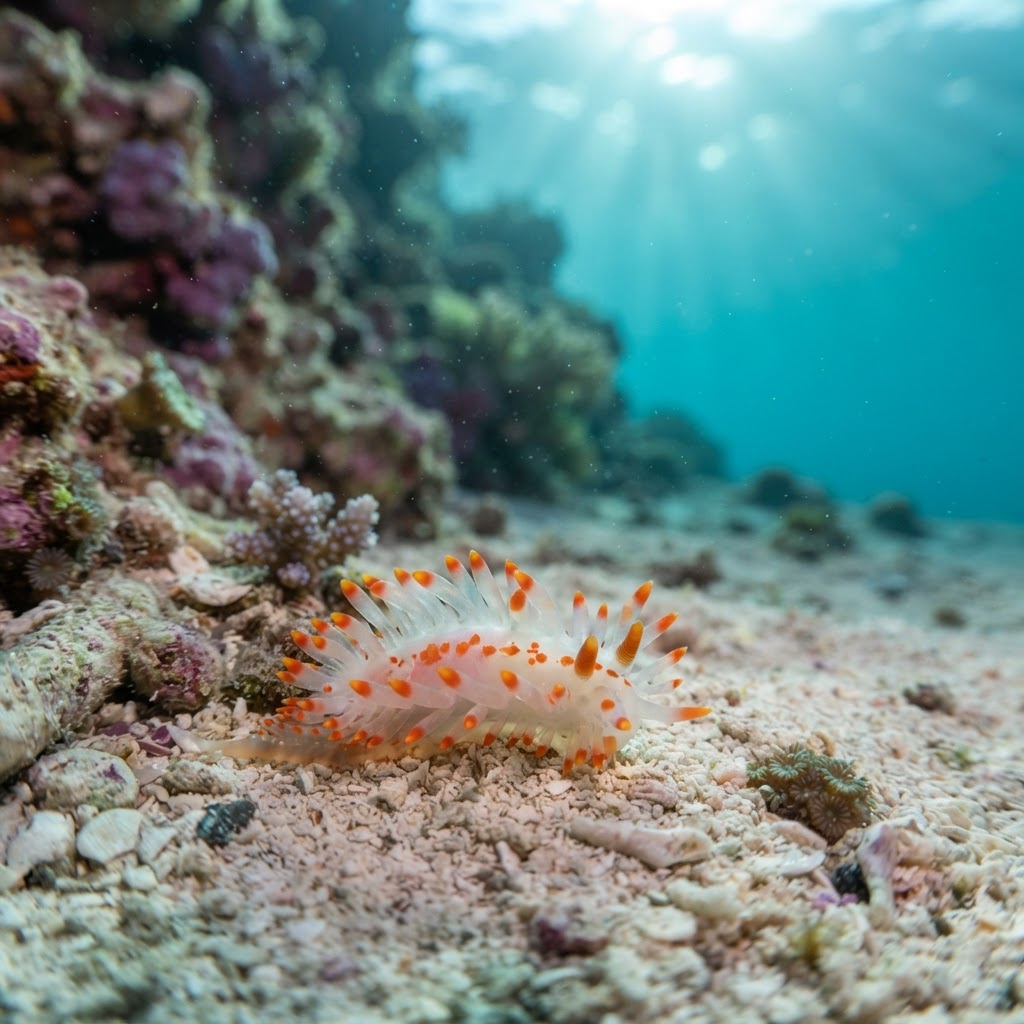
Small, slug-shaped nudibranch with a translucent white to cream body covered in scattered raised bumps (tubercles) tipped in bright orange or yellow. A cluster of feathery gills sits toward the rear of the back, also edged in orange, with two orange-tipped rhinophores (sensory horns) up front. It moves slowly across rock and reef surfaces, rarely more than a couple of centimetres long, so divers usually spot it by scanning encrusted rock walls rather than open water.
Divers find it parked on rock, algae or encrusted reef surfaces, grazing slowly and barely reacting to a torch or a close look. It shows no defensive display beyond staying still, and most sightings come from divers working slowly along a wall or kelp-forest reef rather than mid-water. Its slow, grazing pace means it is often found in the same small patch on repeat dives at a site.
Like other dorid nudibranchs, it likely feeds on encrusting bryozoans or sponges, using its diet to build up the same bright pigments seen in its orange-tipped tubercles and gills.
Sightings are logged year-round with no clear seasonal spike in the data, which fits its cold-water niche of roughly 12 to 19 C found off California and Baja California through most of the year.
Reef neighbours a diver could mistake it for. Use the identification notes above to tell them apart.
This is a cold-water Pacific species, most commonly logged on dive sites through California, with a strong secondary population across Baja California, Mexico. It turns up on rocky reef and kelp-forest sites rather than tropical coral, so look for it on typical Southern and Central California shore and boat dives.
Mapping where McDonald's Dorid is logged…
It is most reliably found on rocky reef dive sites in California, with a solid secondary population across Baja California, Mexico. Look for it on cold-water rock and kelp-forest sites rather than tropical reef.
There is no strong seasonal pattern in the sighting data, so it is considered a year-round find within its cold-water range of about 12 to 19 C.
Look for a small, pale white to cream nudibranch with scattered tubercles tipped in bright orange, plus orange-edged gills and rhinophores near the rear and front of the body. It moves slowly over rock and encrusting growth, rarely growing large.
Exact size data is not confirmed, but like most Limacia nudibranchs it is small, typically only a couple of centimetres long, making it an animal you find by looking closely rather than spotting from a distance.
No. It has no sting or bite of concern to divers and simply grazes slowly on reef surfaces, posing zero risk if you stop to look or photograph it.
Site and sighting data is aggregated from diver logs, iNaturalist and GBIF. For taxonomy and conservation status:
Light-spotted Aegires
3,168 sites