Synodus jaculum
Small reef-bottom lizardfish logged around West Papua's dive sites, resting motionless on sand or rubble in 24.5 to 29 C water.
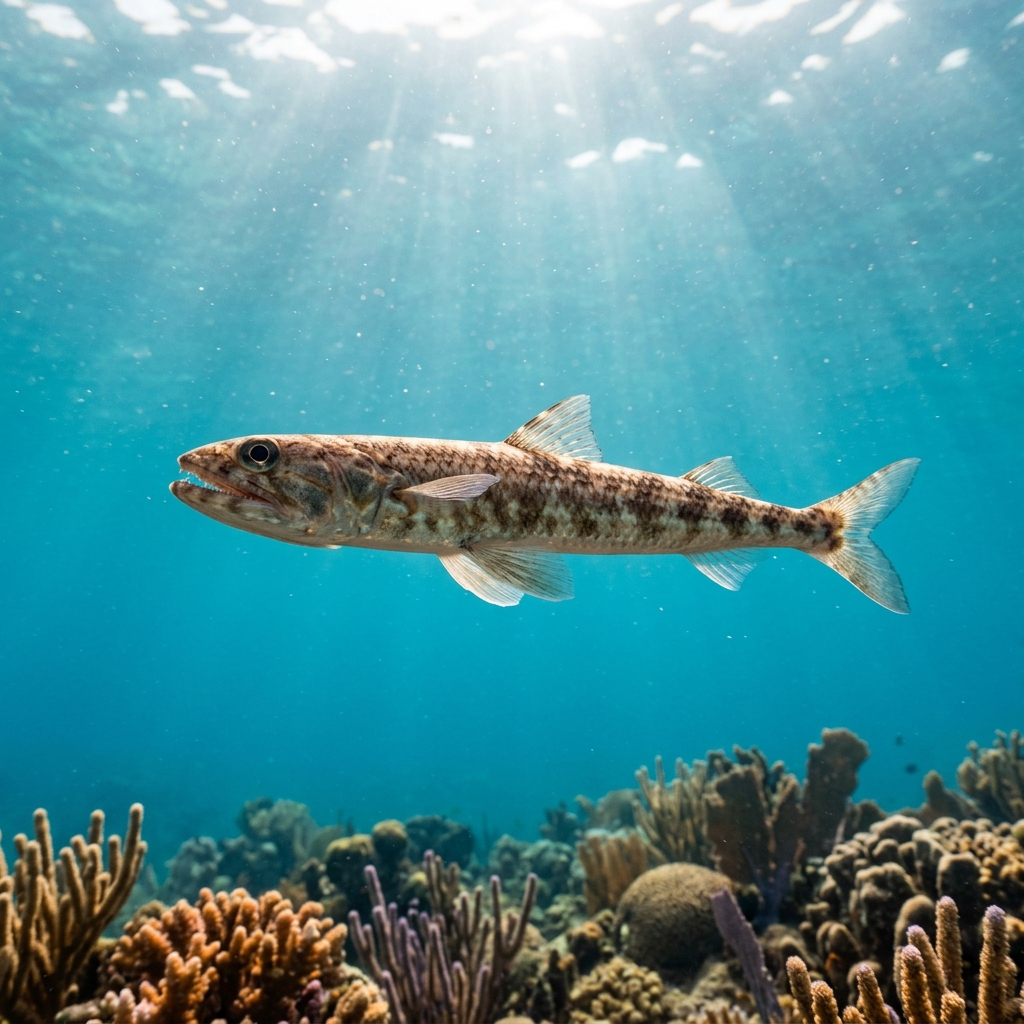
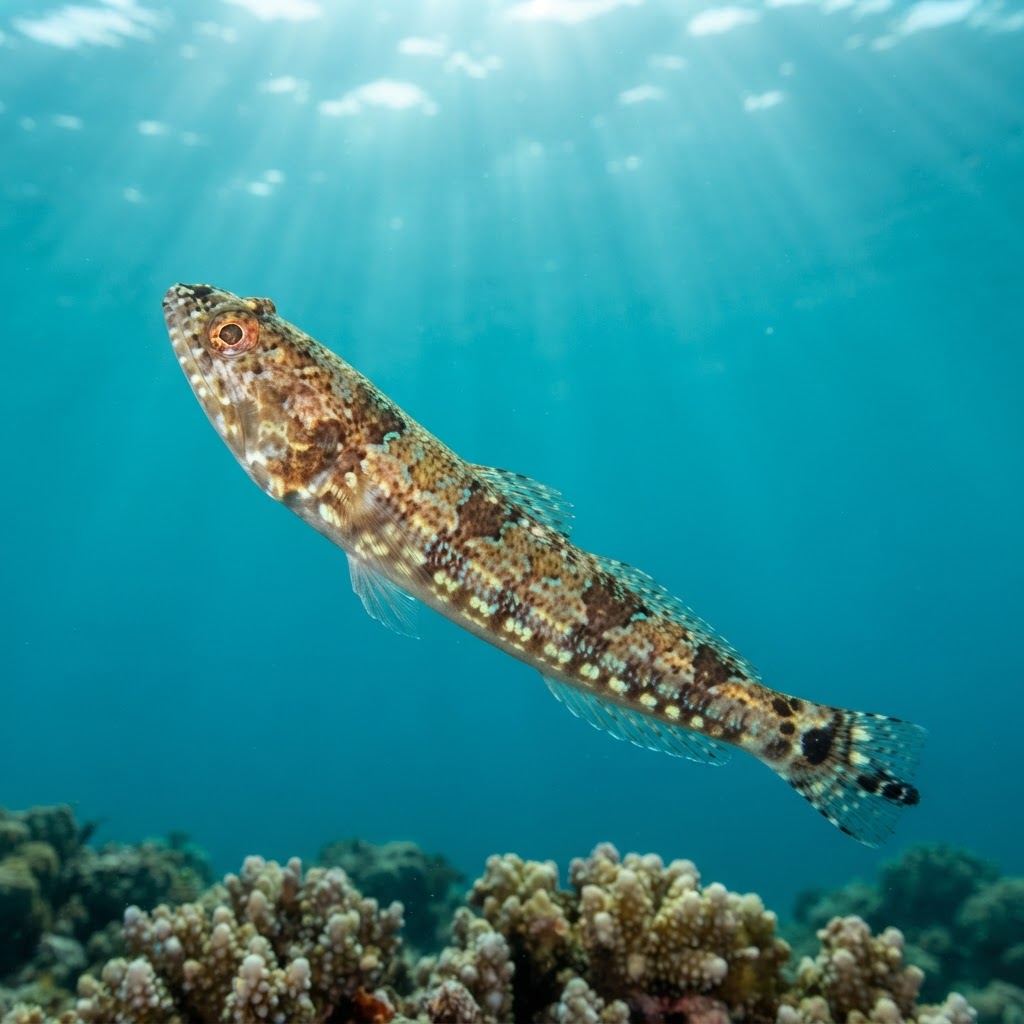
A slim, torpedo-shaped fish around 14 cm long, mottled brown and tan with pale blotches that mimic the sand or rubble it rests on. It props itself up on its lower fins in a lizard-like pose, head slightly raised, which is where the common name comes from. Look for the pointed, reptilian snout and large mouth typical of lizardfish, held perfectly still until something edible swims past.
Expect to find it lying still on sand, rubble or a low reef ledge, propped up on its fins and blending into the substrate rather than swimming about. It is an ambush predator, so it will hold position and let small fish or shrimp approach before lunging, and it generally tolerates a calm diver hovering close for a photo before darting a short distance and resettling.
Like other lizardfish, it hunts by staying motionless and relying on a burst of speed and a mouthful of sharp teeth to snatch passing prey, rather than chasing anything down.
No clear seasonal pattern shows up in the data, and its comfort range of 24.5 to 29 C spans typical year-round conditions on these Indo-Pacific reefs, so it can turn up on any dive.
Most reliably logged in West Papua, Indonesia, which accounts for the bulk of recorded sightings, with a smaller number of records from Dili in Timor-Leste. Both areas fit its pattern of sand and rubble patches near reef structure rather than open water.
Mapping where Lighthouse Lizardfish is logged…
West Papua in Indonesia is the most reliable region, with additional sightings logged around Dili in Timor-Leste. It favours sand and rubble patches near reef structure rather than open water.
There is no strong seasonal pattern in sightings. It sits comfortably in 24.5 to 29 C water, which covers these reefs year-round, so any month is workable.
Look for a slim, mottled brown fish around 14 cm long propped up on its fins on sand or rubble, with a pointed snout and a lizard-like resting posture. It stays motionless rather than swimming in the open.
They reach about 14 cm in length, making them one of the smaller lizardfish species divers encounter on Indo-Pacific reefs.
No, they pose no danger to divers. They are small ambush predators focused on tiny prey and will simply dart away if you get too close.
That raised, lizard-like posture lets them scan the surrounding sand or rubble while staying camouflaged, ready to strike at passing small fish or shrimp.
Site and sighting data is aggregated from diver logs, iNaturalist and GBIF. For taxonomy and conservation status:
Soldierfish
3,612 sites