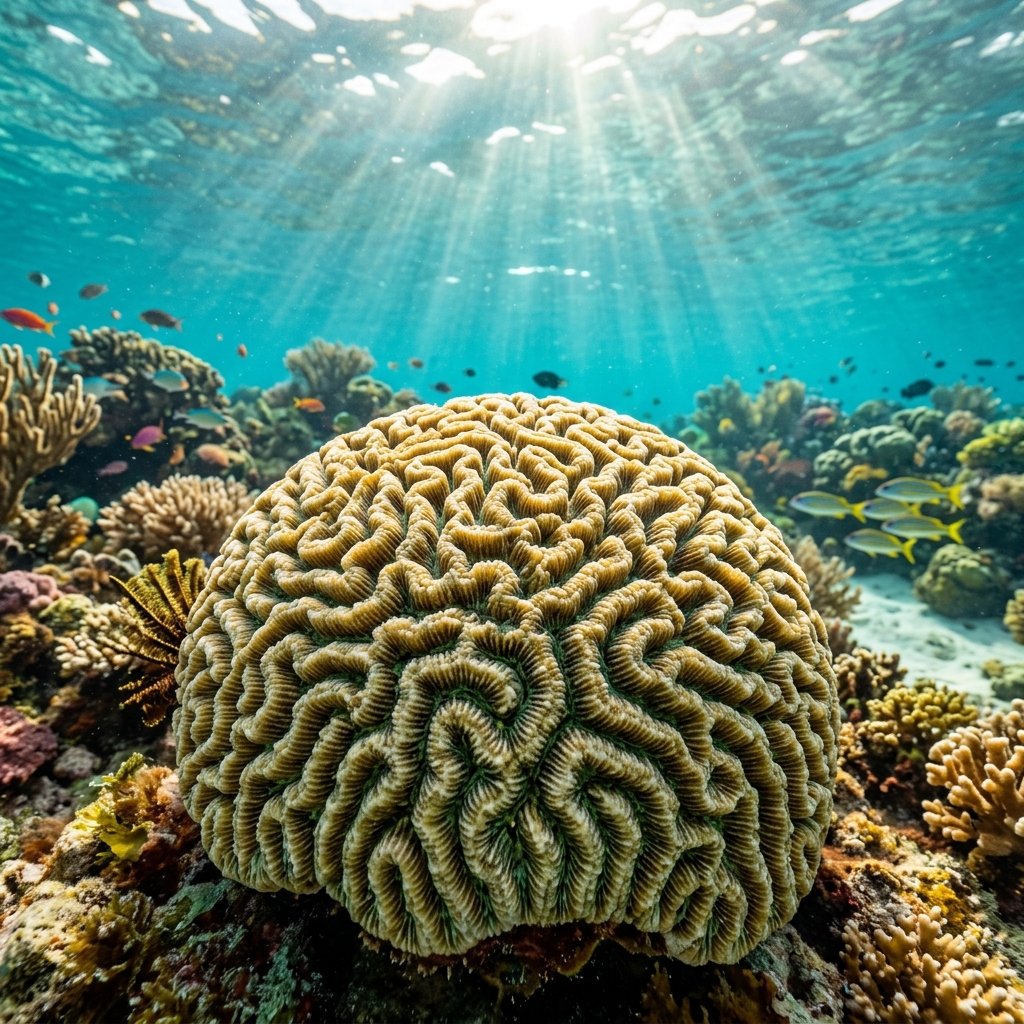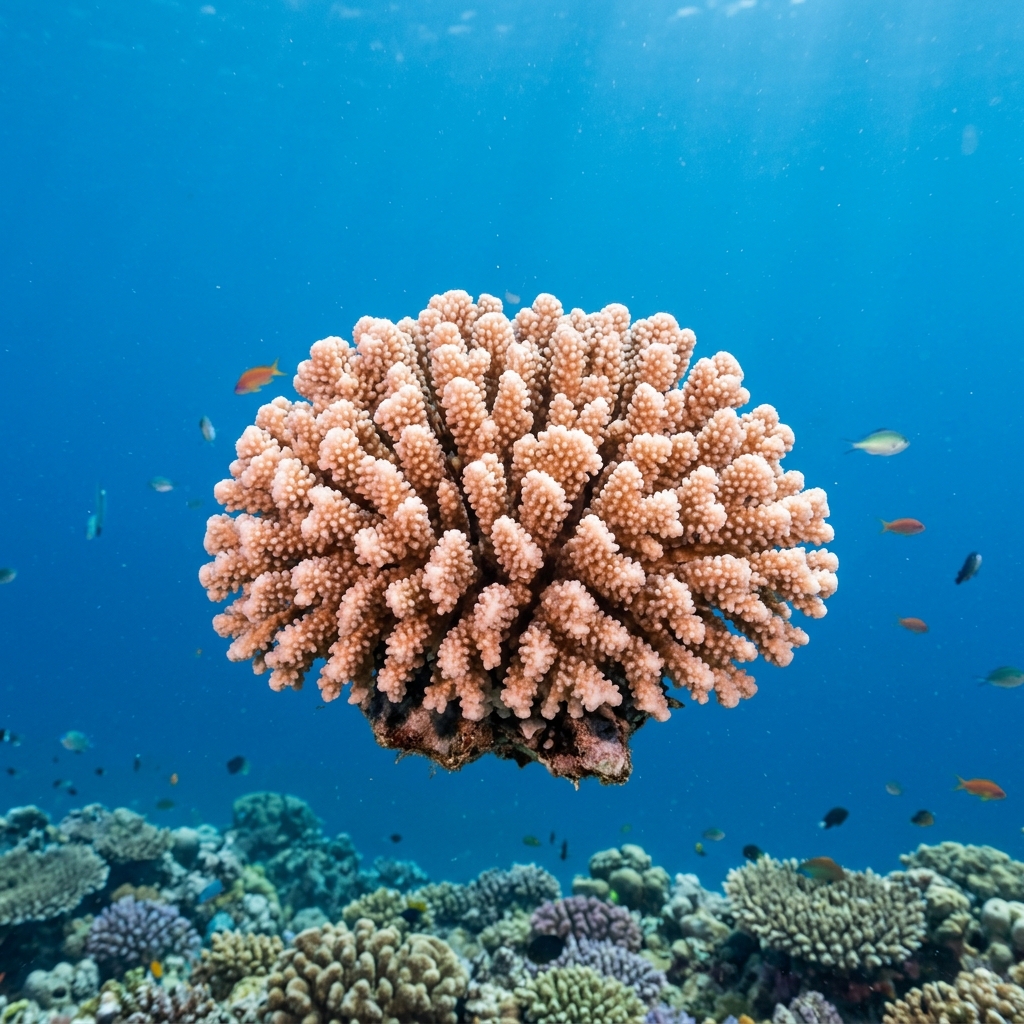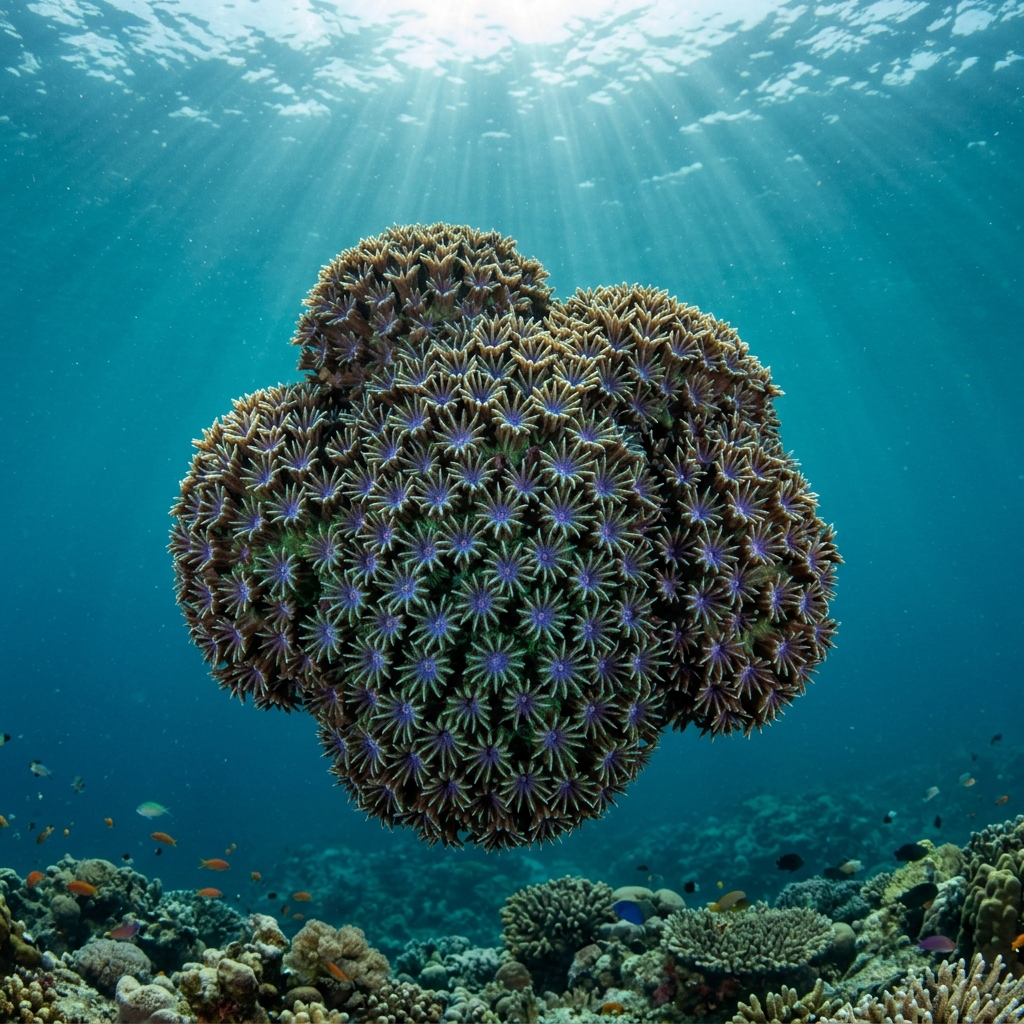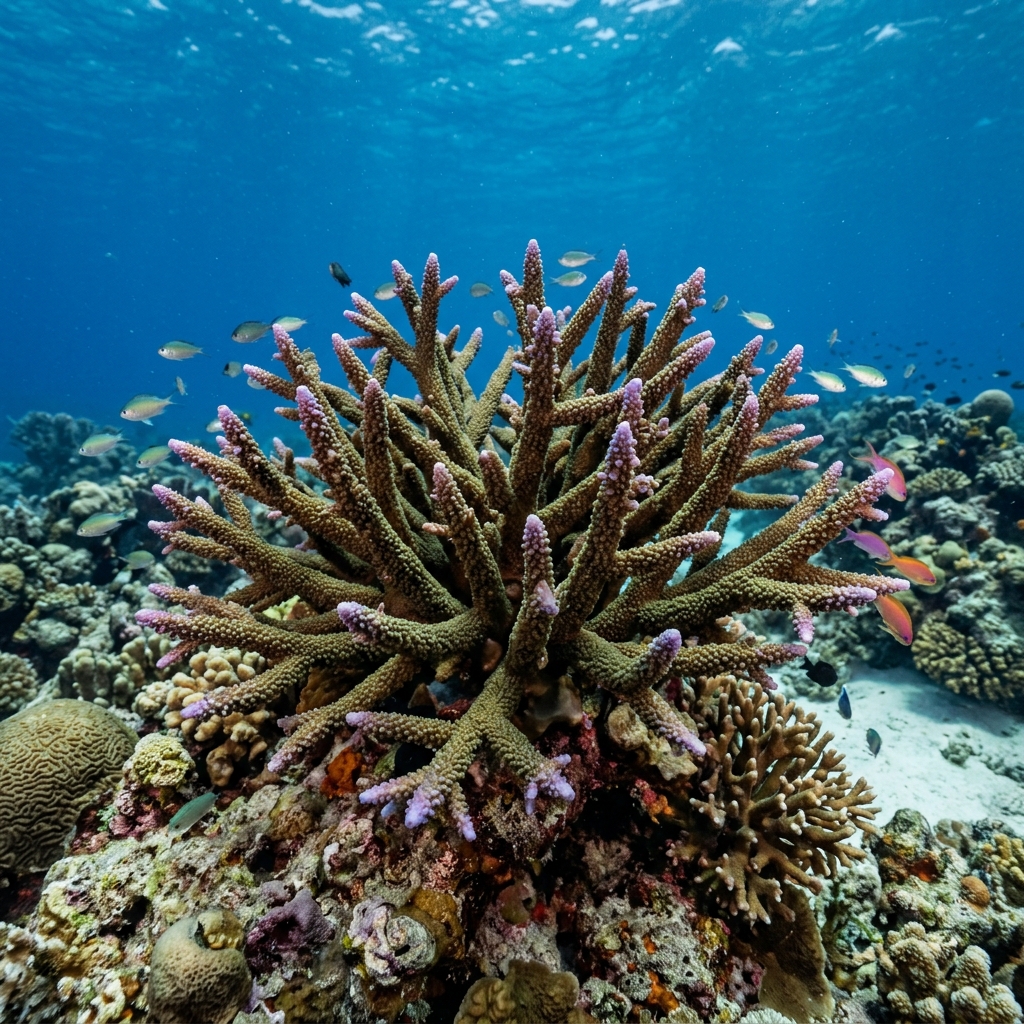
Agaricia spp.
Wavy, plate-like colonies common on Caribbean reefs from Bonaire to Cuba, thriving year-round in 26-29C water.
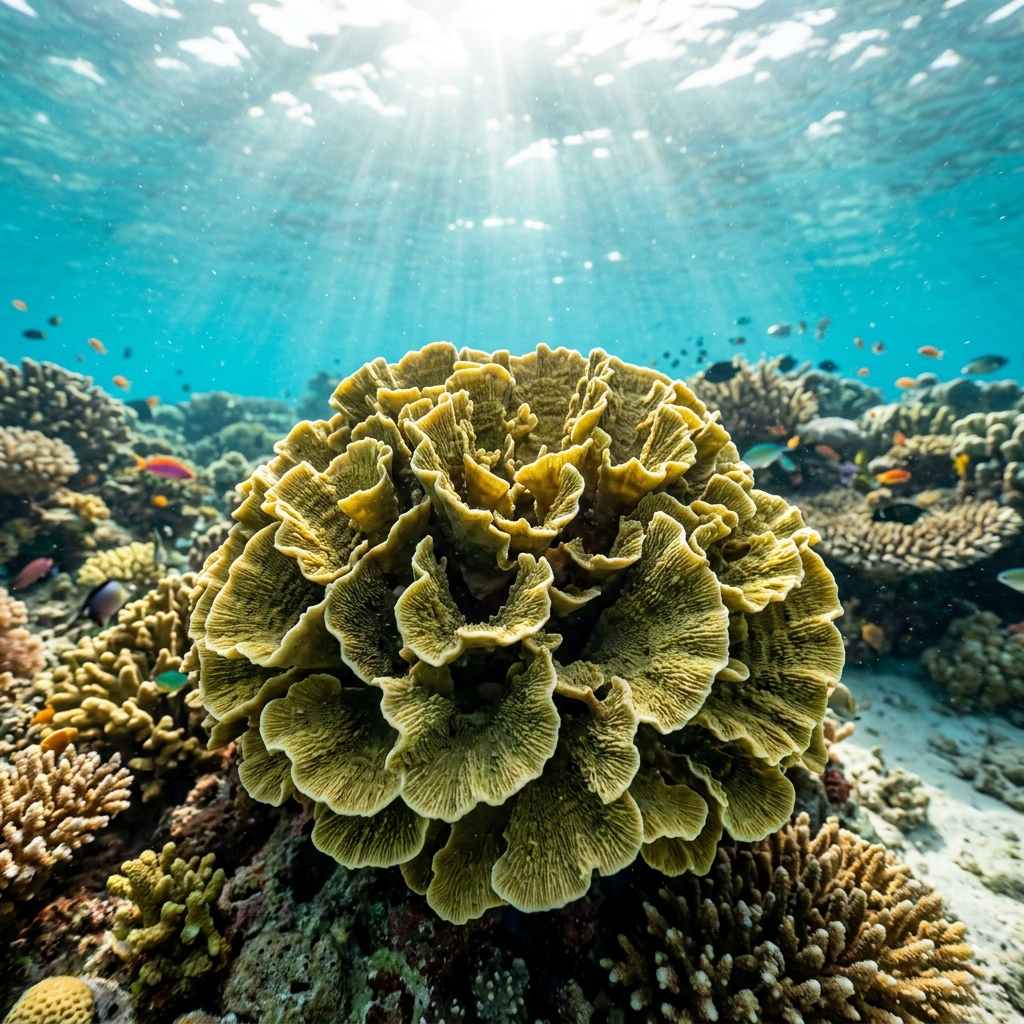
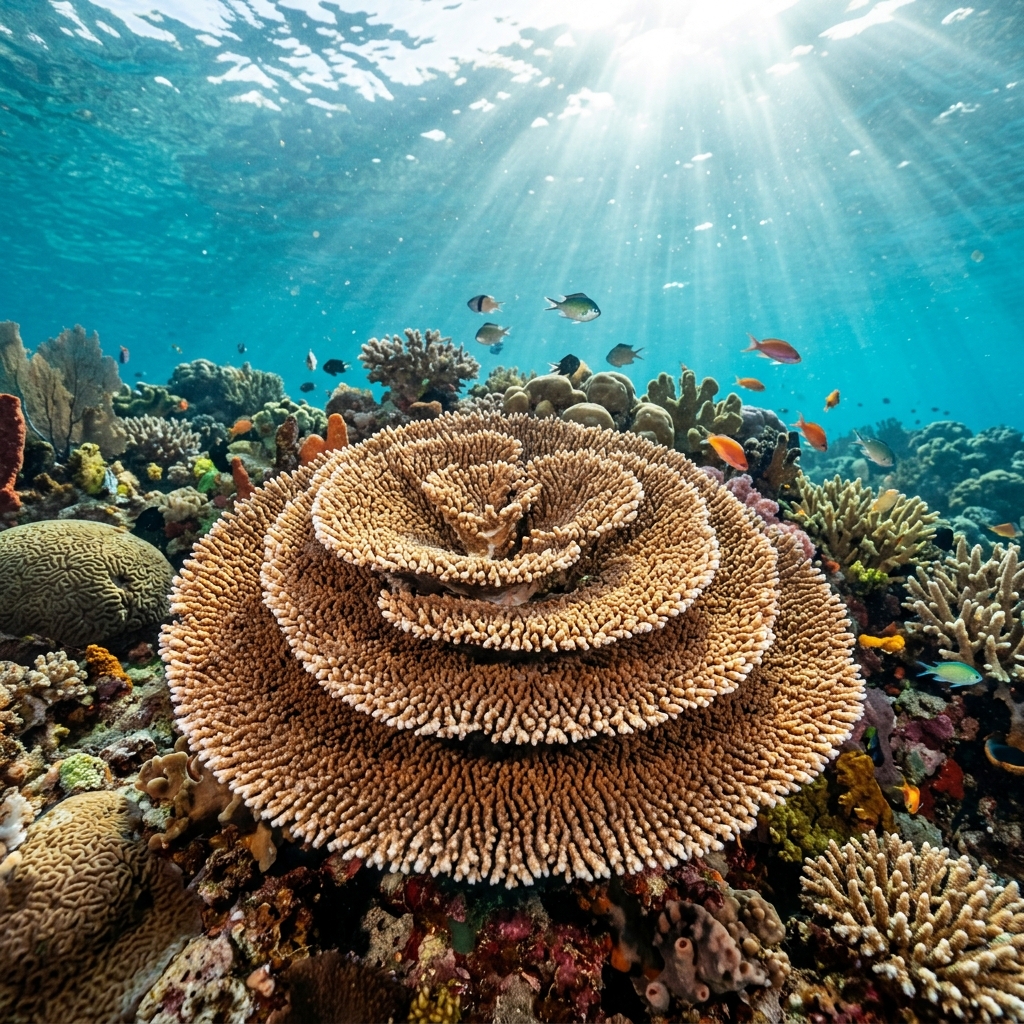
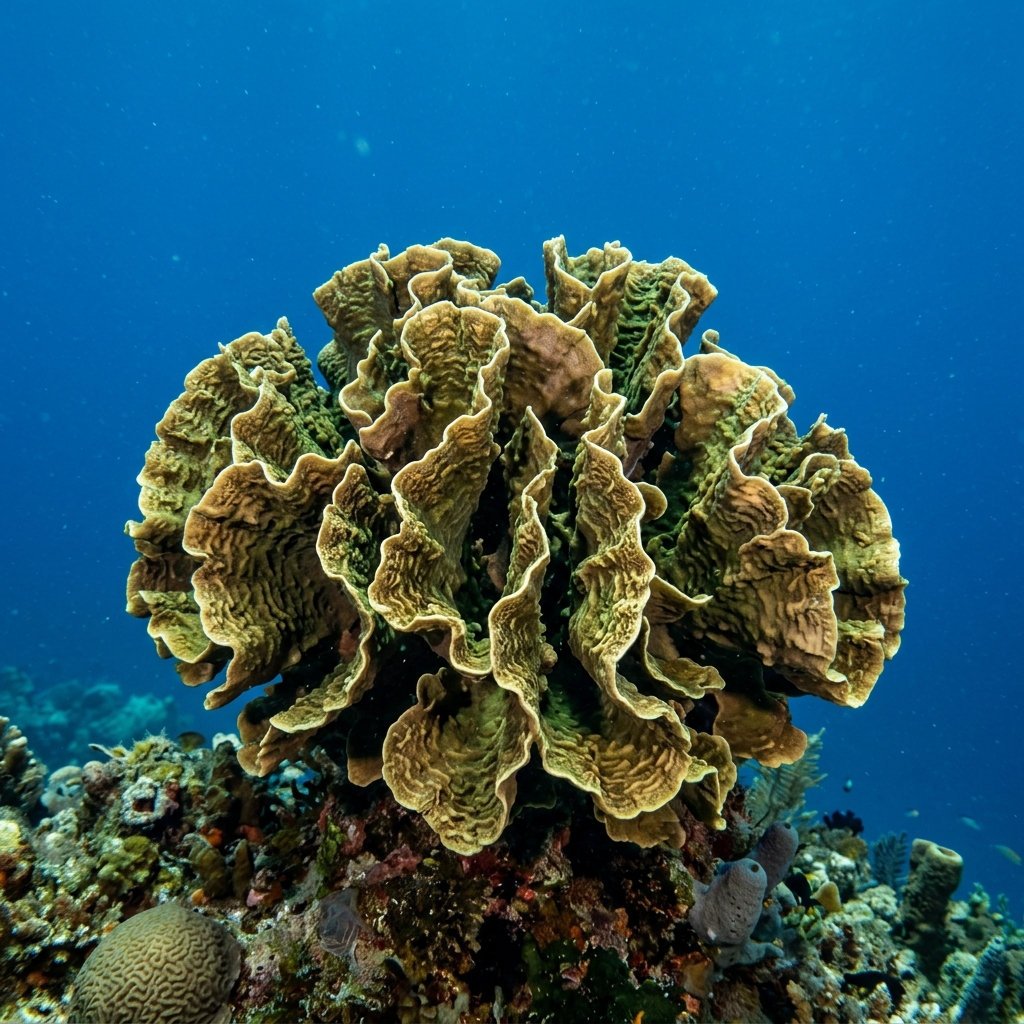
Look for thin, wavy plates or whorls stacked like folds of lettuce leaves, usually in shades of tan, brown, or grey-green. The surface has fine ridges and grooves radiating across each plate, giving it a corrugated, papery look rather than a solid boulder shape. Colonies range from small single plates to sprawling overlapping tiers that build up the reef structure, and polyps stay retracted and hard to see during the day.
Being fixed to the reef, it offers no chase or movement, so the interest lies in what happens around and on it. By day the plates look still and textured, with polyps retracted, but small fish tuck into the gaps between tiers and invertebrates graze along the ridges if you look closely. At night the polyps extend to feed, giving the surface a fuzzier, more active look than the daytime version.
Its stacked, overlapping plates are built for low light, which is part of why colonies turn up from shallow reef flats down to depths well past sport-diving limits, doing double duty as both a shade-tolerant coral and a structural reef-builder.
No clear seasonal pattern shows up in the sightings, and with a comfortable range of 26 to 29C it stays part of the reef year-round, so any month works for a dive.
Reef neighbours a diver could mistake it for. Use the identification notes above to tell them apart.
Strong populations turn up across the wider Caribbean, with Cuba, Bonaire, and the Bahamas among the most reliable countries for it, followed by Venezuela, Colombia, Brazil, the Cayman Islands, and Curacao. Within those, the Leeward Coast of Bonaire, Grand Cayman, and the Caribbean Coast of Colombia are particularly well logged, along with Jardines del Rey in Cuba and Pernambuco in Brazil.
Mapping where Lettuce Coral is logged…
It's widely logged across the Caribbean, with strong numbers in Cuba, Bonaire, and the Bahamas, plus good sightings in Venezuela, Colombia, and the Cayman Islands. Bonaire's Leeward Coast and Grand Cayman are two of the most consistent spots to find it.
There's no strong seasonal pattern in the sightings, and it stays comfortable in 26 to 29C water year-round, so it's a reliable find on any dive regardless of month.
Look for thin, wavy plates stacked like folds of lettuce, tan to grey-green in colour, with fine ridges running across the surface. Colonies build up in overlapping tiers rather than forming a solid rounded mass.
Size varies a lot by site and depth, from small single plates to sprawling colonies that stack into multi-tiered structures covering a wide patch of reef. There's no fixed typical size, since growth depends heavily on light and depth.
They're classed as Vulnerable, mainly due to broader reef stressors like warming seas and coral disease rather than any single direct threat. Divers can help by avoiding contact with the fragile plate edges.
The Lettuce Coral is listed as vulnerable by the IUCN. Observe from a distance, avoid touching or feeding it, and report sightings to local marine research organisations.
Listed as Vulnerable, largely due to reef-wide pressures like warming water and disease affecting hard corals across its range. Divers can help by keeping fins and gear clear of the plates, since a broken edge takes years to regrow.
Site and sighting data is aggregated from diver logs, iNaturalist and GBIF. For taxonomy and conservation status:
Plate Coral
2,991 sites