Octopus bimaculoides
Spot the Lesser Two-spot Octopus along the Pacific Coast of the US and Baja California. Best from May onward in waters from 14 to 28°C.
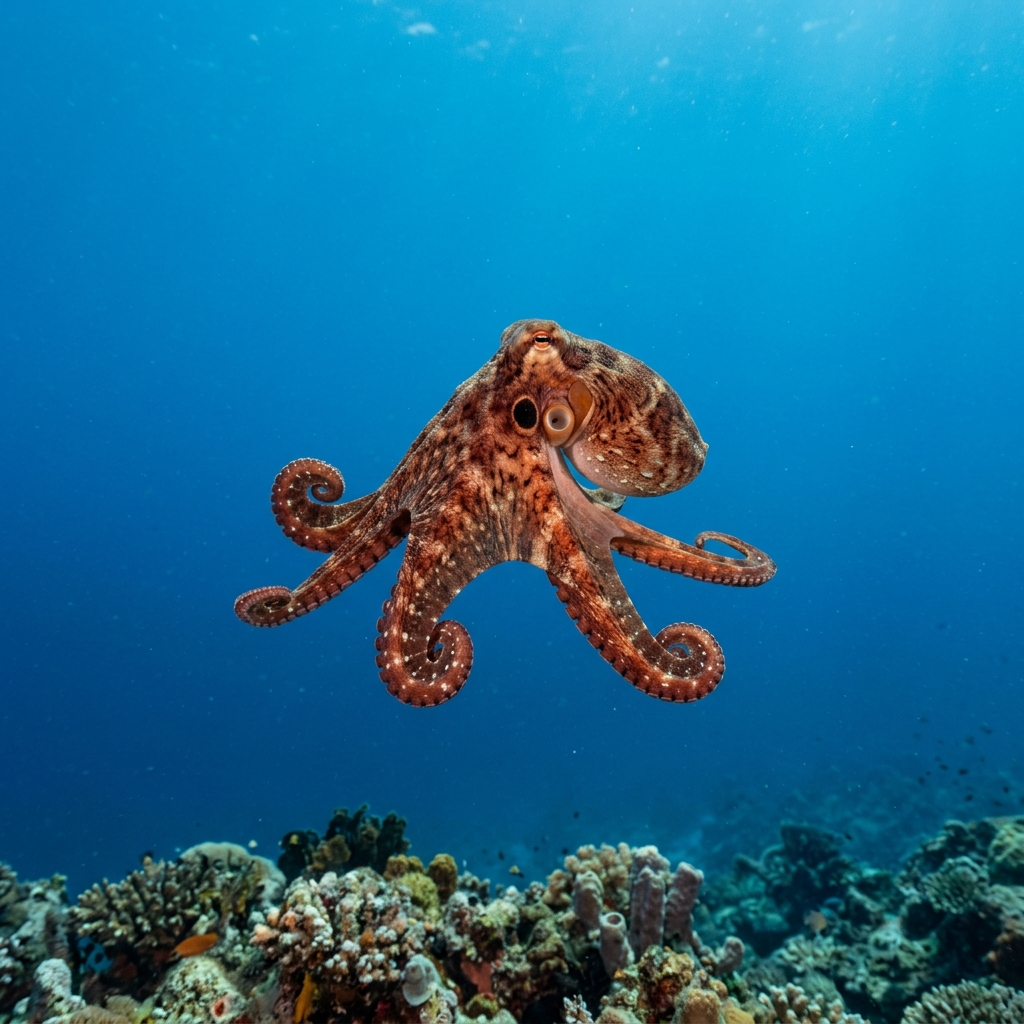
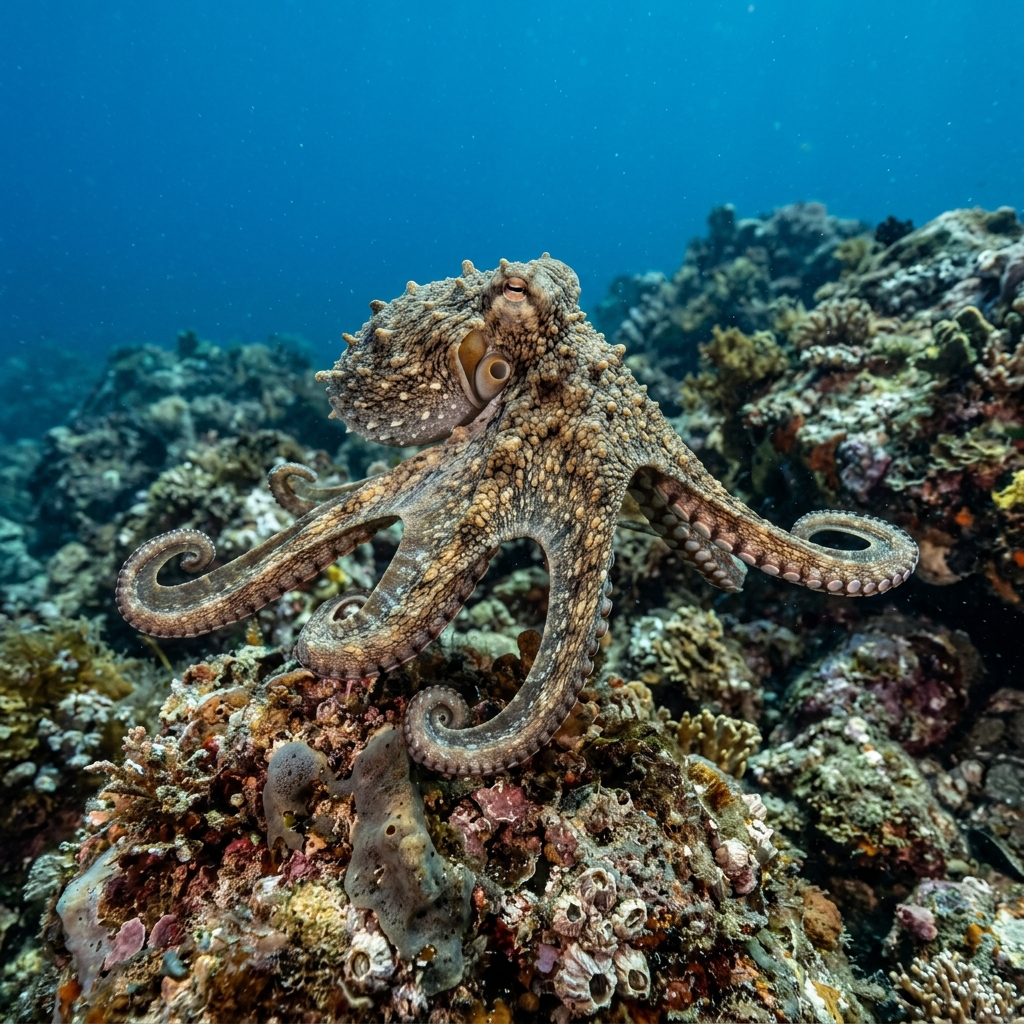
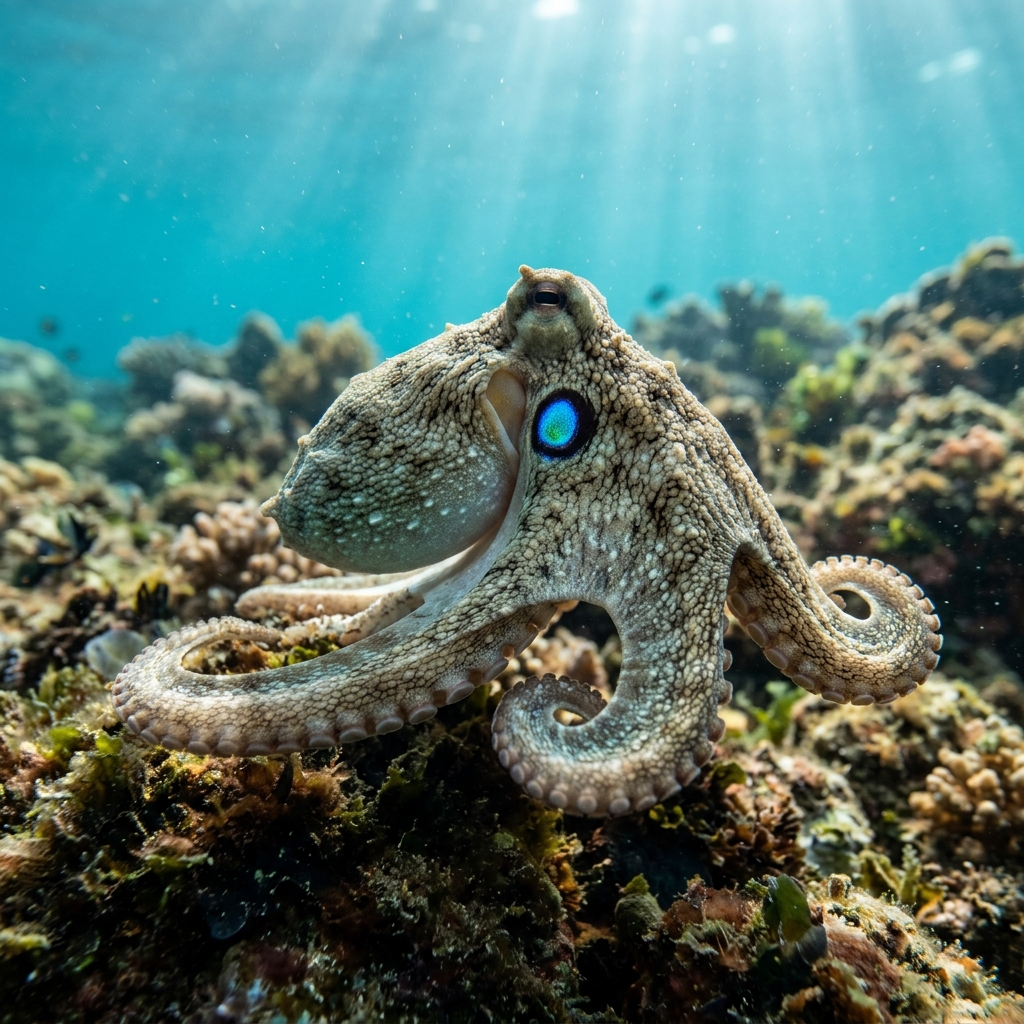
Look for a small, compact octopus roughly 8 cm across the mantle, typically mottled brown, grey, or russet to match the surrounding rock or algae. The key field mark is a pair of dark, iridescent false eyespots (ocelli) on either side of the mantle, each ringed with a paler halo, these persist even when the animal shifts colour during camouflage. The body is stocky compared to larger Pacific octopuses, and the arms are relatively short and thick for its size.
Shy by default, this octopus will usually retreat into a rocky crevice or flatten and colour-match to substrate the moment it senses a diver. Slow, deliberate approaches from a distance give you the best chance of watching it in the open. Activity peaks around dawn and dusk, when individuals can be seen hunting, probing cracks and rubble with their arms for small crabs and invertebrates.
The two false eyespots are not just an ID feature, they are an active defence. When threatened and unable to hide, the octopus flares these ocelli to mimic the face of a larger predator, buying a split second of hesitation from whatever is chasing it.
Seasonality data from Northern Hemisphere sites shows sightings spread across much of the year, concentrating from May through to March, with relatively few records in April. The species tolerates a wide temperature range (14 to 28°C), so it is present year-round at suitable shallow-water sites.
Reef neighbours a diver could mistake it for. Use the identification notes above to tell them apart.
Sightings are concentrated along the Pacific Coast of the United States, which accounts for the vast majority of logged encounters, from Southern California northward. Baja California in Mexico is the next most productive area, particularly in the northern Baja region. A small number of records exist further inland and along the northern Pacific coast of Mexico.
Mapping where Lesser Two-spot Octopus is logged…
The overwhelming majority of diver sightings come from the Pacific Coast of the United States, particularly in Southern California's shallow rocky reefs. Baja California in Mexico is the next best bet, especially in the northern Baja region. It is not recorded outside this northeastern Pacific range.
Sightings are logged across most of the year, from May through to March, with April being the quietest month in the data. Because the species tolerates cool to warm water (14 to 28°C), it does not disappear in winter along its core California and Baja range. Dawn and dusk dives tend to be most productive regardless of season.
The two dark, iridescent false eyespots on either side of the mantle are the giveaway, they stay visible even when the animal is camouflaged. It is a small, stocky species with relatively short arms. The Common Octopus and Day Octopus share a similar mottled look but lack the clearly defined ringed ocelli and are not found in the northeastern Pacific.
Mantle length is typically around 8 cm, making this a noticeably small octopus compared to the Giant Pacific Octopus sharing some of its range. Total arm span can reach roughly 50 cm in larger adults, but most individuals you encounter in the shallows are compact and easy to miss against rocky substrate.
No. They pose no meaningful risk to divers. Like all octopuses they have a beak and can bite if grabbed or cornered, so the obvious rule is don't handle them. Their usual response to a diver is to hide or camouflage, not to confront.
The paired dark ocelli on the mantle mimic the eyes of a larger animal, giving potential predators pause when the octopus cannot escape into a crevice. The spots have an iridescent blue-green sheen that makes them particularly conspicuous when the octopus flares them as a threat display.
Site and sighting data is aggregated from diver logs, iNaturalist and GBIF. For taxonomy and conservation status:
Blue-ringed Octopus
925 sites