Cryptosoma cristatum
Uncommon box crab logged across Lanzarote and Tenerife dive sites in 17.8-23.8C water, year-round sightings in the Canary Islands.
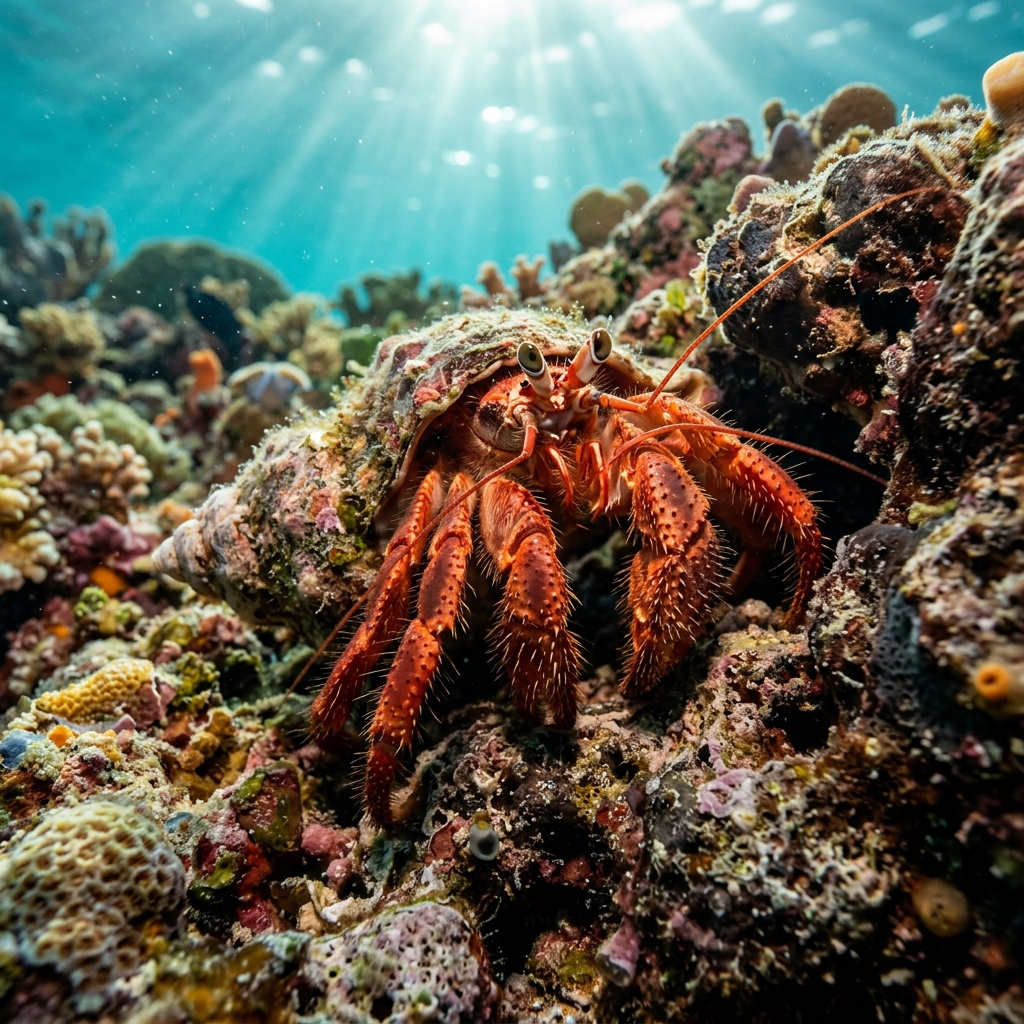
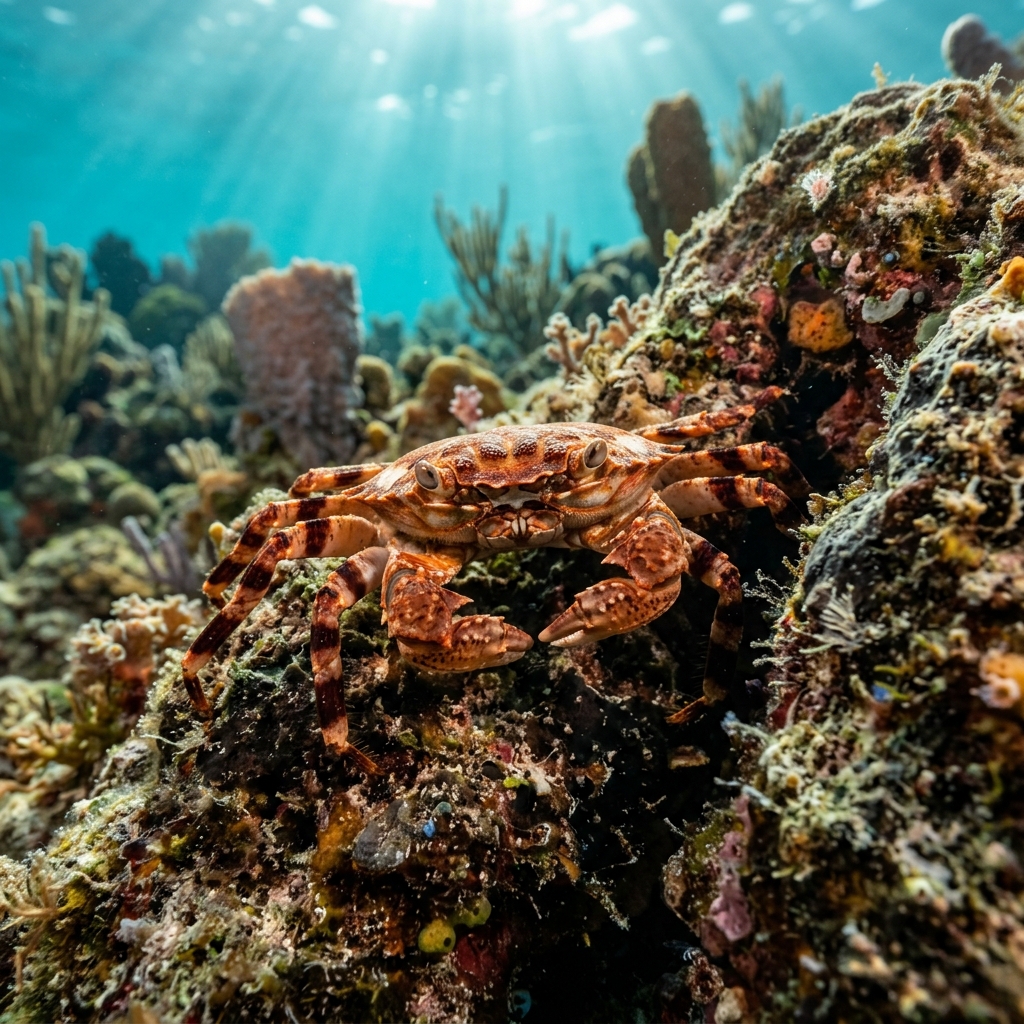
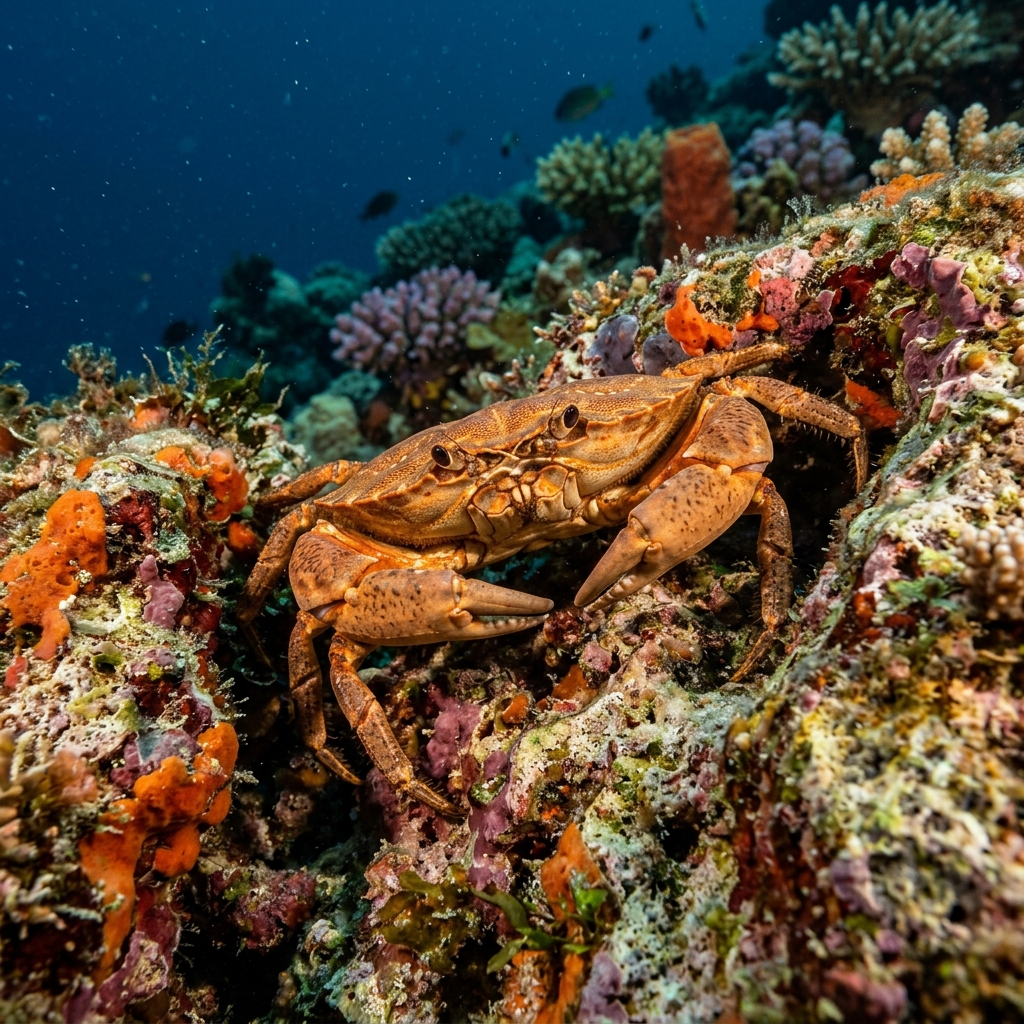
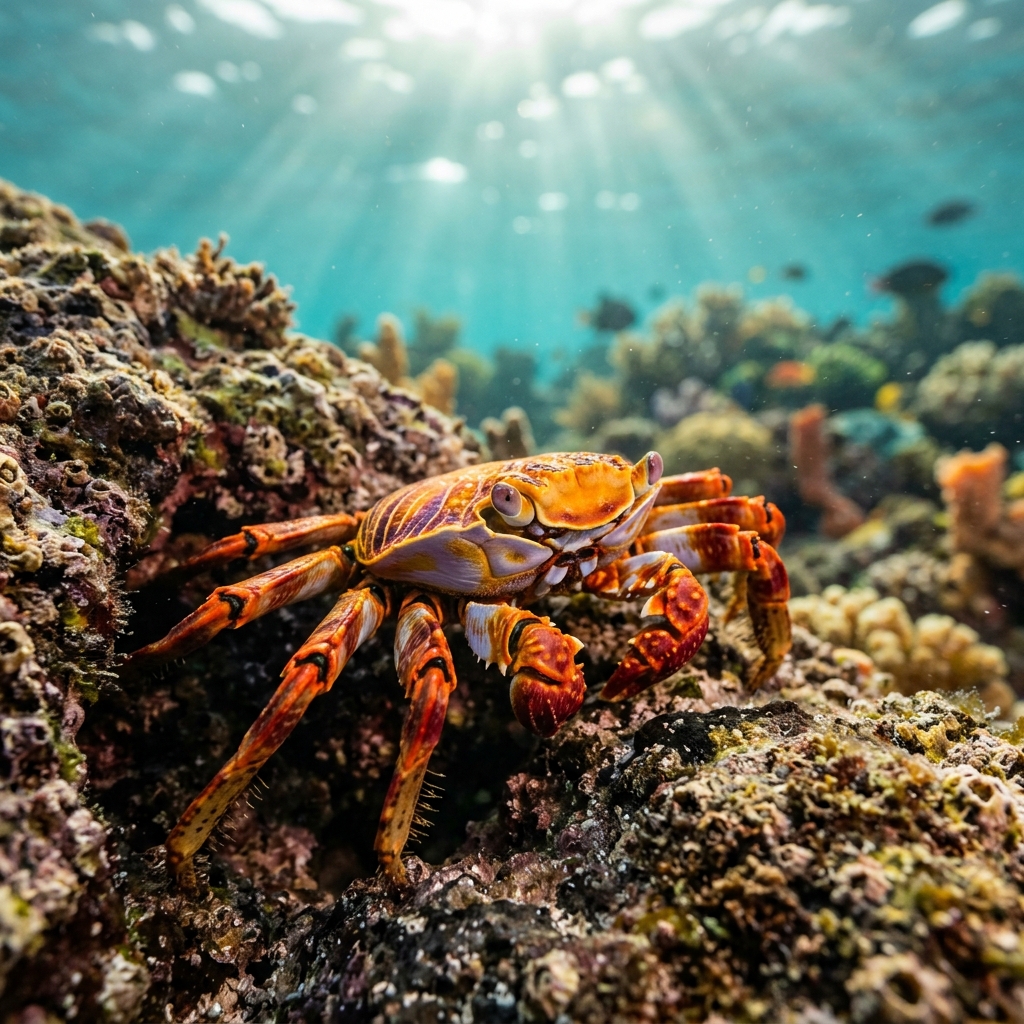
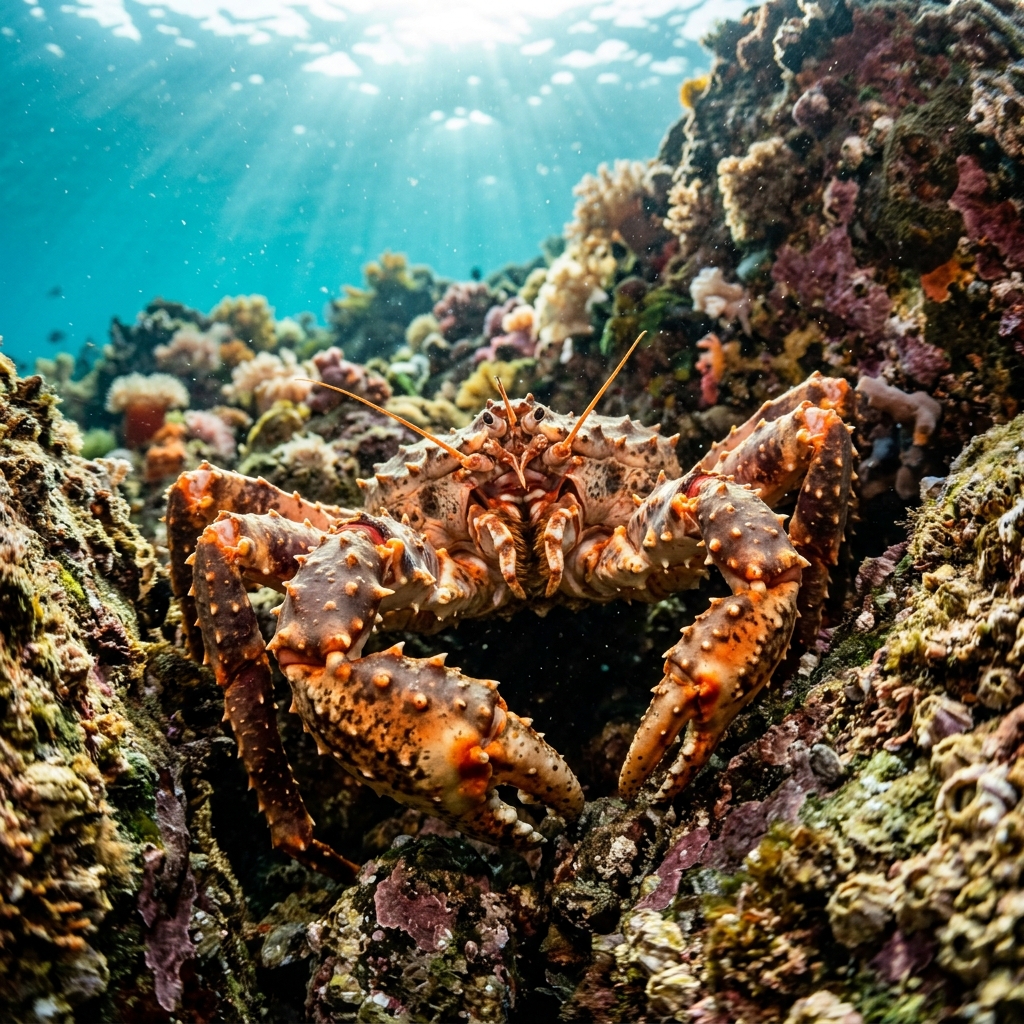
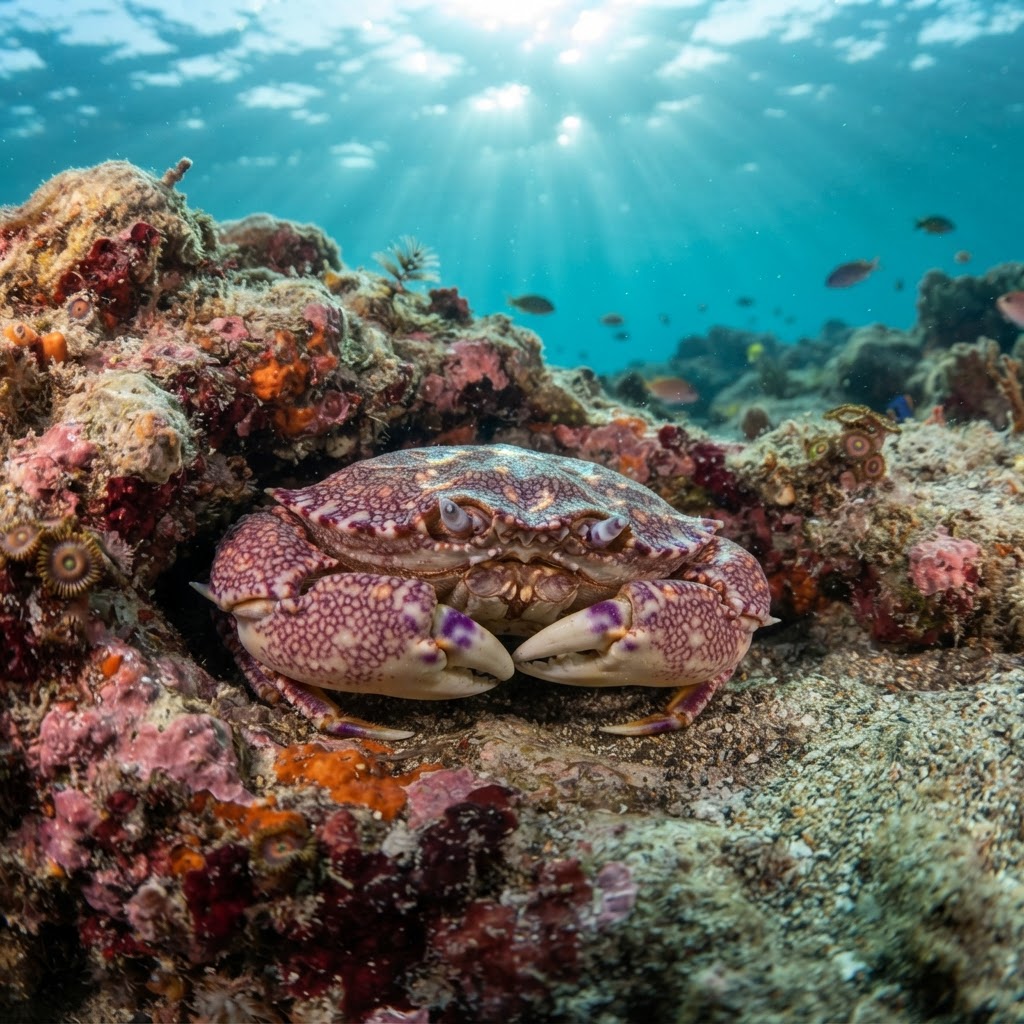
A boxy, almost square shell with a mottled, rough-textured surface that helps it blend into sand and rubble. It tucks its large claws flat against the front of its body when disturbed, covering its face like hands over eyes, which is where the common name comes from. Sightings put it at a modest size for a box crab, sitting low and often half buried rather than perched in the open.
Divers usually find it resting on sand or rubble patches near reef structure, often partially buried or wedged against rock, moving slowly if at all. When approached it tends to fold its claws up over its face rather than flee, a defensive posture that is more about hiding than fighting. Most sightings come from unhurried bottom time on sandy stretches rather than active swimming encounters.
The claw-over-face posture is a real defence tactic: by shielding its face and softer front with its own pincers, the crab presents attackers with its toughest, most armoured surfaces first.
There is no clear seasonal pattern in the sighting data, so treat it as a year-round find in the Canary Islands. Water there sits in the 17.8 to 23.8C range across the year, which this crab seems comfortable in throughout.
This one is very much a Canary Islands crab, with dive logs concentrated in Lanzarote and, to a lesser extent, Tenerife. Within those islands it turns up at a wide spread of sites, though always as an uncommon find rather than a guaranteed spot.
Mapping where Lesser-spotted Shame-faced Crab is logged…
It is most reliably logged in Lanzarote, with further sightings in Tenerife, making the Canary Islands the place to look for it. It shows up at a wide range of sites there but is never described as common.
Sighting data shows no strong seasonal pattern, so it is considered a year-round find. Canary Islands water stays in a fairly narrow 17.8 to 23.8C band all year, which suits it in any month.
Look for a boxy, roughly square shell with a mottled, textured surface sitting low on sand or rubble. If disturbed it folds its large claws up over its face rather than swimming off.
No, it poses no danger to divers. It is a slow-moving, defensive crab that hides its face with its claws rather than confronting anything nearby.
Folding its claws up over its face is a defence posture, presenting its armoured pincers to a threat while shielding its softer front parts. It is a passive strategy rather than an aggressive one.
Site and sighting data is aggregated from diver logs, iNaturalist and GBIF. For taxonomy and conservation status:
European Green Crab
2,469 sites