Lepisosteus osseus
Spot Longnose Gar in the Great Lakes, Florida and beyond. A prehistoric-looking freshwater fish active across a wide 14-28 °C temperature range.
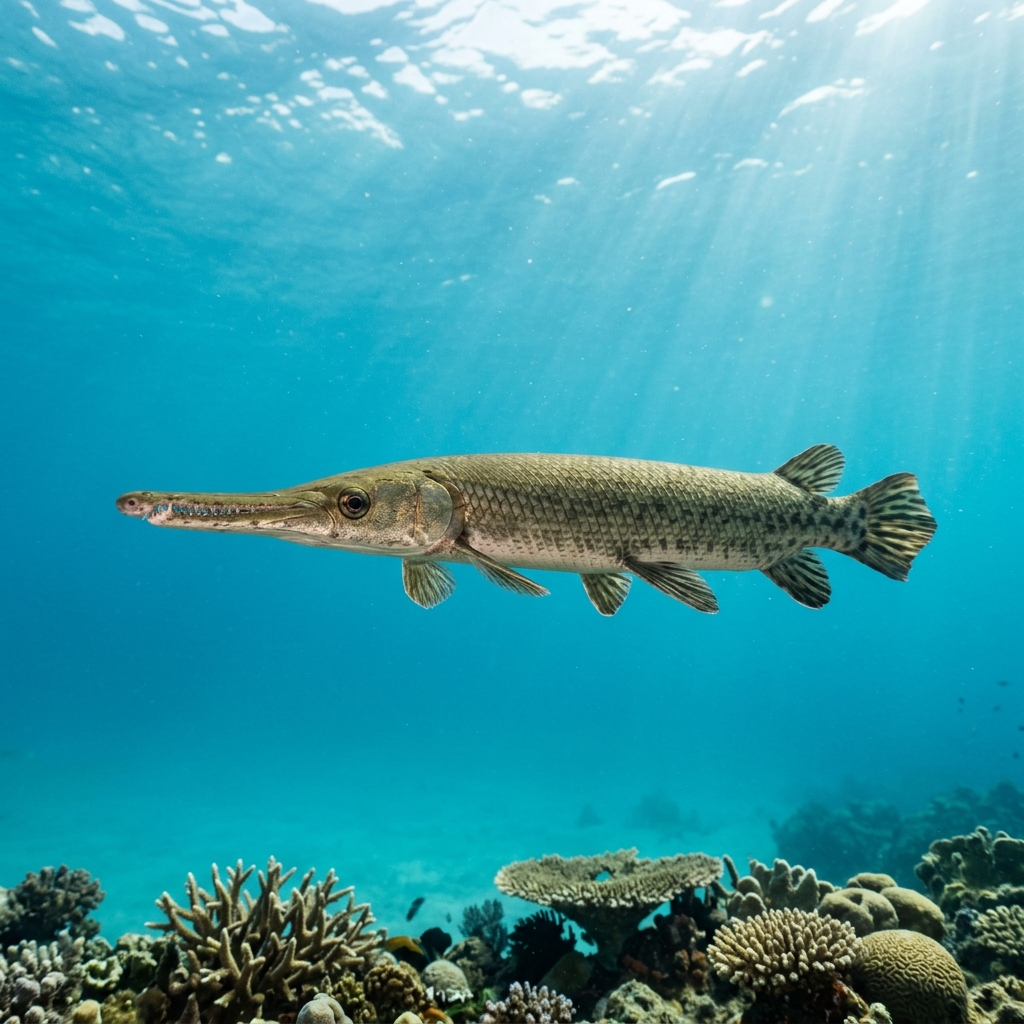
That impossibly long, narrow beak lined with small teeth is the one feature that makes identification instant underwater. The body is cylindrical and torpedo-shaped, covered in hard, interlocking diamond-shaped scales (called ganoid scales) that look almost armour-plated. Colouration is typically olive-brown on the back fading to a pale, cream-white belly, with faint darker spots on the flanks. Juveniles carry a distinctive dark stripe running the length of the body.
Gar are most often spotted hovering motionless just below the surface or alongside submerged structure, using near-neutral buoyancy to ambush prey. They tend to ignore divers entirely, holding their position with barely a fin movement, which makes for close, unhurried observation. Approach slowly and avoid rising directly beneath them, as breaking the surface layer is the one thing likely to spook them.
Longnose Gar can gulp air directly from the surface using a modified swim bladder that functions as a primitive lung, allowing them to survive in warm, oxygen-depleted water that would suffocate most fish.
No clear seasonal peak emerges from the available data, so encounters are possible year-round wherever conditions suit. The species tolerates a wide temperature band of 14 to 28 °C, meaning it can be active through both cooler northern summers and warm southern winters.
Longnose Gar is logged across dive sites in the United States and Canada, with the strongest presence in the Great Lakes region on the Canadian side and across Florida and the wider Southeast in the US. The Central and Mountain West of the US also contributes sightings, making this a freshwater encounter available across a broad sweep of North America.
Mapping where Longnose Gar is logged…
Longnose Gar turns up at freshwater dive sites across both the United States and Canada. The Great Lakes region on the Canadian side is the most consistently logged area, with Florida and the broader Southeast US also producing regular sightings. The Central and Mountain West of the US adds further opportunities.
There is no strong seasonal pattern in the current sighting data, suggesting encounters are possible throughout the year. The species tolerates water temperatures from around 14 °C to 28 °C, so it remains active across both cool northern summers and milder southern winters.
Nothing else in North American freshwater looks quite like a Longnose Gar. Look for an elongated, torpedo-shaped fish with a beak-like snout roughly twice the length you would expect, covered in hard, interlocking diamond-shaped scales. Colouration is olive-brown above and pale below, often with faint spotting on the flanks.
Longnose Gar pose no meaningful risk to divers. They are ambush predators focused on fish, and their typical response to a diver is simply to hold still or drift away slowly. Their teeth are small and designed for gripping slippery fish, not for defence.
Longnose Gar are one of North America's larger freshwater fish. Adults commonly reach 90 to 120 cm in length, and large individuals can exceed 150 cm. Their slender build means they look longer than they are heavy.
Yes. Longnose Gar have a highly vascularised swim bladder that doubles as a primitive lung, letting them gulp air at the surface. This adaptation allows them to thrive in warm, stagnant water with low oxygen levels where most other fish cannot survive. Divers sometimes see them making brief, purposeful rises to the surface to breathe.
Site and sighting data is aggregated from diver logs, iNaturalist and GBIF. For taxonomy and conservation status:
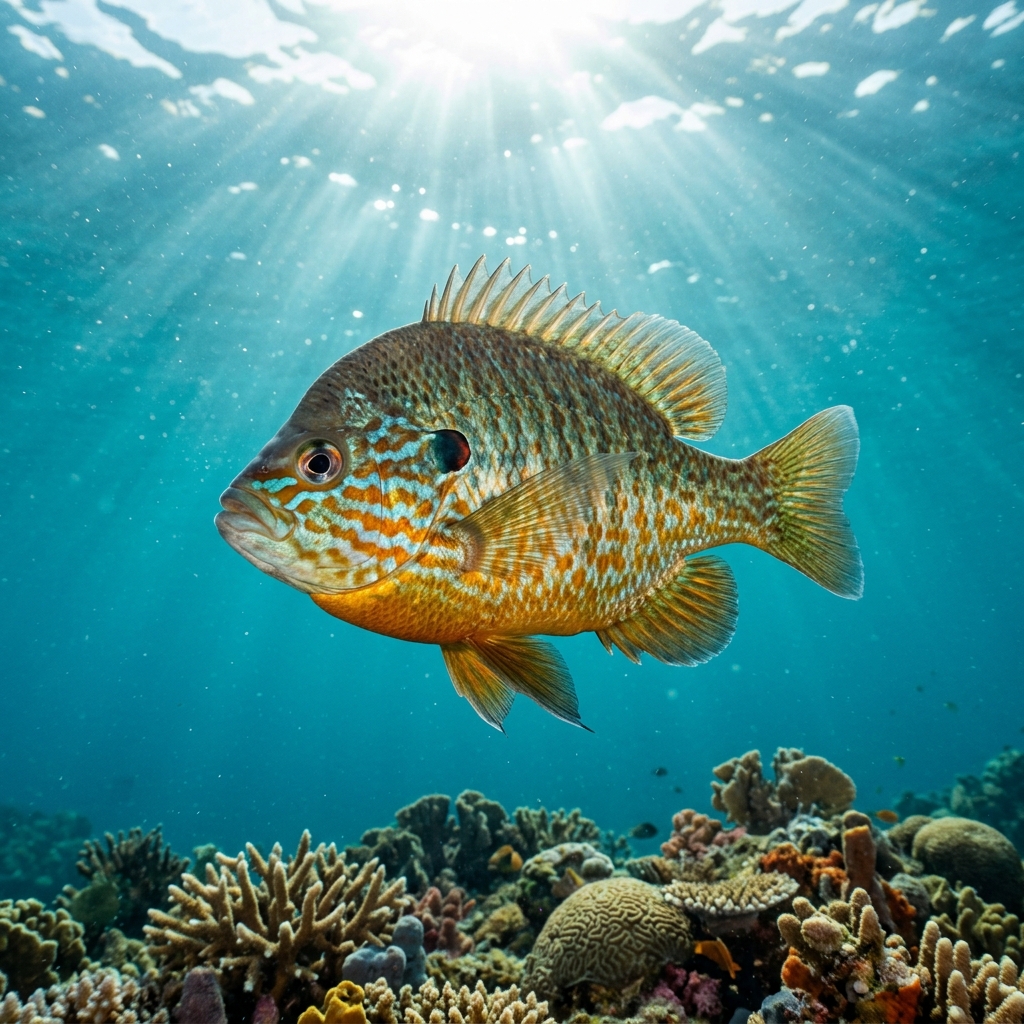
Sun Perch
2,182 sites