Macropharyngodon meleagris
Speckled and shy, leopard wrasse turns up on sandy patches from Visayas to Taveuni in water near 26C, most months of the year.
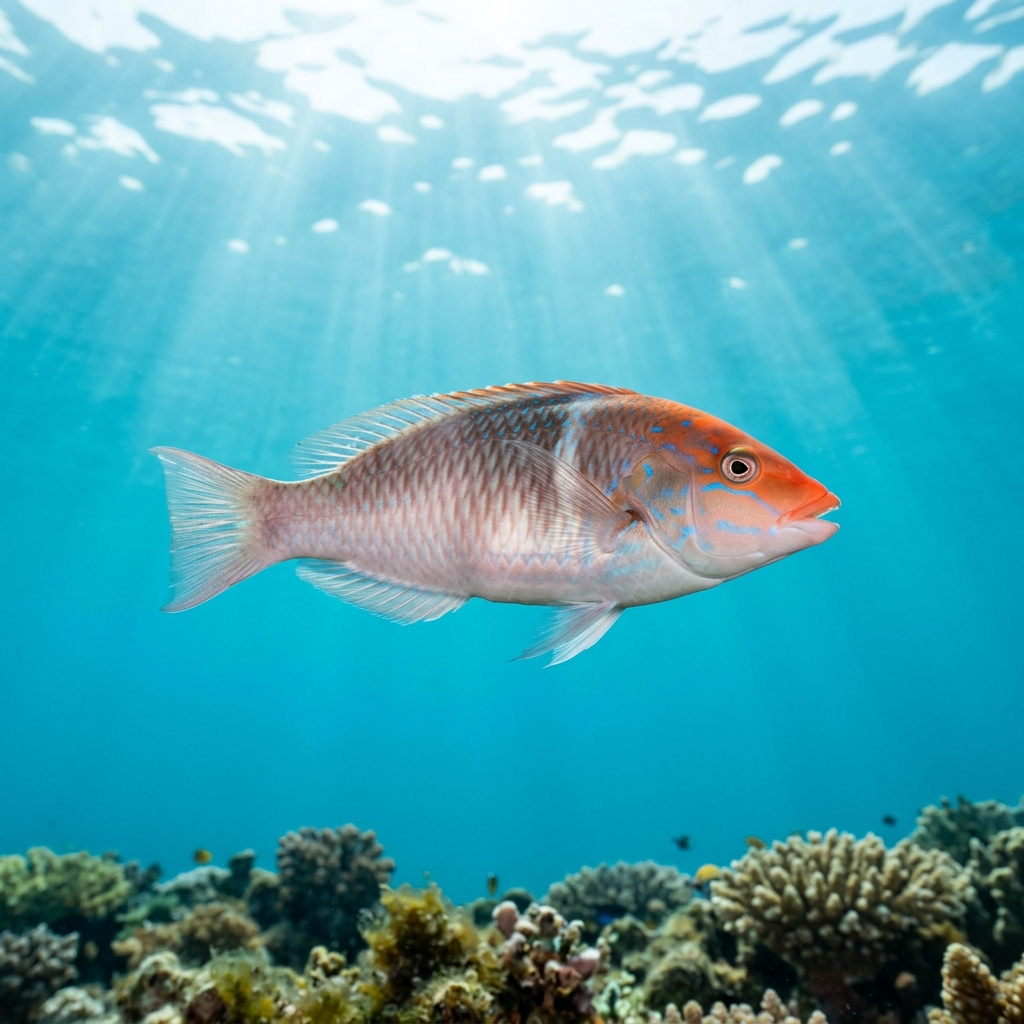
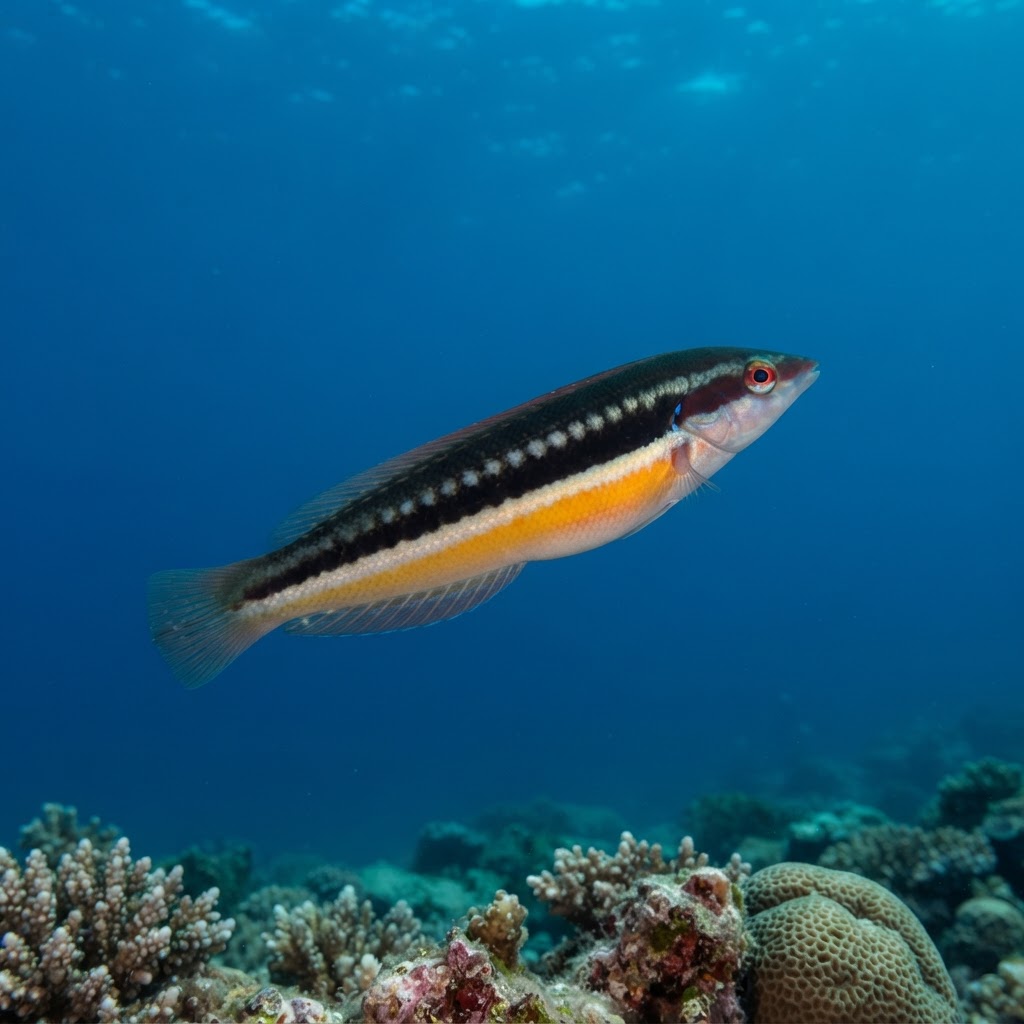
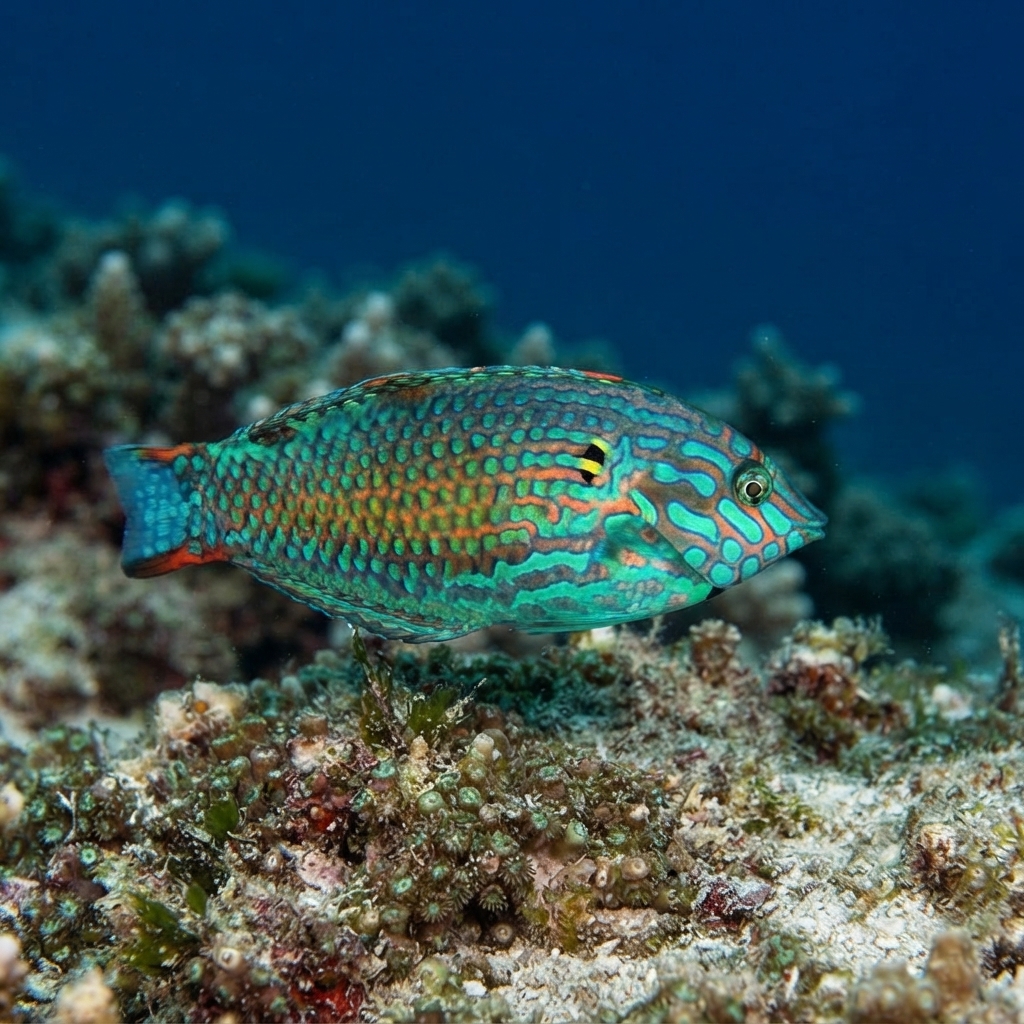
A small, slender wrasse around 10 cm long, its white to pale body covered in dense dark speckles and blotches that give it a leopard-print look. It swims low over sand and rubble patches with quick, darting bursts rather than a steady glide. Males develop a bolder head pattern with more defined spotting than the finer speckling seen on females and juveniles.
Look for it picking through sand and rubble patches near coral, snatching small invertebrates as it goes, usually alone rather than in groups. It tends to stay low and close to the substrate, darting for cover among rubble or burying itself in sand when a diver gets too close. Most sightings come during daytime reef dives on the sandy fringes rather than over hard coral structure.
Like many wrasses, it buries itself in sand at night and when startled, a defence habit that also makes it vanish quickly if you approach too fast during the day.
No clear season shows up in the sighting data, and with a comfortable range of roughly 24.7 to 28.9C this fish is present on tropical reefs year-round. Turn up on any dive in its range and there's a fair chance of finding one working the sand.
Most reliably logged in the Philippines, especially around the Visayas, with strong showings across Australia's Queensland and New South Wales coasts and Taiwan's Green Island and Xiaoliuqiu. French Polynesia's Tuamotu Islands, Fiji's Taveuni, and Saipan in the Northern Mariana Islands also produce regular sightings for divers working sandy reef edges.
Mapping where Leopard Wrasse is logged…
The Philippines, particularly the Visayas region, produces the most sightings, alongside Queensland and New South Wales in Australia, Green Island and Xiaoliuqiu in Taiwan, and Taveuni in Fiji.
There's no strong seasonal pattern in the data, and its comfortable temperature range of roughly 25 to 29C means it's found on tropical reefs throughout the year.
Look for a small, slender fish around 10 cm long with a white body covered in dense dark speckles, moving in short darting bursts low over sand and rubble patches near reef edges.
They stay small, typically reaching around 10 cm in length, making them one of the more petite wrasses divers spot on sandy reef flats.
No, they pose no threat to divers. They're small, shy invertebrate feeders that dart away or bury in sand rather than approach.
It buries itself in sand both at night and when startled during the day, a defensive habit shared by several sand-dwelling wrasse species to avoid predators.
Site and sighting data is aggregated from diver logs, iNaturalist and GBIF. For taxonomy and conservation status:
Bird Wrasses
3,632 sites